Shop on Lazada
Pokémon TCG products
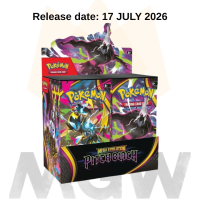
Pokemon TCG ME5 Pitch Black Booster Box Factory Sealed
$296.70
Buy on Lazada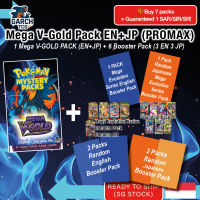
Pokemon TCG Mystery Pack {Guaranteed Hits! Authentic Japanese & English Cards | Chance for Alternate Arts!}
$82.88
Buy on Lazada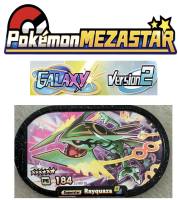
Pokemon Mezastar Galaxy Version 2 Authentic 6 Star for Sale
$48.00
Buy on Lazada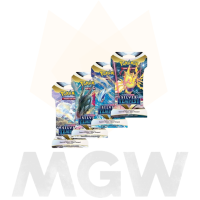
Pokemon TCG SS12 SWSH12 Silver Tempest Sleeved Booster Packs x4 RANDOM ARTWORK Brand New Factory Sealed
$90.56
Buy on Lazada
Pokemon TCG Mystery Pack {With Guaranteed Hits & Chance for AA!} ORIPA - AUTHENTIC Booster Packs for Pokemon Card Game
$30.88$38.88
![[SG Stock] Pokemon Elite Trainer Box (ETB) Acrylic Case](https://sg-live.slatic.net/p/e6742900d4ff11186675a48be9091e24.png_200x200q80.jpg)
[SG Stock] Pokemon Elite Trainer Box (ETB) Acrylic Case
$64.88$74.88
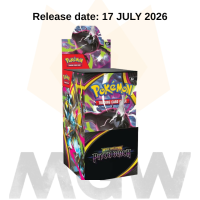
Pokemon TCG ME05 Pitch Black Half Booster Box Factory Sealed ME5
$181.13
Buy on Lazada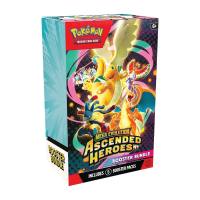
TCG Pokemon ME-2.5 Ascended Heroes 6 Booster Bundle
$149.90
Buy on LazadaAbout Pokémon TCG
Pokémon Trading Card Game (Pokémon TCG) is a collectible trading card game based on the Pokémon franchise. Players construct decks comprising Pokémon, Energy and Trainer cards to battle one another, whilst the cards themselves serve as highly collectible objects featuring hundreds of unique illustrations, varying rarities, promotional releases and historically significant prints.
The game was originally developed by Creatures Inc. and forms part of the broader Pokémon brand managed by The Pokémon Company and its regional organisations. Creatures Inc. is specifically identified as being responsible for the development of the Pokémon Trading Card Game.
Basic information
| Category | Information |
|---|---|
| Full name | Pokémon Trading Card Game |
| Common abbreviation | Pokémon TCG / PTCG |
| Japanese name | ポケモンカードゲーム |
| Genre | Trading/collectible card game |
| Based on | Pokémon |
| Original developer | Creatures Inc. |
| Publisher/brand management | The Pokémon Company and regional Pokémon organisations |
| Original Japanese release | 1996 |
| International debut | 1999 in North America and Europe |
| Players | Primarily 2 |
| Standard deck | 60 cards |
| Primary purposes | Playing, collecting, trading and competitive tournament play |
| Major competitive event | Pokémon TCG World Championships |
| Current major era | Mega Evolution era |
| Official competitive program | Play! Pokémon |
The Pokémon TCG debuted internationally in North America and Europe in 1999, while the Japanese Pokémon card game dates to the franchise’s earliest years. The first Pokémon TCG World Championships were held in 2004.
Core concept
Pokémon TCG combines two distinct elements: Pokémon battling and collectible cards. In the game, each player assumes the role of a Pokémon Trainer, with their deck representing both their team of Pokémon and the resources required for battle.
A typical deck contains:
- Pokémon cards: The creatures that engage in combat.
- Energy cards: Resources necessary to execute attacks.
- Trainer cards: Items, Supporters, Stadiums and other effects that assist the player.
- Special Pokémon cards: Powerful or mechanically distinctive Pokémon introduced throughout the game’s history.
The standard deck size is 60 cards. Players typically begin with an opening hand, establish an Active Pokémon and Bench Pokémon, and take turns developing their board state before attacking. The fundamental victory condition is to take all of one’s Prize cards. Alternatively, a player may win if their opponent has no Pokémon left in play or cannot draw a card when required.
Brand pillars
It is useful to distinguish Pokémon TCG as a game from Pokémon TCG as a brand. The brand encompasses far more than competitive gameplay alone and is built upon four major pillars:
- Gameplay: Players construct decks and compete against other Trainers.
- Collecting: Enthusiasts acquire cards for their featured Pokémon, artwork, rarity, historical significance or investment value.
- Trading: Cards are exchanged between collectors and players.
- Community: Local leagues, Pokémon Card Gyms, retail stores, tournaments, judges and organised competitions create a social ecosystem around the game.
The Pokémon Company explicitly describes Pokémon TCG as both a competitive game and a collecting hobby, noting that cards feature diverse illustrations and artistic styles.
Origins and history
1996: Birth of the Pokémon card game
Pokémon began as a video game franchise with Pokémon Red and Green in Japan in 1996. The Pokémon card game was subsequently introduced as an additional medium for fans to interact with the Pokémon world. This extension allowed the franchise to be experienced through physical cards, collecting, trading and head-to-head competition.
1999: International expansion
The Pokémon TCG arrived in North America and Europe in 1999, transforming it from a domestic Japanese card game into a global product. This period established the core identity that persists today: collect Pokémon, build a deck, battle, and trade or collect more cards.
2000s: Establishment of competitive play
Organised competitive play developed substantially during the 2000s. The first Pokémon TCG World Championships were held in 2004, establishing a formal international championship structure. Consequently, the game developed distinct audiences comprising casual players, serious competitive players and, increasingly, dedicated collectors.
Major eras
Pokémon TCG history is generally divided into series or eras corresponding broadly to Pokémon generations and major gameplay mechanics.
| Era | Approximate period | Major identity |
|---|---|---|
| Original / Base Set era | 1996–1999+ | Original Pokémon, early Wizards-era cards internationally |
| Neo era | 2000–2002 | Johto Pokémon |
| e-Card era | 2002–2003 | e-Reader technology |
| EX era | 2003–2007 | Pokémon-ex mechanics |
| Diamond & Pearl | 2007–2010 | Generation IV |
| HeartGold & SoulSilver | 2010–2011 | Johto remake era |
| Black & White | 2011–2013 | Generation V |
| XY | 2013–2016 | Mega Evolution |
| Sun & Moon | 2016–2019 | Pokémon-GX |
| Sword & Shield | 2019–2023 | Pokémon V / VMAX / VSTAR |
| Scarlet & Violet | 2023–2025+ | Pokémon ex / Terastal mechanics |
| Mega Evolution | 2025–present | Mega Evolution Pokémon ex |
Exact boundaries differ depending on whether one references Japanese releases, international releases, competitive legality or collector terminology.
Card types
Pokémon cards
These cards form the heart of the game and typically display the Pokémon’s name, HP, type, attacks, abilities, retreat cost, weakness/resistance, evolution information, card number and rarity. Pokémon can be Basic Pokémon or evolve from previous stages (e.g., Charmander → Charmeleon → Charizard), mirroring the video game evolution system.
Energy cards
Energy provides the resources necessary for attacks. Types include Grass, Fire, Water, Lightning, Psychic, Fighting, Darkness, Metal, Fairy (in older eras) and Colorless. Energy management is a fundamental strategic system within the game.
Trainer cards
Trainer cards represent people, objects, locations and other elements from the Pokémon universe. Major categories include:
- Item: Usually provides an immediate effect.
- Supporter: Represents an important Trainer character with a stronger effect, generally restricted to once per turn.
- Stadium: Represents a location or environmental effect influencing the game state.
Trainer cards contribute significantly to the strategic complexity of deck construction.
Gameplay mechanics
A standard game proceeds through several phases:
- Deck construction: Players build a 60-card deck containing Pokémon, Energy and Trainer cards.
- Setup: Players draw opening hands and place a Basic Pokémon into the Active position, with additional Pokémon placed on the Bench.
- Turns: On their turn, players may draw a card, play Pokémon, evolve Pokémon, attach Energy, play Trainer cards, use Abilities, retreat or attack. Rules permit flexible combinations of these actions, subject to specific restrictions.
- Combat: The Active Pokémon attacks the opponent’s Active Pokémon, accumulating damage through attacks and effects.
- Knock Outs: When a Pokémon reaches 0 HP, it is Knocked Out. The opponent generally takes one or more Prize cards depending on the Pokémon knocked out.
- Victory: The first player to take all their Prize cards wins.
This structure creates the strategic concept of Prize trading, where players aim to create favourable exchanges between their Pokémon and their opponent’s rather than simply dealing maximum damage.
Strategic depth
While appearing simple on the surface, competitive Pokémon TCG involves considerable decision-making. Key strategic concepts include:
- Deck construction: Selecting Pokémon, Trainer cards and Energy counts while maintaining consistency and addressing opposing strategies.
- Resource management: Deciding when to utilise valuable cards versus preserving them.
- Prize mapping: Calculating expected Prize card trades for both players.
- Tempo: Establishing board presence quickly to dictate the game’s direction.
- Card advantage: Drawing additional cards or removing opponent resources.
- Information: Inferring the contents of the opponent’s hand or deck.
- Risk management: Navigating randomness inherent in shuffling and drawing. The Pokémon Company notes that luck influences battle outcomes alongside strategic deck construction and decision-making.
Special mechanics
The brand is defined by continuously introducing new mechanics:
- Pokémon-ex: Appearing in multiple eras, these powerful Pokémon carry special Prize-card implications when Knocked Out.
- Pokémon-EX: A distinct historical mechanic prominent during the Black & White and XY eras; capitalisation distinguishes it from later ‘ex’ cards.
- Mega Evolution: Introduced during the XY era and returned in the modern game. The new Mega Evolution series began in 2025, featuring Mega Evolution Pokémon ex with exceptionally high HP and powerful attacks. However, knocking them out awards the opponent three Prize cards, creating a significant risk/reward trade-off 12. As of 2026, Mega Evolution remains a defining theme of the current era.
- Pokémon-GX: Introduced during Sun & Moon, representing powerful Pokémon with distinctive attacks.
- Pokémon V / VMAX / VSTAR: Signature mechanics of the Sword & Shield era, including Dynamax/Gigantamax-inspired VMAX and powerful VSTAR effects.
- Terastal Pokémon: Mechanics associated with Terastalisation introduced during the Scarlet & Violet era.
Collecting and rarity
For many enthusiasts, collecting is the primary attraction. Cards vary dramatically in rarity and presentation, including common, uncommon, rare, holographic, ultra-rare, illustration-focused, special illustration, secret/numbered, promotional and tournament-release cards. The same Pokémon often appears repeatedly with completely different artwork, which is one of the game’s strongest collecting characteristics. The Pokémon Company emphasises that cards can be appreciated for their artwork independently of gameplay function 3.
Desirability stems from character popularity, artwork quality, scarcity, age, condition, competitive utility and nostalgia. This combination positions Pokémon TCG uniquely at the intersection of game, hobby, art collection and pop-culture merchandise.
Products and distribution
Pokémon TCG is distributed through numerous formats:
- Booster packs: Small randomised packs for opening and collecting.
- Booster boxes: Larger products containing multiple packs for retailers and serious collectors.
- Elite Trainer Boxes: Bundles combining booster packs with accessories like sleeves and dice.
- Starter decks: Pre-constructed decks allowing new players to begin immediately.
- Special collections: Products centred on specific Pokémon or themes.
- Promotional products: Releases containing exclusive or alternate cards.
Unusual starter products have also been released, such as Starter Deck 100 in Japan, which randomly supplied one of 100 deck configurations.
Artwork
Artwork is arguably the most important aspect of the brand. Unlike conventional strategy games where cards function primarily as game pieces, Pokémon cards serve as miniature artworks depicting Pokémon battling, eating, sleeping, playing, interacting with Trainers or inhabiting natural environments. Different illustrators employ dramatically different styles, meaning two cards featuring the same Pokémon can appeal to entirely different collectors. This diversity has helped cultivate an audience that appreciates the cards without necessarily playing the game.
Competitive ecosystem
Pokémon TCG features a formal international competitive ecosystem known as Play! Pokémon. Participants compete in local tournaments, League events, regional competitions, international championships and the Pokémon TCG World Championships. Players earn Championship Points towards World Championship qualification. The official environment includes certified judges, tournament organisers and detailed regulations 4.
Standard format
The Standard format is the primary competitive format and changes intentionally over time. Older cards become illegal through rotation, determined since 2020 by regulation marks. This prevents the card pool from becoming permanently unmanageable and forces continuous adaptation.
Alternative formats
Formats such as Gym Leader Challenge (GLC) impose unique deck-building restrictions and create distinct strategic environments. Official resources recognise alternative formats as an important component of the broader community.
Community and global presence
The international community comprises competitive players, casual players, collectors, artists, retailers, judges, tournament organisers, content creators and families. Japan possesses particularly extensive infrastructure, with approximately 1,700 Pokémon Card Gyms and roughly 280,000 events annually reported as of May 2025. Certification systems support event organisers and judges globally.
Pokémon TCG is available in 76 countries and 13 languages. Visual consistency and shared rules allow cards to function as a cross-language communication tool between players internationally.
Pokémon TCG in Singapore
Singapore is an active part of the international Pokémon TCG ecosystem. The official Singapore Pokémon site provides comprehensive resources regarding gameplay, card information, events and community engagement 2. Official events ranging from beginner-friendly activities to high-level competitions are held throughout the year.
Relationship to other Pokémon media
Pokémon TCG occupies a distinct position within the franchise, bridging digital play and physical ownership.
| Pokémon product | Main experience |
|---|---|
| Video games | Exploration, collecting and battling digitally |
| Anime | Storytelling and characters |
| Pokémon GO | Location-based collecting/gameplay |
| Pokémon merchandise | Character fandom |
| Pokémon TCG | Physical collecting + strategy + competition |
| Pokémon Center | Retail/merchandise experience |
Unlike video games, the TCG translates Pokémon characteristics into card mechanics rather than simulating them literally. For example, video game types correspond to card types and Energy requirements, whilst evolution is represented through staged card play. This makes the TCG recognisable to video game fans while remaining an independent strategy game.
Business model
Pokémon TCG utilises the classic collectible-card-game model: new sets lead to randomised packs, driving collecting, deck construction, trading and competitive play. New expansions create simultaneous markets for players seeking competitive staples, collectors targeting specific art or rarities, casual fans wanting favourite characters, retailers selling sealed and single products, and a secondary market for individual cards.
Cultural significance and longevity
Pokémon TCG has transcended its origins as a children’s trading card game to become simultaneously a sophisticated competitive strategy game, a vast collecting system, an art medium, a social hobby, a nostalgia product and a pop-culture icon. Its longevity is attributed to the durability of the Pokémon franchise, constant mechanical evolution, mutual reinforcement between collecting and playing, generational renewal, enormous artistic variety and competitive rotation that keeps the meta-game dynamic.
As of 2026, Pokémon TCG is in the Mega Evolution era following the Scarlet & Violet series. Modern cards combine contemporary designs, advanced illustration styles, Pokémon ex mechanics and sophisticated collector products 56. The official Singapore Pokémon site highlights 30 years of Pokémon cards in 2026, reflecting the game’s three-decade history.
Ultimately, Pokémon TCG is a global collectible card-game ecosystem that transforms Pokémon’s characters, battles and world into a physical hobby combining strategic gameplay, collecting, trading, artwork and organised competition.