Shop on Lazada
Ravensburger products
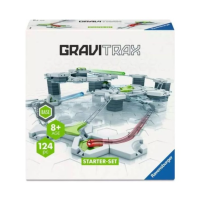
Ravensburger Gravitrax Starter Set /Gravitrax Building Expansion Set Marble Run & STEM Toy For Kids Age 8 & Up
$129.90$180.00
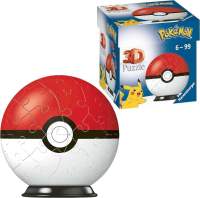
Ravensburger Pokemon 3D Jigsaw Puzzle Ball for Kids Age 6 Years Up - 72 Pieces/54 Pieces/Pencil Pot 54 Pieces
$37.90$49.90
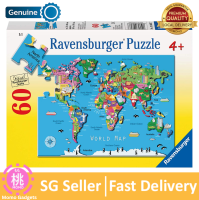
Ravensburger World Map 60 Piece Jigsaw Puzzle for Kids – Every Piece is Unique Pieces Fit Together Perfectly
$33.90$40.90
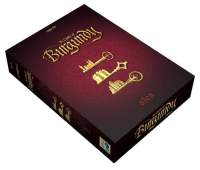
Ravensburger The Castles of Burgundy - 20th Anniversary Edition
$84.00
Buy on Lazada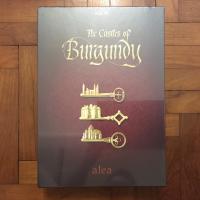
The Castles of Burgundy 20th Anniversary Edition board game (Box Slightly Dented GUARANTEED GENUINE $14 off for Self Collection)
$80.00
Buy on Lazada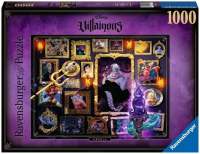
Ravensburger Disney Villainous Ursula/ Captian Hook Jigsaw Puzzle - 1000 Unique Pieces
$63.90$75.90
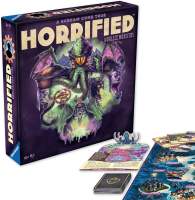
Ravensburger Jurassic Park Danger! Jaws or Horrified - Adventure Strategy Game for Kids & Adults Age 10 & Up!
$51.90$75.00
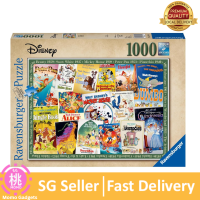
Ravensburger 19874 Disney Vintage Movie Posters 1000 Piece Puzzle for Adults Every Piece is Unique
$43.90$56.90
About Ravensburger
Overview
Ravensburger is a German manufacturer of games, puzzles, toys and educational products. Established in 1883 in Ravensburg, Germany, the company has grown from a regional publishing house into an international group recognised by its distinctive blue triangle logo.1 Its portfolio encompasses jigsaw puzzles, board games, children’s books, arts-and-crafts kits and STEM-based construction systems.
The brand’s philosophy centres on three core principles: enjoyment, education and togetherness. These values have guided product development since the company’s inception and continue to inform its games, puzzles, books and toys.2 Today, the Ravensburger Group operates as a family of companies built around three global brands—Ravensburger, BRIO and ThinkFun—alongside several national labels.3
Infobox
| Attribute | Information |
|---|---|
| Company / Brand | Ravensburger |
| Original name | Otto Maier Verlag |
| Founded | 1883 |
| Founder | Otto Robert Maier |
| Origin | Ravensburg, Württemberg, Germany |
| Headquarters | Ravensburg, Germany |
| Industry | Games, puzzles, toys, publishing, educational products |
| Best known for | Jigsaw puzzles, board games, children’s games and books |
| Signature logo | Blue triangle |
| Parent group | Ravensburger Group |
| Major group brands | Ravensburger, BRIO, ThinkFun |
| Notable modern property | Disney Lorcana |
| International presence | Global |
| Corporate status | Privately held/family-owned group |
Origins and early history
The company’s history began in 1883 when Otto Robert Maier founded a publishing business in Ravensburg, southern Germany. Originally named Otto Maier Verlag, the firm initially focused on instructional and educational materials rather than puzzles or toys.4 Maier’s approach reflected contemporary pedagogical theories that emphasised learning through practical activity, promoting the idea that knowledge could be acquired through doing and playing.
This educational foundation became integral to the company’s identity. Rather than treating entertainment and education as mutually exclusive, Maier sought to combine them, a principle that would eventually define the Ravensburger brand.
In 1884, the company released its first board game, A Trip Around the World. This title combined entertainment with geographical learning, allowing players to discover information about different countries while playing.5 It established a recurring formula of play, learning and discovery that would characterise future Ravensburger products across games, books, puzzles and educational materials.
Expansion into children’s products
During the late 19th and early 20th centuries, Ravensburger expanded beyond instructional publishing. The product range gradually grew to include children’s books, picture books, activity books, educational books, games, playing cards, craft products, educational materials and puzzles. This diversification transformed the business from a traditional publishing house into a broader children’s entertainment and education company.
The company’s historical philosophy proved particularly well suited to children’s products, as it allowed entertainment to serve an educational purpose without replicating the experience of conventional schooling.
Puzzle tradition
Ravensburger is perhaps most strongly associated with jigsaw puzzles. It has become one of Europe’s best-known puzzle brands, offering designs ranging from simple children’s puzzles to complex adult puzzles containing thousands of pieces. Historical themes have included landscapes, animals, architecture, art, fantasy, Disney characters, popular entertainment franchises, travel, nature, photography, humour and illustration.
The brand’s reputation in this category is closely linked to its emphasis on manufacturing quality, detailed imagery and the tactile experience of assembly. Ravensburger describes its blue-triangle brand as one of Europe’s leading labels for games, puzzles, arts and crafts, as well as children’s and youth books in German-speaking markets.6
The blue triangle
The blue triangular logo is one of Ravensburger’s most recognisable visual elements. Associated with the brand since 1974, it serves as a prominent quality and brand identifier on product packaging.7 For many consumers, particularly in Europe, the symbol immediately connotes puzzles, games, children’s products, learning and family entertainment.
Product categories
Although puzzles remain its most internationally recognisable product line, Ravensburger’s portfolio extends significantly beyond jigsaws.
Jigsaw puzzles
The puzzle business encompasses children’s, family and adult puzzles in numerous sizes and formats. The company also produces specialised experiences such as 3D puzzles, which adapt the traditional flat jigsaw concept into three-dimensional construction activities.
Board and family games
Ravensburger produces games for young children, families, casual players, experienced hobbyists and party gaming. Its portfolio includes both original titles and licensed properties.
Arts and crafts
The company develops creative products that enable children and adults to create artwork rather than simply play conventional games.
Children’s books
Publishing remains part of the company’s heritage. Ravensburger continues to produce children’s and young-adult books, particularly in German-speaking markets.8
Construction and STEM play
A notable example is GraviTrax, a marble-run and construction system in which players build tracks and experiment with concepts such as gravity, motion and momentum. Ravensburger explicitly links GraviTrax to its historical “learning by doing” philosophy.9
Trading card games
Ravensburger has expanded into the trading-card-game market through Disney Lorcana, created in collaboration with The Walt Disney Company.10
Disney Lorcana
Disney Lorcana is a collectible trading card game that launched in August 2023. It features Disney characters reimagined within a fantasy setting, where players assume the role of Illumineers who use magical ink to summon versions of characters known as Glimmers.11 Unlike traditional Ravensburger puzzles, Lorcana targets the competitive trading-card-game market.
Gameplay combines deck building, collecting, strategy, competitive play, Disney characters and fantasy storytelling. The title represents a significant expansion of Ravensburger’s identity beyond its traditional European puzzle and family game reputation.1213
Brands within the Ravensburger Group
It is important to distinguish the Ravensburger brand from the broader Ravensburger Group. The group currently unites three major global brands:
Ravensburger
The core brand, represented by the blue triangle, covers puzzles, board games, children’s games, arts and crafts, books, construction and educational play, and trading card games.
BRIO
BRIO is a Swedish toy brand renowned for wooden railway systems. Founded in Sweden in the 19th century, it later joined the Ravensburger family. Its products include railway toys, toddler toys, games and construction sets.14
ThinkFun
ThinkFun is an American-origin brand specialising in logic, brain and educational games designed around problem-solving and learning through play.
The group also operates several national brands, including Carlit, Alga, Wonder Forge and F.X. Schmid.
Philosophy and educational approach
Ravensburger’s stated brand values are enjoyment, education and togetherness. Products are intended to be entertaining; to help users discover concepts, develop skills and learn; and to create opportunities for families and friends to spend time together. These principles descend directly from the company’s original educational philosophy, and the company describes its mission as creating products that encourage discovery, personal development and shared experiences.
Education has historically been more central to Ravensburger than to many traditional toy companies. Following the principle of “learning by doing”, different product types target specific developmental outcomes:
- Puzzles: concentration and spatial reasoning
- Board games: strategic and social skills
- Construction toys: creativity and problem solving
- Children’s books: knowledge and literacy
- Logic games: reasoning
- GraviTrax: physics and engineering concepts
This positions Ravensburger at the intersection of toy manufacturer, educational publisher and entertainment company.
International development
Although Ravensburger originated in Germany, its products are now distributed internationally. The group describes itself as increasingly global, with operations and markets across numerous countries.15 The brand is particularly strong in Europe but has developed substantial recognition in markets such as the United States, where offerings include puzzles, games, GraviTrax and Disney Lorcana.
The company operates localised websites and subsidiaries for different regions. For example, its Japanese operation presents Ravensburger, BRIO and ThinkFun as its three principal brands in that market.8
Licensed intellectual properties
Licensed intellectual properties form a significant part of the business. Ravensburger products frequently feature characters and franchises from major entertainment companies, including Disney and numerous pop-culture properties. This strategy allows the company to combine established product formats with characters that already possess strong consumer recognition, as seen in collaborations ranging from themed puzzles to the Disney Lorcana trading card game.
Brand identity
| Characteristic | Ravensburger’s approach |
|---|---|
| Visual identity | Blue triangle |
| Core audience | Children, families and adults |
| Core products | Puzzles and games |
| Educational element | Strong |
| Family orientation | Strong |
| Design philosophy | Accessible, colourful and approachable |
| Brand heritage | More than 140 years |
| Global strategy | International |
| Modern expansion | STEM toys, 3D puzzles, TCGs and licensed entertainment |
The company’s continuous heritage dating back to the 1880s is a major component of its brand equity, distinguishing it from many competitors in the toy and game sector.
Contemporary profile
As of 2026, Ravensburger functions as a large international play-and-learning group with activities spanning puzzles, games, toys, books, arts and crafts, educational play, construction systems and trading card games. Its three major global brands—Ravensburger, BRIO and ThinkFun—provide access to diverse categories and age groups.16 The traditional blue triangle remains strongly associated with puzzles, games and family entertainment.
The company’s official online store showcases categories including jigsaw puzzles, 3D puzzles, board games, arts and crafts, GraviTrax and Disney Lorcana, illustrating the breadth of its current portfolio.9
Cultural significance
Ravensburger’s significance lies in its ability to combine traditional play with modern entertainment. It has endured for more than a century by repeatedly adapting its product range while retaining a recognisable philosophy. Its evolution can be summarised as follows:
- 1883: Publishing and educational materials
- 1884: Board games
- 20th century: Children’s books, games, puzzles and educational products
- Late 20th century: International expansion and strengthening of the puzzle business
- 21st century: Digital-era licensing, construction toys, STEM-oriented play and international brands
- 2023 onward: Expansion into the trading-card-game market through Disney Lorcana
For several generations, Ravensburger has occupied a distinct position in childhood and family leisure. A single brand may represent a child’s first puzzle, a family’s weekend board game, a teenager’s creative activity, an adult’s 1,000-piece puzzle, a hobbyist’s 3D construction set, a child’s GraviTrax experiment or a collector’s Disney Lorcana cards. This broad age appeal is among the company’s greatest strengths, enabling it to build an ecosystem around the concept of playful discovery rather than remaining tied to a single toy category.
Assessment
Ravensburger is one of Germany’s most historically significant toy, game and puzzle brands. Founded in 1883 as Otto Maier’s publishing company in Ravensburg, it evolved into a global entertainment and educational group. Its blue triangle logo has become synonymous with high-quality jigsaw puzzles, family games and children’s products.17
What differentiates Ravensburger from conventional toy manufacturers is its longstanding emphasis on education through play. Products are generally designed not merely to occupy children but to encourage creativity, reasoning, discovery, concentration and social interaction. Today, the Ravensburger Group encompasses Ravensburger, BRIO and ThinkFun, while the core Ravensburger brand spans puzzles, games, books, arts and crafts, construction systems and newer properties such as Disney Lorcana.18
Ultimately, Ravensburger evolved from a 19th-century German educational publisher into a global play-and-learning company, retaining the central premise that entertainment, education and togetherness can coexist within a single product.
References
- About Ravensburger
- About Ravensburger
- Ravensburger Brands & Products
- The Ravensburger Group
- Digital tour guide – Museum Ravensburger
- Disney Lorcana Trading Card Game | Ravensburger US
- Disney Lorcana Turns the Page to the Next Chapter | Disney Lorcana by Ravensburger | Disney Lorcana by Ravensburger
- ラベンスバーガージャパン
- Ravensburger Online-Shop ► Jigsaw Puzzles, Games & more
- Newsroom of Ravensburger AG – Ravensburger 2025: Growth in core business, drop in trading cards
- Newsroom of Ravensburger AG
- Ravensburger AG (via Public) / Ravensburger 2025: Wachstum im Kerngeschäft, Rückgang bei Sammelkarten
- OTS: Ravensburger AG / Ravensburger 2025: Wachstum im Kerngeschäft, Rückgang …
- Ravensburger North America, Inc. | LinkedIn
- 1. The First Chapter: The Story Begins | Disney Lorcana by Ravensburger | Disney Lorcana by Ravensburger
- Ravensburger Brands & Products
- Ravensburger Gruppe – Geschichte, Management und mehr
- RAVENSBURGER LIMITED overview – Find and update company information – GOV.UK