Shop on Lazada
Rheem products
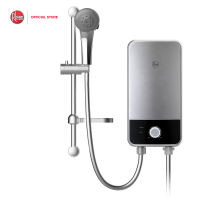
Rheem Prestige Plus Instant Water Heater with Delivery and Installation
$238.00
Buy on Lazada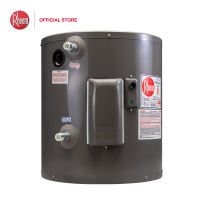
Rheem 57L 65SVP15S Classic Electric Storage Water Heater
$435.00
Buy on Lazada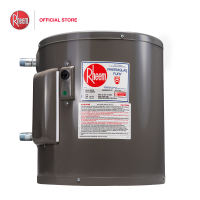
Rheem 38L 65SVP10S Classic Electric Storage Water Heater
$395.00
Buy on Lazada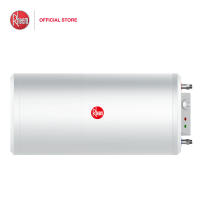
Rheem 25L EHG Slim Classic Electric Storage Water Heater
$285.00
Buy on Lazada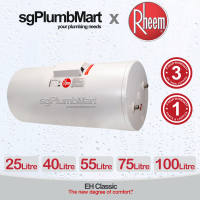
Rheem Classic Electric Storage Water Heater 25L / 40L / 55L / 75L / 100L ( EH-25M / EH-40M / EH-55M / EH-75M / EH-100M )
$504.00$600.00
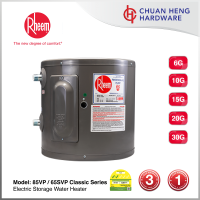
Rheem Mexico Series Vertical Storage Heater
$510.00$777.00
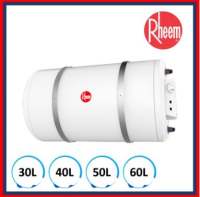
Rheem EHG Classic Horizontal Storage Heater (EHG-30 / EHG-40 / EHG-50/ EHG-60)
$277.20$280.00
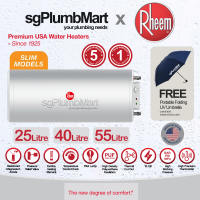
Rheem Classic Electric Storage Water Tank Heater 25 40 55 Litres Slim Series EHG25S EHG40S EHG55S
$285.00$317.00
About Rheem
Rheem Manufacturing Company, commonly known as Rheem, is an American global manufacturer specialising in heating, cooling, water heating, pool heating and commercial refrigeration equipment. Established in California in 1925, the company has grown from a producer of galvanised steel products into one of the world’s leading air and water equipment manufacturers. Rheem is currently headquartered in Atlanta, Georgia, United States, and operates as part of Japan’s Paloma Group.1
The company is widely recognised for its water heaters, tankless water heaters, heat pump water heaters, air conditioners, heat pumps, furnaces, boilers, pool heaters and commercial HVAC equipment. As of 2025, Rheem reported operations in more than 88 countries, with approximately 15,000 employees, 25 manufacturing plants and over 50 global air and water brands.2
Company profile
| Category | Information |
|---|---|
| Company name | Rheem Manufacturing Company |
| Common name | Rheem |
| Founded | 1925 |
| Founders | William Rheem, Richard Rheem and Donald Rheem |
| Origin | Emeryville, California, USA |
| Headquarters | Atlanta, Georgia, USA |
| Parent company | Paloma Group, Japan |
| Industry | HVAC, water heating, pool heating, refrigeration |
| Major products | Water heaters, HVAC systems, heat pumps, furnaces, boilers, pool heaters, commercial refrigeration |
| Geographic reach | 88+ countries |
| Manufacturing | 25 plants globally |
| Employees | 15,000+ |
| Global brands | 50+ air and water brands |
| 2025 global sales | Approximately US$6 billion |
| Corporate positioning | Air and water solutions |
| Major markets | North America, Australia, Asia, Europe and other international markets |
The figures above reflect Rheem’s 2025 company information and sustainability reporting.3
History
Origins: 1925
Rheem was established in 1925 when the Rheem brothers founded a business in Emeryville, California. The company’s early operations differed significantly from its modern portfolio, focusing primarily on galvanising steel drums, barrels and other metal products.4
This industrial expertise in steel fabrication eventually laid the foundation for the company’s entry into the equipment and water heating industries. In 1930, Rheem Manufacturing Company was formally incorporated, expanding its product range to include boilers and tanks.5
Entry into water heating
A pivotal moment occurred in 1931 when Rheem acquired the John Wood Manufacturing Company and began producing automatic gas storage water heaters. Water heating subsequently became a core business and remains one of the company’s most significant product categories today.6
Expansion into heating and air conditioning
During the 1940s and 1950s, Rheem expanded beyond water heating into residential space heating equipment, including furnaces, before entering the growing air conditioning industry.7 This strategic transition transformed Rheem from a metal products and water heating manufacturer into a broader home comfort equipment company.
The company’s modern identity is anchored in two closely related areas:
Air + Water
This combination remains central to Rheem’s corporate positioning.
Acquisition of Ruud
In 1959, Rheem acquired the Ruud Manufacturing Company, a brand with a strong heritage in water heating tracing its history to Edwin Ruud, a pioneer in automatic gas water heater development.8 Rather than being absorbed, Ruud continued as a major brand within the Rheem family. This acquisition highlights that Rheem is not merely a single product brand but a larger corporate entity encompassing numerous brands.
Raypak and pool heating
Rheem continued to expand into specialised heating markets by acquiring Raypak in 1985. Known for copper-fin boilers and heating equipment, Raypak became particularly significant in pool and spa heating, as well as commercial water heating and hydronic applications.9 Raypak remains part of Rheem’s broader brand portfolio today.
Paloma ownership
A major shift in corporate history occurred in 1988 when Paloma Co., Ltd. of Nagoya, Japan, acquired Rheem. Paloma is a major Japanese manufacturer of gas appliances and related equipment. Under this ownership, Rheem developed into a significantly more international organisation.
Although Rheem originated in the United States and retains its American corporate identity and headquarters, its ultimate ownership is Japanese. The corporate structure can be summarised as follows:
Paloma Group (Japan)
↓
Rheem Manufacturing Company (United States)
↓
Rheem + numerous international brands
Rheem identifies Paloma’s 1988 acquisition as a major milestone in its corporate history.10
Product portfolio
Rheem’s product portfolio extends well beyond water heating, covering multiple categories of air and water technology.
Water heating
Water heating is arguably Rheem’s most recognisable category. Products include:
- Traditional tank water heaters
- Gas water heaters
- Electric water heaters
- Tankless water heaters
- Heat pump water heaters
- Commercial water heating systems
- High-efficiency water heaters
- Electric instantaneous water heaters
- Hot water storage and related systems
Rheem describes itself as a major global manufacturer of water heating products, and this sector remains central to its business.11
Heat pump water heaters
A key area of recent innovation is heat pump water heating. Unlike traditional electric resistance elements, these units transfer heat from surrounding air into the water. Rheem states that some of its heat pump water heaters can be up to four times as efficient as standard electric water heaters, depending on operating conditions.12
Heating and cooling (HVAC)
Rheem maintains a substantial HVAC business serving both residential and commercial customers. Its portfolio includes:
- Air conditioners
- Heat pumps
- Gas furnaces
- Packaged HVAC systems
- Commercial HVAC equipment
- Air handlers
- Indoor air equipment
- Heating and cooling systems
- Controls and connected products
In the residential market, Rheem competes with major HVAC manufacturers such as Carrier, Trane, Lennox, Goodman and Daikin.13
Pool and spa heating
Through Raypak, Rheem has a significant presence in pool and spa heating. Products include pool heaters, spa heaters, commercial pool heating systems, boilers and hydronic heating equipment. Raypak’s specialisation provides access to markets distinct from conventional residential HVAC and water heating.14
Commercial refrigeration
Rheem has also expanded into commercial refrigeration through brands such as Russell, Witt, ColdZone and Kramer. These businesses operate within Rheem’s broader commercial refrigeration activities, demonstrating that the company is not exclusively a residential water heater manufacturer but also has a substantial commercial and industrial equipment division.15
Family of brands
Rheem employs a multi-brand strategy. Key brands associated with the Rheem family include:
- Rheem: The flagship brand covering heating, cooling and water heating products.
- Ruud: A long-established HVAC and water heating brand with roots going back more than a century.
- Raypak: Focused on pool and spa heating, boilers and commercial water heating applications.
- Friedrich: A premium air conditioning and home environment brand that joined the Rheem family in 2021.16
- Eemax: Known for electric and instantaneous water heating systems.
- Richmond: A water heating brand with a strong presence in the North American market.
- Intergas: A European heating brand.
- Solahart: Associated with solar and water heating solutions.
- ProStock: A branded aftermarket parts and distribution network.
Corporate materials describe a portfolio of over 50 brands globally, though the exact mix varies by region and business segment.17
Business model
Rheem operates across several levels of the HVAC and water heating value chain:
Residential
Products are supplied for houses, apartments, condominiums and residential developments.
Commercial
Equipment is used in hotels, restaurants, offices, hospitals, schools, industrial facilities and commercial buildings.
Professional trade channel
A critical component of Rheem’s business is the professional trade, including plumbers, HVAC contractors, mechanical contractors, builders, engineers, distributors and dealers. Consequently, Rheem places considerable emphasis on contractor training, technical support and professional distribution. Its 2025 report indicated that hundreds of thousands of trade partners had been trained through its sustainability and product training programmes.
Global presence
Although founded in America, Rheem is now a genuinely international manufacturer. According to its 2025 sustainability report, the company had:
- Over 15,000 employees
- 25 manufacturing plants
- Operations across five continents
- Products sold in more than 88 countries
- 50 global air and water brands
- Approximately US$6 billion in global sales in 202518
Products and brands are adapted to regional requirements, technologies and regulations. This localisation is essential as HVAC and water heating products depend heavily on local climate, fuel availability, electrical standards, building codes and water systems.
Rheem in Singapore
Rheem maintains a presence in the Asian market. In Singapore, the brand is primarily associated with water heating solutions for residential and commercial applications.19
The Singapore market is particularly relevant to water heating due to the year-round warm climate; the focus is less on space heating and more on domestic hot water, energy efficiency, reliability and compact installation.20
Technology and innovation
Rheem has increasingly focused on high-efficiency and connected equipment. Development areas include:
- Heat pump technology
- High-efficiency water heating
- Smart controls
- Connected HVAC systems
- Leak detection
- Energy monitoring
- Low-emission technologies
- Refrigerant transitions
- Integrated air and water systems
The EcoNet platform, for example, provides connected control and monitoring capabilities for compatible Rheem equipment. The broader strategic direction is towards equipment that measures, optimises and reduces energy consumption rather than simply providing heating or cooling.22
Sustainability
Sustainability is a major component of Rheem’s corporate strategy, encapsulated in its programme “A Greater Degree of Good”. This approach covers three broad areas:
- Intelligent products: Developing products that consume less energy and reduce greenhouse gas emissions.
- Responsible processes: Reducing waste, energy use and emissions throughout manufacturing.
- Inspired people: Training employees, contractors, plumbers and other industry participants.23
Rheem’s 2025 sustainability report stated that the company met or exceeded all original 2025 sustainability targets. Global manufacturing operations achieved a 55% reduction in greenhouse gas emissions compared to the 2018 baseline.21 The company has since established new 2035 sustainability goals, including reducing product lifecycle emissions intensity and increasing recyclable, reusable or compostable packaging.12
Competitive position
Rheem is best understood as a major global HVAC and water heating manufacturer rather than solely a water heater brand. Its competitive strengths include:
- Long history: Over 100 years of industrial and heating/water heating experience.
- Large product portfolio: Capability to provide both air-side and water-side equipment.
- Strong contractor network: Plumbers and HVAC professionals are integral to its distribution model.
- Multi-brand strategy: Different brands allow targeting of diverse markets and price segments.
- International manufacturing: Manufacturing and sales operations across multiple continents.
- Energy-efficiency focus: Heat pumps and high-efficiency HVAC/water heating products are increasingly central to its strategy.
Corporate identity and ownership
As of 2026, Rheem positions itself around the concept of air and water solutions rather than treating water heating and HVAC as separate industries. Current strategy emphasises electrification, heat pump technology, energy efficiency, smart equipment, decarbonisation, sustainable manufacturing, contractor education, global expansion and the integration of air and water technologies.
At the 2026 AHR Expo, Rheem introduced the next phase of its sustainability strategy and announced its 2035 roadmap, demonstrating that sustainability and lower-emission technologies are central to its long-term corporate strategy.12
Rheem is not a publicly traded independent company like Carrier Global or Trane Technologies; it is part of the privately controlled Paloma Group, which acquired Rheem in 1988.22
It is important to distinguish between Rheem Manufacturing Company (the corporate entity), Rheem® (the consumer-facing brand) and the Rheem family of brands (which includes Ruud, Raypak, Friedrich, Eemax, Richmond, Intergas, Solahart and others). A product may carry a brand other than Rheem while still belonging to the same corporate family.
Key milestones
| Year | Milestone |
|---|---|
| 1925 | Rheem founded in California |
| 1930 | Rheem Manufacturing Company incorporated |
| 1931 | Entered automatic gas storage water heating |
| 1930s–50s | Expanded across the United States and into heating |
| 1959 | Acquired Ruud Manufacturing |
| 1985 | Acquired Raypak |
| 1988 | Acquired by Japan’s Paloma |
| 2000s | Expanded international HVAC and water businesses |
| 2021 | Friedrich joined Rheem’s family of brands |
| 2025 | Rheem celebrated its 100th anniversary |
| 2025 | Reported ~US$6B global sales, 25 plants and 15,000+ employees |
| 2026 | Introduced new 2035 sustainability roadmap |
Historical milestones are based primarily on Rheem’s own corporate history and company materials.24
Overall assessment
Rheem’s significance extends beyond its consumer brand recognition. Starting as a California steel manufacturer, it became a major water heater producer, expanded into heating and air conditioning, acquired established brands such as Ruud and Raypak, came under Paloma’s Japanese ownership, and ultimately developed into a global air and water equipment group.
While its strongest historical identity remains water heating and HVAC, its current strategic direction increasingly centres on heat pumps, electrification, energy efficiency, smart controls and sustainability. In 2025, Rheem marked its 100th anniversary, with corporate figures placing it at roughly US$6 billion in annual global sales, over 15,000 employees, 25 manufacturing plants and operations reaching more than 88 countries.24
Rheem is a century-old, globally active HVAC and water technology manufacturer whose roots lie in American steel manufacturing and water heaters, and whose modern business spans heating, cooling, hot water, pool heating and commercial refrigeration.25
References
- About – Rheem Manufacturing Company
- 品牌介绍-瑞美
- YEAR SEVEN20252025 Sustainability Progress Repor
- Rheem 100
- News Releases – Rheem Manufacturing Company
- About Rheem | Global leader Manufacturing in Air Conditioning and Water Heating Products
- News Releases – Rheem Manufacturing Company
- Company Vitals & History – Rheem Manufacturing Company
- Sustainability – Innovation | Rheem Singapore
- Sustainability – Rheem Manufacturing Company
- News Releases – Rheem Manufacturing Company
- News Releases – Rheem Manufacturing Company
- News Releases – Rheem Manufacturing Company
- Sustainability – Rheem
- About – Rheem
- Rheem’s Green Mission: Key Sustainability Targets for 2025 – Rheem
- News Releases – Rheem Manufacturing Company
- Rheem Manufacturing Company
- Locations – Rheem Manufacturing Company
- News Releases – Rheem Manufacturing Company
- Rheem 100 ebook
- Innovation – Rheem
- Sustainability – Rheem
- Rheem History – Rheem Indonesia
- Rheem History – Rheem Indonesia