Shop on Lazada
Sainsbury’s products
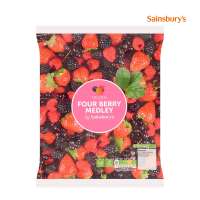
Sainsburys Four Berry Medley Mix - Frozen
$14.95
Buy on Lazada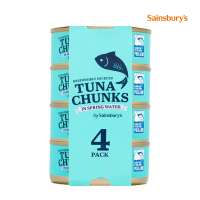
Sainsburys Tuna Chunks In Spring Water - 4 Pack
$13.95
Buy on Lazada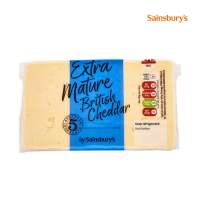
Sainsburys British Extra Mature Cheddar Cheese
$12.90
Buy on Lazada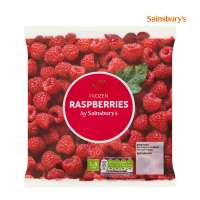
Sainsburys Raspberries - Frozen
$9.86$10.95
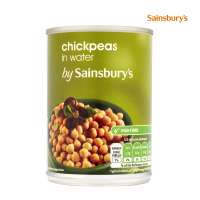
Sainsburys Chickpeas In Water
$2.00
Buy on Lazada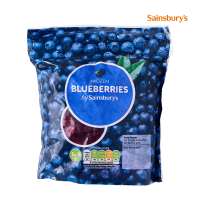
Sainsburys Blueberries Blueberry - Frozen
$6.95
Buy on Lazada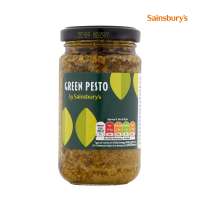
Sainsburys Green Pesto
$3.06$3.60
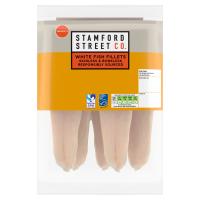
Sainsburys White Fish Fillets MSC Pollock - Frozen
$9.90
Buy on LazadaAbout Sainsbury’s
Sainsbury’s is one of the largest and most prominent retail groups in the United Kingdom, primarily known for its supermarket and grocery operations. Established in 1869 by John James Sainsbury and Mary Ann Sainsbury, the business has expanded from a single London food shop into a nationwide retailer encompassing supermarkets, convenience stores, online grocery services, general merchandise, clothing, loyalty programmes and various consumer services. As of 2026, Sainsbury’s identifies itself as the UK’s second-largest grocer. 1
The corporate parent entity is J Sainsbury plc, a publicly listed British company. The group integrates the core Sainsbury’s supermarket chain with several other major brands and businesses, including Argos, Tu, Habitat, Nectar and Nectar360. 2
Basic information
| Category | Information |
|---|---|
| Full corporate name | J Sainsbury plc |
| Consumer brand | Sainsbury’s |
| Founded | 1869 |
| Founders | John James Sainsbury and Mary Ann Sainsbury |
| Headquarters | London, United Kingdom |
| Industry | Retail / grocery / general merchandise |
| Main market | United Kingdom |
| Core business | Supermarkets, convenience stores and online grocery |
| Parent company | J Sainsbury plc |
| Current CEO | Simon Roberts |
| Chair | Martin Scicluna |
| Employees | Approximately 140,000 colleagues |
| Sainsbury’s supermarkets | 600+ |
| Sainsbury’s convenience stores | 885 |
| Argos collection points | 1,100+ |
| Active Nectar users | Approximately 24 million |
| Current purpose | “Make good food joyful, accessible and affordable for everyone, every day.” |
The data presented above reflects the company’s 2025/26 reporting period and corporate information available in 2026. 3
History
Origins: 1869
Sainsbury’s traces its origins to 1869, when John James Sainsbury and his wife Mary Ann opened their first shop in London.
The original enterprise focused on fresh produce, specifically items such as butter, milk, eggs and bacon. The founders established a business philosophy centred on providing high-quality food at competitive prices.
This fundamental proposition—combining quality with value—became a defining characteristic of the Sainsbury’s brand and remains integral to the company’s stated heritage more than 150 years later. 4
The early Sainsbury’s philosophy
Historically, the company has been associated with the principle:
Quality perfect, prices lower.
This motto helped establish Sainsbury’s reputation as a retailer that sought to combine relatively high standards of food quality with competitive pricing.
Expansion into a major British retailer
Over subsequent decades, Sainsbury’s grew from individual food shops into a substantial retail network.
The company gradually developed:
- larger stores;
- supermarkets;
- own-brand products;
- distribution infrastructure;
- refrigerated food operations;
- online grocery shopping;
- convenience stores;
- clothing;
- general merchandise.
This evolution mirrored a broader transformation in British retail, as consumers increasingly shifted from purchasing individual products at specialist shops to conducting larger portions of their shopping in supermarkets.
Sainsbury’s emerged as one of the principal companies driving this shift.
Its heritage now spans more than 150 years, and the company maintains the Sainsbury Archive, which houses documents, photographs, objects and other historical materials relating to the business. The archive contains more than 120,000 digitised images. 5
The modern Sainsbury’s business
Today, Sainsbury’s operates well beyond the scope of a traditional supermarket chain.
The company’s operations can be broadly categorised into several key areas.
Grocery
Grocery retail remains the core of Sainsbury’s business.
Its supermarket division sells:
- fresh fruit and vegetables;
- meat and fish;
- dairy;
- bakery products;
- frozen food;
- packaged food;
- drinks;
- household products;
- health and beauty products;
- cooking ingredients;
- prepared meals.
The company operates 600+ supermarkets and 885 convenience stores, complemented by its online grocery operation. 6
Online shopping
Sainsbury’s manages a significant online grocery business, enabling customers to order food for home delivery and various collection methods.
The company’s strategy increasingly focuses on allowing customers to shop whenever and wherever they want, integrating physical stores with digital channels. 7
Sainsbury’s supermarkets
The supermarket network constitutes the most recognisable element of the brand.
Sainsbury’s stores range from large supermarkets designed for major weekly shopping trips to smaller convenience-format locations intended for quick purchases.
The company states that its stores are positioned at the centre of communities throughout the UK and views its physical network as a significant competitive advantage. 8
The retailer continues to expand its network; in the 2025/26 financial year, it opened more than 40 new stores. 9
Own-brand products
A critical component of Sainsbury’s identity is its own-brand food.
Rather than solely selling products manufactured by third parties, Sainsbury’s develops products under its own labels.
One of the most prominent ranges is:
Taste the Difference
Taste the Difference is Sainsbury’s premium own-label food range.
Positioned above the retailer’s standard products, it focuses on higher-end ingredients, flavours and recipes.
According to Sainsbury’s, sales of Taste the Difference have grown by more than 50% since the inception of its Food First strategy, making it a vital component of the company’s premium food proposition. 10
Sainsbury’s continues to expand its own-brand portfolio. During 2025/26, it introduced approximately 1,200 new own-brand products, around half of which were within the Taste the Difference range. 11
Nectar loyalty programme
One of Sainsbury’s most significant strategic assets is Nectar.
Nectar is a loyalty programme that allows customers to earn and redeem points when shopping with participating businesses.
Sainsbury’s has increasingly integrated Nectar into its pricing strategy through Nectar Prices.
Instead of offering identical promotional prices to all customers, certain products are available at a lower price when the customer scans their Nectar card or uses the programme.
This development has transformed Nectar from a traditional points-based loyalty scheme into an integral part of Sainsbury’s customer relationship and pricing strategy.
Sainsbury’s reports approximately 24 million active Nectar users.
Argos
A pivotal development in modern Sainsbury’s history was the acquisition of Argos.
Founded in 1973, Argos became renowned in Britain for its catalogue-based retail model, which allowed customers to select products and collect them from stores.
Sainsbury’s acquired Argos in 2016. 12
Today, Argos has evolved into a highly digital retailer selling products such as:
- consumer electronics;
- toys;
- household goods;
- appliances;
- home and garden products;
- technology;
- health and beauty products.
Sainsbury’s states that Argos has around 20 million active customers, more than 1,100 collection points, and that roughly 80% of transactions originate online. 13
This acquisition enabled Sainsbury’s to diversify significantly beyond food retail.
Tu clothing
Tu is Sainsbury’s clothing brand.
Launched in 2004, Tu offers:
- women’s clothing;
- men’s clothing;
- children’s clothing;
- lingerie;
- nightwear;
- denim;
- schoolwear;
- maternity clothing;
- specialist sizes.
Tu products are sold online, through Argos and in more than 400 selected Sainsbury’s stores. Sainsbury’s describes Tu as the sixth-largest clothing retailer in the UK by volume. 14
This provides Sainsbury’s with a significant position outside traditional grocery retail.
Habitat
Another key brand within the group is Habitat.
Founded in 1964, Habitat became known for modern, design-led furniture and home products.
Sainsbury’s acquired Habitat in 2016 as part of its expansion into general merchandise.
Currently, Habitat products are available through Sainsbury’s, Argos and Habitat’s online channels. Sainsbury’s states that around 600 Sainsbury’s stores sell Habitat products, while more than 7,000 Habitat products are available online. 15
Sainsbury’s broader brand family
The modern Sainsbury’s group functions as a retail ecosystem rather than merely a supermarket chain.
Major consumer-facing brands and businesses include:
| Brand / business | Main role |
|---|---|
| Sainsbury’s | Grocery and supermarket retail |
| Argos | General merchandise and digital retail |
| Tu | Clothing |
| Habitat | Furniture and home products |
| Nectar | Loyalty programme |
| Nectar360 | Retail media and loyalty-related services |
| Smart Charge | EV charging |
Sainsbury’s describes these complementary businesses as providing customers with additional reasons to shop within its ecosystem. 16
Nectar360 and retail media
A notable newer segment of the Sainsbury’s business is Nectar360.
Retailers possess extensive data regarding purchasing behaviour, particularly when customers utilise loyalty programmes.
Nectar360 leverages Sainsbury’s and Nectar capabilities to provide retail media services to brands and suppliers.
Essentially, manufacturers can utilise the Sainsbury’s retail ecosystem to reach customers with advertising and promotional activities based on shopping behaviour.
This creates a business stream that extends beyond the traditional supermarket model.
Sainsbury’s describes Nectar360 as having market-leading retail-media capabilities powered by the Nectar loyalty platform and its network of partner brands. 17
Smart Charge
Sainsbury’s has also entered the electric-vehicle charging market.
Its Smart Charge service provides ultra-rapid EV charging at selected Sainsbury’s locations.
As of 2025/26, the network comprised approximately:
- 700 charging bays
- across 80 Sainsbury’s locations
- using 100% renewable electricity, according to the company.
The service is integrated with Nectar, allowing customers to receive loyalty benefits. 18
This initiative illustrates how Sainsbury’s aims to make its supermarkets multifunctional destinations rather than solely places to purchase food.
Corporate structure
The listed parent company is J Sainsbury plc.
The Sainsbury’s supermarket operation forms the central pillar of the group, while businesses such as Argos, Tu, Habitat and Nectar-related activities complement the grocery operation.
The overarching strategy can be summarised as:
Food → customers → stores → loyalty → digital ecosystem → complementary retail businesses.
Food remains the strategic centre, while ancillary businesses enhance customer engagement and generate additional revenue opportunities.
Leadership
As of 2026:
Chief Executive — Simon Roberts
Simon Roberts serves as the Chief Executive of J Sainsbury plc.
He has led the company through its recent Next Level Sainsbury’s strategy, which has prioritised grocery, value, product quality, customer loyalty and store investment.
The company states that its current strategy has delivered six consecutive years of food-volume growth ahead of the market and its highest food-volume market share in ten years. 19
Chair — Martin Scicluna
Martin Scicluna serves as Chair of J Sainsbury plc. 20
Current strategy: “Next Level Sainsbury’s”
Sainsbury’s current strategy is designated Next Level Sainsbury’s.
At its core is the objective for Sainsbury’s to become a stronger food retailer while better leveraging its scale, stores, brands and customer data.
The company has placed particular emphasis on:
- Lower prices
- Food quality
- Product availability
- Customer service
- Store investment
- Own-brand innovation
- Nectar loyalty
- Digital retail
- Sustainability
- Long-term supplier relationships
Sainsbury’s reports having invested approximately £1.3 billion in lowering prices over the past five years. 21
Competition
Sainsbury’s operates in one of Britain’s most competitive retail markets.
Its major competitors include:
- Tesco
- Asda
- Morrisons
- Aldi
- Lidl
- Waitrose
- Marks & Spencer in selected food categories
- numerous convenience and specialist retailers.
Sainsbury’s occupies a distinct position in this market.
It competes with large traditional supermarkets on scale while simultaneously facing pressure from discounters Aldi and Lidl, which have gained significant influence due to their low-price propositions.
Consequently, value and pricing have become critical elements of Sainsbury’s recent strategy.
Sainsbury’s market position
Sainsbury’s currently describes itself as the UK’s second-largest grocer.
Its corporate information indicates a grocery market share of approximately 15% and states that around 70% of the UK population shopped with Sainsbury’s during the past year.
This positions the company as one of the most significant participants in the British food system.
Its importance extends beyond product sales; the group collaborates with thousands of suppliers, farmers and producers, exerting substantial influence over the products available to British consumers.
Sustainability
Sustainability constitutes a significant element of Sainsbury’s corporate strategy.
The company’s sustainability programme is titled Plan for Better.
Key areas of focus include:
- reducing greenhouse-gas emissions;
- sustainable agriculture;
- responsible sourcing;
- animal welfare;
- reducing food waste;
- reducing packaging;
- supporting communities;
- improving diets;
- supporting suppliers and farmers.
Sainsbury’s reported a 53.6% reduction in absolute greenhouse-gas emissions from its own operations against its 2018/19 baseline in 2025/26.
It also reports having donated 26.8 million meals and raised £8.7 million for Comic Relief during 2025/26 as part of efforts to address food poverty.
Food poverty and community involvement
Sainsbury’s maintains a long-standing focus on community initiatives and food poverty.
A major partnership exists with Comic Relief, which has collaborated with Sainsbury’s for more than 25 years.
In 2025/26, Sainsbury’s states it donated £8.7 million to Comic Relief and launched an ambition to raise £30 million by 2030.
The company has also participated in initiatives supporting school breakfast programmes and the redistribution of surplus food.
Employees
Sainsbury’s is a major British employer.
The group reports approximately 140,000 colleagues.
The workforce includes personnel working in:
- supermarkets;
- convenience stores;
- warehouses;
- logistics;
- online fulfilment;
- Argos;
- technology;
- corporate offices;
- customer service;
- merchandising;
- product development;
- buying;
- marketing.
Due to its extensive store network, Sainsbury’s is also a significant employer in local communities throughout Britain.
Financial scale
Sainsbury’s is a large publicly traded British company.
For the 2024/25 financial year, the company reported:
- £1.036 billion retail underlying operating profit;
- £531 million retail free cash flow;
- £242 million statutory profit after tax;
- 3.1% retail sales growth excluding fuel.
These figures demonstrate the scale of the company’s operations, although financial results naturally fluctuate annually.
The company published its 2026 Annual Report and Financial Statements on 2 June 2026, covering the 2025/26 financial year.
Brand identity
Sainsbury’s possesses one of the most recognisable retail identities in Britain.
Its branding has traditionally been associated with:
- orange;
- clean, modern supermarket design;
- emphasis on food;
- British heritage;
- quality;
- value;
- family shopping.
While the brand has evolved considerably over its 150+ year history, the fundamental proposition has remained consistent:
good-quality food at accessible prices.
Today, this is articulated through the company’s purpose:
“We make good food joyful, accessible and affordable for everyone, every day.”
Significance
Sainsbury’s holds significance for several reasons.
Historically
It is one of Britain’s oldest major supermarket businesses, with roots dating back to 1869.
Economically
It is a major employer, retailer, purchaser and supply-chain partner.
Culturally
Sainsbury’s is deeply embedded in everyday British life. Supermarkets have become important community institutions, and Sainsbury’s stores are present in communities across the UK.
Strategically
The company represents the transformation of traditional grocery retail into a broader ecosystem involving:
food + clothing + general merchandise + digital retail + loyalty + advertising + financial/consumer services + EV charging.
Summary
Sainsbury’s is a historic British retail group founded in 1869 that has evolved from a London food shop into one of the UK’s largest supermarket and retail businesses, with a modern ecosystem spanning grocery, Argos general merchandise, Tu clothing, Habitat home products, Nectar loyalty and retail media.
Timeline
| Year | Event |
|---|---|
| 1869 | John James and Mary Ann Sainsbury open their first shop in London |
| Late 19th–20th centuries | Sainsbury’s expands across Britain |
| 20th century | Develops into a major supermarket chain |
| 2004 | Tu clothing launches |
| 2016 | Sainsbury’s acquires Argos and Habitat |
| 2020s | Greater focus on food, value, Nectar and digital retail |
| 2023 | Nectar Prices introduced |
| 2024 | Sainsbury’s launches Smart Charge EV charging |
| 2025 | Food First/Next Level strategy continues; major investment in value and stores |
| 2026 | Sainsbury’s reports 600+ supermarkets, 885 convenience stores and around 140,000 colleagues |
The company maintains a detailed historical archive covering its development from 1869 onwards.
Business model overview
A useful framework for understanding Sainsbury’s is:
Sainsbury’s started as a food shop → became a supermarket → became a national supermarket chain → acquired complementary retailers → built a digital and loyalty ecosystem.
Today, food remains the centre of the company, but Sainsbury’s is no longer simply “a supermarket.”
Its competitive advantage derives from combining:
large physical store network
↓
food and own-brand products
↓
online shopping
↓
Nectar customer data & loyalty
↓
Argos general merchandise
↓
Tu clothing + Habitat home
↓
Nectar360 retail media
↓
additional services such as Smart Charge
This combination distinguishes the modern Sainsbury’s business from a retail and branding perspective.
References
- About us | J Sainsbury plc
- Our heritage | J Sainsbury plc
- Our brands | J Sainsbury plc
- Our business model | J Sainsbury plc
- Annual Report 2026 | J Sainsbury plc
- Our purpose | J Sainsbury plc
- Performance, reports and policies | J Sainsbury plc
- Annual Report 2025 | J Sainsbury plc
- Results, Reports and Presentations | J Sainsbury plc
- Performance, reports and policies | J Sainsbury plc
- Results, Reports and Presentations | J Sainsbury plc
- J Sainsbury plc
- Our strategy | J Sainsbury plc
- Investment case | J Sainsbury plc
- Sainsbury’s
- SAINSBURY’S SUPERMARKETS LTD filing history – Find and update company information – GOV.UK
- SAINSBURY’S SL LIMITED filing history – Find and update company information – GOV.UK
- SAINSBURY’S GROUP HOLDINGS LIMITED filing history – Find and update company information – GOV.UK
- SAINSBURY’S SUPERMARKETS LTD overview – Find and update company information – GOV.UK
- SAINSBURY’S HOLDINGS LIMITED filing history – Find and update company information – GOV.UK
- Sainsburys Careers: Join Our Team & Grow