Shop on Lazada
Selleys products
SELLEYS - ALL IN 1 LAUNDRY PODS 72PCS & REFILL 60PCS | FLORAL / LAVENDER
$36.80
Buy on Lazada
SELLEYS - LAUNDRY LIQUID DETERGENT 3KG | INDOOR DRYING / COLOUR CARE / ANTIBACTERIAL
$16.90
Buy on Lazada
SELLEYS - LAUNDRY LIQUID DETERGENT REFILL 2.4KG | INDOOR DRYING / COLOUR CARE / ANTIBACTERIAL
$14.50
Buy on Lazada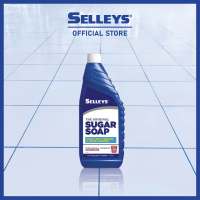
SELLEYS - LIQUID SUGAR SOAP | HEAVY DUTY GREASE & GRIME CLEANER
$11.90
Buy on Lazada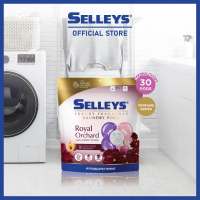
SELLEYS - ALL IN 1 LAUNDRY PODS (PERFUME SERIES) | OCEAN WHISPER / ROYAL ORCHARD
$28.90
Buy on Lazada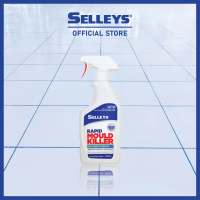
SELLEYS - RAPID MOULD KILLER 500ML | ELIMINATES 99.9% OF GERMS & DESTROYS MOULD
$10.50
Buy on Lazada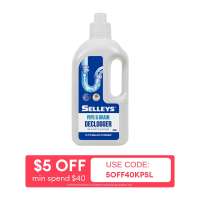
Selleys Pipe & Drain Declogger 800G
$6.75$7.40
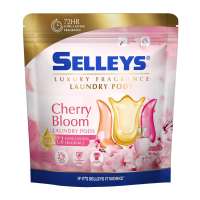
Selleys All In 1 Laundry Pods Refill - Cherry Bloom 60S
$24.50$28.90
About Selleys
Selleys is an Australian home-improvement and DIY brand widely recognised for its range of adhesives, sealants, fillers, putties, repair products and maintenance solutions. Established in Sydney in 1939 by German immigrant Martin Selley, the company evolved from a small manufacturer of putty and adhesives into one of Australia’s most prominent trade and consumer brands. Its enduring promise remains “If It’s Selleys, It Works.” 1
Today, Selleys operates as part of the Nippon Paint Group, following Nippon Paint Holdings’ acquisition of DuluxGroup in 2019. The brand has expanded significantly beyond Australia, with a strong presence across Asia, including Singapore. 2
Basic information
| Item | Details |
|---|---|
| Brand | Selleys |
| Founded | 1939 |
| Founder | Martin Selley |
| Place founded | Sydney, New South Wales, Australia |
| Industry | Home improvement, DIY, construction and maintenance |
| Main categories | Adhesives, sealants, fillers, putties, tiling, cleaning, painting preparation, car care |
| Major markets | Australia, New Zealand and Asia |
| Parent group | Nippon Paint Group |
| Historical corporate home | DuluxGroup |
| Tagline | “If It’s Selleys, It Works” |
| Primary positioning | Reliable, practical and innovative DIY/trade solutions |
Selleys is regarded as a leading Australian brand in adhesives, sealants and fillers, with a product portfolio that now extends across multiple home-maintenance categories. 2
History
Foundation: 1939
The origins of Selleys lie with Martin Selley, who emigrated from Germany to Australia ahead of the Second World War with his wife and young son.
Arriving in 1939 with a patented putty formula and approximately £100, he established a small manufacturing operation in a rented terrace house in Surry Hills, Sydney, producing putty and adhesives. Rather than merely replicating existing products, Selley built a reputation for devising practical solutions to supply constraints and technical challenges.
During wartime shortages, for example, he developed a metallic cement to repair pots and pans when aluminium was scarce, and created a local alternative when imported heat-resistant stove putty became unavailable. 3 This problem-solving ethos became integral to the brand’s identity.
Early products and philosophy
Two early products were particularly significant in establishing the brand:
- Selleys Metallic Cement
- Selleys Unifix
These items helped embed a culture of invention, repair and practical problem solving that continues to define Selleys. 4 Notably, this early philosophy aligns with modern sustainability principles; rather than discarding broken items, consumers were enabled to repair and reuse them. Selleys continues to reference this heritage in its sustainability messaging. 5
Expansion into DIY
By the 1950s, growing consumer interest in household repairs prompted Selleys to expand beyond its original putty and adhesive business. By 1959, the company offered products spanning adhesives, sealants, decorative finishes and general household repair, and introduced the Selleys Handyman Bar to cater to the burgeoning DIY movement. 6
This period marked a pivotal transition from specialist materials manufacturer to a consumer-facing DIY brand.
Product innovation
Innovation has remained central to Selleys’ development, with major product lines created to address specific household and construction needs.
Liquid Nails
Selleys Liquid Nails is a construction adhesive range designed to bond materials without mechanical fasteners such as nails. It has become one of the brand’s flagship construction products. 7
No More Gaps
Selleys No More Gaps is formulated for filling and sealing gaps and cracks in buildings. It is among the brand’s most recognisable products and is closely associated with renovation and finishing work. 8
Aquadhere
Selleys Aquadhere is an adhesive range widely used in woodworking and DIY projects. 9
Spakfilla
Selleys Spakfilla is a filler range designed to repair holes, cracks and surface imperfections prior to painting or finishing. 10
Knead It
Selleys Knead It is a repair putty for fixing and rebuilding various materials, reflecting the brand’s original repair-oriented philosophy.
Other notable product families include Wet Area, Storm, 600 Series, Power Grip, BBQ Tough and Complete Clean. 11
Product portfolio
While best known for glues and sealants, the current Selleys portfolio encompasses a broad range of categories. The catalogue includes:
- Adhesives
- Sealants
- Putty & fillers
- Tiling
- Cleaning
- Painting
- Car care
- Accessories
- Flooring 12
These products serve both household consumers and professional tradespeople. Homeowners typically use Selleys for tasks such as repairing broken items, filling wall cracks, sealing bathroom joints, timber repair, tile fixing, mould removal and paint preparation. Professional users apply Selleys products across construction, carpentry, plumbing, glazing, tiling, flooring, roofing, painting, waterproofing and plastering.
Major brand families
Selleys operates as a brand family, with distinct sub-brands targeting specific applications.
| Brand/product family | Main purpose |
|---|---|
| Liquid Nails | Construction adhesives |
| No More Gaps | Gap and crack filling |
| Wet Area | Bathroom/kitchen waterproof sealing |
| Aquadhere | Woodworking adhesives |
| Power Grip | General-purpose bonding |
| Storm | Waterproof sealing |
| 600 Series | Professional adhesive sealants |
| Spakfilla | Surface filling and repair |
| Knead It | Repair putty |
| Complete Clean | Household cleaning |
| BBQ Tough | BBQ cleaning and maintenance |
Brand philosophy
The core principle underpinning Selleys is practical problem solving. The slogan “If It’s Selleys, It Works” articulates the brand’s value proposition: consumers can expect reliable results when selecting a Selleys product for a specific task. 1
This solution-oriented positioning resonates in the DIY sector, where purchases are driven by the need to fix something rather than by the product category itself. For instance:
- Gap → No More Gaps → Smooth surface
- Broken object → Repair adhesive/putty → Repaired object
- Materials needing bonding → Liquid Nails → Strong bond
- Bathroom joint → Wet Area → Waterproof seal
Consequently, Selleys functions as a solution-oriented brand rather than merely a chemical products manufacturer.
Australian identity
Selleys maintains a strong connection to its Australian heritage. Founded in Sydney in 1939, it grew alongside Australia’s post-war DIY culture. The brand frequently emphasises durability and performance under demanding conditions, with its communications highlighting practicality and reliability. 3 Over time, Selleys has evolved from a small chemical manufacturer into an Australian household name in DIY and repair.
International expansion
Although Australian in origin, Selleys is no longer exclusively domestic. The brand has expanded into New Zealand and numerous Asian markets, including Singapore, Malaysia, Thailand, Hong Kong, South Korea, Taiwan, Indonesia, Vietnam, China and the Philippines. 14
Its Asian presence has grown increasingly significant as the brand integrates into the wider Nippon Paint Group network.
Selleys in Singapore
Singapore represents a key market for Selleys within its Asian expansion strategy. The brand has been available locally for many years and now operates under Nippon Paint management.
The Singapore portfolio covers DIY repair, adhesion, sealing, lubrication, cleaning, putty and filling, and general home maintenance. Selleys Singapore positions itself as an Australian-origin brand providing home-improvement and DIY solutions through local retail and e-commerce channels. 7
Corporate ownership
Selleys was historically associated with DuluxGroup, the Australian company behind a large portfolio of home-improvement brands. In 2019, Nippon Paint Holdings acquired DuluxGroup, incorporating Selleys into the global Nippon Paint Group. 2
Despite this change in ownership, the brand continues to operate under the Selleys name, benefiting from access to a broader international network while retaining its established identity.
Innovation and R&D
Research and development have historically underpinned Selleys’ competitive position. The wider DuluxGroup organisation maintained significant technical capabilities, including a Yates and Selleys research centre in Padstow, New South Wales. 3
R&D efforts focus on solving specific problems rather than simply expanding SKUs, addressing needs such as stronger bonding, faster curing, improved waterproofing, mould resistance, flexibility, adhesion to difficult surfaces, ease of application and enhanced durability. This approach has driven the portfolio’s evolution from basic glues and putties toward specialised formulations for particular applications.
Sustainability
Sustainability has become an increasingly visible component of Selleys’ strategy, linked directly to its founding history. Martin Selley’s early Metallic Cement was developed to enable repairs during material shortages, which the brand now frames as an early example of repair, reuse and repurposing. 5
Modern sustainability initiatives include encouraging repair over replacement, reducing waste, developing sustainable product solutions, consumer education and minimising operational environmental impact. Products such as re:act, which utilise refillable cleaning concepts to reduce disposable plastic bottles, exemplify this commitment. 5
Reputation and awards
Selleys has cultivated a strong reputation in the DIY market. According to its Singapore operation, the brand was voted the Most Trusted Brand in Glue, Construction Adhesives, Sealants and Fillers by Reader’s Digest in 2019. It was also recognised by the Australian Financial Review as one of Australia’s Top 50 Most Innovative Companies for two consecutive years. 7
These accolades reinforce the brand’s dual pillars of trust and innovation.
Target customers
Selleys serves two overlapping customer segments.
Consumers and DIY users
This group comprises individuals undertaking home repairs, renovations and maintenance. Typical projects include filling wall holes, furniture repair, bathroom sealing, gluing household items, tile fixing, paint preparation and general cleaning.
Professional trades
Selleys also supplies professional users in construction and related industries, including builders, carpenters, plumbers, painters, tilers, roofers, glaziers, flooring contractors and maintenance professionals.
This dual positioning allows the master brand to appeal effectively to both ordinary homeowners and professional tradespeople.
Competitive positioning
Selleys competes in a fragmented market encompassing construction adhesives, silicone sealants, caulks, wood glues, epoxies, repair compounds, wall fillers, waterproofing products and household maintenance items.
Its competitive advantage lies not in any single specialist product but in offering a large, recognisable portfolio under one trusted brand. For consumers, Selleys effectively serves as shorthand for “I need something to fix this,” a broad mental association that proves particularly valuable in DIY retail environments.
Factors in success
Several factors explain the brand’s longevity:
- Problem-solving origins: Early products addressed genuine material and repair needs rather than simply filling categories. 3
- DIY growth: Expansion aligned with rising consumer interest in home repairs.
- Recognisable sub-brands: Names like Liquid Nails and No More Gaps enhance product recall and clarity.
- Dual market appeal: Utility for both domestic repairs and professional construction sites.
- Portfolio diversification: Movement beyond traditional glues into sealants, fillers, tiling, cleaning and paint preparation. 11
- International distribution: Asian expansion transformed Selleys from a domestic brand into an international home-improvement player. 14
Timeline
- 1939 — Martin Selley establishes the business in Sydney. 1
- 1940s — Products such as Metallic Cement emerge from wartime material shortages and repair needs. 3
- 1959 — Selleys expands strongly into consumer DIY products and launches the Handyman Bar. 6
- 1960s onward — Continued expansion and product innovation.
- Later decades — Major product families including Liquid Nails, No More Gaps, Spakfilla, Aquadhere and others become established. 10
- 2000s–2010s — Growing international presence, particularly in Asia. 14
- 2019 — Nippon Paint Holdings acquires DuluxGroup, bringing Selleys into the Nippon Paint Group. 2
- 2019 — Selleys receives Reader’s Digest recognition for trust in glue, construction adhesives, sealants and fillers. 7
- 2020s — Continued expansion across adhesives, sealants, fillers, cleaning and other home-improvement categories, alongside sustainability initiatives. 5
- 2026 — Selleys remains an established Australian-origin brand within the Nippon Paint Group, with significant presence across Australia, New Zealand and Asian markets. 14
Summary
Selleys began as a small Sydney business in 1939 and grew into a major Australian DIY brand by consistently addressing everyday repair problems. Founder Martin Selley’s response to shortages and practical needs established an innovation-and-repair philosophy that remains evident today. 3
The brand is best known for adhesives, construction adhesives, sealants, fillers and repair products, with names such as Liquid Nails, No More Gaps, Aquadhere, Spakfilla and Knead It achieving widespread recognition. 10
Its evolution can be traced from putty and repair products through adhesives and DIY to construction, maintenance and ultimately an international home-improvement brand. This trajectory is encapsulated in its enduring promise: “If It’s Selleys, It Works.” 1
References
- Our History – Selleys
- About Selleys – Your home improvement solution provider
- Adhesives, Fillers, Sealants & More – Selleys
- Selleys | About
- Selleys Sustainability & Safety Focus – Selleys
- Discover Selleys Product Brands – Selleys
- Selleys Singapore | Quality Home Cleaning and DIY Solutions
- Selleys: Adhesives | Sealants | Putty Fillers | Glues | Cleaning Products – Australia
- About – Selleys 犀利牌
- Selleys
- Trusted Australian Brand For Home & DIY Hardware – Selleys
- All Products – Selleys
- Our Brands | DuluxGroup
- FAQ – Selleys 犀利牌