Shop on Lazada
SHI BA ZI ZUO products
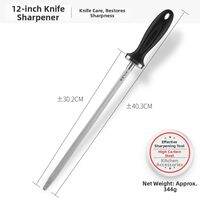
SHI BA ZI ZUO | Kitchen Butcher Knife Sharpening Rod 8 Inches
$16.26$31.91
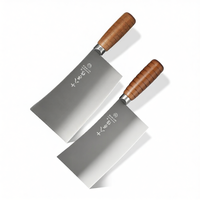
SHI BA ZI ZUO | Professional Multi-function Kitchen Knife
$22.90$57.15
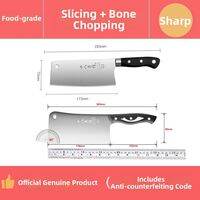
SHI BA ZI ZUO | Sharp Household Slicer
$24.86$30.53
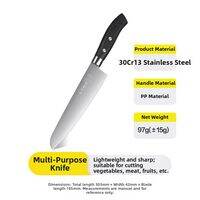
SHI BA ZI ZUO | Multi-purpose Stainless Steel Kitchen Knife
$7.27$33.01
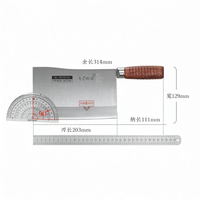
SHI BA ZI ZUO | Chef-Specific Meat Cleaving Kitchen Knife
$73.27$145.57
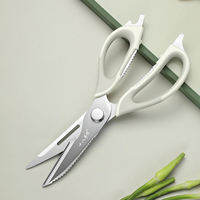
SHI BA ZI ZUO | Multi-Functional Food Scissors
$9.92$24.78
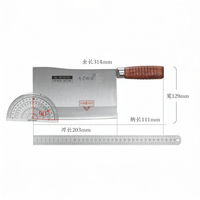
SHI BA ZI ZUO | Chef Specialized Chopping Knife for Home and Commercial Use
$74.58$147.87
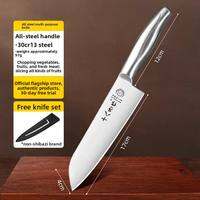
SHI BA ZI ZUO | Sharp Kitchen Knife for Slicing Meat Fruits and Sushi Preparation
$14.24
Buy on LazadaAbout SHI BA ZI ZUO
SHI BA ZI ZUO (十八子作) is a prominent Chinese kitchen knife and cutlery brand originating from Yangjiang, Guangdong, a city widely recognised as China’s knife-and-scissors manufacturing hub. Operated by Yangjiang Shibazi Group Co., Ltd. (阳江十八子集团有限公司), the brand is best known for its Chinese-style cleavers, chef knives and household cutlery 1. In 2024, SHI BA ZI ZUO was officially designated a “China Time-honored Brand” (中华老字号) by China’s Ministry of Commerce, acknowledging its historical continuity and cultural significance within the industry 1.
Basic information
| Item | Information |
|---|---|
| Chinese name | 十八子作 |
| Romanization | SHI BA ZI ZUO |
| English rendering | Shibazi / Shibazi Zuo |
| Parent company | Yangjiang Shibazi Group Co., Ltd. (阳江十八子集团有限公司) |
| Industry | Kitchen knives, cutlery, household hardware |
| Origin | Yangjiang, Guangdong, China |
| Founder | Li Lianghui (李良辉) |
| Modern enterprise founded | 1983 |
| Brand registration | 1997 |
| Major identity | Chinese kitchen-knife and cleaver brand |
| China Time-honored Brand | 2024 |
| Core philosophy | “做一把好刀” (“Make a good knife”) |
Historical records present two distinct founding dates for the brand. Chinese government archives trace the brand’s craft tradition to 1950, while the company cites 1983 as the establishment of its modern private enterprise. The trademark “十八子作” was subsequently registered in 1997 1.
Etymology and meaning
The name SHI BA ZI ZUO carries specific cultural and linguistic significance derived from the founder’s identity. The phrase “十八子” (eighteen sons/children) functions as a character puzzle based on the founder’s surname, Li (李). The Chinese character 李 can be visually decomposed into the components 木 (wood) and 子 (child/son), which the brand interprets as a creative reconstruction linking the name directly to the Li family lineage 2.
The suffix “作” denotes workmanship or craftsmanship, translating conceptually to “made by” or “crafted by”. Consequently, SHI BA ZI ZUO signifies “Shibazi Craftsmanship” or “Made by Shibazi”, emphasising the maker rather than merely describing the product. This naming convention aligns with the brand’s historical slogan, “First be a good person, then make a good knife” (先做好人,再造好刀), and its central corporate mission to “make a good knife” (做一把好刀) 2.
Origins and Yangjiang knife-making tradition
SHI BA ZI ZUO is intrinsically linked to Yangjiang, a coastal city in western Guangdong with a knife-making history spanning over 1,400 years. Historically, production was concentrated in small ironworking workshops in areas such as Datiexiang (Blacksmith Lane), creating a dense cluster of traditional craftsmen 1. This heritage formed the industrial foundation upon which modern manufacturers like SHI BA ZI ZUO were built.
The brand’s identity is deeply embedded in this regional culture rather than existing independently of it. Yangjiang is officially designated the “China Knife and Scissors Capital” (中国刀剪之都), possessing a comprehensive ecosystem covering steel supply, forging, grinding, heat treatment and export logistics. SHI BA ZI ZUO leverages this geographic identity as a core component of its value proposition, associating the brand directly with Yangjiang’s manufacturing expertise and Chinese culinary traditions 1.
History and development
Founder and early tradition
The central figure in the brand’s history is Li Lianghui (李良辉), who entered a Yangjiang blacksmith workshop in 1947 to learn traditional knife-making. He later studied under Liang Jifu (梁季芙), a noted master of Yangjiang cutlery, representing a direct link between traditional craftsmanship and modern industrial manufacturing 1. Government archives date the brand tradition to 1950, when Li established an “十八子” blacksmith workshop after observing that existing small knives did not meet household needs for processing meat and ingredients 1.
Establishment of the modern enterprise
The modern iteration of SHI BA ZI ZUO began in 1983 when Li Lianghui and his wife, Lu Rongjuan, established a private knife factory. Initial operations were modest, comprising a workshop of less than 200 m², approximately eight workers and capital under RMB 20,000, primarily producing carbon-steel kitchen cleavers 1. Over subsequent decades, the business evolved from a family-scale workshop into a large-scale manufacturing group.
During the 1990s, the company transitioned from selling generic knives to building a distinct brand identity. The trademark “十八子作” was officially registered in 1997, marking a strategic shift towards branded manufacturing 1. Yangjiang Shibazi Group Co., Ltd. was formally established in 2002, consolidating the company’s expansion into a vertically integrated organisation 1.
Key milestones
| Year | Development |
|---|---|
| 1950 | Brand and craft tradition associated with Li Lianghui begins |
| 1955 | Li enters the state/collective knife-production system |
| 1983 | Modern SHI BA ZI ZUO enterprise established |
| 1988 | Jiangcheng Xiangyang Household Knife Factory becomes independent |
| 1990s | Rapid expansion of product categories and distribution |
| 1997 | “十八子作” trademark registered; Yangjiang Shibazi Kitchen Industry established |
| 1998 | “China Kitchen Knife Center” established at the company |
| 1999 | ISO 9001 quality certification obtained |
| 2000 | “十八子” recognised as a Guangdong famous trademark |
| 2002 | Yangjiang Shibazi Group established |
| 2024 | SHI BA ZI ZUO recognised as a China Time-honored Brand |
Products and manufacturing
While frequently associated with Chinese cleavers, SHI BA ZI ZUO maintains a diverse portfolio comprising over 2,000 varieties across different steels, specifications and functions 2. Major product categories include:
- Kitchen knives: Chinese cleavers, chopping knives, slicing knives, chef knives, boning knives, utility knives, fruit and vegetable knives, and specialty kitchen knives.
- Knife sets: Household sets, gift sets, multi-function sets, and knife-and-block combinations.
- Other cutlery: Scissors, household cutting tools, and specialty knives.
- Household hardware: Various kitchen and household hardware products.
Chinese cleavers
The classic Chinese kitchen cleaver remains the brand’s signature product. Distinct from Western chef’s knives, the rectangular blade design facilitates slicing, chopping, mincing, dicing, crushing garlic and transferring ingredients. SHI BA ZI ZUO adapted its cleaver designs to accommodate regional cooking habits across China, developing numerous variations to suit different cutting practices and preferences 2.
Technological innovations
The company describes its development through five major technological revolutions that distinguish it from traditional artisan makers 1:
- Integrated blade-and-handle construction: Development of “连体直出” construction, integrating the blade and handle structure rather than relying on separate joining methods.
- Multi-function kitchen knives: Expansion in the 1990s into knives designed for meat cutting, fish scaling, bottle opening and frozen-food processing.
- Knife sets: Creation of Chinese-style sets designed for safety, organisation and gifting, helping to overcome traditional taboos regarding knives as gifts.
- Advanced steels: Collaboration in developing steels such as 7Cr17Mo and stainless composite steels for higher-end consumer knives 1.
- Steel-to-knife integration: Investment in proprietary steel-production capabilities to integrate steelmaking, material processing, heat treatment, knife production, finishing and sales.
Metallurgy and materials research
SHI BA ZI ZUO invests significantly in metallurgy rather than solely purchasing finished steel. Research encompasses special alloy steels, stainless steels, composite steels, heat treatment, surface treatment and remelting technology. The company has utilised electroslag-remelted steel in certain products to enhance cleanliness, strength, hardness and toughness 2. This vertical integration allows the group to operate as an enterprise combining scientific research, steelmaking, manufacturing and sales.
Manufacturing scale and standards
The manufacturing subsidiary operates across knife and scissors manufacturing, kitchen products, stainless-steel products, steel processing, material research, surface treatment, heat treatment and product development 2. Historical company data documents a manufacturing footprint exceeding 250,000 m² with thousands of employees 2.
In 1998, the “China Kitchen Knife Center” (中国菜刀中心) was established at the company’s Yangjiang facilities, positioning SHI BA ZI ZUO as a representative institution of the national industry 2. The company was among the first in its sector to adopt ISO 9001 and ISO 14001 management systems. It currently leads the drafting of one national standard for kitchen knives, participates in ten national or industry standards, holds over 60 effective patents and has received more than 300 honours and awards 1.
Brand philosophy and strategy
The brand philosophy operates on three levels: the fundamental mission to “make a good knife”; the ethical imperative to “first be a good person, then make a good knife”; and the ambition that “Shibazi is the knife; the knife is Shibazi” 1. This progression reflects a goal to make SHI BA ZI ZUO synonymous with Chinese knives.
Strategically, the brand explicitly ties its identity to Yangjiang, using the city’s reputation for knife-making heritage and manufacturing expertise as a value proposition. Unlike brands that obscure their origins, SHI BA ZI ZUO promotes the association between Yangjiang, Chinese knife-making and the brand itself 2. It occupies a unique position as neither purely a traditional artisan maker nor solely a mass-production factory, but rather a hybrid combining traditional craftsmanship with modern metallurgy, industrial manufacturing and product design.
Cultural tourism and international presence
SHI BA ZI ZUO has developed knife-making into a form of industrial cultural tourism. Assets include a national-level Grade III museum, a national industrial-tourism demonstration site, two AAA-level tourist attractions, a Guangdong intangible-cultural-heritage production-protection base and a provincial study-tour education base 1. These initiatives present the brand as part of a broader narrative encompassing Chinese knives, Yangjiang heritage and food culture.
Internationally, products are exported to markets including the United States, Canada, Germany, Russia, South Korea, Europe and Southeast Asia 2. The company’s long-term vision is to establish SHI BA ZI ZUO as a global Chinese knife brand, competing alongside Japanese, German and Swiss manufacturers while retaining a distinct Chinese culinary identity 2.
Market position and recognition
Within China, SHI BA ZI ZUO is strongly associated with kitchen knives and has historically claimed leading sales positions in the domestic market, though such figures are company-provided claims 2. It stands alongside Zhang Xiaoquan (张小泉) as one of the most recognisable domestic knife brands. Its distinction lies in combining heritage with scale: a family lineage rooted in traditional Yangjiang craftsmanship that evolved into a modern manufacturer with proprietary materials research, national distribution and international exports 1.
In 2024, SHI BA ZI ZUO was included in the third batch of China Time-honored Brands, a designation recognising brands with significant historical continuity and commercial heritage. This status acknowledges the continuity of the craft tradition and brand lineage dating back to 1950, despite the modern corporation being established in 1983 1.