Shop on Lazada
Tamiya products
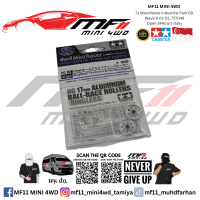
ITEM# 95563 JR LW 17MM BALL-RACE ROLLERS Hg Aluminum (Ringless)
$24.10
Buy on Lazada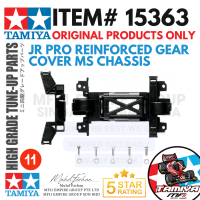
Item# 15363 Jr Pro Reinforced Gear Cover Ms Chassis
$5.88
Buy on Lazada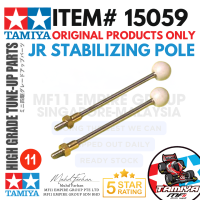
ITEM# 15059 JR STABILIZING POLE
$3.08
Buy on Lazada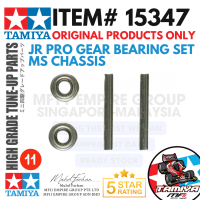
JR PRO GEAR BEARING SET (15347)
$7.28
Buy on Lazada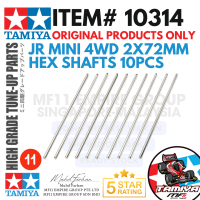
JR MINI 4WD 2X72MM HEX SHAFTS (10314)
$3.64
Buy on Lazada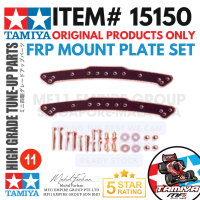
FRP Mount Plate Set (15150)
$3.36
Buy on Lazada![JR ALUMINUM MOTOR SUPPORT [15149]](https://sg-live.slatic.net/p/b4a8d003a3ee6a76c94c4d382b093107.png_200x200q80.jpg)
JR ALUMINUM MOTOR SUPPORT [15149]
$1.68
Buy on Lazada![[Local Ready Stock]Authentic TAMIYA Panel Line Accent Color Panel Liner Water-based Gunpla Panel Liner](https://sg-live.slatic.net/p/88ecf303e5d8d994d5c39adb04a623dc.jpg_200x200q80.jpg)
[Local Ready Stock]Authentic TAMIYA Panel Line Accent Color Panel Liner Water-based Gunpla Panel Liner
$9.90$15.00
About Tamiya
Tamiya, Inc. is a Japanese hobby manufacturer best known for producing high-quality plastic model kits, radio-controlled (R/C) vehicles, Mini 4WD racing cars, educational construction kits, paints, tools, and hobby accessories. Founded in the aftermath of World War II, Tamiya has become one of the world’s most respected brands in the scale modelling and hobby industry, earning a reputation for setting the “Tamiya Standard” for precision, engineering, and ease of assembly.1
Overview
- Company Name: Tamiya, Inc.
- Japanese Name: 株式会社タミヤ (Kabushiki Kaisha Tamiya)
- Industry: Hobby Manufacturing
- Founded: 8 May 1946 (as Tamiya Shoji Co.)
- Current Company Established: 24 March 1984
- Headquarters: Shizuoka, Japan
- Current President: Nobuhiro Tamiya (since July 2024)
- Main Products:
- Plastic model kits
- Radio-controlled (R/C) vehicles
- Mini 4WD cars
- Educational construction kits
- Acrylic and enamel paints
- Modelling tools and accessories2
History
Origins (1946–1953)
Tamiya began in 1946 as Tamiya Shoji & Co., a sawmill and lumber business founded in Shizuoka by Yoshio Tamiya. In 1948, the company created a wooden model division after recognising the growing demand for educational hobby products.
As the model business proved more successful than lumber, Tamiya closed its sawmill operations in 1953 and focused entirely on manufacturing wooden model kits.3
The Plastic Model Revolution (1960s)
The company entered a new era in 1960 with its first plastic model, the 1/800 Battleship Yamato. Plastic injection moulding offered greater precision than wood, allowing Tamiya to produce highly detailed replicas.
Another milestone came in 1962 with the release of the 1/35 Panther Tank. This model helped establish the now-famous 1/35 military scale, which later became the worldwide standard for armoured vehicle kits.4
Rise to Global Fame (1970s)
Throughout the 1970s, Tamiya invested heavily in in-house mould making, industrial design, engineering, packaging, and instruction manuals. Instead of outsourcing manufacturing, nearly every stage of production was handled internally, allowing strict quality control.
The company also gained worldwide attention through detailed race car models displayed at the Nuremberg Toy Fair in Germany. Their realistic box art, accurate engineering, and excellent fit distinguished them from competitors.5
Radio-Controlled Cars
In 1976, Tamiya released the 1/12 Porsche 934 Turbo R/C. The model became a massive success and sparked an international boom in hobby-grade radio-controlled cars.
Many iconic R/C chassis followed, including the Hornet, Grasshopper, Frog, Hotshot, Avante, Lunch Box, Wild Willy, TT-01, and TT-02. Many of these remain popular today through reissues and modern updates.6
Mini 4WD Phenomenon
In 1982, Tamiya introduced Mini 4WD, battery-powered miniature racing cars that run on plastic guide tracks without remote control.
The series exploded in popularity across Japan and later throughout Asia, particularly in the Philippines, Malaysia, Indonesia, Thailand, and Taiwan. Mini 4WD became both a toy and a competitive engineering hobby, with enthusiasts modifying motors, gears, rollers, wheels, tyres, and chassis for racing performance.
By 1995, Tamiya had sold more than 100 million Mini 4WD units worldwide.
Products
Tamiya manufactures a wide variety of hobby products.
Plastic Scale Models
These include military vehicles, tanks, aircraft, ships, motorcycles, Formula One cars, sports cars, trucks, and figures. Popular scales include 1/12, 1/24, 1/35, 1/48, 1/72, and 1/700.7
Radio-Controlled Models
Tamiya produces hobby-grade electric R/C off-road buggies, touring cars, drift cars, trucks, semi-trailers, tanks, and construction vehicles. Unlike toy-grade R/C products, Tamiya kits are assembled by the user and are designed for customisation and maintenance.8
Mini 4WD
Mini 4WD has become one of Tamiya’s signature product lines. Common racing categories include Box Stock, BMAX, Tuned Class, and Open Class. Tamiya continually releases new chassis, motors, rollers, carbon parts, limited editions, and racing accessories.9
Paints and Tools
Tamiya is equally famous for its modelling supplies, including acrylic paints, enamel paints, lacquer paints, spray paints, airbrush equipment, side cutters, craft knives, files, sanding products, cement, putty, and weathering materials. These products are widely used even by hobbyists who build kits from other manufacturers.10
Manufacturing Philosophy
Tamiya’s long-standing slogan is “First in Quality Around the World.” The company emphasises precision engineering, accurate scale representation, excellent parts fit, detailed instructions, attractive packaging, and reliable customer support.
Its commitment to handling design, mould construction, moulding, and packaging largely in-house has contributed to the term “Tamiya Standard,” used by modellers to describe exceptionally high-quality kits.11
Global Presence
Tamiya operates worldwide through subsidiaries and regional offices, including Tamiya America (USA), Tamiya Europe (Germany), Tamiya Hong Kong, and Tamiya Philippines. The company also maintains manufacturing facilities in the Philippines and supports international distributors across many countries.6
Influence on the Hobby Industry
Tamiya has had a major impact on scale modelling by popularising highly detailed plastic kits, establishing quality benchmarks for model engineering, helping standardise the 1/35 military scale, advancing radio-controlled vehicle design, fostering Mini 4WD racing communities worldwide, and promoting educational STEM learning through model building. Its instructional manuals, precision moulds, and realistic box art are often regarded as industry benchmarks.
Legacy
For nearly eight decades, Tamiya has remained one of the most respected names in hobby manufacturing. From its beginnings as a small lumber company in Shizuoka to becoming a global leader in plastic models and R/C vehicles, the brand has built a reputation for craftsmanship, innovation, and attention to detail.
Whether assembling a 1/35 military tank, racing a Mini 4WD, or driving an R/C buggy, generations of hobbyists associate Tamiya with precision, reliability, and the enjoyment of hands-on model building.