Shop on Lazada
Tamron products
![[Sony E] Tamron 25-200mm F2.8-5.6 Di III VXD G2 Lens [A075S] | Tamron Singapore Warranty](https://sg-live.slatic.net/p/16c1aa8158b66419650a935ae417f99b.png_200x200q80.jpg)
[Sony E] Tamron 25-200mm F2.8-5.6 Di III VXD G2 Lens [A075S] | Tamron Singapore Warranty
$1,311.00
Buy on Lazada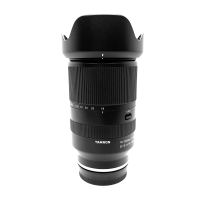
Tamron 18-300mm f/3.5-6.3 Di III-A VC VXD Lens (Canon RF / Fujifilm X / Nikon Z / Sony E Mount 18-300)
$740.00$1,099.00
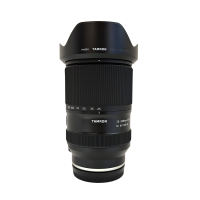
Tamron 25-200mm f2.8-5.6 Di III VXD G2 Lens (Sony E FE Mount)
$1,100.00$1,150.00
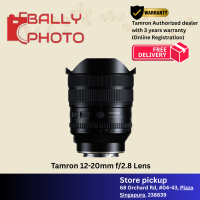
Tamron 12-20mm f/2.8 Lens A084 I 3 Years local Warranty
$2,909.00
Buy on Lazada![Tamron 35-100mm F2.8 Di III VXD Lens [A078S-Sony E] / [A078Z-Nikon Z] | Tamron Singapore Warranty](https://sg-live.slatic.net/p/9eb92546ce3348c4ccc59bb711fcbe82.png_200x200q80.jpg)
Tamron 35-100mm F2.8 Di III VXD Lens [A078S-Sony E] / [A078Z-Nikon Z] | Tamron Singapore Warranty
$1,498.00
Buy on Lazada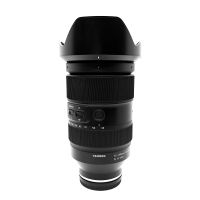
Tamron 35-150mm F2-2.8 Di III VXD Full Frame Lens (Sony E FE Mount 35-150)
$2,000.00$2,688.00
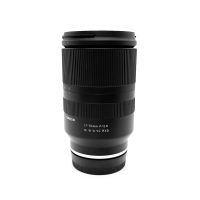
Tamron 17-70mm f2.8 Di III-A VC RXD Lens (Canon RF / Fujifilm X / Nikon Z / Sony E Mount) (17-70 f/2.8)
$900.00$1,260.00
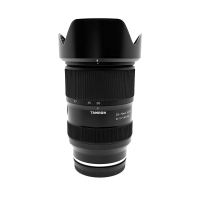
Tamron 28-75mm f/2.8 Di III VXD G2 Full Frame Lens (Nikon Z Mount 28-75 f2.8)
$1,100.00$1,350.00
About Tamron
Tamron Co., Ltd. is a Japanese multinational optical manufacturer best known for designing and producing interchangeable lenses for DSLR and mirrorless cameras. Over more than 70 years, the company has expanded beyond photography into industrial optics, automotive imaging, surveillance systems, medical devices and precision optical components. Today, Tamron is regarded as one of the world’s leading independent lens manufacturers, competing with brands such as Canon, Nikon, Sony, Sigma and Tokina.1
Basic information
- Company Name: Tamron Co., Ltd.
- Japanese Name: 株式会社タムロン (Kabushiki Kaisha Tamuron)
- Founded: 1 November 1950
- Incorporated: 27 October 1952
- Headquarters: Saitama, Japan
- President & CEO: Shogo Sakuraba
- Industry: Optical equipment and imaging technology
- Stock Exchange: Tokyo Stock Exchange (Prime Market)
- Employees: Approximately 5,000 worldwide (2025)
- Main Businesses:
- Photographic lenses
- Surveillance & Factory Automation (FA) lenses
- Automotive imaging lenses
- Medical optical devices
- Precision optical components
- OEM optical manufacturing1
History
Foundation (1950–1960)
Tamron was founded in 1950 as Taisei Optical Equipment Manufacturing in Urawa, Japan. Initially, the company produced camera lenses, binocular lenses and precision optical parts. Its technological foundation was heavily influenced by the renowned optical engineer Uhyoue Tamura, from whom the name “Tamron” was later derived. The Tamron trademark was officially registered in 1958.1
The T-Mount revolution
One of Tamron’s earliest breakthroughs came in 1957 with the introduction of the T-mount, the world’s first interchangeable lens mount system for 35mm SLR cameras. This innovation allowed photographers to use the same lens across different camera brands simply by changing the mount adapter. The concept later evolved into Tamron’s Adapt-A-Matic, Adaptall and Adaptall-2 systems, which became some of the most popular interchangeable lens systems during the film-camera era.1
Becoming Tamron
In 1970, the company officially changed its name to Tamron Co., Ltd. The new name honoured Uhyoue Tamura, whose optical engineering work laid the technological foundation of the company.1
Expansion and innovation
During the 1970s and 1980s, Tamron expanded internationally. Major milestones included the establishment of a US subsidiary in 1979 and a German subsidiary in 1982, as well as entry into video camera lenses, CCTV lenses and precision industrial optics. Tamron also introduced its premium SP (Super Performance) lens series in 1979, which remains one of its flagship product lines.1
Zoom lens leadership
Tamron became especially famous for pioneering compact zoom lenses. Notable achievements include:
95–205mm F6.3 (1961)
One of the first affordable mass-produced zoom lenses.
AF 28–200mm F3.8–5.6 (1992)
Often recognised as the first successful all-in-one superzoom lens for SLR cameras. At launch, it was the world’s smallest and lightest lens in its class, helping establish Tamron’s reputation for compact, versatile optics.1
Digital camera era
As digital photography grew in the 2000s, Tamron expanded its lineup for Canon EF, Nikon F, Sony A, Sony E, Fujifilm X and Nikon Z mounts. Its mirrorless lenses have become especially popular for combining compact size, high optical quality and competitive pricing. Many reviewers consider Tamron one of the strongest value-oriented alternatives to first-party camera lenses.
Business segments
Today Tamron operates in three primary areas.
Photographic products
This is the company’s best-known division. Products include wide-angle zoom lenses, standard zooms, telephoto zooms, macro lenses, prime lenses and superzoom lenses.
Surveillance & Factory Automation
Tamron manufactures optics for security cameras, machine vision, factory inspection systems and industrial automation. These lenses are designed for high durability and precision in commercial environments.1
Mobility & Healthcare
Tamron also develops optics for automotive cameras (ADAS), driver monitoring systems, autonomous driving sensors, medical imaging, surgical equipment and healthcare devices. This business has become increasingly important as demand for advanced sensing technologies grows.1
Manufacturing
Tamron’s manufacturing network includes facilities in Japan, Vietnam and China. Its Vietnamese factories have become major production centres for modern photographic lenses, complementing long-standing operations in Japan.1
Famous lens series
Some of Tamron’s most recognisable product families include:
- SP (Super Performance): Professional-grade lenses.
- Di Series: Full-frame DSLR and mirrorless lenses.
- Di II: APS-C format lenses.
- Di III: Mirrorless lenses.
- VC (Vibration Compensation): Optical image stabilisation.
- USD (Ultrasonic Silent Drive): Fast ultrasonic autofocus.
- RXD (Rapid eXtra-silent Drive): Quiet stepping motor for mirrorless cameras.
- VXD (Voice-coil eXtreme-torque Drive): High-speed linear autofocus motor.
Reputation
Strengths
- Excellent price-to-performance ratio
- Lightweight designs
- Sharp optics
- Reliable autofocus
- Innovative zoom ranges
- Broad compatibility with major camera systems
Criticisms
- Smaller lens ecosystem than first-party manufacturers
- Fewer premium prime lenses than some competitors
- Some entry-level models use more plastic construction than flagship alternatives
Awards
Tamron has received numerous international awards, including recognition from EISA (Expert Imaging and Sound Association), TIPA (Technical Image Press Association), Red Dot Design Award, iF Design Award and Camera GP Awards. These accolades acknowledge excellence in optical performance, innovation and product design.
Corporate philosophy
Tamron’s mission is centred on using optical technology to improve people’s lives. The company emphasises creating “emotion and reassurance” through mastery of light, serving both consumer imaging and business applications such as safety, mobility and healthcare.1
Legacy
Over seven decades, Tamron has evolved from a small Japanese optical workshop into a global optics company. It has played a significant role in advancing interchangeable lens technology—particularly through innovations such as the T-mount system, Adaptall lenses, compact superzooms and modern mirrorless optics—while also expanding into industrial, automotive and medical imaging. Today, Tamron is recognised as one of the world’s leading independent lens manufacturers, balancing affordability, innovation and optical performance.1