Shop on Lazada
The Face Shop products
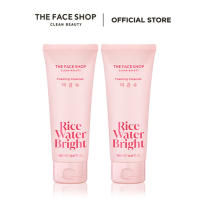
THEFACESHOP Rice Water Bright Foaming Cleanser 150ml
$20.16$32.00
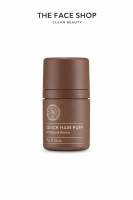
THEFACESHOP Quick Hair Puff
$14.55$25.00
![[Best Selling Daily Mask] THEFACESHOP Real Nature Mask Sheet Skincare Masker Muka 面膜](https://sg-live.slatic.net/p/bce427ba88121f842df292dbb96601c9.jpg_200x200q80.jpg)
[Best Selling Daily Mask] THEFACESHOP Real Nature Mask Sheet Skincare Masker Muka 面膜
$3.00
Buy on Lazada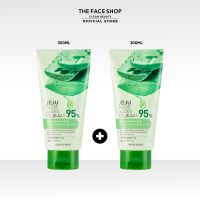
THEFACESHOP Jeju Aloe Fresh Soothing Gel 300ml– Moisturizing soothing after sun care aloe vera
$11.00$22.00
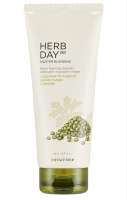
THEFACESHOP Herb Day 365 Master Blending Foaming Cleanser
$9.75$13.00
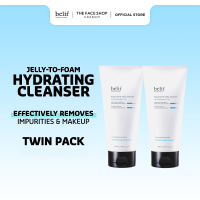
belif Aqua Bomb Jelly Cleanser 160ml - Hydrating facial cleanser removes makeup and impurities
$55.90$86.00
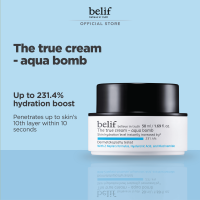
belif The true cream aqua bomb - Hydrating Gel Cream Moisturizing Cooling Hyaluronic Acid Niacinamide
$50.37$69.00
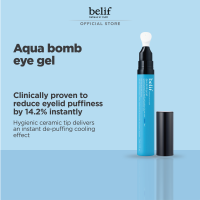
belif Aqua Bomb Eye Gel 15ml - Reduces Puffiness Tone Improvement Firming Eye Care
$32.12$44.00
About The Face Shop
The Face Shop, frequently stylised as THE FACE SHOP or THEFACESHOP, is a South Korean beauty and cosmetics brand specialising in skincare, makeup, body care and personal-care products formulated with botanical and naturally derived ingredients. Established in 2003 in South Korea, the brand achieved rapid domestic growth through the Korean ‘road shop’ retail model before expanding internationally. It is currently a subsidiary of LG Household & Health Care (LG H&H), the beauty and household products division of LG Corporation.1
Basic information
| Field | Information |
|---|---|
| Brand name | The Face Shop / THEFACESHOP |
| Industry | Cosmetics & personal care |
| Founded | 2003 |
| Country of origin | South Korea |
| Founder | Jung Woon-ho |
| Parent company | LG Household & Health Care |
| Parent group | LG Corporation |
| Main categories | Skincare, cleansing, makeup, masks, body care, hair care |
| Brand positioning | Accessible Korean beauty with an emphasis on botanical/naturally derived ingredients |
| Major markets | South Korea and numerous international markets |
| Notable product families | Rice Water Bright, Real Nature, White Seed, Chia Seed, Yehwadam, Jeju volcanic/clay lines |
| Official Korean/global association | LG Beauty |
International corporate materials state that The Face Shop was created in Korea in 2003 and has since expanded to more than 30 countries, though individual regional operations maintain varying store counts and product assortments.
History
Foundation
The Face Shop was established in South Korea in 2003 by Jung Woon-ho. The founding concept focused on offering cosmetics inspired by natural ingredients and botanical extracts at price points accessible to a broad consumer base.2
This positioning was significant within Korea’s developing cosmetics market. Rather than operating exclusively as a luxury or dermatological brand, The Face Shop combined Korean beauty trends, approachable packaging, affordable pricing, extensive product variety and ingredient storytelling centred on natural origins. This approach helped establish the company as one of Korea’s prominent ‘brand shop’ or ‘road shop’ cosmetics retailers.
The Korean road shop model
Understanding The Face Shop requires context regarding its retail format. During the 2000s, the Korean cosmetics sector underwent a structural shift. Instead of relying primarily on department stores or specialised beauty counters, brands such as The Face Shop developed dedicated single-brand stores where customers could browse extensive product portfolios.
This model provided specific commercial advantages: an affordable entry point, a large product assortment, dedicated branded retail space, frequent product launches and high consumer accessibility. The Face Shop became particularly identifiable through this format, which helped reposition Korean skincare from a luxury purchase to an everyday consumer category.
International expansion
The Face Shop began expanding beyond Korea relatively early. International growth commenced in the mid-2000s, with Canada and Southeast Asia among the initial overseas markets. The brand subsequently entered numerous additional territories across Asia, North America and the Middle East.3
For example, the brand was introduced in the Philippines in 2006 and expanded through major shopping malls.4 This international strategy coincided with the rising global popularity of Korean popular culture and cosmetics, a phenomenon later termed K-beauty.
Acquisition by LG Household & Health Care
A pivotal development in the brand’s history was its acquisition by LG Household & Health Care. In November 2009, LG H&H announced the acquisition of a 90% stake in The Face Shop for approximately ₩350 billion (about US$302 million at the time).13
This transaction held strategic significance for LG H&H. While LG already maintained a strong presence in the premium Korean cosmetics segment, The Face Shop provided a dominant position in the mass-market and accessible cosmetics sector. The acquisition enabled LG H&H to operate across multiple price tiers, from premium beauty brands to accessible lines like The Face Shop.6
The transaction was completed around 2010, after which The Face Shop has operated as part of the LG H&H beauty portfolio.12
Brand philosophy
The Face Shop’s identity has historically centred on the concept of beauty inspired by nature. Product narratives frequently highlight ingredients such as rice, chia seed, aloe, coconut, green tea, various seeds, Jeju volcanic minerals and diverse floral and plant extracts.
This does not imply that every product is purely natural. Rather, natural ingredients and their cultural associations form a core component of the brand’s marketing and product development language. The brand’s formula can be summarised as Korean beauty technology combined with ingredient-focused formulations, nature-inspired storytelling and accessible pricing.2324
Product categories
The Face Shop maintains a comprehensive product portfolio spanning multiple personal care segments.
Skincare
Skincare is the brand’s primary category. Products include cleansers, cleansing oils, cleansing balms, cleansing waters, toners, essences, serums, emulsions, moisturisers, eye creams, sunscreens, facial masks, exfoliators and anti-aging treatments. Current global assortments feature multiple Rice Water Bright cleansing and treatment products.5
Makeup
The makeup range has included cushion foundations, BB creams, liquid foundations, concealers, lip products, eye makeup, blush and makeup accessories.6
Body care
Body care offerings comprise body wash, body lotion, hand creams, body scrubs and fragrance products.
Hair care
Hair care products include shampoos, conditioners, hair treatments and scalp-care items.
Masks
Sheet masks are central to The Face Shop’s K-beauty identity. The Real Nature range, for instance, includes numerous sheet masks formulated around specific ingredients.
Major product lines
Rice Water Bright
Rice Water Bright is among The Face Shop’s most recognisable product families. Centred on rice-derived ingredients, the line focuses on cleansing, hydration and complexion brightening. Products include the Rice Water Bright Foaming Cleanser, Cleansing Oil, Cleansing Wipes, Essential Treatment, Deep Peeling Cleansing Balm, sunscreen, moisturisers and serums.5 Several items in this range are identified as best sellers on global LG Beauty platforms.
The line exemplifies the brand’s approach of adapting traditional Asian beauty ingredients into modern, accessible mass-market cosmetic formulations.
Real Nature
Real Nature is a major product family closely associated with sheet masks. Its concept revolves around ingredient-centred skincare, with different masks linked to specific botanical or food-derived ingredients. This allowed The Face Shop to participate significantly in the Korean sheet mask trend, offering inexpensive masks targeted at individual skin concerns.
White Seed
White Seed is a skincare family focused on brightening. The range includes brightening toner, lotion, serum, cleansers, creams and sets.71418
Chia Seed
Chia Seed represents the brand’s strategy of building a skincare concept around a recognisable natural ingredient. The line emphasises hydration and moisture, featuring toners and moisturising treatments.
Yehwadam
Yehwadam occupies a more premium position within the portfolio. Unlike the mass-market positioning of Rice Water Bright, Yehwadam draws on traditional Korean botanical ingredients and heritage-inspired beauty concepts, allowing The Face Shop to address a higher-priced segment of the skincare market.
Ingredient storytelling
A distinctive characteristic of The Face Shop is its ingredient-based product architecture. Products are frequently given an ingredient identity rather than a generic functional name. For example, rice signifies brightening and cleansing; chia seed indicates hydration; white seed denotes brightening; Jeju volcanic ingredients suggest pore and oil cleansing; aloe implies soothing; and collagen or pomegranate signals firming and anti-aging.
This approach simplifies consumer navigation and aligns with the broader Korean skincare tradition of organising products around specific skin concerns and key ingredients.29
Factors contributing to success
Several factors have supported the brand’s growth:
- Affordable K-beauty: The Face Shop made Korean cosmetics accessible to ordinary consumers, rather than limiting K-beauty to expensive department store brands.
- Extensive assortment: Single stores offer comprehensive solutions for cleansing, moisturising, brightening, acne care, anti-aging, makeup, body care and hair care.1617
- Natural-ingredient positioning: The botanical aesthetic differentiated the brand from purely clinical or luxury competitors.
- Korean cultural wave: The global rise of Korean entertainment created a favourable environment for Korean beauty brands.
- Retail visibility: Dedicated stores provided significant presence in shopping malls and commercial districts.2021
- Corporate resources: Post-acquisition, The Face Shop gained access to LG H&H’s research capabilities, distribution networks and international experience, while strengthening LG H&H’s position in the accessible cosmetics market.1927
Role in K-beauty
The Face Shop is recognised as one of the brands that helped popularise K-beauty internationally. Emerging before ‘K-beauty’ became a mainstream global term, The Face Shop, alongside Missha, Etude and Skin Food, helped establish the Korean road-shop cosmetics model overseas during the 2000s and early 2010s.
The brand’s international appeal stemmed from a combination of Korean origin, skincare innovation, attractive packaging, affordable prices, distinctive ingredients and extensive product selection. This formula proved particularly effective in Asian markets.28
Target customer and positioning
Historically, The Face Shop’s core demographic has been the mass-market beauty consumer, particularly those interested in Korean skincare but seeking alternatives to luxury pricing. The broad product range appeals to teenagers, young adults, university students, first-time skincare users, daily consumers and K-beauty enthusiasts looking for ingredient-oriented products.
| Brand characteristic | Rating |
|---|---|
| Korean identity | High |
| Natural/botanical image | High |
| Affordability | High |
| Product variety | High |
| Skincare focus | High |
| Luxury positioning | Low |
| Clinical/dermatological positioning | Low |
| Mass-market accessibility | High |
| K-beauty identity | High |
The brand occupies a space between ‘nature-inspired Korean beauty’ and ‘accessible everyday skincare’.
Corporate structure
The Face Shop is sometimes mistakenly regarded as an independent entity. Its corporate hierarchy is as follows:
- LG Corporation
- LG Household & Health Care (LG H&H)
- The Face Shop
LG H&H operates a diversified beauty portfolio with brands positioned at various market levels. The Face Shop serves as a key accessible and mass-market component within this structure.1927
Competitive landscape
Historical competitors include other Korean road-shop era brands such as Missha, Etude, Innisfree, Nature Republic, TonyMoly and Skinfood.
However, the competitive environment has evolved significantly. The contemporary K-beauty market comprises thousands of brands, including newer digital-native companies competing via social media, influencer marketing, specialised active ingredients and direct-to-consumer commerce. Consequently, The Face Shop now operates in a substantially more crowded marketplace than during its initial expansion in the 2000s.
Brand evolution
The brand’s development can be categorised into four phases:
- 2003–2005 (Establishment): Establishment of the natural-ingredient, affordable cosmetics concept in Korea.
- 2005–2009 (Rapid expansion): Development of the domestic retail network and commencement of international expansion.
- 2009/2010 onwards (LG era): Acquisition of a controlling stake by LG H&H, providing greater corporate scale and international resources.13
- 2010s–2020s (Global K-beauty brand): Continued international expansion and development of recognisable product franchises such as Rice Water Bright, Real Nature and White Seed.
Strengths and challenges
Strengths
- Brand recognition: One of the most recognisable names in Korean cosmetics.
- Product breadth: Consumers can construct complete skincare routines within the brand ecosystem.1617
- Accessible pricing: Historically more affordable than luxury Korean beauty brands.
- Ingredient-driven marketing: Ingredient concepts facilitate consumer understanding.
- International experience: Long-standing global operations compared to recently globalised startups.222526
- LG backing: Substantial corporate infrastructure through LG H&H.
Challenges
- Market saturation: Consumers now have access to an enormous number of alternative brands.
- Evolving preferences: Younger consumers increasingly prioritise clinical evidence, transparent ingredient lists, dermatologist endorsement, specialised actives, sustainability, vegan claims and highly targeted formulations. The traditional ‘nature plus Korean beauty’ positioning may appear less distinctive than in previous decades.
- Modernisation pressures: Competition from newer K-beauty companies built specifically for social media and global e-commerce platforms.
Current status
As of 2026, The Face Shop remains part of the LG H&H beauty portfolio and continues to sell skincare, makeup and personal-care products internationally. Rice Water Bright remains a key franchise, comprising cleansers, oils, wipes and treatments.5
Regional assortments vary significantly. Operations in markets such as Vietnam and Malaysia offer extensive selections across skincare, cleansing, body care and makeup categories, reflecting local consumer preferences and market maturity.891011152021
References
- The Face Shop
- Homepage about us – THE FACE SHOP
- LG H&H
- The Face Shop – Official Website | LG beauty
- Rice Water Bright Skincare | Korean Rice Water Cleansers & Brightening Care
- Products
- BỘ DƯỠNG TRẮNG DA WHITE SEED (TONER, LOTION, CREAM)
- Trang chủ – THE FACE SHOP
- THE FACE SHOP | Website chính thức tại Việt Nam
- THE FACE SHOP | Website chính thức tại Việt Nam
- THE FACE SHOP | Website chính thức tại Việt Nam
- LG and Faceshop complete merger
- LG Household buys The Faceshop for 420 bln won | Yonhap News Agency
- White Seed Archives – THE FACE SHOP
- Trang chủ – THE FACE SHOP
- Bộ sản phẩm dưỡng da Archives – THE FACE SHOP
- Làm sạch Archives – THE FACE SHOP
- White Seed Archives – THE FACE SHOP
- COMPANY > Company History > Lucky Corporation ~ LG Chemical (1974 ~ 2000) | LG H&H Co., Ltd. _ Healthy & Beautiful
- THE FACE SHOP | THEFACESHOP Malaysia |
- THE FACE SHOP | Nature Collection | Your One-Stop K-Beauty Shop |
- Wholesale – THEFACESHOP Australia
- 더페이스샵 | Clean Beauty
- 더페이스샵 | Clean Beauty
- Pharmacy – THEFACESHOP Australia
- Wholesale – THEFACESHOP Australia
- LG H&H Introduction – LG H&H UK
- AboutUs– The Face Shop
- Câu chuyện thương hiệu The Face Shop Natural Story– THEFACESHOP