Shop on Lazada
Topps products
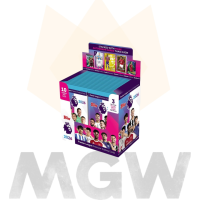
(Ready Stocks) Topps Chrome Premier League 2026 Box x1 Brand New Factory Sealed
$136.71
Buy on Lazada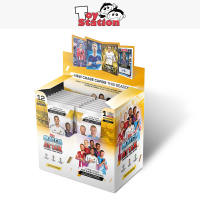
Topps Match Attax UCLMA 2025/26 Sealed Booster Box (Bundle of 32 Packets) Trading Card Game TCG
$147.84$168.00
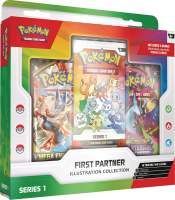
TCG Pokemon First Partner llustration Collection Series 1
$109.90
Buy on Lazada
Topps Turbo Attax Formula 1 F1 2026/27 Sealed Booster Box (Box of 24 Packets) Trading Card Game TCG
$108.00$120.00
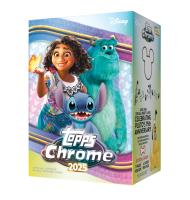
Topps Chrome Disney 2025
$89.90
Buy on Lazada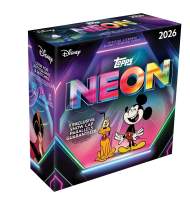
Topps Disney Neon 2026 Value/Mega/Hobby Box
$99.90
Buy on Lazada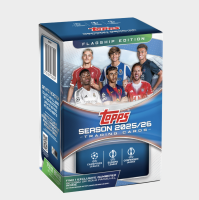
Topps UEFA Club Competitions Season 2025/26 Flagship Value/Hobby Box
$59.90
Buy on Lazada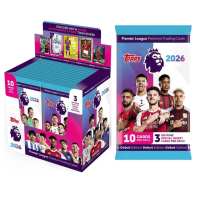
Topps Premier League 2026 Trading Card Booster
$177.12$226.20
About Topps
Topps is an American collectibles and trading-card brand best known for its baseball cards, though its origins lie in the confectionery and chewing gum industry. Founded in 1938 by the Shorin brothers, Topps became one of the most influential names in the modern trading-card sector after introducing its first major sports-card products in the early 1950s 1. Today, Topps serves as the flagship trading-card brand of Fanatics Collectibles, following Fanatics’ acquisition of Topps’ sports and entertainment trading-card business in 2022.
Overview
| Category | Information |
|---|---|
| Brand | Topps |
| Founded | 1938 |
| Founders | Shorin brothers |
| Country of origin | United States |
| Original industry | Confectionery / chewing gum |
| Famous early product | Bazooka Bubble Gum |
| Entered sports cards | 1951 |
| Best known for | Baseball and sports trading cards |
| Current parent | Fanatics |
| Current business | Fanatics Collectibles |
| Major markets | Sports, entertainment, collectibles, stickers, trading-card games, digital collectibles |
| Notable brands | Topps Baseball, Topps Chrome, Topps Heritage, Topps NOW, Bowman, Match Attax, Garbage Pail Kids |
| Website | Topps.com |
History
Origins: 1938–1950
Topps was established in the United States in 1938 by the Shorin brothers as a confectionery company 1. Its original business operations were unrelated to sports cards. One of the company’s most significant early innovations was Bazooka bubble gum, introduced in 1947. Bazooka grew into a major American candy brand and remains part of the broader Topps heritage, which eventually included confectionery brands such as Ring Pop and Push Pop.
The link between Topps and trading cards originated partly as a marketing strategy for selling gum. Cards were packaged with or alongside confectionery products to incentivise purchases, a tactic that ultimately helped transform Topps from a gum manufacturer into a dominant force in the collectibles industry 3.
The birth of modern Topps Baseball
Topps entered the sports-card market in 1951, producing its first major baseball-card set 4. These cards would eventually form the foundation of the modern sports-card hobby. A landmark moment occurred in 1952 with the release of the famous 1952 Topps Baseball set 5. Widely regarded as one of the most important baseball-card releases in history, the 1952 set featured colourful, visually distinctive and information-rich designs that established the template for modern sports cards 6.
The Mickey Mantle connection
The 1952 Topps Mickey Mantle card has become one of the most celebrated cards in collecting history. Although technically part of the 1952 set, its cultural significance has made it a symbol of the entire sports-card hobby. The combination of Mickey Mantle’s legendary career, the iconic 1952 design, the card’s age, historical scarcity and sustained collector demand has rendered high-grade examples extraordinarily valuable 7. This association is a primary reason Topps remains closely linked to the history of baseball-card collecting.
Expansion beyond baseball
While baseball became its defining category, Topps gradually diversified into other forms of collecting. From the 1950s onwards, the company produced entertainment-related cards featuring celebrities and popular culture icons. Historical subjects included Elvis Presley and The Beatles, followed later by properties such as Charlie’s Angels, E.T. and Batman. This expansion established a core aspect of the brand’s identity: Topps was not merely a baseball-card company but an enterprise that transformed popular culture into collectibles 8. This philosophy remains central to the brand today.
Topps and the collecting hobby
Topps played a pivotal role in evolving trading cards from simple promotional items into a dedicated collecting hobby. Modern Topps products typically feature multiple tiers of rarity, including:
- Base cards: The standard cards comprising a set.
- Parallels: Alternative versions of base cards.
- Short prints (SPs): Cards produced in smaller quantities.
- Super short prints (SSPs): Even scarcer variations.
- Refractors: Specialty Chrome-style cards.
- Autographs: Cards signed by athletes or celebrities.
- Relics: Cards containing pieces of memorabilia.
- Patch cards: Cards containing pieces of jerseys or other equipment.
- 1/1 cards: Unique cards with only one copy produced.
The pursuit of increasingly rare cards has become a defining characteristic of modern sports-card collecting. Topps’ own collecting guide describes base cards as the foundation of a set, with parallels offering progressively limited versions of the same basic design.
Key product lines
Topps Chrome
One of the most recognisable modern product families is Topps Chrome. These products utilise distinctive reflective, metallic card stock and are particularly popular among collectors seeking rookie cards, refractors, numbered parallels, autograph cards and extremely rare 1/1 cards. The Refractor concept specifically has become integral to modern sports-card collecting, with Topps describing its baseball Chrome products as featuring a parallel structure ranging from standard Refractors to the ultra-rare Superfractor 1/1 cards.
Topps Heritage
Topps Heritage adopts a retrospective approach by reproducing the visual language of historic Topps sets rather than creating futuristic designs. Modern players are presented using design elements inspired by cards from previous decades. This makes Heritage a combination of modern athletes, historical Topps design and nostalgia, serving as a clear example of the company leveraging its own archive as a creative resource.
Topps NOW
Topps NOW is a print-on-demand programme designed to rapidly convert major sporting moments into collectible cards. Significant events such as record-breaking performances, championships, historic debuts, walk-off home runs or major milestones can become Topps NOW cards shortly after they occur. These cards are available only during a limited purchasing window; once closed, the final order quantity determines the print run, effectively making each card a snapshot of a specific moment in sports history. This differs significantly from traditional Topps products, which are manufactured in advance and distributed via packs.
Bowman
Bowman is a vital component of the Topps family, particularly renowned for featuring baseball prospects and young players. While traditional Topps Baseball often focuses on established MLB players and rookies, Bowman is strongly associated with the prospecting aspect of the hobby. Collectors purchase Bowman cards hoping to identify future stars before they become established major-league players. Following its acquisition of Topps, Fanatics noted that Bowman had become part of its portfolio and described the brand as especially important for young prospects and emerging stars 2.
Match Attax
Launched in 2006, Match Attax combines collectible football cards with trading-card game mechanics. Players collect cards featuring footballers and use them in gameplay. The product gained significant popularity among younger football fans and expanded across multiple competitions and markets. Topps describes Match Attax as the world’s best-selling sports trading-card game, with distribution spanning all continents.
International expansion and football
Topps maintains a substantial presence outside North American sports, with European history being particularly significant. Topps Europe began in 1989 as Merlin Publishing Ltd., initially becoming a major player in collectible stickers. In 1994, Merlin launched its official Premier League football collection. Topps acquired Merlin in 1995, securing a larger footprint in European collectibles and establishing itself as a major football/soccer collectibles company.
Key properties associated with Topps’ European business have included the Premier League, UEFA Champions League, Bundesliga, WWE, Pokémon, Star Wars, Doctor Who and National Geographic.
Entertainment and pop culture
Historically, Topps has licensed and produced collectibles for numerous global entertainment franchises, including Star Wars, Marvel, WWE, Garbage Pail Kids, Pokémon, Doctor Who, Batman and E.T. 8. Consequently, the company occupies a unique position at the intersection of sports, entertainment and pop culture. Fanatics currently describes Topps as the home of sports properties such as Bundesliga and Formula 1, alongside entertainment properties including Star Wars and Topps’ original Garbage Pail Kids IP.
The 2022 Fanatics acquisition
A major turning point in corporate history occurred in 2022, when Fanatics acquired Topps’ sports and entertainment trading-card business, encompassing both physical and digital collectibles operations. Topps subsequently became the cornerstone brand of Fanatics Collectibles. This acquisition was strategically significant as Fanatics had already been developing a new trading-card business and securing major sports licensing relationships.
The combination provided Fanatics with Topps’ renowned brand, manufacturing expertise, established collector relationships, international distribution networks, existing licenses and collectibles infrastructure. Conversely, Topps gained the backing of one of the world’s largest sports-focused consumer businesses. Today, Topps is best understood as a brand and business unit within Fanatics Collectibles rather than an independent standalone company.
Topps in the modern Fanatics era
Under Fanatics ownership, Topps has expanded aggressively across various sports. Its portfolio now covers or includes partnerships involving MLB, NBA, NFL, Formula 1, UEFA, Bundesliga, WWE, MLS, college sports and international football. Fanatics states that Topps and its broader collectibles operation sell into more than 100 countries, with physical operations in multiple nations including the UK, Germany, Brazil, Italy and Japan.
The brand has also advanced its memorabilia offerings, introducing programmes such as Rookie Debut Patch and other cards incorporating game-used or player-worn material. Furthermore, the Fanatics era has facilitated Topps’ return to categories where it had previously lost licensing rights. Notably, Topps returned as the official NBA trading-card brand beginning with the 2025–26 season, marking its comeback after an absence dating back to the 2009–10 season. It has also resumed status as an official NFL/NFLPA trading-card licensee, launching new licensed football products under the Topps name. Strategically, this positions Topps increasingly as a broad global sports-collectibles platform rather than solely a traditional baseball-card manufacturer.
75th Anniversary of Topps Baseball
2026 marks the 75th anniversary of Topps Baseball, tracing the company’s baseball-card history back to 1951. Topps is commemorating this milestone through products and designs referencing key historical moments, including reinterpretations of classic aesthetics. This anniversary highlights a distinctive feature of the brand: the company’s history is intrinsic to its product. Modern Topps cards frequently reference designs from 1952, 1975, 1987, 1991 or other eras, allowing collectors to simultaneously acquire contemporary athlete cards and pieces of Topps history.
Significance in collecting culture
Topps’ importance extends beyond production volume; the company helped establish many conventions defining modern sports collecting:
- The annual card set: Collectors anticipate a new flagship set each year.
- The rookie card: A player’s earliest major licensed cards often become their most desirable collectibles.
- The checklist: Completing a full set is a collecting objective in itself.
- Inserts and parallels: Modern products offer multiple layers of scarcity.
- Autographs and memorabilia: Cards provide a tangible physical connection to athletes.
- Nostalgia: Topps repeatedly reuses historical designs, treating its archive as a creative resource.
- Cultural documentation: Cards preserve specific athletes, events, teams or moments in tangible form.
In this sense, Topps has evolved from a gum company using cards to sell candy into an enterprise whose cards themselves became the primary collectible. The brand appeals simultaneously to multiple generations; a collector of 1980s Topps baseball cards may recognise the same brand when their children collect 2020s Topps Chrome. High-end collectors may pursue vintage Mickey Mantle cards alongside modern 1/1s or autographed memorabilia. This creates a rare connection spanning vintage collecting, nostalgia, modern sports fandom, alternative assets and pop culture, making the brand’s longevity one of its greatest competitive advantages.
Brand architecture
Depending on context, “Topps” may refer to several distinct entities:
- Topps: The main trading-card brand.
- Topps Baseball: The flagship baseball-card line and arguably the brand’s most historically significant product.
- Topps Chrome: Premium Chrome-style trading cards featuring refractors and other parallels.
- Topps Heritage: Modern cards utilising historical Topps designs.
- Topps NOW: Limited-time, print-on-demand cards commemorating current events.
- Bowman: Prospect-focused sports cards, particularly in baseball.
- Match Attax: Football/soccer trading-card game.
- Garbage Pail Kids: Topps’ famous original pop-culture/card IP.
These diverse product lines enable Topps to serve varied collector demographics, from children purchasing inexpensive trading cards to serious investors acquiring rare autographs, patches and 1/1 cards.
Valuation factors
A Topps card’s value is not determined solely by age. Collectors generally assess the following factors:
- Player importance: Legendary or highly popular players attract greater demand.
- Rookie status: Recognised rookie cards carry substantial significance.
- Scarcity: Cards numbered /99, /25, /10, /5 or 1/1 are typically much scarcer than standard issues.
- Condition: Centreing, corners, edges and surface quality dramatically affect value.
- Grading: Professional grading companies such as PSA, SGC and Beckett authenticate and grade cards.
- Autograph: Genuine athlete or celebrity signatures significantly increase desirability.
- Memorabilia: Game-used or player-worn material enhances distinctiveness.
- Historical importance: Cards associated with famous sets or pivotal moments command exceptional interest.
- Market demand: Ultimately, value is determined by what collectors are willing to pay.
Current status
As of 2026, Topps operates as the flagship trading-card brand within Fanatics Collectibles. Its products span sports, entertainment, physical cards, digital collectibles, stickers and trading-card games. The company continues to innovate around limited-edition cards, on-demand releases, autographs, memorabilia, patch cards, Chrome technology, digital collecting, international football, major American sports, entertainment licenses and direct-to-consumer sales. The 75th anniversary of Topps Baseball further emphasises the enduring connection between historical designs and modern collecting practices.
Topps is to trading cards what brands such as LEGO are to construction toys: a company whose own history, designs, characters and products have become integral to the culture of collecting itself.