Shop on Lazada
TOTO products
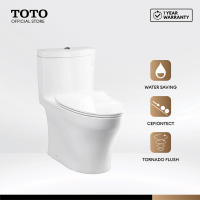
TOTO One Piece Toilet Bowl C889DESI
$1,143.45$1,485.00
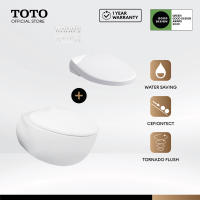
TOTO CW812REJT2 / TCF47360GSG LE MUSE Wall Hung Toilet Bowl with Washlet S7 (Concealed Connection)
$3,807.65$4,945.00
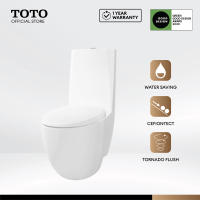
TOTO LE MUSE Close Coupled Toilet Bowl CW811
$1,497.65$1,945.00
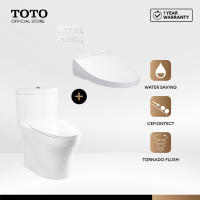
TOTO One Piece Toilet Bowl C889CDESI with Washlet TCF34461GSG (Concealed Connection)
$2,621.85$3,405.00
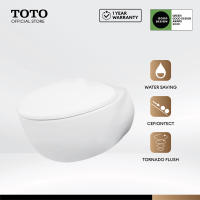
TOTO LE MUSE Wall Hung Toilet Bowl CW812
$912.45$1,185.00
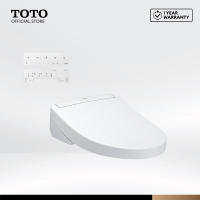
TOTO Washlet TCF34461GSG
$1,551.55$2,015.00
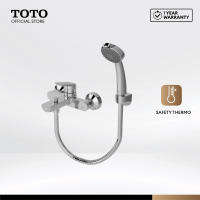
TOTO Umi Single Lever Bath & Shower Set
$327.25$425.00
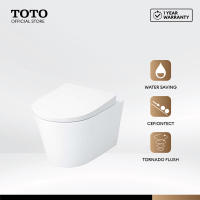
TOTO Wall Hung Toilet CW553A
$1,193.50$1,550.00
About TOTO
TOTO LTD. (Japanese: TOTO株式会社) is a Japanese manufacturer best known internationally for sanitary ware, toilets, bathroom fixtures and advanced bathroom technology. Founded in 1917, the company has grown from a domestic ceramic sanitary-ware producer into a global group specialising in bathroom equipment and advanced ceramics 1. Its most recognisable products include the WASHLET electronic bidet toilet seat and the NEOREST integrated smart toilet series 2.
Headquartered in Kitakyushu, Fukuoka, Japan, TOTO operates businesses and subsidiaries across Asia, North America and Europe 3. As of March 2026, the TOTO Group employed 31,837 people, including contract and temporary staff 1.
Overview
| Item | Information |
|---|---|
| Company | TOTO LTD. |
| Japanese name | TOTO株式会社 |
| Founded | 15 May 1917 |
| Original company | Toyo Toki Company, Limited |
| Headquarters | Kitakyushu, Fukuoka, Japan |
| Industry | Sanitary ware, bathroom equipment, housing equipment, ceramics |
| Best known for | Toilets, WASHLET, NEOREST, bathroom fixtures |
| Chairman | Noriaki Kiyota |
| President | Shinya Tamura |
| Employees | 31,837 (as of March 2026) |
| Capital | ¥35.579 billion |
| Stock code | 5332 |
| Global presence | Asia, Americas, Europe |
The figures above reflect corporate information as of 23 June 2026 unless otherwise noted 1.
Origin of the name
Although the modern company is known as TOTO, it was not originally established under that name. The firm was founded in 1917 as Toyo Toki Company, Limited in Kokura, Kitakyushu, and is recognised as Japan’s first manufacturer specialising in ceramic sanitary ware 5. The name evolved over the following decades:
- 1917: Toyo Toki Company, Limited
- 1970: TOTO Kiki Ltd.
- 2007: TOTO Ltd. (current name) 10
TOTO is therefore a corporate name rather than an acronym describing its products.
History and founding
TOTO’s origins are closely linked to Japan’s modernisation in the early 20th century. While ceramic sanitary ware was already established in parts of Europe, it remained uncommon in Japan at the time. Founder Kazuchika Okura developed an interest in the category after observing European examples during an overseas inspection trip with his father, Magobe Okura 6. Convinced that Japan would eventually require modern sanitation infrastructure, he pursued the domestic production of ceramic toilets and related products 5.
In 1917, the sanitary-ware operation was separated from the broader Morimura business group to form Toyo Toki, which later became TOTO 1. This placed the company within the same industrial family that helped establish several major Japanese ceramics manufacturers.
Founding philosophy
A central motivation behind TOTO’s establishment was not merely manufacturing toilets but improving quality of life through better sanitation. The founder’s stated ambition was to provide a healthy and civilised lifestyle at a time when Japan lacked extensive sewage infrastructure 2. This philosophy shaped the brand’s later identity, positioning bathroom technology as integral to health, cleanliness, comfort and daily living rather than as basic construction hardware.
Morimura Group connection
TOTO’s history is intertwined with that of the Morimura Group, a significant Japanese ceramics and trading network. The wider group traces its roots to Morimura Gumi, established in 1876. In 1904, Nippon Toki Gomei Kaisha was founded and later became Noritake; in 1917, its sanitary-ware division was spun off to create Toyo Toki, which evolved into TOTO 1. This historical relationship means TOTO, Noritake, NGK Insulators and other Japanese ceramics businesses share common origins in the development of the country’s modern ceramic industry.
Early development and post-war expansion
Initially focused on ceramic sanitary ware, TOTO gradually expanded its product range beyond toilets and washbasins. A pivotal development occurred after World War II when the company began manufacturing its own plumbing fittings in 1946, transforming it into a more comprehensive plumbing-equipment manufacturer 7. The business subsequently grew to encompass urinals, washbasins, bathtubs, faucets, showers, bathroom systems, kitchen equipment, vanity units, toilet seats, public-restroom equipment, ventilation and heating systems, welfare equipment, building materials and advanced ceramics 1.
Japan’s rapid economic development after the war created substantial demand for modern plumbing. The expansion of housing, urban infrastructure, sewage networks and public facilities drove growth, with the 1964 Tokyo Olympics serving as a symbolic milestone. Infrastructure development surrounding the Games—including railways, subways and sewer systems—accelerated the transformation of Japan’s residential and urban environment 8. Bathrooms evolved from utilitarian spaces into sophisticated environments incorporating water management, sanitation, comfort, convenience, technology and design, a progression that became central to TOTO’s business strategy 9.
Key product technologies
WASHLET
WASHLET is TOTO’s electronic bidet toilet-seat technology and arguably the product line most responsible for the company’s international recognition outside traditional plumbing circles. Rather than relying solely on toilet paper, the system provides controlled water washing alongside additional hygiene and comfort functions 14. It has become one of the defining products of the modern Japanese bathroom and is listed as a flagship category alongside NEOREST on TOTO’s global website 2.
WASHLET represents a conceptual shift from viewing the toilet as a sanitary disposal fixture to treating it as a personal hygiene and comfort appliance. Depending on the model and market, features may include bidet washing, heated seats, adjustable water temperature and pressure, warm-air drying, deodorisation, automatic flushing, automatic lid operation, sensor controls and self-cleaning functions 11. Specific configurations vary by region. The product embodies TOTO’s approach of combining plumbing, electronics, ceramics, water engineering and user-centred design into a single bathroom experience.
NEOREST
NEOREST is TOTO’s premium integrated toilet series, in which the bowl, electronic washing system, controls and associated technologies are designed as a unified system rather than separate components. Positioned at the high end of the portfolio, NEOREST is presented globally alongside WASHLET and WASHLET+ as a major product category 2. The concept illustrates the company’s broader integration of toilet, bidet, electronics, water efficiency, hygiene and aesthetics into a single product.
Technology and advanced ceramics
TOTO’s competitive advantage extends beyond ceramic manufacturing to encompass multiple disciplines. These include ceramic engineering drawing on more than a century of experience; water-flow, washing and flushing technologies designed to improve cleaning while controlling consumption; electronic sensors, controls and automated functions in WASHLET and NEOREST products; hygiene technologies for maintaining surface cleanliness; and design treating bathrooms as designed environments rather than purely functional infrastructure 4.
Notably, TOTO also operates an Advanced Ceramics Business producing components for industrial applications, including semiconductor manufacturing equipment. Products in this segment include electrostatic chucks, aerosol deposition components and structural ceramics 4. This business leverages ceramic technologies originally developed for bathroom and plumbing products, creating a contrast between everyday consumer goods and highly specialised industrial components 11.
Product categories
TOTO’s current business spans four main areas:
Sanitary ware
Core products include toilets, urinals, washbasins, sinks, toilet seats and public-restroom equipment 1.
Bathroom equipment
This category covers bathtubs, complete unit bathrooms, faucets, showers, bathroom accessories, ventilation systems and heating and drying equipment.
Residential equipment
Products include modular kitchens, bathroom vanity units, countertops, environmental building materials and welfare equipment.
Advanced ceramics
The industrial business comprises advanced ceramic components and related technologies for semiconductor and other high-tech manufacturing 4.
Major product families
| Product / technology | Description |
|---|---|
| WASHLET | Electronic bidet toilet-seat system |
| NEOREST | Premium integrated smart toilet |
| WASHLET+ | Toilet configurations designed to integrate WASHLET technology |
| Faucets | Bathroom and plumbing faucets |
| Touchless Faucets | Sensor-operated faucets |
| Flotation Tub | Advanced bathtub concept |
| Public Restrooms | Commercial and public restroom systems |
These categories are among those currently highlighted globally 2.
Global operations
TOTO has transformed from a domestic manufacturer into a global brand with operations across Asia, the Americas and Europe. The group lists companies and activities in China, Hong Kong, Taiwan, India, Korea, Vietnam, Thailand, Malaysia, Indonesia, Singapore, the United States, Mexico and Germany/Europe 13. Rather than exporting a standardised Japanese bathroom concept, the company adapts products to different markets. In China, for example, TOTO established local production and trading operations from the 1990s onwards, making the country a major production base 15. More recently, the company has continued to expand its footprint, including reported activity in Bangladesh in 2026 16.
Presence in Southeast Asia
Southeast Asia is a significant region for TOTO’s international business. The company maintains dedicated operations in countries including Thailand, Vietnam, Malaysia, Indonesia and Singapore 12. In Thailand, TOTO (THAILAND) CO., LTD. serves as part of the Asian network, catering to a market characterised by large-scale residential construction, hospitality and commercial development. Vietnam similarly hosts local operations and showrooms, reflecting the importance of establishing regional presence rather than relying solely on exports 12. For readers in Singapore, TOTO’s regional network supports product availability and service alignment with local building standards and preferences.
Brand positioning and design philosophy
TOTO generally occupies the premium-to-luxury segment of the bathroom market. Its brand proposition emphasises cleanliness, comfort, technological integration, sophisticated design, water efficiency and long-term reliability 1. The company describes its strategy as focusing on quality and design to sustain a premium position.
Design at TOTO integrates form, function and technology. High-end products often conceal complex engineering behind simple, clean surfaces, reflecting a Japanese design tradition of delivering sophisticated functionality through minimal user interfaces 17. This approach has earned recognition through international design awards and positions TOTO within the architecture and interior design sectors. Products appear in luxury hotels, airports, office buildings, restaurants, shopping centres, museums, residential developments and private homes worldwide, with a Global Reference section showcasing notable installations 2.
CLEANOVATION
A recent expression of TOTO’s brand strategy is CLEANOVATION, described as “Enriching lives with innovative clean technology” 2. The concept combines cleanliness, innovation, technology and design, positioning bathroom hygiene as part of a broader lifestyle rather than a purely functional concern. This reflects the company’s evolution from selling plumbing equipment towards offering a comprehensive bathroom experience.
Sustainability and corporate philosophy
Sustainability is integral to TOTO’s corporate strategy, with focus areas including water conservation, energy and resource efficiency, environmentally conscious materials, sustainable manufacturing and green building materials. The company publishes a Global Environmental Vision as part of its strategic framework 1. Water-saving technology is particularly relevant given the significant household water consumption associated with toilets and bathrooms.
TOTO’s corporate philosophy traces back to its founding mission of improving lives through better sanitation. A key cultural principle is “Kindness Must Always Come First,” reflecting an emphasis on anticipating customer needs rather than simply manufacturing products 1. This ethos informs attention to details such as water spray behaviour, seat temperature, flushing acoustics, surface cleanliness and ease of use.
Corporate scale and headquarters
As of March 2026, TOTO reported 31,837 consolidated employees and paid-in capital of ¥35.579 billion 1. Operations encompass residential and commercial bathroom equipment, international businesses, advanced ceramics, research and development, building materials and sustainability initiatives. The headquarters are located at 1-1, Nakashima 2-chome, Kokurakita-ku, Kitakyushu, Fukuoka 802-8601, Japan 1. Kitakyushu is historically significant as the city where TOTO was founded and as one of Japan’s major industrial centres during the country’s modernisation.
Competitive landscape
TOTO competes with manufacturers including LIXIL/INAX and Panasonic in Japan; Kohler and American Standard internationally; and Grohe, Geberit, Duravit and Hansgrohe in Europe and global markets. The competitive landscape varies considerably by country and product category. TOTO’s primary differentiation lies in its combination of Japanese sanitary-ware heritage, proprietary WASHLET technology, premium design and integrated bathroom systems 1.
Milestones
- 1903: Kazuchika Okura becomes convinced of the potential for ceramic sanitary ware after seeing European products 6.
- 1917: Toyo Toki Company, Limited is established in Kokura, Japan 5.
- 1946: Manufacturing of plumbing fittings begins, broadening the company’s capabilities 7.
- Post-war period: Housing and infrastructure modernisation drives growth in plumbing and sanitary equipment.
- 1960s: Sophisticated plumbing systems become increasingly common in Japanese housing and infrastructure 8.
- 1970: Company renamed TOTO Kiki Ltd. 10.
- 1980: WASHLET products launched 14.
- 1980s onward: International expansion and development of premium brand positioning.
- 1990s onward: Remodelling and renovation become increasingly important in the Japanese market 13.
- 2006: TOTO Universal Design Research Institute established; participation in ISH Exhibition, Frankfurt 17.
- 2007: Company renamed TOTO Ltd. 10.
- 2017: Centenary anniversary celebrated.
- 2020s: Increased emphasis on smart toilets, advanced hygiene technologies, sustainability, design and advanced ceramics.
- 2025–2026: Continued expansion of NEOREST/WASHLET technology, wellness-oriented bathroom functions and advanced ceramic applications 1.
References
- Toto Ltd. – Wikipedia
- Toto Ltd. – Wikipedia
- Toto Ltd. – Wikipedia
- Toto Ltd. – Wikipedia
- History-TOTO东陶中国
- History-TOTO东陶中国
- History-TOTO东陶中国
- History-TOTO东陶中国
- History-TOTO东陶中国
- Toto Ltd. – Wikipedia
- Toto Ltd. – Wikipedia
- History – TOTO
- History-TOTO东陶中国
- History-TOTO东陶中国
- History-TOTO东陶中国
- Toto Ltd. – Wikipedia
- History-TOTO东陶中国