Shop on Lazada
Trapo products

Trapo Car Mat for Tesla Model Y Juniper (2025-Present)
$355.83
Buy on Lazada![Trapo Hydrophobic Wiper Blades / windshield windscreen coating / silicone rubber wiper / heat resistant / non-streak / quiet [M Series]](https://sg-live.slatic.net/p/7b75dffa0d3e6614a65c52bf0ecd3544.png_200x200q80.jpg)
Trapo Hydrophobic Wiper Blades / windshield windscreen coating / silicone rubber wiper / heat resistant / non-streak / quiet [M Series]
$34.95
Buy on Lazada
Trapo Car Mat for Tesla Model 3 Highland Facelift (2023-Present)
$355.83
Buy on Lazada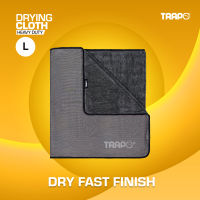
Trapo Microfiber Series | Car Wash Glove / Drying Towel / Detailing Cloth / Wash Dry Buff
$25.90
Buy on Lazada
Trapo Car Mat for XPeng G6 (2024-Present)
$310.00$355.83
![[TOP CAR MAT FOR MERCEDES BENZ] Car Models/Anti-Bacterial / Hygiene / Odourless / Premium / Waterproof [BLACK BASE BLACK LINING]](https://sg-live.slatic.net/p/6ec9438b110c2377d4f4ee24d3a426e9.jpg_200x200q80.jpg)
[TOP CAR MAT FOR MERCEDES BENZ] Car Models/Anti-Bacterial / Hygiene / Odourless / Premium / Waterproof [BLACK BASE BLACK LINING]
$331.00$380.83
Trapo Car Mat for Toyota bZ4X (2023-Present)
$345.83
Buy on Lazada
Trapo Car Mat for BYD Seal 6 (2025-Present) | Anti-Slip | Waterproof | Custom Made | Odour Free
$355.83
Buy on LazadaAbout Trapo
Trapo is a Malaysian automotive accessories brand best known for its custom-fit car mats and its focus on making everyday driving smarter, safer, and more sustainable. Founded in 2016 by brothers Tzong Lee and Zare Lee, the company began with an initiative to repurpose industrial waste into functional car mats and has since expanded into a broader automotive accessories and detailing business.1
Overview
| Category | Information |
|---|---|
| Brand | Trapo |
| Industry | Automotive accessories |
| Founded | 2016 |
| Country of origin | Malaysia |
| Founders | Tzong Lee and Zare Lee |
| Headquarters | Malaysia |
| Signature product | Custom-fit automotive floor mats |
| Other products | Wipers, dashcams, car accessories, detailing solutions |
| Core positioning | Smart, Safe, Sustainable |
| Key markets | Malaysia, Indonesia, Singapore, Thailand, Australia |
| Known for | Antibacterial, anti-slip and sustainability-oriented car mats |
Trapo currently describes itself as an automotive accessories brand serving Malaysia, Indonesia, Singapore, Thailand, and Australia.2
History
Trapo was established in Malaysia in 2016. The company was founded by brothers Tzong Lee and Zare Lee, who identified an opportunity to improve the standard automotive floor mat.
The founders addressed two primary issues: conventional coil-style car mats that trapped dirt and moisture while being difficult to clean, and substantial foam waste generated by their family’s manufacturing business. Trapo’s initial concept was to develop a car mat that solved everyday driving problems while giving industrial waste a second life.3
The brand’s first major product was an antibacterial car mat, which became the foundation of Trapo’s identity. The company’s philosophy focused on addressing hygiene, mat movement, cleaning ease, and durability rather than simply altering the aesthetic design.
Early expansion
According to Trapo’s corporate history:
- 2016: Trapo established in Malaysia.
- 2017: First physical hub opened in Melaka Raya.
- 2018: Expansion into Indonesia.
- 2019: Introduction of the OXTRA automotive accessories range and expansion onto Shopee Malaysia.
- 2020: Expansion of Malaysian physical hubs and entry into Singapore.
- 2021: Expansion into Thailand and introduction of newer generations of car mats, including Hex II, Classic Mark III, and Eco II.
- 2024: Launch of Trapo Global, extending the brand toward markets including Australia, New Zealand, and the Middle East.4
By 2025, The Star reported that Trapo had more than one million customers, 25 retail hubs, and a presence in eight countries, with a product portfolio spanning approximately 12 automotive accessory categories.5
Founders
Trapo was founded by Tzong Lee and Zare Lee, who serve as the company’s co-founders and co-CEOs.6 Their approach prioritised identifying everyday problems experienced by drivers over competing solely on conventional automotive accessory design.
A core principle associated with the founders is understanding customer needs before creating products. This problem-oriented approach became central to Trapo’s product development.7
The founders also viewed sustainability as a practical business challenge rather than merely an environmental marketing concept. Their experience with industrial foam waste motivated the development of recycled-material car mats. The Star reported that their family business generated roughly 300 tonnes of foam waste annually, creating a strong incentive to find productive uses for the material.8
Products and services
Although Trapo is strongly associated with floor mats, it has evolved into a broader automotive accessories brand.
Car mats
Car mats remain the company’s flagship category. Trapo offers several generations and tiers of mats, including the Eco, Classic, and Hex families. These products are designed to be custom-fit for individual vehicle models rather than functioning as generic universal mats.9
Depending on the model, Trapo mats emphasise features such as:
- Custom fit
- Anti-slip construction
- Dirt containment
- Easy cleaning
- Antibacterial properties
- Cushioning
- Water and spill management
- Customisable colours
- Recycled materials
The current Eco Mark IV, for example, is marketed as being made with approximately 70% recycled material and utilises RealGrip anti-slip technology. The company states its mats are available for more than 1,200 car models.
Wipers
Trapo has expanded into windshield wipers and related replacement products, transitioning from a single-product specialist to a recurring automotive maintenance brand.
Dashcams
Dashcams form part of the newer automotive accessories portfolio.10
Other accessories
The wider range includes products such as:
- Phone holders
- Car care accessories
- Interior accessories
- Other driving-related products
The Star described Trapo as having expanded into approximately 12 automotive accessory categories.11
Detailing
Trapo has moved beyond physical accessories into car detailing services, positioning itself increasingly as a broader automotive care ecosystem rather than solely a car mat company.12
Car mat technology
The company’s differentiation stems largely from combining functionality, hygiene, and sustainability. Traditional PVC coil mats generally consist of a network of flexible coils designed to catch dirt. Trapo’s alternative construction aims to be easier to clean while providing better fit and stability.
Trapo highlights several advantages over conventional PVC coil mats, including dirt trapping, fungus resistance, antibacterial performance, and anti-slip characteristics.13
The company has incorporated silver-ion antibacterial technology into its mats. The Star reported that Trapo uses this technology alongside anti-slip surfaces to address issues such as lingering dirt and odour.14
Sustainability
Sustainability is a distinctive characteristic of the Trapo brand. The company’s origin story is connected to repurposing industrial waste into automotive products.15
Over time, Trapo’s sustainability strategy has expanded beyond using recycled materials. Current initiatives include:
- Recycled-material manufacturing
- Car mat trade-in programmes
- Wiper refill programmes
- Dashcam recycling
- Recycling used products
- Converting discarded material into reusable inputs
Trapo illustrates its manufacturing philosophy as a cycle in which materials are broken down, processed into reusable material, and subsequently incorporated into new car mats.16
The Eco product line focuses particularly on this positioning. For example, the current Eco Mark IV is advertised as using approximately 70% recycled material.17
The Star has also reported that Trapo has used materials including recycled EVA foam, water bottles, and rice husks in its eco-oriented mats. Used Trapo mats can additionally be returned for repurposing.
Brand philosophy
Trapo summarises its positioning with three words:
Smart. Safe. Sustainable.
These concepts form the company’s brand framework.18
Smart
The company emphasises product engineering designed around specific driver problems. Examples include custom vehicle fit, anti-slip systems, easier cleaning, modular replacement components, and practical automotive technology.
Safe
Safety is expressed through products such as dashcams and wipers, as well as details like secure-fitting floor mats. A mat that shifts underneath the driver’s feet can potentially interfere with pedal operation; consequently, Trapo emphasises anti-slip construction and secure attachment mechanisms.19
Sustainable
This pillar covers recycled materials, product recycling, and manufacturing practices intended to reduce waste.20
Business model
Trapo operates through a combination of e-commerce, physical retail hubs, and automotive services. This hybrid model supports custom-fit car mats, which benefit from physical installation. Customers may purchase products online and visit a Trapo location for installation or other services.
Hubs offer services such as free installation, free vacuuming, product assistance, and automotive-related services. The company maintains physical locations in areas including Klang Valley, Johor Bahru, Melaka, and Sarawak.21
This structure gives Trapo an online-to-offline (O2O) business model rather than relying exclusively on traditional automotive retail.
Product tiers
Trapo differentiates its car mats through distinct product families:
| Range | General positioning |
|---|---|
| Eco | More affordable and sustainability-focused |
| Classic | Mainstream all-round option |
| Hex | Premium high-end positioning |
| Hex Ultimate | Higher-end offering |
Trapo’s global guide states that warranty periods vary by product: Eco (1 year), Classic (3 years), and Hex (5 years).22
Geographic expansion
Trapo began as a Malaysian company but has developed a distinctly regional identity. Its major Southeast Asian markets followed a trajectory from Malaysia to Indonesia, Singapore, and Thailand.
Australia has subsequently become part of its international footprint. Trapo’s global site also describes expansion toward New Zealand and the Middle East.23
Indonesia is notable as Trapo entered the market in 2018. The Indonesian operation sells the company’s various car mat and automotive accessory products through a localised platform.24
Awards and recognition
Trapo lists several awards and recognitions, including:
- Life at Work — Finalist, TalentCorp, 2023
- Endeavor Local Selection Panel, 2021
- LazMall Brand of the Year — Motors Category, 2021
- Shopee Mall Brand Sales — 2nd Place, Motors, 202025
These recognitions reflect both e-commerce performance and development as a Malaysian consumer brand.
Corporate identity
The Malaysian business is identified on its official site as TRAPO MARKETING SDN BHD, with Malaysian registration number 1294179-D. Its listed registered address is in Melaka.26
There is also a separate company record for TRAPO MALAYSIA SDN. BHD., registered in Malaysia in 2017, whose stated business includes manufacturing and exporting rubber car mats.27
When discussing “Trapo” as a brand, it is useful to distinguish the consumer brand from the individual legal entities and operating companies behind its various markets.
Market differentiation
Trapo’s growth is notable because car mats are typically a low-interest automotive commodity. The company differentiated this product through multiple layers:
- Better fit
- Anti-slip properties
- Antibacterial and hygienic features
- Easier cleaning
- Custom colours and design
- Recycled materials
- Retail installation combined with online sales
- Expansion into the broader car accessories ecosystem
This strategy helped transform the company from a specialist car mat seller into a broader automotive lifestyle and accessories brand. The Star notes that Trapo’s strong customer retention encouraged expansion beyond mats, as customers who purchased durable mats might not require replacements for many years.
Competitive positioning
Trapo sits between a traditional automotive accessory manufacturer and a modern direct-to-consumer brand. Its competitive proposition includes:
| Dimension | Trapo’s approach |
|---|---|
| Product | Engineered automotive accessories |
| Hero product | Custom-fit car mats |
| Design | Functional and customisable |
| Hygiene | Antibacterial positioning |
| Safety | Anti-slip and secure fit |
| Sustainability | Recycled materials and recycling programmes |
| Sales | E-commerce and physical hubs |
| Service | Installation and detailing |
| Geography | Primarily Asian, increasingly global |
| Brand promise | Smart, Safe, Sustainable |
Evolution
Trapo has evolved through three broad stages:
Stage 1: Car mat startup (2016 onwards)
The company identified problems with conventional car mats and developed its own antibacterial, custom-fit alternative.18
Stage 2: Automotive accessories brand (2019–2021 onwards)
Trapo added OXTRA products, wipers, and other automotive accessories while expanding throughout Southeast Asia.19
Stage 3: Automotive ecosystem (2024 onwards)
The company increasingly combines accessories, technology, detailing, physical hubs, recycling programmes, and international e-commerce under one brand. Its current website presents car mats, wipers, dashcams, and detailing as major parts of the ecosystem.20
References
- About Us – TRAPO® Car Mat Malaysia
- About Us – Trapo Global
- Home – TRAPO Asia
- Car Mat Guide – Trapo Global
- Trapo Eco – Affordable Perodua Traz (2026-Present)Car Mats – TRAPO® Car Mat Malaysia
- Car Mats Malaysia | TRAPO
- Contact – TRAPO® Car Mat Malaysia
- Info Carmat – Trapo Indonesia
- Company Details – TRAPO® Car Mat Malaysia
- Aksesoris Mobil TRAPO Indonesia – Stylish & Protective
- About Us – Trapo Singapore
- Car Mats Singapore | TRAPO
- trapo.asia
- Trapo X MAS25 – TRAPO® Car Mat Malaysia
- trapo.asia
- trapo.asia
- trapo.asia
- Toyota Innova (2016-Present) – MTSB
- Trapo Eco – Affordable BYD Atto 2 (2025-Present)Car Mats – MTSB
- Trapo HEX – Ultimate Car Mats for Honda HR-V S,E,V,RS Hybrid Facelift (2025-Present) MY – MTSB
- Mini Aceman (2024-Present) – MTSB
- Honda N Box (2017-Present) Car Mat | Hex | Trapo Singapore – MTSB
- Trapo HEX – Ultimate Car Mats for Jetour VT9 (2025-Present) – MTSB
- Trapo HEX – Ultimate Car Mats for Jaecoo J7 PHEV (2025-Present) – MTSB
- Proton X90 (2023-Present) Car Mat | Hex | Trapo Malaysia – MTSB
- Trapo HEX – Ultimate Car Mats for Toyota Corolla Fielder (2012-Present) – MTSB
- TRAPO | LinkedIn