Shop on Lazada
Usborne products
![[SG] 2025 LATEST NEW USBORNE Little First Sticker Book Educational Activity Books Gifts Presents Ideas](https://sg-live.slatic.net/p/8e41f91108bf05cabdf961ac6e372156.png_200x200q80.jpg)
[SG] 2025 LATEST NEW USBORNE Little First Sticker Book Educational Activity Books Gifts Presents Ideas
$2.68$7.90
![[SG STOCK] Usborne Peep Inside All Titles - Age 3+ Kids Toddler Baby Children Early Learning Lift the Flap Educational Interactive Picture Board Book](https://sg-live.slatic.net/p/2e7c9e30d973baed96edcf698cc5d42f.jpg_200x200q80.jpg)
[SG STOCK] Usborne Peep Inside All Titles - Age 3+ Kids Toddler Baby Children Early Learning Lift the Flap Educational Interactive Picture Board Book
$5.77$15.00
![[SG STOCK] Usborne First Sticker Book All Titles - Age 3+ Toddler Interactive Activity Book Kids Early Learning Travel Educational Activity Sticker Book](https://sg-live.slatic.net/p/09341ae6d14689c9579a11becec6a147.png_200x200q80.jpg)
[SG STOCK] Usborne First Sticker Book All Titles - Age 3+ Toddler Interactive Activity Book Kids Early Learning Travel Educational Activity Sticker Book
$2.98$10.00
![[SG STOCK] Usborne Look Inside All Titles #1 - Age 3+ Kid Interactive Lift the Flap Books Children Educational STEM Encyclopedia Learning Book](https://sg-live.slatic.net/p/acd4e7ffe1589d9ff8c91f3195730e2d.png_200x200q80.jpg)
[SG STOCK] Usborne Look Inside All Titles #1 - Age 3+ Kid Interactive Lift the Flap Books Children Educational STEM Encyclopedia Learning Book
$8.75$20.00
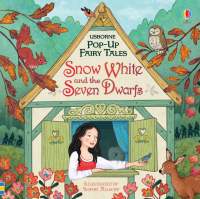
Usborne Pop-up Series Early Learning English book Hard Cover Children Book Interactive pop up book for kids
$6.84$16.90
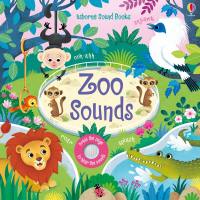
Usborne Sound Book Series (8 Titles)
$29.20$30.90
![[SG] USBORNE Wipe Clean Activity Educational Books (more than 55 Titles)](https://sg-live.slatic.net/p/2d672928d9bfd44c9f520c7828ef937c.jpg_200x200q80.jpg)
[SG] USBORNE Wipe Clean Activity Educational Books (more than 55 Titles)
$3.58$7.50
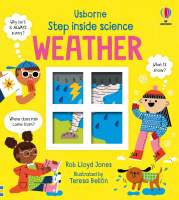
Usborne Peep Inside Series Books Children Early Educational reading books Step Inside Science Pop-up Books Gift Set for kids. Christmas Gift
$9.85$19.90
About Usborne
Usborne Publishing is a British independent publisher that specialises exclusively in books for children. Established in 1973 by Peter Usborne, the company is recognised for combining rigorous editorial content with distinctive illustration, innovative formats and child-friendly design. Usborne remains a family-owned, independent business led by Managing Director Nicola Usborne, the founder’s daughter.1
The publisher’s titles are sold internationally and have been translated into more than 130 languages and dialects, establishing Usborne as one of the most widely recognised British children’s publishing brands globally.
Basic information
| Item | Details |
|---|---|
| Brand/company | Usborne Publishing Limited |
| Common name | Usborne / Usborne Books |
| Industry | Children’s publishing |
| Founded | 1973 |
| Founder | Peter Usborne |
| Headquarters | London, United Kingdom |
| Ownership | Independent, family-owned |
| Current Managing Director | Nicola Usborne |
| Main market | Children’s books |
| International reach | 130+ languages and dialects |
| Main product categories | Picture books, fiction, nonfiction, activity books, educational books, baby/toddler books |
| Website | usborne.com |
Usborne’s UK headquarters are located at Usborne House, 83–85 Saffron Hill, London EC1N 8RT. The company states that its books are conceived, written and produced through offices in London, Oxfordshire and Wolverhampton.2
History
Founding
Usborne was established in 1973 by Peter Usborne. Having already worked in children’s publishing, his impending parenthood influenced his decision to found his own company. He aimed to create children’s books that were not merely educational but visually exciting, accessible and genuinely enjoyable.2
The publishing model he developed was distinctive for its era. Rather than treating children’s nonfiction as dry reference material, Usborne combined engaging writing, colourful illustrations, strong graphic design, accessible explanations, interactive elements and carefully researched information. This approach established what became a defining characteristic of the brand: learning through curiosity and visual discovery.
Peter Usborne’s influence
Peter Usborne is regarded as the central figure in the company’s history. He believed children’s publishing should be treated as a specialised creative discipline rather than a smaller version of adult publishing. Consequently, Usborne invested heavily in editors, writers, illustrators and designers working collaboratively.
The company describes Peter as having pioneered a new generation of children’s books that combined popular subject matter with high standards of editorial, design and production quality. He remained closely associated with the business throughout his life. In 2022, he was awarded a CBE for services to literature. He died in March 2023 at the age of 85.2
His daughter, Nicola Usborne, subsequently continued his legacy as Managing Director, preserving the company’s family-business structure.
Publishing philosophy
A central tenet of the Usborne identity is the concept of curiosity. The company describes its purpose as creating “brilliant books for children” whilst placing children at the centre of the publishing process. Books are approached from a child’s perspective, with writing and design intended for “curious eyes”.1
Child-centred design
Usborne generally avoids making educational books resemble conventional textbooks. Information is broken into manageable segments and presented alongside illustrations, diagrams, captions, activities and visual explanations.
Strong visual identity
Illustration is fundamental to the brand rather than merely decorative. Usborne books are often immediately recognisable due to their colourful layouts, illustrations and carefully structured pages.
Educational entertainment
Usborne occupies a space between education and entertainment. Its nonfiction books are designed to teach, but the presentation encourages exploration rather than rote memorisation.
Curiosity rather than instruction
The company’s broader philosophy is encapsulated by its “Be Curious” branding. Its books encourage children to ask questions, investigate subjects and discover information independently.1
Book categories
Although Usborne became particularly renowned for nonfiction and educational books, its catalogue has expanded significantly. The company describes its development as extending from nonfiction into activity books, baby books and fiction.
Major categories include:
- Nonfiction: Science, history, geography, nature, technology, space, animals, the human body, politics and many other subjects.
- Activity books: Colouring, puzzles, stickers, drawing, mazes, crafts and other interactive activities.
- Fiction: Early readers, chapter books, novels and series for various reading ages.
- Baby and toddler books: Titles specifically designed for very young children, including sensory and interactive formats.
- Picture books: Illustrated stories aimed primarily at younger readers.
- Reference books: Encyclopaedic and fact-based books designed to allow children to explore subjects independently.
- Educational books: Titles supporting literacy, mathematics, science and general learning.
Notable formats and series
Usborne has developed a recognisable identity through its use of series and recurring formats. Among the best-known examples are:
That’s not my…
A highly recognisable baby and toddler series built around tactile, repetitive books. Each volume encourages children to touch different textures whilst searching for a character’s missing feature. The series illustrates Usborne’s strategy of turning simple developmental activities into distinctive branded reading experiences.
Usborne Beginners
An introductory nonfiction series aimed at young readers. Topics are presented using relatively simple text, illustrations, photographs and accessible explanations.
Very First Reading
Books designed to support children who are beginning to read independently.
First Thousand Words
Illustrated vocabulary books that introduce large numbers of everyday words through detailed scenes and labelling.
Usborne Young Reading
A collection aimed at children developing independent reading skills, including adaptations and original stories.
Levelled reading collections
Usborne has developed numerous reading-level and subject-based collections, allowing the company to target books at particular developmental stages.
Distinctive design style
Usborne is particularly recognisable for its design. A typical nonfiction book may combine large illustrations, small information panels, diagrams, captions, labels, jokes, questions and activities. This creates a high-information-density page whilst maintaining a playful experience.
Compared with a traditional encyclopaedia, an Usborne book often feels closer to an illustrated visual exploration. The company writes and designs almost all its books internally, which is unusual as many publishers outsource significant parts of editorial and design production. Usborne argues that keeping this work integrated allows it to maintain control over quality, accuracy and presentation.
Rainbow balloon logo
One of the most recognisable elements of the Usborne brand is its rainbow-coloured hot-air-balloon logo. The balloon serves as a key visual identifier across its international publishing programme.
During its 50th-anniversary year, Usborne stated that more than 12,000 Usborne books were in print worldwide, including more than 3,000 titles published in English. As new titles are published and older ones retired, this figure represents a historical snapshot rather than a permanent catalogue size.
International expansion
Usborne’s books are available internationally in English and more than 130 other languages and dialects. The company publishes under its own name in languages including English, French, German, Italian, Spanish, Dutch, Korean, Brazilian Portuguese, Catalan and Chinese.
It also licenses translation rights to publishers in many additional languages and markets.1 This licensing model allows Usborne’s books to be adapted to different linguistic and cultural contexts whilst retaining the core brand identity.
Business model
Usborne combines several publishing and distribution models.
Traditional publishing
Usborne develops books and sells them through conventional book-trade channels, including retailers and distribution partners.
International licensing
Foreign publishers can acquire rights to translate and publish Usborne titles in their respective markets.
Community selling
In the UK and Europe, Usborne operates Usborne Community Partnerships, its social and direct-selling division. Independent Usborne Partners operate their own businesses and sell books through personal networks, online channels and community activities. These individuals are self-employed partners rather than employees of Usborne.3
United States distribution
The US distribution structure differs from other markets. Corporate disclosures identify Educational Development Corporation (EDC) as the exclusive US multi-level-marketing distributor for Usborne books, whilst US booksellers can obtain titles through HarperCollins for the trade market.4
Direct selling history
Direct selling has been a significant part of Usborne’s business history. In the UK and Europe, this operation is now known as Usborne Community Partnerships, formerly Usborne Books at Home.3
Independent Partners sell books through home-based businesses, online sales, book parties, community events, schools, children’s groups and book fairs. This model has enabled Usborne to reach families and communities beyond conventional bookstores.
According to Usborne’s brand guidelines, Partners are independent, self-employed businesses rather than employees of the publisher.
Ownership
Unlike many large publishing companies, Usborne has remained independent and family-owned, which is a key aspect of its brand positioning.1 Family succession has seen leadership pass from Peter Usborne to his daughter, Nicola Usborne, who currently serves as Managing Director.2
Usborne continues to operate as an independent family publishing company rather than as an imprint within a multinational conglomerate.
Brand values
Usborne summarises its philosophy around three broad principles encapsulated in its family motto: “good books, good jobs, good charity”.
- Good books: Prioritising high-quality children’s publishing that is both engaging and informative.
- Good jobs: Emphasising the people involved in producing books, particularly writers, editors, designers and other creative professionals.
- Good charity: Incorporating charitable activity as part of the company’s broader social philosophy.
The company also aims to operate responsibly towards people and the planet whilst promoting diversity and representation in its books.
Diversity and representation
Usborne states that it creates books for children of every age, ethnicity and gender. Its philosophy holds that children should see themselves represented in books whilst also encountering people whose experiences differ from their own. This aligns with contemporary publishing approaches where children’s literature is expected to provide varied representations of people, families, cultures and experiences.
Significance in children’s publishing
Usborne’s significance stems from several factors:
- Transforming nonfiction: Making children’s nonfiction visually exciting and approachable by integrating illustration, typography, diagrams, humour and interaction rather than relying on blocks of text.
- Design as education: Treating the physical design of a page as part of the teaching process.
- Global brand recognition: Establishing a recognisable visual language and rainbow balloon logo across international markets.
- Independence: Retaining family ownership for more than five decades.
- Broad age range: Publishing for multiple age groups, from baby and toddler books through early readers, middle-grade titles and older children’s nonfiction and fiction.
Brand personality
| Dimension | Usborne positioning |
|---|---|
| Core audience | Babies, children, parents, educators |
| Core promise | Make children curious |
| Personality | Curious, playful, intelligent, friendly |
| Visual style | Colourful, illustrated, information-rich |
| Emotional appeal | Discovery and wonder |
| Functional benefit | Learning and reading development |
| Brand values | Quality, curiosity, creativity, education |
| Differentiator | Strong integration of editorial, illustration and design |
| Ownership story | Independent family business |
| Global proposition | British children’s publishing with international reach |
Usborne is positioned not merely as an educational publisher but as a brand offering “learning that feels like discovery”. This allows its books to appeal simultaneously to parents seeking educational value and children seeking visually engaging content.
Comparison with other publishers
| Publisher/brand | General identity | Usborne’s distinction |
|---|---|---|
| Usborne | Educational + illustrated + interactive children’s publishing | Strong combination of learning, design and curiosity |
| Scholastic | Large-scale children’s publishing and education | Usborne is smaller and more design-led/independent |
| Penguin Random House Children’s | Broad children’s literature | Usborne is more strongly associated with nonfiction/activity/reference |
| DK | Highly visual nonfiction/reference | Similar visual emphasis, but Usborne has a broader early-childhood/activity presence |
| Ladybird | Classic early children’s books | Usborne has a particularly strong educational/nonfiction identity |
| Oxford University Press Children’s | Educational and literary publishing | Usborne is more strongly associated with commercial illustrated children’s books |
The closest conceptual comparison is DK, particularly in illustrated nonfiction, although the two brands have different histories and product strategies.
Usborne today
As of 2026, Usborne describes itself as one of the world’s leading independent children’s book publishers and continues to operate as a family business. Its current website emphasises books, activities and digital Quicklinks alongside its traditional publishing catalogue.1
The company continues to evolve children’s reading whilst maintaining its traditional publishing identity, with a catalogue spanning physical books, activities and digital resources.1
Timeline
- 1973: Peter Usborne establishes Usborne Publishing in the UK.2
- Late 1970s–1980s: The company develops its distinctive illustrated educational and nonfiction style and expands internationally.
- 1980s onward: Usborne develops its community and direct-selling operation, which eventually becomes Usborne Community Partnerships.3
- 1990s–2000s: Expansion of the catalogue and translation/licensing programme across international markets.
- 2010s: Increasing incorporation of digital resources and online components alongside physical books.
- 2022: Peter Usborne receives a CBE for services to literature.2
- 2023: Usborne celebrates its 50th anniversary. Peter Usborne dies in March 2023; Nicola Usborne continues as Managing Director.
- 2026: Usborne remains an independent, family-owned children’s publisher with books available internationally in English and over 130 other languages and dialects.