Shop on Lazada
Weber products
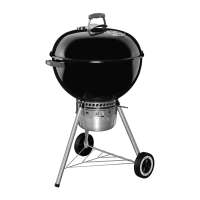
Weber Original Kettle Premium 22 Inch - Charcoal BBQ Grill
$689.00
Buy on Lazada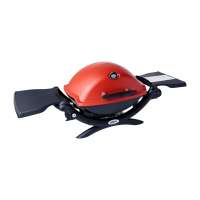
Weber Q1250
$529.00
Buy on Lazada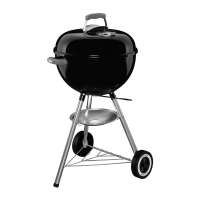
Weber Original Kettle 18 Inch - Charcoal BBQ Grill
$339.00
Buy on Lazada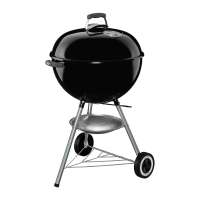
Weber Original Kettle 22 Inch - Charcoal BBQ Grill
$509.00
Buy on Lazada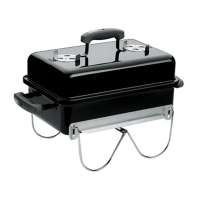
Weber Go-Anywhere Portable Charcoal Grill - Charcoal BBQ Grill
$229.00
Buy on Lazada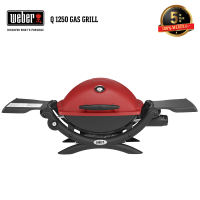
Weber Q1250 Portable Gas Grill
$529.00
Buy on Lazada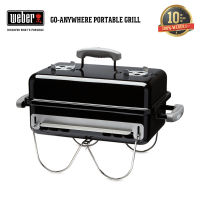
Weber® Go-Anywhere Portable Charcoal Grill - Black
$239.00
Buy on Lazada
MGB 660L Mobile Garbage Bin Multiple Colours Dustbin Outdoor Bin Trash Bin
$226.10$318.00
About Weber
Weber is an American outdoor-cooking brand best known for its iconic kettle charcoal grills, as well as gas, electric, wood-pellet, portable, and smart grilling systems. Founded around the invention of the kettle grill in 1952 by George Stephen Sr. in Chicago, Weber played a major role in popularising modern backyard barbecue culture.1
Note: “Weber” can refer to several unrelated companies. This article is about Weber, the barbecue and outdoor-cooking brand, rather than Weber Food Technology, the German food-processing machinery company.2
Brand overview
| Field | Information |
|---|---|
| Brand | Weber |
| Industry | Outdoor cooking / barbecue |
| Founded | 1952 |
| Founder | George Stephen Sr. |
| Origin | Chicago, Illinois, United States |
| Best known for | Kettle charcoal grills |
| Major product categories | Charcoal, gas, electric, wood-pellet, portable and smart grills |
| Headquarters | Chicago area, Illinois |
| Manufacturing | Huntley, Illinois, among other global production/sourcing operations |
| Brand positioning | Outdoor cooking, grilling, innovation and backyard entertaining |
| Official website | weber.com |
Weber is one of the world’s most recognisable barbecue-grill brands. Its identity is closely associated with the round, lidded kettle grill, a design that originated in Chicago in 1952.
The company’s fundamental idea was relatively simple: make outdoor cooking easier, more controllable and less vulnerable to weather and flare-ups. What began as an adaptation of a marine buoy eventually became one of the defining products of American backyard cooking.1
Today, Weber’s portfolio extends considerably beyond traditional charcoal grills. The company has developed products using gas, electricity and wood pellets, as well as portable and digitally connected grilling systems.1
Weber therefore occupies an interesting position in the outdoor-cooking industry: it is simultaneously a heritage barbecue brand and a company that has continually expanded into newer grilling technologies.
History
Origins
The story begins with George Stephen Sr., who worked at Weber Brothers Metal Works in the Chicago area. The company manufactured metal marine buoys, which were made from joined hemispherical pieces of metal.
In the early 1950s, Stephen was frustrated with the limitations of the open brick and metal barbecue pits commonly used at the time. Wind could interfere with cooking, rain could ruin a barbecue, and uncontrolled flames could burn food.
Stephen subsequently took inspiration from the shape of a buoy. He essentially used a metal hemisphere as the bowl of a grill, added legs and ventilation holes, and placed another hemisphere on top as a lid.
The resulting design provided something relatively unusual at the time: a covered outdoor cooker that could better control heat and protect food from the elements.1
The first kettle grill was introduced in 1952.
Why the shape mattered
The kettle’s distinctive geometry was more than a visual signature. Its bowl-and-lid configuration allowed users to manipulate airflow and therefore the charcoal fire.
The lid also made it possible to cook using both direct and indirect heat, expanding the range of foods that could be prepared.
This became the foundation of Weber’s product philosophy.
The Weber Kettle
The Weber Kettle is arguably the most important product in the company’s history.
Its basic architecture consists of:
- a rounded charcoal bowl;
- a matching domed lid;
- adjustable air vents;
- a cooking grate;
- a charcoal grate;
- legs and wheels on many models.
The design has remained recognisable for more than seven decades.
Weber’s own historical timeline identifies 1952’s Original Kettle as the starting point, followed by products such as the Smokey Joe in 1962, the Gas Barbecue Kettle in 1971, and the Smokey Mountain Cooker in 1981.1
The kettle ultimately became more than a product: it became a visual symbol of American backyard barbecue.
From Weber Brothers Metal Works to Weber-Stephen
George Stephen’s invention initially emerged from his work at Weber Brothers Metal Works. As demand for the kettle increased, Stephen eventually acquired the business and changed its name to Weber-Stephen Products towards the end of the 1950s.1
The company then concentrated increasingly on developing and marketing grills specifically for consumers.
During the 1960s and 1970s, Weber promoted its products through demonstrations and cooking events. This helped educate consumers about what could be achieved with a covered kettle grill.
Television appearances and demonstrations were also important in establishing barbecue as an accessible form of home cooking rather than simply a specialised outdoor activity.1
Expansion of the product range
Although charcoal remains central to Weber’s identity, the company progressively expanded into different cooking technologies.
Major milestones
| Year | Product / development |
|---|---|
| 1952 | Original Kettle |
| 1962 | Smokey Joe |
| 1971 | Gas Barbecue Kettle |
| 1981 | Smokey Mountain Cooker |
| 1985 | Weber Genesis |
| 1990 | Performer |
| 1995 | Spirit gas grill |
| 1999 | Summit gas grill |
| 2003 | Weber Q |
| 2007 | New-generation Genesis gas grill |
| 2016 | iGrill / Summit Charcoal |
| 2017 | Genesis II |
| 2018 | Spirit II / Pulse |
| 2020 | SmokeFire wood-pellet grill / Weber Connect |
| 2021 | Smart Grills / Weber Traveler |
| 2022 | New Genesis gas grill |
This progression illustrates Weber’s strategy of moving from a single iconic charcoal format towards a broad outdoor-cooking ecosystem.1
Weber Genesis
One of Weber’s most important products after the original kettle was the Genesis gas grill, introduced in 1985.
The Genesis represented a major change in outdoor cooking. Instead of relying on charcoal, consumers could obtain the convenience of gas while retaining many characteristics associated with outdoor grilling.
Weber’s own history describes the introduction of Genesis as a transformative moment for gas-barbecue design.1
According to former Weber executive Jim Stephen, the 1985 Genesis was particularly important to the company’s survival and growth during a period when the business faced increasing competition.1
The Genesis name subsequently became one of Weber’s flagship product families.
Major product families
Charcoal grills
Charcoal remains one of Weber’s defining categories.
The company’s kettle grills are designed around traditional charcoal cooking, with airflow management and the lid allowing users to perform both direct grilling and indirect cooking.
Examples include the:
- Original Kettle
- Master-Touch
- Performer
- Summit Charcoal
Gas grills
Weber’s gas-grill portfolio includes several major families:
- Genesis
- Spirit
- Summit
These are aimed at consumers who prioritise convenience, rapid heating and temperature control.
Smokers
The Smokey Mountain Cooker, introduced in 1981, established another important category for Weber.
It is designed specifically for low-and-slow cooking and smoking rather than simply high-temperature grilling.
Portable grills
Weber has also developed smaller products for people who want to grill away from the traditional backyard.
The Weber Traveler, introduced in the company’s modern portable-grill lineup, is an example of this strategy.1
Electric grills
Electric cooking gives Weber a way to reach consumers who may have restrictions on charcoal or gas.
This category also reflects the company’s attempt to make outdoor cooking applicable to a wider variety of living environments.
Wood-pellet grills
Weber entered the wood-pellet category with SmokeFire, introduced in 2020.
Pellet grilling combines automated temperature management with wood-fired cooking, allowing the same appliance to be used for both grilling and longer cooking sessions.1
Smart grilling
Weber has increasingly incorporated digital technology into its products.
The company’s Weber Connect system and related smart-grilling products use sensors and digital interfaces to help monitor cooking temperatures and guide users through the cooking process.1
Manufacturing
Although Weber has become a global brand, its history remains strongly connected to the Chicago area.
Weber states that its grills are designed and engineered by a team based at its Chicago headquarters. It also continues manufacturing grills at its facility in Huntley, Illinois, using U.S. and globally sourced components.1
This connection to the Midwest is an important part of Weber’s corporate identity.
The company describes this as maintaining its Midwestern roots, while simultaneously operating in international markets.1
International expansion
Weber gradually expanded beyond its original U.S. market.
According to the company’s history, international expansion included markets such as:
- Canada
- Europe
- Australia
- New Zealand
- South Africa
Building the brand internationally was not simply a matter of exporting grills. In many markets, Weber also had to introduce consumers to the concept of American-style outdoor grilling.
Weber developed demonstrations, educational programmes and Weber Grill Academies as part of this international expansion.1
Today, Weber describes its customer community as global, with owners in cities across North America, Europe, Asia-Pacific and elsewhere.1
Brand philosophy
Weber’s branding revolves around several recurring themes.
Outdoor cooking
The company’s central proposition is that cooking outdoors is more than simply preparing food. It is an experience around which people gather.
Innovation
Innovation has been a defining part of Weber’s identity since the invention of the kettle.
The company has repeatedly adapted its basic grilling concept to new technologies, including:
charcoal → gas → electric → pellet → connected/smart cooking
Social connection
Weber emphasises the social aspect of grilling: families and friends gathering around food.
This is reflected in the company’s stated belief that outdoor meals create opportunities for people to connect.1
Durability
Long-term product life is another major part of Weber’s positioning. The company emphasises quality, warranties and continuing customer support as part of its brand promise.1
Innovation
Weber’s history is particularly interesting because many of its innovations have been practical rather than purely technological.
Examples include:
Kettle design
The original innovation: enclosing the fire and food within a domed cooking chamber.
Flavorizer Bars
Weber developed angled metal bars in its gas grills that catch dripping fat and juices, allowing them to vaporise and contribute flavour while helping manage flare-ups.1
Temperature management
Across charcoal, gas and pellet products, Weber has continually worked on improving heat distribution and temperature control.
Digital cooking
Products such as iGrill and Weber Connect brought temperature sensors, mobile connectivity and cooking guidance into the traditional grilling experience.
This progression demonstrates how Weber has tried to modernise barbecue without abandoning its core identity.
Weber’s brand identity
The Weber brand is unusually recognisable for an appliance manufacturer.
The black domed kettle has become a visual shorthand for backyard barbecue.
Its brand identity can broadly be summarised as:
American heritage + outdoor cooking + engineering + social gathering
Unlike some appliance brands that compete primarily on specifications, Weber also sells an idea of what the consumer’s lifestyle should look like: friends and family outdoors, food cooking over fire, and a relaxed social environment.
That emotional positioning is a major reason the brand has remained relevant for decades.
George Stephen Sr.
George Stephen Sr. is the central figure in Weber’s history.
He was not simply the founder of a grill company; he was the inventor responsible for transforming the shape of the backyard grill.
His original insight was essentially:
What if a barbecue were enclosed rather than completely exposed?
The answer was the kettle.
Stephen died in 1993. In 2013, he was posthumously inducted into the Barbecue Hall of Fame, with his son Jim Stephen accepting the honour on behalf of the family.1
His legacy remains deeply embedded in Weber’s corporate storytelling.
Why Weber became so successful
Several factors explain Weber’s longevity.
1. A genuinely distinctive product
The kettle was visually and functionally different from many grills available at the time.
2. Simple underlying concept
The product was relatively easy for ordinary consumers to understand:
charcoal + bowl + lid + airflow = controlled outdoor cooking.
3. Continuous product development
Weber did not remain a one-product company. It expanded into gas, smokers, portable grills, pellet grills and smart cooking.
4. Strong brand recognition
The distinctive kettle silhouette became almost synonymous with barbecue.
5. Consumer education
Demonstrations, recipes, instructional content and grill academies helped teach people how to use the products.1
6. Heritage
The fact that the brand can trace its origin to an identifiable invention in 1952 gives Weber a strong historical story that many competitors cannot easily reproduce.
Weber’s place in barbecue culture
Weber’s importance extends beyond the commercial grill market.
The company helped normalise backyard grilling as an everyday American leisure activity.
The traditional kettle made it possible to perform a surprisingly broad range of cooking techniques:
- direct grilling;
- indirect grilling;
- roasting;
- smoking;
- baking;
- low-and-slow barbecue;
- high-temperature searing.
Consequently, Weber’s kettle is often treated not merely as a grill but as a relatively versatile outdoor oven and cooking system.
Its influence can also be seen in the enormous number of later kettle-style grills produced by other manufacturers.
Weber today
Today, Weber presents itself as a global outdoor-cooking company rather than simply a manufacturer of charcoal grills.
Its portfolio encompasses:
Charcoal
↓
Gas
↓
Electric
↓
Pellet
↓
Portable
↓
Smart / connected grilling
The company’s current strategy combines its historical strengths—especially the kettle and gas-grill heritage—with newer technologies such as connected temperature monitoring and smart cooking.1
Its stated philosophy remains centred on making outdoor cooking more enjoyable and bringing people together around food.1
Timeline
1952 — George Stephen invents the first Weber kettle grill.
1962 — Smokey Joe introduced.
1971 — Weber enters gas grilling with the Gas Barbecue Kettle.
1981 — Smokey Mountain Cooker introduced.
1985 — Weber Genesis launches.
1990 — Performer introduced.
1995 — Spirit gas-grill family introduced.
1999 — Summit gas grill introduced.
2003 — Weber Q introduced.
2007 — New-generation Genesis introduced.
2016 — iGrill and Summit Charcoal expand the portfolio.
2017 — Genesis II introduced.
2018 — Spirit II and Pulse introduced.
2020 — SmokeFire wood-pellet grill and Weber Connect launched.
2021 — Smart Grills and Weber Traveler expand Weber’s newer categories.
2022 — New Genesis gas grill introduced.1
What makes Weber different?
If Weber were summarised in one sentence:
Weber is the company that turned the humble covered charcoal kettle into a global barbecue icon, then built an entire outdoor-cooking ecosystem around that invention.
Its strongest differentiator is therefore not simply “we make grills.”
It is the combination of:
70+ years of heritage + recognisable design + grilling expertise + broad product range + continuous innovation.
The original 1952 kettle remains the symbolic heart of the brand, while products such as Genesis, Smokey Mountain Cooker, SmokeFire, Weber Traveler and Weber Connect show how the company has progressively expanded the concept of outdoor cooking.1
Summary
Weber is an American brand specialising in outdoor cooking equipment, particularly barbecue grills and related accessories. It originated in Chicago in 1952 when George Stephen Sr., an employee of Weber Brothers Metal Works, developed a domed charcoal grill based on the shape of a marine buoy. The resulting kettle grill became the foundation of the Weber brand and contributed significantly to the development of modern backyard barbecue culture.1
Over subsequent decades, Weber expanded from charcoal kettles into smokers, gas grills, electric grills, wood-pellet grills, portable grills and digitally connected cooking products. Major product families have included the Kettle, Smokey Joe, Smokey Mountain Cooker, Genesis, Spirit, Summit, Q, SmokeFire and Weber Traveler.1
The company maintains a strong connection to the Chicago region, where it continues to design and manufacture grills, while selling products internationally. Weber’s brand philosophy emphasises outdoor cooking, innovation, product quality and the social experience of sharing meals outdoors.1
In short, Weber’s historical significance comes from turning a relatively simple covered charcoal grill into a globally recognised product category and brand.