Shop on Lazada
Weiss Schwarz products
![Japanese Weiss Schwarz Booster box [Oshi no Ko] Vol.3](https://sg-live.slatic.net/p/7884959668b7a07d922b6a2fd507a076.png_200x200q80.jpg)
Japanese Weiss Schwarz Booster box [Oshi no Ko] Vol.3
$50.00
Buy on Lazada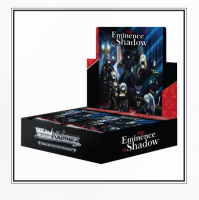
Weiss Schwarz English The Eminence in Shadow booster box
$75.00
Buy on Lazada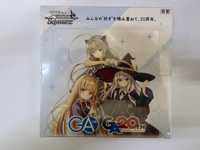
Weiß Schwarz GA Bunko Booster Box – Japanese Edition
$48.00$50.00
Weiss Schwarz The Phantom Thief Empire Strikes Back Extra Booster Box Brand New Factory Sealed
$40.88
Buy on LazadaAbout Weiss Schwarz
Overview
Weiss Schwarz is a Japanese trading card game (TCG) developed and published by Bushiroad. Unlike most major TCGs that focus on a single fictional universe, Weiss Schwarz integrates characters and narratives from numerous anime, manga, video games, light novels and other entertainment franchises into a unified card-game system. Bushiroad describes the game as a platform where players can relive climactic moments from their favourite titles on their own stage.
As of 2026, Weiss Schwarz has grown into one of Bushiroad’s key international TCG properties, featuring more than 150 intellectual properties (IPs) and remaining available in 36 countries and regions, including Singapore.1
Basic information
| Category | Information |
|---|---|
| Name | Weiss Schwarz |
| Japanese | ヴァイスシュヴァルツ |
| Romanisation | Weiß Schwarz |
| Genre | Trading card game |
| Developer / Publisher | Bushiroad |
| First released | March 2008 |
| Original market | Japan |
| Languages | Japanese, English, Simplified Chinese; selected products in Korean |
| Players | 2 |
| Main concept | Crossover TCG based on licensed anime, game and entertainment IP |
| Current scale | 150+ IPs |
| Global availability | 36 countries/regions |
| Major formats | Standard Constructed, Side Constructed, Neo-Standard Constructed |
Bushiroad’s corporate history records the launch of Weiss Schwarz in March 2008, making it one of the company’s earliest major TCG projects.
Name and concept
The name Weiss Schwarz combines the German words for “white” (Weiß) and “black” (Schwarz). These terms represent the game’s two original sides: the Weiß Side and the Schwarz Side. This “White vs. Black” terminology is integral to the game’s identity and deck-construction system. However, the distinction is primarily organisational rather than moral; Weiss Schwarz is not a traditional “good versus evil” game.
Fundamentally, Weiss Schwarz is a crossover anime and game TCG in which different fictional universes are converted into cards while remaining largely separated into individual titles. Rather than creating a single shared universe, each licensed property is treated as its own distinct title. Players typically build decks around a specific franchise, utilising its protagonists, supporting characters, villains, events, iconic scenes and story moments.
IP platform and participating titles
Unlike TCGs built around a proprietary fictional universe, Weiss Schwarz functions as an IP platform. Bushiroad describes it as an “IP platform-type TCG” featuring titles from both Bushiroad and external companies. The catalogue has expanded significantly since launch.
Current and historical titles include franchises such as:
- BanG Dream!
- Re:ZERO
- Sword Art Online
- Fate
- KONOSUBA
- The Melancholy of Haruhi Suzumiya
- Hatsune Miku
- JoJo’s Bizarre Adventure
- Persona
- That Time I Got Reincarnated as a Slime
- SPY × FAMILY
- Frieren: Beyond Journey’s End
- [Oshi no Ko]
- hololive production
- MARVEL
- Pixar
- Disney Mirrorverse
- Blue Archive
- BOCCHI THE ROCK!
- Guilty Gear -Strive-
- Avatar: The Last Airbender
- Adventure Time
The exact lineup changes continually as new licences are announced and products are released.
Gameplay mechanics
Weiss Schwarz is a character-focused battle TCG. Players deploy characters onto a five-position stage, attack opponents, generate resources, activate abilities and attempt to push the opponent’s damage to a losing threshold. The game features three fundamental card categories:
Character Cards
These represent characters from the licensed franchise. They possess statistics such as Level, Cost, Power and Soul, alongside specific card abilities. Characters occupy positions on the player’s Stage and conduct combat.
Event Cards
Events represent actions, situations or effects from the corresponding franchise. They generally provide one-time effects rather than remaining permanently on the Stage.
Climax Cards
Climaxes represent major dramatic moments from the source material. They can dramatically affect combat and damage resolution. A deck incorporates a limited number of Climax cards, making their timing crucial to gameplay strategy.
Level system
A distinctive mechanic of Weiss Schwarz is its Level system. Instead of losing life points, players accumulate damage. When sufficient damage accumulates, the player’s Level increases from 0 to 3. Higher-level characters are generally more powerful but require the player to reach the appropriate Level before they can be played. Consequently, taking damage is not purely detrimental; it also grants access to stronger cards.
Soul and damage cancellation
Characters have a statistic called Soul, which determines potential attack damage. Weiss Schwarz employs a distinctive damage-resolution system involving damage cancellation. This creates significant tension, as a player may appear to be taking massive damage only for several attacks to be cancelled, potentially swinging the game in a single turn.
Stage layout
Each player controls a five-position Stage divided into two zones:
- Center Stage: Three front positions where characters primarily fight opposing characters.
- Back Stage: Two rear positions for characters that support the front line rather than engaging in direct combat.
Stock and Waiting Room
Stock serves as the primary resource. Successful attacks and other actions place cards face-down into the Stock area, which are then spent to pay costs. Notably, Stock cards are normally face-down and cannot be inspected or reordered unless a specific effect permits it.
The Waiting Room functions as the discard or graveyard area. Used cards and defeated characters are placed here. Thematic terminology reflects the game’s anime-inspired presentation, and various effects allow interaction with cards in this zone.
Deck construction and formats
Weiss Schwarz recognises three major deck-construction formats:
Standard Constructed
Cards from officially released products can generally be used together, offering the broadest card pool.
Side Constructed
Decks must use cards belonging exclusively to either the Weiß Side or the Schwarz Side, without mixing the two.
Neo-Standard Constructed
This format is most strongly associated with Weiss Schwarz. Decks are constructed using cards from the same title. For example, a Re:ZERO deck uses only the Re:ZERO card pool and does not freely combine with Sword Art Online or KONOSUBA cards. This rule maintains individual franchise identities and solves balancing issues inherent in crossover TCGs.
A “Title” refers to a specific licensed IP or defined group of IPs that forms a legal card pool. Each title possesses its own code and card set, allowing the game to support hundreds of franchises without collapsing its competitive integrity.
Products and collecting
Weiss Schwarz products generally revolve around two main concepts:
- Trial Decks: Ready-to-play decks based on a particular title, designed as accessible starting points for new players.
- Booster Packs: Randomly distributed packs containing cards of varying rarities, used by players and collectors to expand card pools and improve decks.
Additional products include extra boosters, premium cards, promotional cards and special releases. Collecting is a significant aspect of the hobby. Higher-rarity cards often feature alternate artwork, special foil treatments, signatures, stamped signatures, special parallels, exclusive illustrations or promotional artwork. Signed cards featuring reproduced signatures of voice actors or creators are particularly notable. This gives Weiss Schwarz dual identities as both a competitive TCG and an anime character collectible card game.
Artwork is a primary driver of sales. Cards frequently depict iconic anime scenes, character portraits, romantic moments, transformations, battles or crossover-exclusive illustrations. Consequently, a collection often functions as a physical archive of a fan’s favourite series.
Business model and corporate context
Bushiroad does not need to own every franchise appearing in the game. Instead, it licences popular properties from external companies and adapts them into Weiss Schwarz. This platform model allows continuous audience expansion through new franchise additions, distinguishing it from TCGs dependent on a single original universe.
Weiss Schwarz is one of the flagship products of Bushiroad Inc., which was founded in 2007 with a focus on trading card games and content production. Other major Bushiroad TCG properties include Cardfight!! Vanguard, Shadowverse: Evolve, hololive OFFICIAL CARD GAME, GODZILLA CARD GAME and Love Live! Series Official Card Game.
History
- 2007: Bushiroad is established as an entertainment company focused on trading card games and related media.
- 2008: Weiss Schwarz is officially released in March. The concept of combining numerous anime and game licences into one TCG becomes a defining characteristic.
- 2010s: The game expands its portfolio of licensed properties and develops a substantial Japanese player and collector community, becoming increasingly connected to Bushiroad’s broader anime, event and merchandising ecosystem. English-language Weiss Schwarz subsequently becomes a key part of the overseas strategy.
- 2020s: The number and variety of licences increase dramatically. By the mid-2020s, Bushiroad describes Weiss Schwarz as featuring over 150 popular IPs.
- 2026: Weiss Schwarz celebrates its 18th anniversary. Bushiroad highlights this milestone as part of its 2026 celebrations.
Global presence and organised play
Weiss Schwarz is currently available in 36 countries and regions.1 Major language editions include Japanese, English, Simplified Chinese and selected Korean products. The English edition enables international anime fans to participate without requiring Japanese-language cards.
The game supports an organised tournament scene operated through Bushiroad’s event infrastructure, including local tournaments, regional competitions, large-scale tournaments, conventions and international competitions. Bushiroad organises major TCG tournaments as well as weekly sanctioned tournaments through cooperating stores. The official rules infrastructure encompasses tournament floor rules, deck-construction rules, comprehensive rules, errata and event-specific regulations.
Comparison with other TCGs
| Game | Core identity |
|---|---|
| Weiss Schwarz | Crossover anime/game IP TCG |
| Pokémon TCG | Pokémon universe |
| Yu-Gi-Oh! TCG | Yu-Gi-Oh! universe |
| Magic: The Gathering | Original multiverse with occasional licensed Universes Beyond |
| One Piece Card Game | One Piece universe |
The primary distinction is that Weiss Schwarz derives its identity from the franchises it licences. Adding a new popular anime potentially brings an entirely new community of fans into the ecosystem, rather than merely expanding a single proprietary world.
Strengths and challenges
Strengths
- Strong anime appeal: Fans can collect and play cards featuring characters they already love.
- Huge IP variety: With more than 150 IPs, the game offers an unusually broad catalogue.
- Collector appeal: Premium artwork, signatures and rarity systems create a substantial secondary collecting dimension.
- Accessible concept: The premise of building a deck with characters from a favourite anime is immediately understandable.
- Longevity: The ability to acquire new licences reduces dependence on any single fictional franchise.
Challenges
- Card pool size: Newcomers may feel overwhelmed by the enormous number of titles and cards.
- Licensing dependency: The game relies heavily on obtaining and maintaining external licences.
- Product availability: Different regions do not necessarily receive identical products simultaneously.
- Power differences: Balancing cards across radically different fictional universes is inherently difficult.
- Anime knowledge: Collectors interested in specific titles may find cards from unfamiliar franchises less appealing.
Cultural niche and current status
Weiss Schwarz occupies a unique position bridging anime, manga, light novels, video games, character goods, collectible cards and competitive gaming. It acts as a conduit between Japanese pop culture and the TCG hobby. Its appeal combines fandom, collecting and strategy; players often purchase products due to character affinity before discovering the depth of the competitive game.
As of August 2026, Weiss Schwarz is an established 18-year-old franchise. Bushiroad currently describes the game as featuring 150+ IPs, while its English-facing brand page notes coverage of 90+ anime and video-game titles, reflecting different counting methodologies for the broader IP portfolio versus specific contexts. The game continues to receive new English releases and announcements.