Shop on Lazada
Yeo’s products
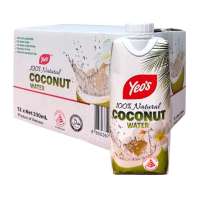
Yeos 100% Coconut Water 330ML (Case of 12)
$16.35$19.15
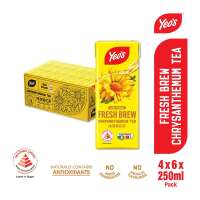
Yeos Chrysanthemum Tea Packet Drink 250ML (Case Of 24)
$10.70$11.60
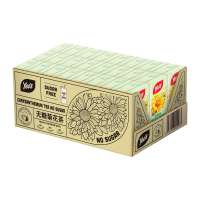
Yeos Chrysanthemum Tea No Sugar Packet Drink 250ML (Case of 24)
$10.70$11.61
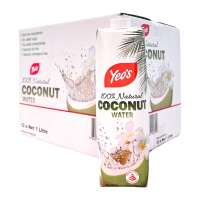
Yeos 100% Coconut Water 1L (Case of 12) - Case - Case
$34.95$47.22
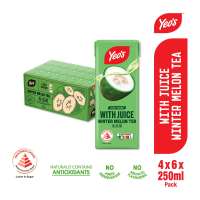
Yeos Winter Melon Tea Packet Drink 250ML (Case Of 24)
$10.70$11.51
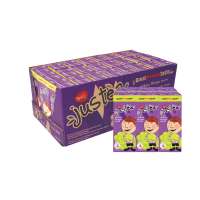
Yeos Justea White Grape Green Tea 250ML (Case Of 24)
$10.70$11.51
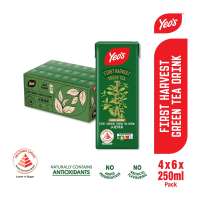
Yeos First Harvest Green Tea Packet Drink 250ML (Case of 24)
$10.70$13.02
Yeos Longan Red Date Packet Drink 250ML (Case Of 24)
$10.70$11.51
About Yeo’s
Yeo’s, formally associated with Yeo Hiap Seng Limited (YHS), is a Singapore-origin food and beverage company best known for its Asian drinks, soy milk, sauces, canned foods and other packaged products. The brand has more than a century of history, having evolved from a small soy sauce business in Fujian, China, into an international Asian food and beverage group.1
Today, Yeo’s maintains a particularly prominent position in Singapore and Malaysia, while its products are distributed across markets in Asia-Pacific, Europe, North America and Oceania. The Singapore-listed Yeo Hiap Seng group states that its products are sold in more than 55 countries.2
Quick facts
| Category | Information |
|---|---|
| Brand | Yeo’s / YEO’S |
| Company | Yeo Hiap Seng Limited and its group companies |
| Origins | Zhangzhou, Fujian, China |
| Founder | Yeo Keng Lian |
| Founded | 1900/1901* |
| Singapore operation | Established in 1935 |
| Industry | Food & beverage |
| Major markets | Singapore, Malaysia and other international markets |
| Best known for | Soy milk, chrysanthemum tea, Asian drinks, sauces and canned foods |
| Current headquarters / registered office | 3 Senoko Way, Singapore |
| Listed company | Yeo Hiap Seng Limited is listed on the Singapore Exchange |
| Current CEO | Ong Yuh Hwang |
| Major shareholder | Far East Organization and parties associated with it |
| Brand positioning | Asian heritage, familiar flavours, convenience and innovation |
Yeo’s own sources cite both 1900 and 1901* in different historical materials. Its Singapore history page states the business was founded in 1900, while its Malaysian milestone page dates the origin to 1901.
Origins and early history
The origins of Yeo’s lie not in Singapore or Malaysia, but in Zhangzhou, Fujian Province, China. Around the beginning of the 20th century, Yeo Keng Lian established a small-scale business producing soy sauce. At the time, soy sauce was an essential everyday ingredient in Chinese cooking, and the company built its reputation on product quality.3
The Yeo family subsequently relocated the business to Nanyang, the historical term commonly used for Southeast Asia, during the 1930s. In 1935, the Yeo Hiap Seng Sauce Factory was established in Singapore as a partnership with capital of S$150.4 This Singapore operation became the foundation of what eventually grew into Yeo Hiap Seng.
Expansion into Malaysia
Yeo’s expansion into Malaysia began in the 1940s. According to the company’s Malaysian history records, the soy sauce business expanded into Malaysia in 1942. In 1959, Yeo Hiap Seng was incorporated in Malaysia with a canning plant in Petaling Jaya, Selangor.5
Malaysia subsequently became one of the company’s most important manufacturing and consumer markets. Yeo’s Malaysia describes the country as a vital manufacturing centre for the group’s international distribution network, supplying markets including Indonesia, New Zealand, Australia, Europe, Indochina and the United States.6 This deep integration into manufacturing and commercial development explains why Yeo’s holds a particularly strong cultural presence in Malaysia beyond being merely an imported Singaporean brand.
Transformation from soy sauce to food and beverage
A pivotal development in the history of Yeo’s was the decision to diversify beyond soy sauce. Beginning in the 1950s, Yeo Hiap Seng started producing a broader range of food and beverage products under the Yeo’s brand.7
Among its early innovations was canned curry chicken. This was significant because canning transformed foods that traditionally required extensive preparation into products that could be stored and consumed conveniently. Yeo’s describes itself as the first company to develop canned curry chicken.8 Following this success in food preservation, the company expanded into beverages.
Rise of soy milk and Asian drinks
Perhaps the most critical turning point in the brand’s history was the development of packaged Asian beverages. In 1953, Yeo Hiap Seng pioneered the bottling of soybean milk and chrysanthemum tea.9
These products were especially important because beverages such as soy milk and chrysanthemum tea had traditionally been associated with freshly prepared or homemade consumption. Yeo’s helped transform them into mass-market packaged beverages. This established a defining characteristic of the brand: combining traditional Asian flavours with modern food-processing technology and convenient packaging. This formula remains central to the identity of Yeo’s today.
Tetra Brik innovation
The history of Yeo’s is notable for its early adoption of aseptic packaging. In 1967, Yeo Hiap Seng states it became the first company in the world to package Asian drinks in Tetra Brik aseptic containers using the UHT process.8
This technological development allowed the company to package beverages in lightweight cartons with extended shelf life, rather than relying primarily on traditional bottles or cans. For consumers, this made Asian herbal beverages and soy milk easier to transport, store and consume, and suitable for modern supermarkets and mass distribution. Through this innovation, Yeo’s effectively industrialised and modernised the distribution of traditional Asian drinks.
Product diversification
By the late 1960s, Yeo’s had developed a considerably broader food and beverage portfolio. Its products included:
Beverages
- Soybean milk
- Chrysanthemum tea
- Asian herbal drinks
- Fruit drinks
- Tea
- Other traditional Asian beverages
Sauces
- Soy sauce
- Chilli sauce
- Tomato sauce
- Oyster sauce
- Other culinary sauces
Food
- Canned foods
- Curry products
- Instant noodles
- Other Asian food products
Official histories note the expansion from soy sauce and beverages into products including chilli sauce, tomato sauce, oyster sauce and instant noodles.10 This diversification helped turn Yeo’s from a soy sauce manufacturer into a comprehensive Asian food and beverage company.
Corporate structure and listing
Yeo Hiap Seng Limited was incorporated in Singapore on 20 December 1955, originally as Yeo Hiap Seng Canning & Sauce Factory Limited. It adopted its present name later and became publicly listed in 1968.11 The Malaysian business was separately incorporated as Yeo Hiap Seng (Malaysia) Sdn Bhd, reflecting the group’s development into a network of companies rather than a single operating entity.12
Today, Yeo Hiap Seng Limited is listed on the Singapore Exchange (SGX).13 There is an important distinction between Yeo’s, the consumer-facing brand seen on products such as soy milk, chrysanthemum tea, sauces and canned foods, and Yeo Hiap Seng Limited, the Singapore-listed corporate entity behind the broader group which consists of different legal entities across various countries.14
Main product categories
The current Malaysian portfolio illustrates the extent of the brand’s diversification, though specific ranges vary by market to suit local tastes and regulations.
Asian drinks
This remains one of the most recognisable categories for Yeo’s. Products include Chrysanthemum Tea, Lychee, Winter Melon, Grass Jelly Drink, Sugar Cane, Chrysanthemum Tea with Luo Han Guo, Bird’s Nest Drink, Lemon Barley and Longan Red Date.17
Soy beverages
Soy remains arguably the most historically important beverage category. The current range includes Soy Bean Milk, Black Soy Milk, Brown Sugar Soy Milk, Soy Immuno, Super Sprouts Original, Super Sprouts Chocolate and Super Sprouts Strawberry.18
Tea
The modern portfolio also includes White Peach Tea, Passion Fruit Tea, Lemon Tea, First Harvest Green Tea and Jasmine Green Tea.16
Other products
Depending on the market, the portfolio also includes food products, sauces, instant noodles and other brands.20
Brand positioning and cultural significance
Yeo’s has positioned itself around recognisable Asian flavours. Rather than competing primarily as a Western-style global beverage company, it has historically commercialised flavours associated with Asian food traditions, such as soy milk, chrysanthemum tea, winter melon, grass jelly, sugar cane, longan and red date. The company describes its Asian drinks as combining Asian heritage and traditional recipes with modern brewing processes.15
Significance in Singapore and Malaysia
Yeo’s has a particularly strong cultural association with Singapore and Malaysia. In Singapore, it is a long-established local food and beverage name with roots going back to the 1930s. In Malaysia, the company developed substantial manufacturing and distribution operations and became deeply integrated into everyday consumer culture, describing itself as having an “entrenched presence” in the market.16
For several generations of consumers, products such as Yeo’s Soy Bean Milk and Chrysanthemum Tea have been familiar supermarket and convenience store items. This provides the brand with heritage and nostalgia that newer beverage companies often cannot easily reproduce.
International presence
Although strongly associated with Singapore and Malaysia, the business of Yeo’s is international. The group states its global network spans Asia-Pacific, Europe, North America and Oceania.24 Corporate profiles indicate that products are distributed in more than 55 countries worldwide, with production facilities in Singapore, Malaysia and China.19
Yeo’s has also established operations or partnerships in markets including Indonesia, Hong Kong, China, Canada and the United States, among others.25 This international strategy is well-suited to Asian food products due to the substantial Asian communities globally who are familiar with these flavours.
Corporate ownership and management
Yeo Hiap Seng Limited is a publicly listed company with a controlling shareholder. According to its 2025 annual report, Far East Organization Pte. Ltd. held approximately 53.84% of issued shares as of 3 March 2026, with several related parties also holding substantial interests.21
As of 2026, Ong Yuh Hwang serves as Chief Executive Officer, having assumed the role on 1 January 2023.22 The current chairman is Na Wu Beng, who took office in April 2025, while Edward Averrill Ng Yong Sheng serves as Deputy Chairman and Executive Director.14 The company’s registered office is located at 3 Senoko Way, Singapore 758057.23
Brand philosophy
Yeo’s describes its corporate purpose as “to nourish every home with natural goodness across generations.”15 Its stated vision is to become a leading Asian company bringing innovative food and beverage products with natural goodness to consumers. Listed corporate values include Integrity, One Team, Ownership, Excellence and Entrepreneurship.15
This reflects an evolution from a traditional Asian food manufacturer to a modern Asian F&B company that leverages heritage as a competitive advantage while continuing to innovate.
Major historical milestones
- 1900/1901 — Yeo Keng Lian establishes the original soy sauce business in Zhangzhou, Fujian.3
- 1935 — Yeo Hiap Seng Sauce Factory established in Singapore.5
- 1940s — Business expands into Malaya/Malaysia.6
- 1950 — Yeo’s begins producing food and beverage products beyond soy sauce; canned curry chicken becomes a notable innovation.7
- 1953 — Bottled soybean milk and chrysanthemum tea are pioneered.9
- 1959 — Malaysian company incorporated with a canning plant in Petaling Jaya.5
- 1967 — Yeo’s pioneers Tetra Brik aseptic packaging using UHT for Asian drinks.8
- 1968 — Yeo Hiap Seng becomes publicly listed in Singapore.13
- 1975 — Yeo Hiap Seng (Malaysia) Berhad listed on the Kuala Lumpur Stock Exchange.
- 1990s–2000s — The brand continues international expansion and develops new products and markets.
- 2010s — Yeo’s strengthens its Asian beverage leadership and expands its international footprint.
- 2020s — The group focuses on portfolio development, changing consumer preferences, digital marketing, international markets and sustainability. Its 2025 annual report is the latest currently listed on the investor-relations website.21
Distinctive characteristics
From a branding perspective, Yeo’s is defined by five major characteristics:
- Heritage: With origins dating to around 1900/1901, the brand claims more than a century of history.3
- Asian identity: Unlike many multinational beverage companies rooted in Western consumer culture, Yeo’s built its portfolio around Asian flavours.
- Innovation: Its history includes notable innovations such as canned curry chicken, bottled soy milk and chrysanthemum tea, and aseptic carton packaging.8
- Mass-market accessibility: Products are generally positioned as everyday food and beverages rather than luxury items.
- Nostalgia: Particularly in Singapore and Malaysia, Yeo’s is associated with childhood, family meals, school lunches, hawker culture and traditional Asian beverages.
Overall assessment
Yeo’s is best understood not merely as a soy milk or drinks brand, but as one of Southeast Asia’s long-established Asian food and beverage brands. Its history follows a clear progression from soy sauce to Asian foods, bottled Asian beverages, modern packaging, mass-market F&B and finally an international Asian food brand.
Its strongest brand equity derives from the combination of heritage, Asian taste, familiarity, affordability and product innovation. While its roots are Chinese and its modern corporate history is strongly associated with Singapore, Malaysia has become one of its most important manufacturing and consumer markets.19 Both its oldest products and newest strategy are built around the same concept: taking familiar Asian flavours and making them convenient and accessible to modern consumers. Consequently, Yeo’s stands as a significant example of a home-grown Southeast Asian brand that successfully transformed traditional regional food culture into a scalable consumer brand.
References
- About Us – Yeo’s
- History & Heritage – Yeo’s
- Our Milestones – Yeo’s
- 1901 – Yeo’s
- 1935 – Yeo’s
- Corporate Info – Yeo’s
- 1950 – Yeo’s
- 1967 – Yeo’s
- PDPA – Yeo’s
- Products – Yeo’s
- Brands – Yeo’s
- Malaysia – Yeo’s
- Nourishing
- Board of Directors – Yeo’s
- Purpose, Vision & Values – Yeo’s
- Home – Yeo’s
- Yeo’s Archives – Yeo’s
- Beverages Archives – Yeo’s
- Yeo’s – Serving Up Goodness
- Products – Yeo’s
- Annual Reports – Yeo’s
- Corporate Governance – Yeo’s
- AGM Updates – Yeo’s
- Asia Africa Oceania / South Asia – Yeo’s
- Yeos Global