Shop on Lazada
Yomerto products
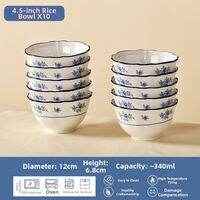
Yomerto | French Style Dinner Plate Glazed Undercolor Deep Plate
$37.08$63.10
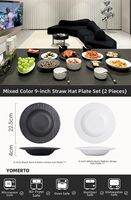
Yomerto | Beautiful Premium Ceramic Plates
$22.65$59.75
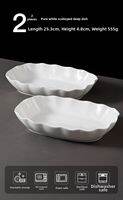
Yomerto | New Elegance Pure White Deep Dinner Plate
$18.34$58.51
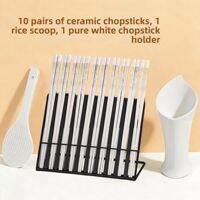
Yomerto | Antibacterial Moisture-Resistant Non-Slip Ceramic Chopsticks
$20.44$32.85
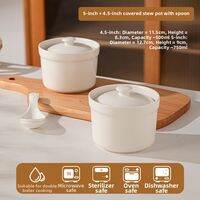
Yomerto | Home-use Covered Stewing Pot for Birds Nest and Egg Pudding
$19.40$33.83
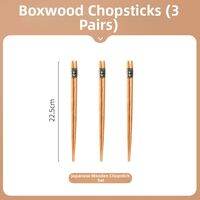
Yomerto | Creative Anti-slip Wooden Chopsticks Set
$11.45$31.31
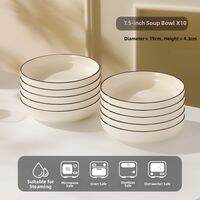
Yomerto | Home Use 2026 New Underglaze Color Creamy Style Deep Plate
$75.90$76.16
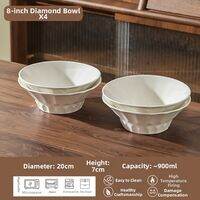
Yomerto | Multi-use Large Ramen Soup Bowl
$26.24$70.04
About Yomerto
Overview
Yomerto (Chinese: 悠米兔) is a Chinese lifestyle brand specialising in daily-use ceramics and kitchenware. Headquartered in Jingdezhen, Jiangxi Province, the brand is affiliated with Jingdezhen Yijiang Ceramics Co., Ltd. and operates primarily through e-commerce channels 12. Originally known for creative hand-painted and cartoon-style tableware, Yomerto has expanded its product range to include Chinese, Japanese, European, and Nordic-inspired bowls, plates, cups, bakeware, and kitchen accessories 1. It is positioned as a design-oriented brand that emphasises everyday aesthetics and targets younger consumers through online retail platforms 2.
Corporate background
| Item | Details |
|---|---|
| Brand name | Yomerto |
| Chinese names | 悠米兔 / 莜米兔 (variant spellings exist in different sources) |
| Location | Jingdezhen, Jiangxi Province, China |
| Parent company | Jingdezhen Yijiang Ceramics Co., Ltd. |
| Founded | 2013 |
| Key categories | Tableware, ceramics, kitchenware, homeware |
| Sales channels | E-commerce platforms, online flagship stores |
| Market positioning | Design-led daily-use tableware |
| Core market | Chinese consumers, particularly younger demographics seeking stylish homeware |
Public records generally cite 2013 as Yomerto’s founding year, although some sources list 2014; the latter date may correspond to a specific operational or e-commerce development milestone rather than the initial establishment 2. The parent company, Jingdezhen Yijiang Ceramics Co., Ltd., is engaged in ceramic research and development, production, and e-commerce sales 1. Unlike traditional ceramic brands that rely on offline department stores, Yomerto was established by a team of young entrepreneurs who began with an online flagship store before expanding to multiple platforms including Taobao, JD.com, Douyin, Kuaishou, and Xiaohongshu as order volumes grew 1.
Products and design philosophy
Yomerto’s core offering remains tableware, though the brand has evolved from a specialist ceramic label into a broader kitchen and home lifestyle brand 3. Current product categories available through official online stores include tableware sets, traditional Chinese dinnerware, Nordic-style pieces, Japanese-style ware, European tableware, bowls, plates, creative serving dishes, stew pots, bakeware, roasting trays, children’s tableware, drinkware, glassware, cutlery, chopsticks, spoons, placemats, kitchen gadgets, and general household items 3.
The brand does not adhere to a single aesthetic but instead covers a wide spectrum of styles suited to diverse home décor preferences. These include Japanese-inspired natural and minimalist designs, European tableware emphasising formality and colour, Nordic modern luxury, traditional Chinese dining culture, and playful cartoon or pet-themed ranges aimed at families and younger consumers 1. This multi-style approach allows consumers to select products based on interior design compatibility rather than brand loyalty alone.
Early Yomerto products were distinguished by original, youthful designs featuring motifs such as reindeer, cartoon characters, hand-painted florals, princess themes, pure white finishes, and baking-specific items 1. This differentiated the brand from traditional Jingdezhen porcelain, which is typically associated with classical blue-and-white patterns and collectible craftsmanship. Instead, Yomerto focuses on integrating ceramics with modern home aesthetics and contemporary lifestyles 1.
Materials and manufacturing
Historical brand materials have highlighted the use of bone china, underglaze and in-glaze decoration, and high-temperature firing techniques, with certain lines marketed for their lightness, translucency, and durability 1. However, not all Yomerto products are bone china; the current catalogue includes ceramics, glass, and other materials, and specific composition should be verified via individual product listings. Many items are currently described as featuring underglaze decoration 3.
Regulatory history
In 2022, the Xihu District Market Supervision Administration in Nanchang, Jiangxi Province, issued penalties against Jingdezhen Yijiang Ceramics Co., Ltd. for unfair competition. The authority found that certain daily-use ceramics sold through the “Yomerto Flagship Store” on Tmall were labelled as originating from Jingdezhen when they were actually sourced from suppliers in Chaozhou, Guangdong Province. The company was ordered to cease the misleading conduct and fined RMB 200,000 for false origin claims.
This enforcement action pertained to specific products and does not indicate that all Yomerto goods are manufactured outside Jingdezhen. Nevertheless, it demonstrates that the brand’s supply chain has included non-Jingdezhen sources, and that the brand’s geographic identity and actual manufacturing locations have not always been identical.
Relationship with Jingdezhen
Yomerto’s connection to Jingdezhen operates on three levels. Firstly, the parent company is registered in Jingdezhen and the brand has long been identified with the city 2. Secondly, the company’s stated business scope encompasses ceramic R&D, design, production, and e-commerce, leveraging Jingdezhen’s industrial resources. Thirdly, regulatory findings confirm that at least some products have been sourced from other regions, meaning that brand origin and manufacturing location are not synonymous. This reflects a broader pattern among modern Chinese ceramic e-commerce brands where headquarters, design studios, warehouses, and factories may be geographically dispersed.
Sales channels and market positioning
Yomerto is an e-commerce-native brand whose growth parallels the expansion of China’s online retail sector. Confirmed sales platforms include JD.com, Taobao/Tmall, Douyin, Kuaishou, and Xiaohongshu 3. Recruitment materials for the parent company have listed Tmall and JD.com as primary sales channels 3. Compared to the traditional ceramics distribution model of factory-to-distributor-to-retailer, Yomerto follows a design-and-supply-chain-to-e-commerce-platform-to-content-marketing pathway.
Within the Chinese tableware market, Yomerto occupies the mass to mid-range segment as a design-focused daily-use brand. It does not position itself as a luxury or collectible porcelain maker but instead prioritises visual appeal, practicality, accessible pricing, stylistic variety, and suitability for everyday dining, gifting, and household use 2. Its competitive set comprises modern homeware and e-commerce tableware brands rather than traditional artisanal ceramic studios.
Target audience
Yomerto’s typical consumers include young families seeking tableware that complements their kitchen and dining aesthetics; women interested in home styling and dining presentation; young renters and solo dwellers looking to enhance living spaces within limited budgets; and newlyweds or new homeowners purchasing tableware sets and gift boxes 3. The brand’s visually appealing products are also well-suited to image and short-video platforms, aligning with content-driven e-commerce trends.
Brand identity and philosophy
Key descriptors for Yomerto’s visual and product language include youthfulness, practicality, design differentiation through form and pattern, stylistic diversity, and value for money. The brand’s official JD.com store states that it values the everyday dining moments of homemakers and aims to create household objects that become part of daily memories 3. In essence, Yomerto seeks to bring design and ritual to ordinary meals.
Product line evolution
Yomerto’s expansion can be characterised in three phases. The first phase centred on original creative ceramic tableware with distinctive hand-painted and cartoon designs that established brand recognition 1. The second phase developed a comprehensive tableware system encompassing bowls, plates, cups, cutlery, and multi-person sets. The third phase has seen further diversification into bakeware, glassware, children’s products, kitchen tools, storage solutions, and general homeware 3. As of 2026, the brand continues to expand beyond traditional ceramics into glass drinkware and broader lifestyle categories, evolving from a ceramic tableware label into a more complete home and kitchen lifestyle brand 3.
Comparison with traditional Jingdezhen brands
| Dimension | Traditional Jingdezhen ceramic brands | Yomerto |
|---|---|---|
| Core value | Craftsmanship, heritage, collectibility | Design, utility, lifestyle aesthetics |
| Primary consumers | Collectors, traditional porcelain enthusiasts | Young families, mass-market consumers |
| Style | Classical, Eastern | Multi-style, youth-oriented |
| Sales channels | Offline retail, distributors, trade fairs | E-commerce-centric |
| Product focus | Art pieces, high-end porcelain, daily-use ceramics | Daily tableware and homeware |
| Purchase motivation | Craft and cultural significance | Aesthetics, practicality, value |
| Product refresh rate | Relatively traditional | Faster, driven by e-commerce cycles |
Yomerto represents a business model that adapts Jingdezhen’s ceramic industry to the daily lives of younger, digitally native consumers.
Strengths and challenges
Yomerto benefits from strong e-commerce capabilities, extensive stylistic range, the cultural capital associated with Jingdezhen, accessible pricing that encourages everyday use of designed tableware, and inherent suitability for social media content creation 1. However, the brand faces challenges including intense competition in the aesthetically driven tableware segment, product homogeneity across the category, the need to ensure consistency between marketing claims and actual supply chains following the 2022 regulatory penalty, and the transition from viral product success to sustained brand equity and classic product lines.
Naming conventions
Various Chinese name forms appear in public sources, including 悠米兔 and 莜米兔, alongside the Latin-script forms Yomerto and YOMERTO 2. The most commonly used Chinese consumer-facing name is 悠米兔. For reference purposes, Yomerto (悠米兔) is the preferred primary designation, with variant Chinese spellings understood to refer to the same brand rather than distinct entities.