Shop on Lazada
Aqara products
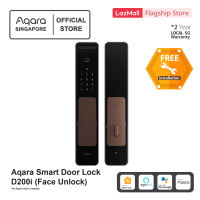
Aqara Smart Door Lock D200i (Wi-Fi + Zigbee Edition). Apple HomeKey & Google Home Face unlock
$1,069.00$1,099.00
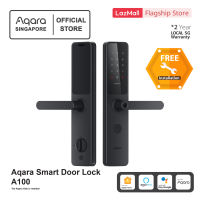
Aqara Smart door lock Aqara A100 Smart Door Lock (International Zigbee Edition) Apple Homekit & Aqara App
$649.00$669.00
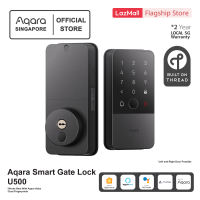
Aqara Smart Gate Lock U500 - Thread support Apple Home & Google Home compatible 2-year warranty black smart digital gate lock.
$660.00$799.00
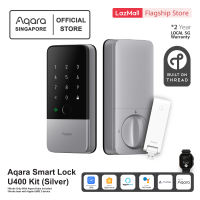
Aqara Smart Door Lock U400 Build to Support Apple UWB.
$839.00$849.00
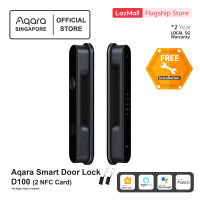
Aqara Smart door lock Aqara D100 Smart Door Lock (Zigbee Edition). Apple HomeKey & Google Home Integrated Doorbell
$839.00$869.00
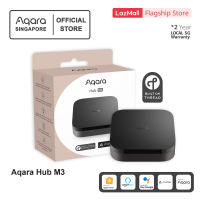
AQARA Hub M3 with (IR) Support Apple Home Alexa and Google Home with POE support
$274.00$289.00
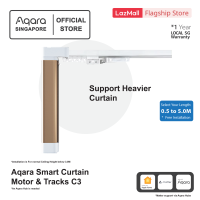
AQARA Smart Curtain Motor & Tracks With installation support apple home google assistance Alexa
$949.00$999.00
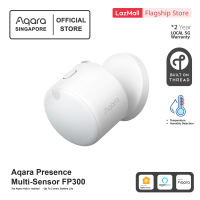
Aqara Presence Multi-Sensor FP300 (support Zigbee and Thread)Works with Apple home and Alexa
$94.00$99.00
About Aqara
Aqara is a global smart home and Internet of Things (IoT) brand owned by Lumi United Technology Co., Ltd., a technology company headquartered in Shenzhen, China. The company develops connected devices and software for residential and commercial automation, with a particular emphasis on sensors, smart locks, switches, cameras, hubs, lighting, curtain controls and intelligent building systems 1.
Among smart home enthusiasts, Aqara is particularly well known for its compact, relatively affordable sensors, extensive automation capabilities and integration with ecosystems such as Apple Home, Google Home, Amazon Alexa, Samsung SmartThings and Matter 2.
Overview
| Field | Information |
|---|---|
| Brand | Aqara |
| Chinese parent company | Lumi United Technology Co., Ltd. |
| Industry | Smart home / IoT / building automation |
| Founded | 2009 — Lumi; Aqara brand launched in China in 2016 |
| Founder / CEO | Eugene You (You Yanyun) |
| Headquarters | Shenzhen, Guangdong, China |
| Main market | Smart home and building automation |
| Major technologies | Zigbee, Wi-Fi, Bluetooth, Thread, Matter, AI/IoT |
| Companion platform | Aqara Home |
| Major ecosystems | Apple Home, Google Home, Amazon Alexa, Samsung SmartThings, Matter |
| Product categories | Hubs, sensors, switches, cameras, locks, lighting, curtain controllers, thermostats and more |
| Global reach | 170+ countries and territories |
| Activated devices | 56+ million globally as of Dec. 31, 2025 |
| Product scale | 2,200+ SKUs across 50+ categories as of Dec. 31, 2025 |
The figures above are derived primarily from Aqara’s corporate materials; the company states that the 56-million-device and 2,200-SKU metrics were measured as of December 31, 2025 3.
History
Lumi: the company behind Aqara
Aqara’s history begins with Lumi United Technology rather than the Aqara brand itself. Lumi was founded in 2009 by Eugene You (You Yanyun). According to Aqara, You’s background was in automation control, wireless sensor networks, energy management and building-control technologies. His original vision extended beyond consumer smart home gadgets; he aimed to make buildings more intelligent, connected and energy-efficient 4.
The company initially concentrated on IoT and building-automation technologies. Over time, Lumi moved increasingly into consumer smart home products, eventually becoming one of China’s major smart home technology companies.
Creation of Aqara
The Aqara brand was established in 2016 in China. The name is derived from the Latin words “Acutulus”, meaning smart or intelligent, and “Ara”, meaning home 5. This marked an important transition: instead of concentrating primarily on underlying IoT technology, Lumi created a recognisable consumer brand around a complete smart home ecosystem. Aqara subsequently expanded outside China, developing localised products, apps, distribution networks and partnerships with major technology ecosystems 6.
Expansion timeline
- 2009 — Lumi is founded.
- 2014 — Lumi develops its smart home business.
- 2016 — Aqara brand launched in China.
- 2017 — Aqara expands its smart home ecosystem and opens an Aqara Home experience store.
- 2018 — Aqara develops its HomeKit-oriented product range.
- 2019–2020 — International expansion accelerates, including overseas subsidiaries and localised products.
- 2020 onward — Aqara expands its presence through Amazon, Apple retail and other international channels.
- 2022 — Aqara participates in major technology-industry events and expands partnerships.
- 2024 — Aqara continues expanding its global product portfolio and smart-building business.
- 2025 — Aqara reports more than 2,200 SKUs across 50+ categories and more than 56 million activated devices worldwide 7.
Product portfolio
Aqara’s strategy centres on building a complete automation ecosystem rather than manufacturing isolated smart devices. Its current product portfolio includes:
Hubs
Hubs form the central infrastructure of the Aqara ecosystem. Examples include:
- Hub M3
- Hub M2
- Hub M100
- Hub M200
- Hub M1S Gen 2
- Hub E1
- Camera Hub G3
- Camera Hub G2H Pro
A hub connects Aqara’s lower-power devices and coordinates automations between them. Depending on the model, Aqara hubs can combine technologies such as Zigbee, Wi-Fi, Bluetooth, infrared and Matter 8.
Sensors
Sensors are arguably the category that made Aqara especially popular. Its ecosystem includes sensors for:
- Motion
- Presence
- Doors and windows
- Temperature
- Humidity
- Light
- Vibration
- Water leakage
- Smoke and other environmental conditions
- Air quality
- Human presence
The basic concept is that sensors detect what is happening, and automations decide what should happen next. For example, a door opening may trigger hallway lights to turn on, a camera to begin recording and a notification to be sent. Conversely, if no person is detected, lights may turn off, the air conditioner may change state and selected devices may enter an energy-saving mode. This sensor-first approach differentiates Aqara from smart home brands that concentrate mainly on appliances and entertainment devices.
Smart switches and controllers
Aqara produces a large range of controls for conventional electrical equipment, including:
- Wall switches
- Wireless switches
- Mini switches
- Smart plugs
- Button controllers
- Dimmer controls
- Remote controls
- Curtain controllers
- Roller-shade controls
- HVAC/air-conditioner controllers
One of Aqara’s major philosophies is that users do not need to replace everything in their home with a smart appliance. Instead, a conventional device can sometimes be automated through a smart switch, relay, plug, IR controller or other controller. This makes Aqara particularly useful for retrofitting existing homes.
Smart locks and security
Security is another major part of Aqara’s portfolio. Its smart locks include products such as the Smart Lock U300 and U400, while its security lineup includes cameras, video doorbells, sensors and alarm functionality. Aqara currently lists door locks and cameras among its core product categories 9.
The objective is to connect traditionally separate security products into a single automation system. For example, when someone approaches the door, presence is detected, the camera identifies or observes the event, the smart lock provides access, lights turn on and selected devices change state. This reflects Aqara’s product strategy moving beyond simple smart gadgets toward an integrated security and automation platform.
Cameras
Aqara also manufactures connected security cameras. Its camera products include:
- Camera Hub G3
- Camera Hub G2H
- Camera G2H Pro
- Video doorbells
- Camera/security hubs
Some Aqara cameras serve a dual purpose as both a security camera and a smart home hub. This allows a single device to provide video monitoring while also acting as part of the automation infrastructure 10.
Lighting
Aqara has expanded beyond sensors and switches into lighting. Its lighting ecosystem is designed to work with its automation platform, allowing lighting to respond to motion, presence, time, door status, ambient light, scenes and other smart home events. This enables a fundamentally different approach from manually controlling a light; instead of telling the light what to do, the user tells the home what they want the light to do automatically.
Curtains and blinds
Aqara is also heavily involved in motorised curtain and shade automation. Curtain controllers can automatically open or close curtains according to time, sunrise/sunset, temperature, presence or other automation conditions. This exemplifies Aqara’s ecosystem philosophy, as a curtain controller interacts with sensors and other devices rather than operating independently.
Aqara Home
At the software level, the main Aqara ecosystem is Aqara Home. The Aqara Home app acts as the central interface for device setup, device control, automation, scenes, notifications, security, remote access and device management. Aqara’s hubs allow connected accessories to be managed through Aqara Home while also exposing compatible devices to external smart home platforms 11.
Zigbee
One of the most important technologies in Aqara’s ecosystem is Zigbee. Rather than connecting every small sensor directly to Wi-Fi, many Aqara sensors use low-power wireless communication with an Aqara hub. This offers several advantages, including low power consumption, small sensor designs, long battery life, reduced Wi-Fi congestion, fast local communication, mesh networking and reliable automation.
Aqara’s documentation describes Zigbee as allowing connected accessories to continue operating even when the home’s internet connection is unstable or disconnected, depending on the automation and device configuration 12. This is one reason Aqara sensors can be considerably smaller and more battery-efficient than many Wi-Fi-based alternatives.
Matter
Aqara has increasingly embraced Matter, the cross-platform smart home standard created to make devices more interoperable across manufacturers and ecosystems. Aqara describes Matter as a standard intended to improve compatibility between different smart home platforms and manufacturers 13.
This is strategically important for Aqara. Historically, a smart home customer might have had to decide whether to build an Apple Home, Google Home or Alexa house. Matter attempts to make that decision less restrictive. Compatible Aqara devices can participate in supported third-party Matter ecosystems, subject to the capabilities and connectivity requirements of the particular product 14.
Apple Home
Aqara has a particularly strong relationship with the Apple Home ecosystem. The company began integrating with Apple’s HomeKit ecosystem relatively early in its international smart home development and has subsequently developed numerous products compatible with Apple Home 15. This helped Aqara become especially popular among Apple users seeking HomeKit-compatible sensors and switches, home automation, Siri control and Matter-based Apple Home integrations. Aqara’s developer documentation currently provides instructions for connecting compatible products to Apple Home through both HomeKit and Matter 16.
Other ecosystem compatibility
Aqara’s strategy does not force users to rely solely on Aqara Home. Depending on the specific product, Aqara supports integration with ecosystems such as Apple Home, Google Home, Amazon Alexa, Samsung SmartThings and Matter. Aqara emphasises compatibility with major third-party platforms as part of its ecosystem strategy 17. This broad interoperability is considered one of the brand’s most important competitive advantages.
Technology philosophy
Aqara’s products are built around several layers: sensors, connectivity, hub, automation engine, smart home platform and third-party ecosystems. For example, a motion sensor communicates via Zigbee or Thread to an Aqara Hub, which triggers an automation that adjusts lights, air conditioning and curtains, sends a notification and updates platforms such as Aqara Home, Apple Home, Google Home, Alexa or Matter. Crucially, Aqara is not simply selling individual devices; it is selling the relationships between devices.
Automation
Automation is arguably Aqara’s defining feature. While a basic smart device allows control from a phone, a smart home ecosystem lets the house control itself. Examples include:
- Morning: At 7:00 AM, curtains open, bedroom lights gradually turn on, the air conditioner changes state and selected appliances activate.
- Leaving home: When the last person leaves, lights turn off, doors are checked, security mode activates, cameras change state and selected appliances are powered down.
- Coming home: When someone approaches, the door lock detects the authorised user, entry lights activate, curtains adjust and the air conditioner turns on.
- Water leak: If a leak sensor detects water, Aqara sends an alert, the hub sounds an alarm, a smart valve can potentially shut off water where supported, and a camera can provide visual confirmation.
This event → condition → action model is central to Aqara.
AI and spatial intelligence
Aqara’s more recent corporate strategy goes beyond traditional smart home automation. The company describes its long-term direction as spatial intelligence: environments should understand people, their behaviour and their surroundings and respond accordingly. Its stated vision involves combining IoT, AI, sensors, automation, data and building systems. The goal is for a building to become more adaptive rather than merely remotely controlled. Aqara’s CEO and founder Eugene You describes this as making the relationship between people and their environments more seamless and intuitive 18. In this envisioned model, the house understands what is happening and responds appropriately, rather than waiting for explicit commands.
Commercial and building automation
Aqara is not limited to consumers. Its business now includes solutions for residential developments, hotels, offices, property management, smart communities, real estate, building security, access control and building automation. The company has developed platforms such as Aqara Studio and the Aqara Developer Platform for larger-scale IoT and building-management applications 19. This shifts Aqara’s identity from a smart home accessory company to an IoT and intelligent-building technology company with a consumer smart home brand.
Global scale
Aqara has expanded substantially outside China. According to the company’s latest brand information, as of December 31, 2025, Aqara had:
- 2,200+ SKUs
- 50+ product/solution categories
- 56+ million activated devices worldwide
- Presence across 170+ countries and territories
- Recognition as a national-level Chinese “Little Giant” enterprise 20.
Older Aqara corporate material gives smaller figures because those figures were published earlier; therefore, the newer 2025 figures are the more appropriate ones to use when describing Aqara’s current scale 21.
Founder
Eugene You (You Yanyun) is the founder and CEO associated with Aqara. His background is particularly relevant to understanding the company because Aqara did not originate as a conventional consumer-electronics startup. You’s expertise includes automation control, wireless sensor networks, building automation, energy management, power electronics and IoT. Aqara states he earned master’s degrees from the South China University of Technology and the University of Utah and previously worked with high-tech companies and conducted technology research internationally 22. This background helps explain Aqara’s emphasis on sensors, energy efficiency, automation and building intelligence.
Relationship with Xiaomi
A common source of confusion is the relationship between Aqara and Xiaomi. They are not simply the same brand. Lumi historically developed products that interacted with Xiaomi’s smart home ecosystem, and Aqara’s products have had relationships with Xiaomi/Mi Home in various markets and periods. However, Aqara is a brand of Lumi United Technology, not a Xiaomi-owned brand 23.
Aqara has increasingly developed its own Aqara Home app, hubs, cloud services, ecosystem, global retail network and developer platform. Consequently, modern Aqara should be understood as an independent smart home ecosystem rather than merely a Xiaomi accessory brand.
Position relative to platform providers
Aqara is generally not trying to replace Apple, Google or Amazon as the primary consumer platform. Instead, it sits between the physical home and those ecosystems. For example, an Aqara sensor connects to an Aqara Hub, then to Aqara Home, then via Matter to Apple Home, Google Home or Alexa. Apple, Google and Amazon primarily provide the platform and ecosystem, while Aqara concentrates heavily on the physical devices and sensing/automation layer.
Factors contributing to popularity
Several characteristics have contributed to Aqara’s popularity:
- Small sensors: Aqara became particularly well known for compact sensors that can be installed almost anywhere.
- Low-power wireless technology: Zigbee-based products provide long battery life and avoid placing every sensor directly onto Wi-Fi.
- Extensive automation: Aqara provides many different device types that can interact with one another.
- Ecosystem compatibility: Support for Apple Home, Google Home, Alexa, Matter and other platforms makes Aqara attractive to users who do not want to be locked into a single ecosystem.
- Price-to-feature ratio: Aqara has generally positioned itself below many premium whole-home automation systems while providing a much broader ecosystem than basic smart-gadget manufacturers.
- Design: The company places considerable emphasis on relatively minimalist consumer-electronics design rather than the industrial appearance traditionally associated with automation hardware.
Limitations and criticisms
Ecosystem complexity
Aqara can be extremely powerful, but the ecosystem can become complicated once multiple communication standards and platforms are involved. A device may support Aqara Home, Zigbee, Matter, Apple Home, Google Home and Alexa, but support is not necessarily identical across all of them. A feature available in Aqara Home may not be available when the same device is exposed through another platform.
Hub dependence
Many Aqara devices historically require an Aqara hub. While this can be an advantage for reliability and battery life, it also means that buying several inexpensive sensors can eventually lead to a more substantial ecosystem investment.
Regional differences
Aqara products can vary by region in terms of radio frequencies, electrical standards, firmware, supported ecosystems, cloud services, availability and automation functions. Therefore, buying a product intended for another market can sometimes create compatibility problems.
Cloud and privacy considerations
Like other connected-home platforms, Aqara’s ecosystem involves apps, cloud services and account infrastructure. Aqara publishes privacy policies describing how information associated with its websites, applications and services is handled 24. For privacy-conscious users, it is worth distinguishing between local device-to-hub automation and functions that depend on cloud services.
Industry positioning
Aqara sits somewhere between consumer electronics and professional-style building automation. Its products are accessible enough for consumers to install, but the underlying philosophy—sensors, controllers, hubs, automation logic and building systems—is similar to professional automation.
| Segment | Examples |
|---|---|
| Smart home platforms | Apple Home, Google Home, Alexa, SmartThings |
| Premium building automation | KNX and professional automation systems |
| Consumer smart home ecosystems | Aqara, Philips Hue, Tapo, SwitchBot |
| Smart appliances | Samsung, LG, Bosch, etc. |
| Individual smart gadgets | Many smaller IoT brands |
Business model
Aqara’s business is essentially built around an ecosystem model. The company sells hubs, sensors, switches, cameras, locks, lighting, curtain controllers, other accessories, software/cloud services and professional building solutions. The strategic benefit is that one customer can potentially buy dozens of devices over time. For example, a first purchase of an Aqara hub may be followed by motion sensors, door sensors, temperature sensors, wireless switches, smart locks, cameras, curtain controllers, lighting and additional sensors. This creates a stronger customer relationship than selling a single standalone smart plug.
Current status
As of 2026, Aqara is best understood as a global smart home and intelligent-building technology company built around the Lumi United Technology ecosystem. It began with building automation and IoT technology, developed the Aqara consumer brand in 2016 and subsequently expanded into a broad ecosystem covering sensors, hubs, security, access control, lighting, climate control, curtains and software. Its current strategy is increasingly centred on three ideas:
- Ecosystem interoperability: Matter and integrations with Apple Home, Google Home, Alexa and other platforms.
- Intelligent automation: Using sensors and software to make homes react automatically rather than requiring constant manual control.
- Spatial intelligence: Using increasingly sophisticated sensors, AI and IoT technologies to make buildings understand their occupants and environment 25.
In summary, Aqara has evolved from a smart-device brand into a broader IoT platform and intelligent-building company.
References
- Aqara Company Introduction
- Contact us | AqaraWebsite
- Aqara Smart Hubs for Home Automation
- Everything Matter – Aqara
- The Aqara Brand Story
- Aqara’s Committment to The Environment & Sustainability
- Aqara Smart Hubs for Home Automation
- Aqara Smart Home Products
- Aqara Hub – Aqara
- Apple Home · Aqara Developer Platform Documentation
- Aqara Smart Home & Building Automation Solutions
- Aqara Privacy Policy – Aqara LLC
- Who Owns Aqara: Lumi United Technology and Xiaomi – LegalClarity
- Can someone help me understand the benefits of pairing the U400 with a Matter over Thread hub? – Aqara Products – Aqara Forum
- Privacy Policy
- Apple Home Integration – Apple Home Connect – Aqara Forum
- What is Matter over Thread? – Aqara LLC
- Matter & Thread: A Guide Through the Jungle – Everything Matter – Aqara Forum
- Matter & Thread: A Guide Through the Jungle – Everything Matter – Aqara Forum
- What is Dual Protocol – Aqara
- Aqara Hub M200: Smart Home Hub with Matter, Thread, IR Control & PoE
- Matter protocol and Aqara’s perfect partnership: My firsthand experience – Everything Matter – Aqara Forum
- Everything Matter – Aqara
- Everything Matter
- Aqara Zigbee Hubs and Their Differences (U: 28/02/25)