Shop on Lazada
Arena products
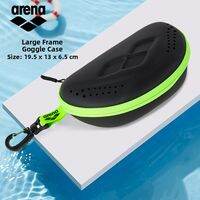
ARENA | Waterproof Breathable Goggles Case
$27.48$33.39
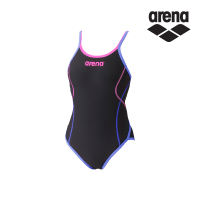
Arena ALJ2100W Ladies 1 pc Swimsuit
$199.00
Buy on Lazada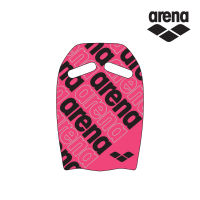
Arena ARAAC2227 Swimming Kickboard
$36.90
Buy on Lazada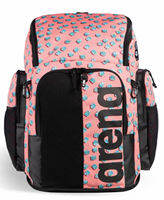
Waterproof Separate Dry Wet Large Capacity Swimming Backpack
$204.28$221.41
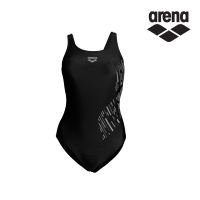
Arena ASW24000 Ladies 1 pc Swimsuit
$45.00$75.00
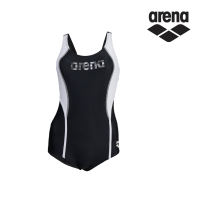
Arena ASW24011 Ladies 1pc Swimsuit
$47.40$79.00
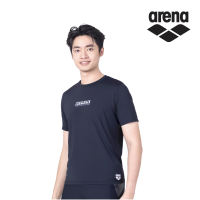
Arena AWWM25425 AQUACOOL Men Adults Short Sleeve UV Swimming Top
$46.75$55.00

Waterproof Wet-dry Separate Large-capacity Swim Bag
$144.47$167.61
About Arena
arena (stylised in lowercase as arena) is an international sportswear brand best known for competitive swimwear, swimming equipment, and aquatic sports products. Founded in 1973, the brand has developed a particularly strong reputation in competitive swimming, where it competes with brands such as Speedo and TYR. Its identity is built around performance, technical innovation, athlete partnerships, and a strong connection to water sports.1
Although its roots are German through founder Horst Dassler, arena developed as a European swimwear brand and is today an Italian company headquartered in Tolentino, Italy. Its products are sold internationally through subsidiaries, distributors, and regional partners.2
Brand overview
| Category | Information |
|---|---|
| Brand name | arena |
| Company | Arena S.p.A. |
| Founded | 1973 |
| Founder | Horst Dassler |
| Origin | Europe / France-associated origins |
| Current headquarters | Tolentino, Italy |
| Industry | Sportswear / sporting goods |
| Main specialisation | Swimming and aquatic sports |
| Major products | Racing swimsuits, training swimwear, goggles, swim caps, accessories |
| Known for | High-performance competitive swimming |
| Current ownership | Privately held; associated with international investment ownership |
| Official site | arena official site |
The company’s current corporate materials describe arena as a brand rooted in swimming since 1973, with a mission centred on promoting an active lifestyle “in and by the water”.3
History
Origins: 1972–1973
The story of arena begins at the 1972 Munich Summer Olympics. Its founder, Horst Dassler, was the son of Adidas founder Adolf “Adi” Dassler and was president of Adidas France. During the Munich Olympics, Dassler watched American swimmer Mark Spitz achieve one of the most extraordinary performances in Olympic history.
Spitz won seven gold medals, setting seven world records in the process. The performance convinced Dassler that swimming could support a specialised high-performance sportswear company.4
In 1973, arena was established as a brand dedicated specifically to aquatic sports. Its first major product was Skinfit, a competition swimsuit made from an extremely lightweight fabric. Arena describes Skinfit as weighing only about 18 grams and being designed to fit the swimmer almost like a “second skin”.5
This focus on technical swimwear rather than simply conventional bathing suits became one of the foundations of arena’s identity.
The 1970s: Establishing a competition brand
Arena quickly understood that elite athletes could play an important role in product development and brand recognition. In 1974, the company signed Australian swimmer Shane Gould, who had won five individual Olympic medals at Munich. Arena subsequently developed the Shane Gould Female Swimsuit Collection.6
The company then developed what it called its Arena Elite Team, recruiting some of the leading swimmers and aquatic athletes of the period. Among the athletes associated with the early team were:
- Mark Spitz — United States
- Novella Calligaris — Italy
- Steve Furniss — United States
- David Wilkie — United Kingdom
- Shirley Babashoff — United States
- Gary Hall — United States
- Klaus Dibiasi — Italy
- Ulrika Knape — Sweden
- Maxine “Miki” King — United States
At the 1976 Montreal Olympics, arena’s athletes reportedly won 44 Olympic medals. At the 1978 World Swimming Championships in West Berlin, arena-sponsored athletes won 62 medals and broke nine world records, according to the company’s historical account.7
This was enormously important to the young brand: arena was no longer simply a new swimsuit manufacturer but was becoming associated with elite international swimming.
Technical innovation
Innovation has remained central to arena’s brand positioning.
Skinfit
Skinfit, launched in 1973, was arena’s first major competition swimsuit. Its extremely lightweight construction was intended to minimise material and improve the relationship between swimsuit and swimmer.8
Flyback
In 1980, arena introduced Flyback, a competition swimsuit featuring thin straps and a more open back. The design was intended to provide swimmers with greater freedom of movement around the shoulders.9
X-Flat
In 1997, arena introduced X-Flat, whose fabric was approximately 25% lighter than its predecessor, according to arena’s corporate history.
Powerskin
In the early 2000s, arena introduced its Powerskin technology, which became a major part of its full-body racing-suit lineup. The technology represented a major transition toward highly engineered competition suits designed around hydrodynamics, compression, fit, and reduced drag.10
X-Glide
Arena’s X-Glide racing suits were another major development. In 2009, the technology received significant attention after TIME included the suits among its 50 Best Inventions of 2009, according to arena’s corporate report.11
Arena and professional swimming
Competitive swimming remains the heart of arena. Unlike many general sportswear companies, arena built its identity around a very specific sport. Its products are designed for different levels of swimming, including:
Competition → Training → Fitness → Leisure
This gives the company a relatively unusual position in sportswear: it can sell a technologically advanced racing suit to an Olympic-level athlete while also selling goggles, swimwear, caps, and training equipment to recreational swimmers.
Arena’s regional product portfolio includes:
- Competition swimsuits
- Training swimsuits
- Recreational swimwear
- Swim briefs and jammers
- Women’s racing and training suits
- Goggles
- Swim caps
- Kickboards
- Pull buoys and training equipment
- Snorkelling equipment
- Other aquatic accessories12
Major milestones
| Year | Milestone |
|---|---|
| 1972 | Horst Dassler is inspired by Mark Spitz’s Olympic performance |
| 1973 | arena is established; Skinfit becomes its first competition swimsuit |
| 1974 | Shane Gould becomes an early sponsored athlete |
| 1976 | Arena Elite Team competes at the Montreal Olympics |
| 1980 | Flyback competition swimsuit introduced |
| 1988 | Matt Biondi becomes an important arena athlete at the Seoul Olympics |
| 1997 | X-Flat introduced |
| 2004 | Powerskin becomes a major element of arena’s full-body racing suits |
| 2009 | X-Glide gains international recognition as a major technical innovation |
| 2019 | Arena acquires global brand rights to Italian swimwear brand Diana |
| 2022 | St Next becomes arena’s first World Aquatics-approved racing suit made entirely from recycled fibres |
| 2023 | Arena becomes a Società Benefit / Benefit Corporation |
| 2024 | Arena launches Primo racing suits and The One Plus goggles, described by the company as its first swimming goggles made in Italy |
Ownership and corporate development
Arena’s corporate history is somewhat more complicated than its brand image suggests. The company was originally created under the orbit of Adidas through Horst Dassler. In 1990, arena was sold by Adidas to Japanese sporting-goods company Descente Ltd., according to historical references.13
Later, arena underwent further ownership changes. In 2013, the company was acquired by investment firm Capvis, after which it continued to develop as an independent international swimming brand. Today, the operating company is Arena S.p.A., an Italian sporting-goods company based in Tolentino, Italy.14
Arena’s corporate reporting also states that in 2023 the company incorporated common-benefit purposes into its bylaws and became a Società Benefit, broadly comparable to a Benefit Corporation.15
Product philosophy
Arena’s philosophy can essentially be summarised around four themes:
Performance
The brand’s original purpose was to make swimmers faster and more competitive. Consequently, its racing products emphasise factors such as:
- Hydrodynamics
- Drag reduction
- Compression
- Body positioning
- Range of motion
- Lightweight construction
- Fabric technology
- Fit
Innovation
Arena describes innovation as one of its core values. The company’s history is particularly notable for repeatedly introducing new generations of technical racing swimsuits.
Athlete involvement
Elite swimmers have played an unusually important role in arena’s development from the beginning. The original Elite Team was not simply a marketing concept; athletes were also used to provide feedback for product design and development.
Italian design
Although founded by Horst Dassler and historically connected with Adidas, modern arena presents itself strongly as a brand combining technical sports research with Italian design. Its corporate mission explicitly describes its products as being shaped by performance, style, comfort, and fit.
Sustainability
Sustainability has become increasingly prominent in arena’s modern strategy. One notable example is St Next, introduced in 2022. Arena describes it as its first World Aquatics-approved racing suit made entirely from recycled fibres.
The company has subsequently incorporated environmental and social objectives into its corporate structure through its Società Benefit status. This represents a shift from arena’s historical emphasis on pure performance technology toward a broader model combining performance, innovation, lifestyle, and environmental responsibility.
Brand identity
Arena’s visual and cultural identity is closely associated with water, speed, and competition. Its branding tends to be considerably more specialised than that of general sportswear brands. Rather than positioning itself primarily around running, football, basketball, or lifestyle fashion, arena’s central territory is the aquatic world.
The company itself describes its values as:
- Authenticity
- Responsibility
- Innovation
- Passion
The brand’s historical connection to elite Olympic swimming is particularly important. Arena effectively built its reputation on the idea that products developed for the world’s best swimmers could subsequently benefit swimmers at every level.
Arena vs Speedo
The most natural comparison for arena is Speedo. Both brands:
- Have deep histories in competitive swimming
- Sponsor elite and Olympic athletes
- Develop high-performance racing suits
- Manufacture goggles and swim accessories
- Serve both competitive and recreational swimmers
- Invest heavily in fabric and hydrodynamic technology
However, their histories differ. Speedo originated in Australia in the early 20th century and became a broad global swimming brand. Arena, by contrast, was specifically born from the performance-swimming boom of the 1970s and was created with elite competition in mind. Arena therefore has a particularly strong identity around European and Italian design, technical innovation, and elite aquatic performance.
Arena in modern competitive swimming
Today, arena is one of the major global swimming brands. Its competitive products occupy the high-performance end of the market, particularly through the Powerskin family and newer generations of racing suits.
The brand also continues to develop products beyond racing, allowing it to operate across the entire swimming ecosystem:
Elite competition → serious training → fitness swimming → recreational swimming → aquatic lifestyle
That broadening is important because arena is no longer simply a manufacturer of Olympic swimsuits. It is an aquatic sports lifestyle brand.
Significance
Arena’s importance stems from the fact that it helped transform swimming apparel from ordinary sports clothing into a highly specialised piece of sporting equipment. The company’s history illustrates several major changes in modern sport:
- 1970s: Lightweight technical fabrics
- 1980s: Improved freedom of movement
- 1990s: Increasingly advanced materials
- 2000s: Compression, hydrodynamics, and full-body racing suits
- 2010s: Increasingly sophisticated performance engineering
- 2020s: Recycled materials, performance technology, and lifestyle products
In that sense, arena is not merely a swimsuit label. It is one of the companies that helped establish the modern concept of the technical racing swimsuit.
Summary
arena is an Italian aquatic-sports brand founded in 1973 by Horst Dassler, the son of Adidas founder Adolf Dassler, after Dassler was inspired by Mark Spitz’s extraordinary seven-gold-medal performance at the 1972 Munich Olympics. Starting with the ultra-light Skinfit competition swimsuit, arena quickly established itself through elite athlete sponsorship, technical innovation, and Olympic competition. Over the following decades, products such as Flyback, X-Flat, Powerskin, and X-Glide helped establish the brand as one of the world’s leading manufacturers of high-performance swimwear. Today, Arena S.p.A. is headquartered in Tolentino, Italy, and produces competition and training swimwear, goggles, caps, and other aquatic equipment for professional and recreational swimmers worldwide. Its modern identity combines performance technology, Italian design, athlete-driven innovation, and increasing attention to sustainability.
References
- History of the 70s – About arena
- arena – Rooted in swimming since 1973
- Arena (swimwear)
- Arena (Unternehmen)
- ヒストリー(1970年代~) | アリーナ公式|arena
- About Arena – SwimWorld
- | THE POWER OF PURPOSE FY24 Arena S.P.A. Società B
- Arena – Competition Swimwear, Swimsuits & Gear
- arena Celebrates 50 Years of Excellence
- About Us
- Beyond The Water. ARENA
- Beyond The Water. ARENA
- Arena History – Arena Canada
- 品牌历史 – 阿瑞娜ARENA官网
- Geschichte | arena swimming Schweiz