Shop on Lazada
brabantia products
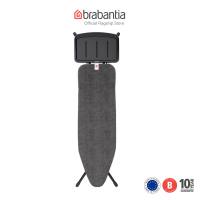
BRABANTIA Ironing Board Size B 124x38cm
$178.00$278.00
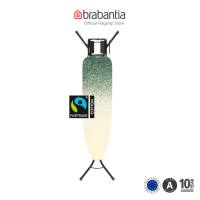
BRABANTIA Ironing Board Size A 110x30cm
$148.00$238.00
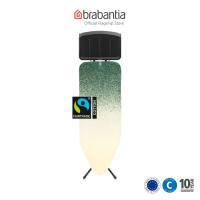
BRABANTIA Ironing Board Size C 124x45cm
$188.00$308.00
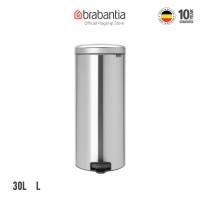
BRABANTIA NewIcon Pedal Bin Soft Closing 30L
$188.00$258.00
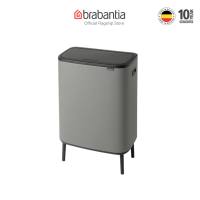
BRABANTIA Bo Touch Bin Hi 60L or 30+30L
$478.00$628.00
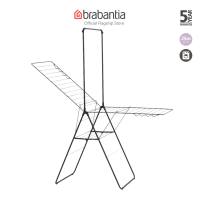
BRABANTIA HangOn Drying Rack with rod 25m Drying Length
$158.00$298.00
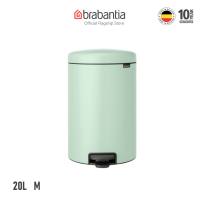
BRABANTIA NewIcon Pedal Bin Soft Closing 20L
$138.00$188.00
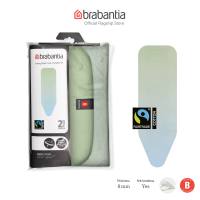
BRABANTIA Ironing Board Cover with Foam for Size B 124x38cm - Soothing Sea
$45.90
Buy on LazadaAbout brabantia
Brabantia is a Dutch family-owned company specialising in household and homeware products. Established in 1919, it has grown from a local metalware manufacturer into an international brand recognised for combining practical utility with Dutch-inspired design, durability and sustainability.1 The company’s portfolio encompasses waste management, laundry care, ironing, food storage, kitchen organisation and general household accessories.
Headquartered in Valkenswaard, Netherlands, Brabantia is led by CEO Tijn van Elderen and operates globally through a network of offices, distribution centres and manufacturing facilities.2 According to the company’s latest published results, revenue for 2025 stood at €150.6 million.3
Corporate overview
| Detail | Information |
|---|---|
| Brand | brabantia |
| Founded | 1919 |
| Country of origin | Netherlands |
| Original entity | Van Elderen & Co |
| Founders | Van Elderen family and 15 founding employees |
| Headquarters | Valkenswaard, Netherlands |
| CEO | Tijn van Elderen |
| Ownership structure | Family-owned |
| Industry | Household goods / Homeware / Consumer products |
| Key markets | Europe, North America, Asia and international markets |
| Signature products | Pedal bins, waste separation systems, ironing boards, laundry dryers, kitchen accessories |
| Original product line | Milk cans, jugs, sieves and funnels |
| Current positioning | Designed-for-longevity household products |
| Sustainability certification | B Corp (since March 2023) |
| Sustainability target | 100% circular design by 2035 |
| 2025 Revenue | €150.6 million |
The corporate entity operating the main brabantia website is Brabantia Branding B.V., registered in Valkenswaard, with Tijn van Elderen serving as CEO.4
Brand identity and philosophy
brabantia operates as a design-oriented household products company. Unlike brands focused on a single category such as cookware or furniture, brabantia produces a wide range of objects used in daily domestic life. Its philosophy centres on making ordinary household tasks more pleasant through thoughtful design, durability and sustainability. This approach is evident in core categories such as pedal bins, laundry dryers and ironing boards, which are treated as integral elements of the home’s visual environment rather than purely functional commodities.
The company’s current market positioning emphasises products that are iconic, intelligently designed and built to last. This commitment is supported by warranties of up to 10 years and spare parts availability for up to 20 years.5
History
Foundation and early years
The history of brabantia began in 1919 in Aalst, a small town in the Dutch province of North Brabant. Originally operating as Van Elderen & Co, the business was established by the Van Elderen family and 15 founding employees.6 Early production focused on metalworking and practical household items, including milk cans, jugs, sieves and funnels.7 This industrial heritage laid the foundation for the company’s gradual transformation from a traditional manufacturer into an international consumer design brand.
Diversification and wartime innovation
During the 1930s, brabantia expanded beyond basic metalware, demonstrating manufacturing versatility by producing radio housings for Philips.8 Following World War II, the company engaged in early recycling efforts by manufacturing cups from discarded condensed-milk tins. This post-war resource efficiency illustrates that sustainable manufacturing practices were embedded in the company’s culture long before circularity became a mainstream consumer trend.9
The pedal bin and design evolution
A pivotal moment occurred in 1952 with the introduction of the first substantial range of pedal bins.10 This product transformed the waste bin from a utilitarian object into a design element featuring attractive proportions, coordinated colours, durable finishes and smooth mechanisms. Throughout the latter half of the 20th century, the assortment expanded to include kitchen ladders, ironing chairs, storage canisters and laundry products. In 1969, the introduction of the Patrice pattern created an iconic visual motif that remains collectible today.11
The transition to a contemporary design brand accelerated in the 21st century. In 2014, the launch of the “Designed for living” vision repositioned brabantia from a conventional goods manufacturer to an international interior and lifestyle design brand, asserting that well-designed products could make everyday routines more enjoyable.12
Product categories
Waste management
Waste bins remain the signature category for brabantia. The range includes pedal bins, touch bins, recycling units, stackable bins, compact kitchen bins, food-waste containers and bin liners. Notable innovations include the Touch Bin (1999), the Bo Touch Bin (2017) and the StepUp recycling system.13 The underlying design principle integrates waste management into the home’s interior aesthetic rather than concealing it.
Laundry and clothes drying
The company maintains a strong position in laundry care with products such as rotary clotheslines, drying racks, wall-mounted systems and accessories. The WallFix, introduced in 2006, exemplifies the combination of space efficiency with household design.14 brabantia also promotes natural drying as a means to reduce electricity consumption and extend garment lifespan.15
Ironing
Ironing products constitute another major category, comprising boards, covers and accessories. As part of its sustainability programme, all brabantia ironing board covers have used 100% Fairtrade cotton from 2025 onwards.16
Kitchen and food storage
The kitchen range covers food storage, preparation, organisation, countertop accessories, recycling and waste separation. These products aim to enhance both the functionality and visual appeal of daily kitchen activities.
Design philosophy
The design identity of brabantia is defined by five key characteristics:
- Functional: Products solve specific household problems rather than serving as mere decoration.
- Minimal and contemporary: Designs feature simple geometric forms, restrained detailing and neutral finishes.
- Designed for visibility: Items such as bins and drying racks are intended to be aesthetically acceptable when left in open view.
- Long-term use: Durability is central to the brand’s value proposition.
- Repairability: Spare parts are available for up to 20 years, encouraging repair over replacement.17
This focus on lifetime value distinguishes brabantia from lower-cost competitors that compete primarily on purchase price.
Sustainability and certifications
Sustainability is a core strategic pillar, with a stated objective of achieving 100% circular design by 2035. This ambition encompasses material health, renewable energy, clean wastewater, recycled production waste, bio-based materials and product recyclability.18 While these targets are not yet fully met, 2024 figures reported 99% material safety against internal criteria, 93% production and warehouse recycling, 43% recycled or bio-based material usage, and 83% product recyclability.19
B Corp and Cradle to Cradle
brabantia achieved B Corporation certification in March 2023, validating its performance across environmental impact, worker treatment, governance, community engagement and customer stewardship.20 Additionally, the company holds Cradle to Cradle® certification for at least 700 products, including 206 at Silver level as of 2024 reporting.21 This reflects a strategy addressing sustainability at the product design and materials stage rather than relying solely on end-of-life recycling.
Manufacturing and operations
brabantia operates an international manufacturing network. Most products are manufactured in company-owned factories in Europe and Asia, supplemented by external suppliers adhering to brabantia standards.22 Production and logistics operations are located in Belgium, China, Latvia and the United Kingdom, alongside commercial offices across Europe, the United States and other global markets.23 Although strongly associated with Dutch Design, manufacturing takes place across multiple countries.
The modern headquarters, B.Home, opened in Valkenswaard in June 2022. Designed around sustainability principles, the building features a wooden structural system, solar panels, vegetation, rainwater collection and reusable materials aligned with BREEAM standards.24 The site holds historical significance as the location of earlier factory operations.
Leadership and ownership
brabantia remains a family business after more than a century. It is currently led by Tijn van Elderen, representing the fourth generation of the Van Elderen family. Having held various marketing, innovation and sales roles within the company, he became CEO in 2012.25 This ownership structure supports a corporate philosophy focused on generational longevity rather than quarterly financial performance.26
Global presence and financial scale
While Dutch in origin, brabantia is a global brand with offices and production facilities spanning from Austria to the United States and from China to Finland.27 Commercial markets include the Netherlands, Belgium, United Kingdom, Germany, France, Italy, Spain, Austria, Denmark, Finland, Switzerland, United States, China and others.
Financially, brabantia Holding generated €150.6 million in revenue in 2025. Despite challenging market conditions and higher raw material costs causing a slight decline from 2024, profitability was maintained through cost reductions.28 This positions the company as a specialised family-owned enterprise rather than a multinational conglomerate.
Strategic developments
Acquisition of Lékué
In 2020, brabantia acquired the Spanish brand Lékué, known for innovative food preparation and on-the-go products. This acquisition expanded the company’s footprint in the kitchen and food consumption market beyond its traditional household categories.29
2025–2026 Repositioning
Recent strategic messaging has introduced the mission “We don’t make trash.” This phrase carries a dual meaning: it references waste-related products while communicating a broader refusal to produce disposable, short-lived goods. Instead, the company aims to create iconic, durable, repairable and increasingly circular household products. This positioning is formally linked to the 2026 messaging “Designed to Last.”30
Historical milestones
| Year | Event |
|---|---|
| 1919 | Van Elderen & Co established in Aalst |
| 1930 | Expanded into radio housings for Philips |
| 1945 | Produced cups from recycled condensed-milk tins |
| 1952 | First major range of pedal bins launched |
| 1969 | Patrice pattern introduced |
| 1999 | Touch Bin introduced |
| 2006 | WallFix introduced |
| 2014 | “Designed for living” vision launched; first Cradle to Cradle certification |
| 2015 | WeForest partnership established |
| 2016 | Sponsorship of The Ocean Cleanup begins |
| 2017 | Bo Touch Bin introduced |
| 2019 | 100th anniversary celebrated |
| 2020 | Lékué acquired |
| 2021 | StepUp recycling bin introduced |
| 2022 | B.Home headquarters opens in Valkenswaard |
| 2023 | B Corp certification achieved |
| 2025 | Ironing board covers transition to 100% Fairtrade cotton |
| 2025 | Revenue reaches €150.6 million |
| 2026 | “We don’t make trash” / Designed to Last positioning launched |
Market positioning and assessment
brabantia occupies a distinct position between commodity household goods and premium interior brands. By combining function, design, material quality, durability and sustainability, it commands a premium over generic alternatives while remaining accessible compared to luxury lifestyle marques. The brand personality is characterised as practical, calm, optimistic, design-conscious, responsible and long-term oriented.
Key strengths include a century-long heritage, high recognition of signature products like the Touch Bin, design differentiation in commoditised categories, credible sustainability certifications and a 20-year spare parts commitment.32 However, the company faces challenges including premium pricing pressures, manufacturing complexity involving steel and textiles, high sustainability expectations, competition from low-cost replicas and evolving consumer demands.33
Ultimately, brabantia’s primary asset is the synthesis of Dutch heritage, recognisable design, everyday functionality and a longevity-focused philosophy. This combination has enabled the elevation of routine household chores into a recognisable premium brand category.
References
- Our story | Brabantia
- History | Brabantia
- BRABANTIA RESULTS 2025 | Brabantia
- Legal notice | Brabantia
- Nieuwe duurzame hoofdkantoor Brabantia officieel geopend. | Brabantia
- Timeline + Museum | Brabantia
- IMPACT REPORT 2021.
- Sustainability | Brabantia
- Where are your products made? – Help & contact
- Oficinas | Brabantia
- CEO Tijn van Elderen over 100 jaar Brabantia | Brabantia
- Brabantia S&L Belgium (0412.833.582) : Omzet & bestuurders
- Brabantia S&L Netherlands B.V. | Company.info
- Brabantia (U.K.) Limited – Company Profile – Endole
- Tijn van Elderen (CEO Brabantia): ‘Spullen van Action kunnen na een half jaar al naar de schroothoop’ – EW
- Resultaten Brabantia 2024 | Brabantia
- Resultaten Brabantia 2023 | Brabantia
- Brabantia goed op weg naar 100% circulair design in 2035
- Mark Voncken naar Brabantia | Brabantia
- Brabantia geeft startsein bouw nieuw designcenter in Valkenswaard. | Brabantia
- BRABANTIA (U.K.) LIMITED persons with significant control – Find and update company information – GOV.UK
- Sustainability | Brabantia
- Brabantia’s history – Help & contact
- Sustainability | Brabantia
- Brabantia’s history – Help & contact
- Brabantia & sustainability – Help & contact
- Where are your products made? – Help & contact
- Tijdlijn + Museum | Brabantia
- About Brabantia – Help & contact
- Geschiedenis van Brabantia – Hulp & contact
- More about Brabantia | Brabantia
- More about Brabantia | Brabantia
- Legal notice | Brabantia