Shop on Lazada
Britannia products
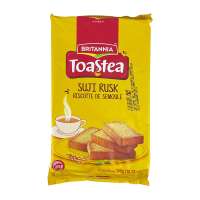
Britannia Suji Rusk (305g) - Dashmesh Singapore
$3.00
Buy on Lazada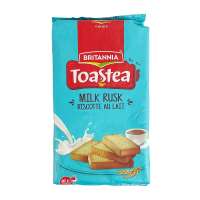
Britannia Milk Rusk (280g) - Dashmesh Singapore
$2.80
Buy on Lazada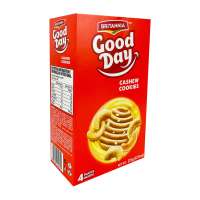
Britannia Good Day Cookies Cashew (231g) - Dashmesh Singapore
$2.50
Buy on Lazada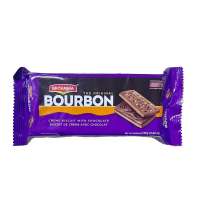
Britannia Bourbon Biscuit (97g) - Dashmesh Singapore
$1.20
Buy on Lazada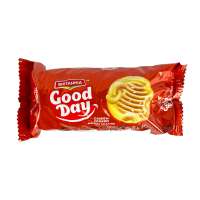
Britannia Good Day Cashew Biscuit (75g) - Dashmesh Singapore
$0.75
Buy on Lazada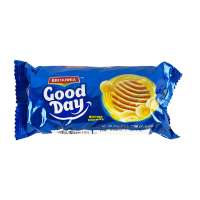
Britannia Good Day Butter Biscuit (75g) - Dashmesh Singapore
$0.75
Buy on Lazada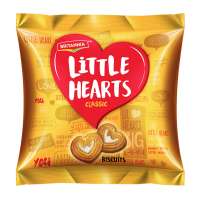
Britannia Little Hearts (75g) - Dashmesh Singapore
$0.90
Buy on Lazada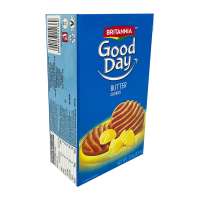
Britannia Good Day Cookies Butter (231g) - Dashmesh Singapore
$2.50
Buy on LazadaAbout Britannia
Overview
Britannia Industries Limited, commonly referred to as Britannia, is one of India’s oldest and most prominent food companies. Established in 1892 in Kolkata, the firm began as a small biscuit manufacturer and has since evolved into a multinational food business with products available in more than 80 countries. Its contemporary portfolio extends beyond biscuits to include bread, cakes, rusks, dairy products and adjacent snack categories.1
| Category | Information |
|---|---|
| Company name | Britannia Industries Limited |
| Brand name | Britannia |
| Founded | 1892 |
| Place founded | Kolkata, India |
| Industry | Food / FMCG |
| Major categories | Biscuits, bakery, dairy, snacks |
| Ownership | Wadia Group is the principal shareholder group |
| Registered office | Kolkata, West Bengal |
| Corporate office | Bengaluru, Karnataka |
| Chairman | Nusli N. Wadia |
| CEO & Managing Director | Rakshit Hargave |
| International presence | 80+ countries |
| Listed | Indian stock exchanges |
| Original name | The Britannia Biscuit Company Limited |
Corporate materials describe Britannia as a “responsible global total foods company”, with core operations centred on bakery, dairy and snacking categories.2
History
1892: Establishment
Britannia traces its origins to 1892, when it was established in Kolkata with an initial investment of ₹295. It initially operated as a small-scale biscuit manufacturing business.3 Founded during the British colonial period, biscuits were originally associated with European tastes and urban consumers. Over subsequent decades, Britannia played a pivotal role in transforming biscuits from a niche product into a mass-market staple across India.
1918: Incorporation as a public company
In 1918, the business was incorporated as a public limited company under Indian company law, adopting the name Britannia Biscuit Company Limited.4 This transition marked its evolution from a small bakery operation into a formal industrial food manufacturer.
1920s–1940s: Expansion
The company expanded its manufacturing footprint significantly during this period, including the establishment of a factory in Mumbai in 1924. During the Second World War, demand for biscuits surged, driven partly by supplies required for British military forces.5 This wartime production accelerated Britannia’s manufacturing scale and cemented biscuits as a key packaged-food category.
Post-independence development
Following India’s independence in 1947, Britannia developed further into a mass-market food company, diversifying beyond its traditional biscuit business. Key milestones in this era include:
- 1954: Britannia pioneered high-quality sliced and wrapped bread in India.
- 1963: The company entered the cake market.
- 1979: The corporate name changed from Britannia Biscuit Company Limited to Britannia Industries Limited.
- 1983: Annual sales surpassed the ₹100-crore mark.
- 1980s onwards: Continued expansion of the biscuit and bakery portfolio.6
The 1979 renaming was particularly significant, reflecting the company’s broader ambition to operate beyond the biscuit segment alone.
Ownership and the Wadia Group
A defining chapter in Britannia’s modern history involves the Wadia Group. During the late 1980s and early 1990s, the company underwent a complex period of corporate control involving businessman Rajan Pillai, the Wadia Group and French food company Danone.
In 1993, Nusli Wadia’s Wadia Group became involved in controlling Britannia alongside Danone, subsequently becoming the dominant shareholder group. In 2009, the Wadia Group acquired Danone’s 25% stake, becoming the company’s largest shareholder.7 Today, Britannia remains closely associated with the Wadia Group, one of India’s historic business conglomerates.
Product portfolio
While biscuits remain central to its identity, Britannia has deliberately diversified its offerings. Current business operations are broadly categorised as follows:
Biscuits
Biscuits constitute Britannia’s signature business, encompassing some of India’s most recognisable packaged brands. Major biscuit brands include:
- Good Day
- Marie Gold
- Tiger
- NutriChoice
- 50-50
- Treat
- Bourbon
- Little Hearts
- Milk Bikis
- Nice Time
- Pure Magic
- Jim Jam
Reporting for 2024–25 indicates that bakery products—including biscuits, cakes, rusks and bread—alongside salted snacks account for the vast majority of turnover.8
Bread
Britannia entered the bread sector decades ago and maintains a substantial packaged-bread portfolio. Products include sandwich bread, whole-wheat bread, high-fibre bread, hot-dog buns and other packaged bakery items. The company’s historical significance in this category dates to its introduction of sliced and wrapped bread in 1954.9
Cakes
Operating in the packaged cake segment since 1963, Britannia offers layer cakes, cream cakes, snack cakes, chocolate-flavoured cakes and other individually packaged bakery products.10 Cakes represent one of the company’s longest-established non-biscuit categories.
Croissants and snacking
Britannia has expanded into newer snack categories in recent years. In 2017, it formed a joint venture with Greek company Chipita S.A. to manufacture and sell ready-to-eat croissants.11 The snacking portfolio has since grown to include filled croissants, wafers and other convenient snack foods.
Dairy
Dairy forms part of Britannia’s strategy to become a comprehensive food company. The portfolio includes milk, butter, cheese, ghee, milk powder, flavoured milk and other dairy products. However, this segment remains considerably smaller than the bakery division; in FY2024–25, approximately 97% of turnover derived from bakery products and salted snacks, with around 3% from dairy products.12
Key brands
Britannia operates as an umbrella brand, while individual products maintain distinct identities and positioning.
Good Day
Good Day is a flagship biscuit brand associated with cookies containing nuts or premium ingredients. Its positioning historically focuses on indulgence and a richer cookie experience.
Marie Gold
Marie Gold is Britannia’s classic tea-time biscuit. Occupying the mass-market segment, it is strongly associated with Indian tea culture.
Tiger
Positioned as an affordable, mass-market biscuit brand, Tiger is central to Britannia’s strategy of reaching consumers across various income levels. The trademark was also the subject of a major international dispute between Britannia and Danone, which was resolved in Britannia’s favour in 2009.13
NutriChoice
NutriChoice represents the health and wellness-oriented portfolio, allowing Britannia to participate in the growing market for fibre-rich, nutritious and healthier snacking options.
Bourbon
Britannia Bourbon is a chocolate sandwich biscuit with a distinctive identity and remains one of the company’s longstanding products.
50-50
Occupying the savoury-sweet biscuit space, 50-50 has become another widely recognised Britannia brand.
Treat
Treat focuses on indulgence, comprising cream biscuits and wafer products. The brand has expanded to include Treat Crème Wafers and later croissants.14
Business model
Britannia operates essentially as a mass-market FMCG company. Its business model relies on several key pillars:
High-volume products
Biscuits and packaged foods are relatively inexpensive items purchased frequently by consumers.
Extensive distribution network
Products are distributed through India’s comprehensive retail ecosystem, including supermarkets, kirana stores, convenience stores, wholesalers, modern retail outlets, e-commerce platforms and food-service channels.
Brand recognition
Having existed for more than a century, Britannia benefits from significant accumulated consumer recognition and trust.
Multiple price points
The company offers products ranging from economical everyday biscuits to premium cookies and higher-value items, enabling it to address diverse consumer segments.
Product innovation
Britannia continuously introduces new flavours, formats and categories. Its FY2024–25 report, for instance, highlights launches such as Tropical Coconut Cookies, 50-50 Golmaal, Jim Jam Pops and new Layer Cake and Croissant variants.15
International presence
Although fundamentally an Indian-origin brand, Britannia has established itself as an international food company with operations extending across more than 80 countries.16 International activities cover markets in South Asia, Africa, the Middle East and other regions.
The company has developed subsidiaries and businesses in countries including Nepal, Bangladesh, Egypt, Kenya and Uganda, among others. Investor materials list a broad collection of international subsidiaries and associated entities.17 This global footprint is significant for an Indian food company, as Indian-origin products enjoy considerable demand among diaspora communities as well as local consumers in these markets.
Advertising and marketing
Advertising has been central to Britannia’s success. Rather than presenting itself solely as a manufacturer, the company has historically built emotional associations around food, family, childhood, tea time and everyday happiness. Different brands employ distinct positioning strategies:
| Brand | General positioning |
|---|---|
| Good Day | Indulgence / cookies |
| Marie Gold | Tea-time / everyday biscuit |
| Tiger | Affordable mass-market nutrition |
| NutriChoice | Health-conscious snacking |
| Bourbon | Chocolate indulgence |
| 50-50 | Savoury / playful snacking |
| Treat | Creamy / indulgent |
| Milk Bikis | Children / family |
This multi-brand approach enables Britannia to target consumers across different age groups, price points and consumption occasions.
Corporate identity
Britannia’s identity has evolved from a “biscuit company” to a “total foods company”. Historically dominated by biscuits, management now pursues a broader portfolio spanning biscuits, bakery, cakes, bread, dairy, snacks, croissants and adjacent categories. The company describes its key businesses as bakery, dairy and adjacent snacking categories.18
Research and development
Product innovation is integral to Britannia’s strategy. The company operates an R&D facility in Karnataka, investing in new products, flavours, formats and packaging. FY2024–25 reporting states that the R&D centre achieved NABL accreditation for the fifth consecutive year and received recognition from India’s Department of Scientific and Industrial Research.19
For an FMCG company facing rapidly changing consumer tastes, this capability is essential to balance taste, cost, nutrition, shelf life, packaging, convenience, food safety and manufacturing efficiency.
Sustainability
Sustainability has become an increasing focus within Britannia’s corporate strategy. Initiatives cover packaging, plastic reduction, recycling, energy, water, responsible sourcing, nutrition and social impact. FY2024–25 sustainability reporting discusses recyclable plastic packaging and laminates, alongside experiments with paper-based alternatives.20
Social initiatives
Britannia operates social-impact programmes, notably the Britannia Nutrition Foundation, which addresses child nutrition and malnutrition issues in India.21 These efforts align with the company’s broader objective of associating its corporate identity with nutrition and responsible food consumption.
Corporate structure
Britannia Industries Limited is a publicly listed Indian company associated with the Wadia Group. Its registered office is located in Kolkata, while corporate headquarters are in Bengaluru. Current leadership includes Nusli N. Wadia as Chairman, Rakshit Hargave as CEO & Managing Director, and N. Venkataraman as Executive Director & CFO.22 The company maintains numerous subsidiaries and international entities as part of its wider corporate structure.23
Major milestones
- 1892: Established in Kolkata with ₹295 initial investment.
- 1918: Incorporated as a public company.
- 1924: Mumbai manufacturing facility established.
- 1954: Developed sliced and wrapped bread in India.
- 1963: Entered the cake market.
- 1979: Renamed Britannia Industries Limited.
- 1983: Sales crossed ₹100 crore.
- 1990s: Major changes in ownership; Wadia Group becomes central.
- 2009: Wadia Group becomes largest shareholder following Danone’s exit.
- 2017: Joint venture with Chipita for croissants.
- 2018: Celebrated 100 years of incorporation.
- 2022: Expanded international and cheese-related businesses.
- 2024–25: Continued expansion into snacks, croissants, cakes and new biscuit formats.24
Significance in India
Britannia’s importance extends beyond commercial metrics. It is among the few Indian consumer brands with more than 130 years of continuous history.24 Generations of Indians have grown up with Britannia products, embedding the brand in everyday food culture, particularly regarding tea and biscuits, children’s snacks, school tiffins, breakfast, packaged bread, cakes and household groceries. It also exemplifies the transformation of a colonial-era enterprise into a major Indian-owned multinational corporation.
Competitive position
Britannia operates in highly competitive Indian FMCG markets. In the biscuit category, its most prominent rival is Parle Products, particularly through brands such as Parle-G. Competition also arises from companies operating in cookies, bread, cakes, dairy, packaged snacks and health-oriented foods.
Britannia’s competitive advantage lies in its combination of brand heritage, distribution reach, product breadth and manufacturing scale. Challenges include maintaining growth amidst increasing consumer demand for healthier foods, premium products, convenient snacks, new flavours, higher nutritional value, lower-sugar options and sustainable packaging.
Distinction between brand and corporate entity
It is useful to distinguish between two related terms:
- Britannia: The consumer-facing brand name appearing on products such as Good Day, Marie Gold, Bourbon, NutriChoice and 50-50.
- Britannia Industries Limited: The corporate entity that owns and operates the business, manufactures and markets products, manages subsidiaries and conducts broader corporate activities.
In common usage, however, “Britannia” generally refers to both the company and its consumer brand.
Summary
Britannia is a 130+ year-old Indian-origin FMCG company that evolved from a small Kolkata biscuit maker founded in 1892 into a multinational food business spanning biscuits, bakery, dairy and snacks, and is today closely associated with the Wadia Group.25
References
- Learn About Britannia’s Legacy and Products in India
- annual report 25 V1_Digital_FIN_Hires_1
- Home – News And Media
- Britannia Industries
- AIM PERSIST ACHIEVE
- annual report 25 V1_Digital_FIN_Hires_1
- investor page
- Category:Britannia Industries – Wikimedia Commons
- Britannia Industries – Wikidata
- Britannia Industries News: Latest Updates & Trends | The Indian Express
- Britannia Industries – Bharatpedia
- Britannia: Rising to the Occasion
- Home – News And Media
- Home – News And Media
- Home – News And Media
- Britannia Biscuits and Dairy Trusted in India for 100+ Years
- Home – News And Media
- investor page
- investor page
- Britannia Governance and Developement
- investor page
- About Us | Britannia International
- CII Market Place
- Britannia India
- Britannia Industries Explained