Shop on Lazada
Burberry products
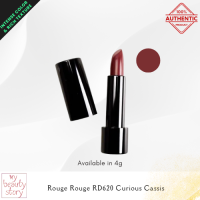
Burberry Full Kisses Shaped and Full Lips Long Lasting Lip Colour 553 Military Red 2g
$29.00$58.00
![Burberry Women Eau De Parfum Spray 100ml [TESTER PACK] - Eclat Parfum](https://sg-live.slatic.net/p/90b1fbf12216f093d0a4d4d4ea2dac81.jpg_200x200q80.jpg)
Burberry Women Eau De Parfum Spray 100ml [TESTER PACK] - Eclat Parfum
$49.00$230.00
![Burberry Weekend Eau De Parfum Sp 100ml [TESTER PACK]](https://filebroker-cdn.lazada.sg/kf/Sbb022972d7a64fa1a3f2f4947be06926n.jpg_200x200q80.jpg)
Burberry Weekend Eau De Parfum Sp 100ml [TESTER PACK]
$43.90$230.00
![Burberry Brit Sheer Eau De Toilette Spray 100ml [TESTER PACKAGING] - Eclat Parfum](https://sg-live.slatic.net/p/burberry-brit-sheer-edt-100ml-tester-2543-2176605-825741d47f33dd8ef425bf75c13f53ad-catalog.jpg_200x200q80.jpg)
Burberry Brit Sheer Eau De Toilette Spray 100ml [TESTER PACKAGING] - Eclat Parfum
$49.00$205.00

Burberry Leather Wallet Mens Charcoal Gray 80702731
$943.20$1,572.00
![BURBERRY Hero Parfum 100ML For Men [Perfume / Fragrance] (100% Authentic from Acebela)](https://filebroker-cdn.lazada.sg/kf/S1aa29b4fddf34cc4a59b56ab2e721835M.png_200x200q80.jpg)
BURBERRY Hero Parfum 100ML For Men [Perfume / Fragrance] (100% Authentic from Acebela)
$100.36$260.00
![BURBERRY Goddess EDP 100ML For Women [Perfume / Fragrance] (100% Authentic from Acebela)](https://filebroker-cdn.lazada.sg/kf/Sa930faf81eb2483ab66c30dfe7c941c27.png_200x200q80.jpg)
BURBERRY Goddess EDP 100ML For Women [Perfume / Fragrance] (100% Authentic from Acebela)
$116.11$255.00
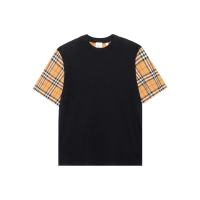
Burberry T Shirts Womens Black Crew Neck Moderate 80148951
$998.40$1,664.00
About Burberry
Overview
Burberry is a British luxury fashion house established in 1856 by Thomas Burberry in Basingstoke, Hampshire, England. Recognised as one of Britain’s most prominent luxury brands, it is particularly associated with outerwear, the trench coat, the Burberry Check, British heritage and the Equestrian Knight Design (EKD). In 2026, Burberry marks its 170th anniversary.1
Basic information
| Category | Information |
|---|---|
| Brand | Burberry |
| Founded | 1856 |
| Founder | Thomas Burberry |
| Founded in | Basingstoke, Hampshire, England |
| Industry | Luxury fashion |
| Main categories | Clothing, outerwear, handbags, shoes, scarves, accessories, beauty/fragrance |
| Most famous product | Burberry trench coat |
| Signature pattern | Burberry Check |
| Signature symbol | Equestrian Knight Design (EKD) |
| Brand heritage | British |
| Corporate company | Burberry Group plc |
| Current creative leader | Daniel Lee, Chief Creative Officer |
| Anniversary in 2026 | 170 years |
Burberry defines its heritage through the creation of clothing designed to protect people from the elements, combining practicality, innovation and British design.2
The founder: Thomas Burberry
Born in England, Thomas Burberry began his career as a draper’s apprentice. At just 21 years old, he established his own business in Basingstoke in 1856, where his original shop primarily served the local community with clothing and fabrics.3
Unlike many fashion businesses of the era, Burberry distinguished itself by prioritising function before fashion. Thomas Burberry sought to address a fundamental challenge: British weather was wet, cold and unpredictable, yet contemporary waterproof clothing was often heavy, uncomfortable and lacked breathability. His solution to this problem eventually became the foundation of the entire Burberry brand.
The invention of gabardine
A pivotal contribution to fashion history was Burberry’s development of gabardine. In 1879, Thomas Burberry created a tightly woven fabric that was lightweight, breathable, weather-resistant, durable and suitable for outdoor clothing. Unlike older waterproof materials that relied on heavy rubberised, waxed or oiled fabrics, gabardine offered protection whilst remaining relatively comfortable. The fabric was subsequently patented in 1888.4
This innovation is central to understanding the brand’s origins. Burberry did not initially achieve fame merely as a fashionable luxury label; rather, it became renowned for solving practical problems through textile innovation. This philosophy—combining innovation, protection and adaptation to British weather—remains evident in Burberry’s identity today.
Expansion into London
As the company grew, Burberry expanded beyond its original Basingstoke premises. In 1891, it opened a London store at 30 Haymarket, establishing a presence in one of Britain’s most significant commercial and fashion districts.5 By this period, Burberry had developed a strong reputation for outdoor clothing and equipment among sportsmen, explorers, mountaineers, aviators, military personnel, travellers and wealthy outdoor enthusiasts. This association with exploration and adventure helped cement Burberry’s status as a brand connected with British resilience and the outdoors.
Exploration and adventure
Burberry clothing was utilised by several notable explorers. A particularly significant example was Roald Amundsen, the Norwegian explorer who became the first person to reach the South Pole in 1911; his expedition used Burberry gabardine clothing and equipment.6 This reinforced a crucial aspect of Burberry’s early image: that it produced clothing designed to withstand extreme conditions. This heritage later proved invaluable as the brand transitioned from practical outdoor wear into luxury fashion.
The trench coat
The product most synonymous with Burberry is the trench coat. Its origins predate the trench coat itself; in 1912, Thomas Burberry patented the Tielocken coat, widely considered its predecessor.7
During World War I, Burberry adapted its outerwear to meet military requirements. The resulting trench coat incorporated practical details such as epaulettes, D-rings, storm shields, gun flaps, belts and durable gabardine construction. According to Burberry’s historical records, more than 500,000 Burberry coats were worn by members of the armed forces during the First World War.8 The term “trench” refers to the trenches of World War I, where soldiers required clothing capable of withstanding rain, wind and difficult conditions.
From military equipment to fashion icon
Following the war, the trench coat transcended its original military purpose, becoming associated with travel, adventure, British sophistication, film, celebrity culture and urban fashion. By the mid-20th century, it had evolved from military equipment into a fashion archetype. Burberry continues to produce Heritage trench coats in Yorkshire, with classic versions retaining details such as the belt, epaulettes and Check lining.9 Today, the trench coat remains one of the most recognisable garments in fashion history.
The Burberry Check
Another defining feature of the brand is the Burberry Check. The distinctive beige, black, white and red pattern originally appeared as a lining for Burberry raincoats in the 1920s and became particularly recognisable as a fashion symbol during the 1960s.10
The Check eventually extended far beyond linings, appearing on scarves, shirts, jackets, handbags, hats, shoes, accessories, umbrellas and luggage. This transformation illustrates a key concept in luxury branding: a functional detail evolving into a visual brand identity. The Check is now almost immediately recognisable even without the word “Burberry”.
The Equestrian Knight Design
The other major Burberry symbol is the Equestrian Knight Design, commonly abbreviated as EKD. The original trademark appeared around 1901, featuring a knight on horseback alongside the Latin word “Prorsum”, meaning “forwards”.11
The symbol communicates ideas central to Burberry, including British heritage, tradition, movement, exploration, strength and progress. Although the EKD has been redesigned and reinterpreted throughout the brand’s history, the equestrian concept remains a vital component of its visual language.
Royal Warrants
Burberry’s British prestige was further reinforced through Royal Warrants. The company received its first Royal Warrant from King George V in 1919 as a “Tailor”.12 Historically, Royal Warrants recognised companies supplying goods or services to members of the British Royal Household. For Burberry, this contributed significantly to its image of British craftsmanship, institutional prestige and heritage.
Burberry during the 20th century
Throughout the 20th century, Burberry gradually evolved from an outdoor and military outfitter into a broader fashion company. Its products became associated with British country life, hunting, horse riding, travel, aviation, military style, London, film and celebrity culture. By 1965, Burberry stated that one in five coats exported from Britain was a Burberry product, demonstrating the company’s significance within British outerwear.13 Even as its product range expanded, the brand’s heritage remained strongly tied to outerwear.
Transformation into a luxury fashion house
Burberry eventually moved beyond being primarily an outerwear manufacturer to become a full luxury fashion house offering:
Womenswear
- Coats
- Dresses
- Knitwear
- Shirts
- Skirts
- Trousers
- Jackets
Menswear
- Suits
- Jackets
- Shirts
- Knitwear
- Trousers
- Outerwear
Accessories
- Handbags
- Shoes
- Belts
- Scarves
- Hats
- Sunglasses
- Jewellery and other fashion accessories
Beauty
- Fragrance and beauty products have also been part of the wider Burberry brand ecosystem.
Despite this diversification, the trench coat has remained the centrepiece of the brand’s identity.
Burberry and popular culture
Burberry’s cultural influence extends well beyond the runway. The trench coat has appeared extensively in Hollywood films, television, British cinema, celebrity wardrobes, music and street fashion. Its association with detectives, spies, travellers and sophisticated urban characters helped transform it into a visual shorthand for mystery, intelligence and elegance. Meanwhile, the Burberry Check became strongly associated with British fashion and celebrity culture. This makes Burberry unusual among luxury brands: its strongest visual symbols were not invented solely for marketing purposes but developed from real historical products and functional design.
Design philosophy
Burberry’s design identity can be understood through five core concepts:
1. Britishness
Burberry frequently draws on British landscapes, weather, architecture, music and cultural history.
2. Protection
The brand’s original purpose was protecting people from the weather, and outerwear remains fundamental.
3. Innovation
From gabardine to new interpretations of trench construction, innovation has always been part of the company’s story.
4. Craftsmanship
Burberry maintains strong connections with British manufacturing and specialist textile production. Its Heritage trench coats, for example, are made in Yorkshire.14
5. Reinvention
Burberry repeatedly redesigns its historical codes rather than simply reproducing archival products. The tension between heritage and modernity is central to the brand.
Daniel Lee and the modern Burberry
A significant recent chapter began when Daniel Lee became Burberry’s Chief Creative Officer in 2022. Burberry describes his approach as bringing a fresh perspective rooted in craft, clarity and British identity.15 Lee’s work has emphasised Burberry’s British character whilst reinterpreting its historical codes for contemporary fashion. This includes renewed attention to the trench coat, British outerwear, equestrian imagery, the Burberry Check, British craft, archive-inspired textiles, and the Burberry rose alongside other contemporary brand motifs.
His role is particularly significant because Burberry has spent much of its modern history balancing two potentially competing identities: traditional British heritage versus modern global luxury fashion.
Burberry in 2026
2026 is a milestone year for Burberry, marking the company’s 170th anniversary. The brand is celebrating through campaigns, products and activations centred on its historical codes. Activities include a Gabardine Capsule and The Trench, Portraits of an Icon, a campaign featuring portraits by photographer Tim Walker and a cast of international figures.16 The company is thus using its history as a major source of contemporary brand identity rather than treating heritage as purely archival.
Key brand codes
The following elements summarise the visual identity of Burberry:
| Brand code | Meaning |
|---|---|
| 🧥 Trench coat | The ultimate Burberry product |
| 🟫 Burberry Check | Instantly recognisable visual identity |
| 🐎 Equestrian Knight | Heritage, movement and British identity |
| ☔ Weather protection | The original purpose of the company |
| 🧵 Gabardine | Burberry’s historic textile innovation |
| 🇬🇧 Britishness | Central cultural positioning |
| 🏭 British craftsmanship | Particularly important to heritage outerwear |
| 🌹 Rose / contemporary motifs | Modern reinterpretation of British identity |
Burberry describes the trench, Check and EKD as enduring brand codes that remain central to the house.17
Distinction from other luxury brands
Burberry occupies a unique position in luxury fashion. Whilst Chanel is associated with Parisian couture and tweed, Dior with the Bar jacket, Louis Vuitton with travel and monogramming, Gucci with Italian maximalism, and Hermès with leather craftsmanship, Burberry is particularly associated with British outerwear, weather protection and the trench coat.
This makes Burberry’s historical foundation unusually practical for a luxury fashion house. Its luxury identity essentially developed from the question of how to make clothing that protects people from British weather, rather than beginning purely with haute couture.
Brand positioning
Today, Burberry is defined as a British luxury fashion house with a strong heritage in outerwear. Its positioning sits at the intersection of:
- Heritage: 1856 history, British craftsmanship, archives
- Function: Weatherproof fabrics and outerwear
- Luxury: Premium materials, craftsmanship and fashion
- Fashion: Runway collections and contemporary design
- Culture: Music, celebrities, film and modern British identity
This combination gives Burberry its distinctive market position.
Summary definition
Burberry is a British luxury fashion house founded by Thomas Burberry in 1856, best known for its weather-resistant outerwear, iconic trench coat, Burberry Check and Equestrian Knight Design, whose identity combines British heritage, textile innovation, craftsmanship and contemporary fashion.
Timeline
- 1856 — Thomas Burberry establishes the company in Basingstoke.
- 1879 — Burberry develops gabardine.
- 1888 — Gabardine is patented.
- 1891 — Burberry opens a London store on Haymarket.
- 1901 — The Equestrian Knight trademark appears.
- 1911 — Roald Amundsen’s South Pole expedition uses Burberry equipment/clothing.
- 1912 — Thomas Burberry patents the Tielocken coat.
- 1914–18 — The trench coat is developed for military use.
- 1919 — Burberry receives its first Royal Warrant.
- 1920s — The Burberry Check begins appearing as trench-coat lining.
- 1940s — Burberry supplies military apparel during World War II.
- 1960s — The Check becomes a major fashion symbol; Burberry reaches significant export scale.
- 1970s onward — Burberry’s heritage outerwear becomes increasingly integrated into mainstream fashion.
- 2000s — Burberry develops into a major global luxury fashion brand.
- 2009 — Burberry launches Art of the Trench.
- 2022 — Daniel Lee becomes Chief Creative Officer.
- 2025 — Burberry continues major heritage and trench-focused initiatives.
- 2026 — Burberry celebrates its 170th anniversary.18
Overall assessment
Burberry’s greatest strength is its unusually coherent heritage. Whilst many luxury brands possess iconic logos or patterns, Burberry has an entire historical narrative behind its visual identity: British weather → gabardine → outdoor clothing → military trench coat → British trench coat → Check → luxury fashion.
The trench coat acts as a bridge between Burberry’s functional 19th-century origins and its position as a 21st-century luxury fashion house. Ultimately, what makes Burberry distinctive is that it turned protection from the British weather into one of the world’s most recognisable luxury-fashion identities.19
References
- History – Burberryplc
- Annual Report 2025/26
- Our Story | Burberry®️ Official
- Burberry Group plc Annual Report and Accounts
- Annual Report 2024/25
- Celebrating 170 years of Burberry – Burberryplc
- How Celebrities Style Burberry’s Iconic Check Print | Vogue
- Checking Up on Daniel Lee and Burberry as the House Turns 170 | Vogue
- Burberry Fall 2026 Ready-to-Wear Collection | Vogue
- Burberry Trench Coats 101: A Guide to Shopping the Iconic Outerwear in 2025 | Vogue
- “Change is inevitable”: Daniel Lee debuts reimagined vision for Burberry | Vogue
- Daniel Lee’s vision for Burberry is an ode to Britishness | Vogue
- Check’s New Mate: Daniel Lee Shares His Vision for Burberry | Vogue
- Burberry names Daniel Lee new chief creative officer as Riccardo Tisci bows out | Vogue
- If I Was An Animal… | Vogue
- Riccardo Tisci Talks Monograms and the Importance of “Humanizing” the Burberry Label | Vogue
- 10 Key Things to Know From Riccardo Tisci’s 134-Look Burberry Debut | Vogue
- Our Story | Burberry®️ Official
- Our Story | Burberry®️ Official