Shop on Lazada
DESCENTE products
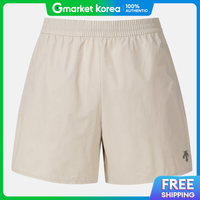
DESCENTE | Descente Running Shorts Mens Womens Sq223Rhp41Beg0 Shorts
$77.90$174.46
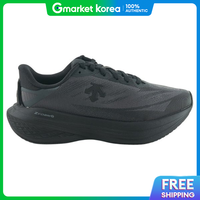
DESCENTE | Descente Running Shoes Energize Super V5 Sr113Rrn14-Blk0
$165.54$353.53
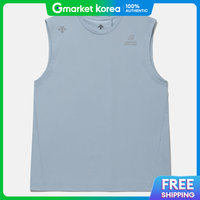
DESCENTE | Descente Sco Oversized Sleeveless Tank Top Sq221Ist51Sky0
$76.85$172.21
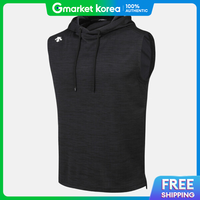
DESCENTE | Descente Training Hooded Sleeveless Tank Top Sq121Tst11Blk0
$70.92$156.94
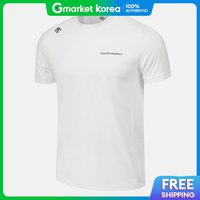
DESCENTE | Descente Running Quick-Dry Short-Sleeve T-Shirt Sq323Rts71Wht0 Top
$62.34$159.47
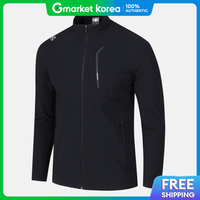
DESCENTE | Descente Training Cooling Tricot Jacket Sq323Tft71Blk0 Jacket
$155.09$288.41
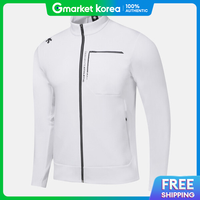
DESCENTE | Descente Standard Training Jacket Sq123Tft13Wht0 Windbreaker
$116.74$247.33
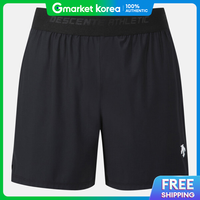
DESCENTE | Descente Training 5-Inch Tricot Shorts Sq321Tkh81Blk0
$120.95$181.43
About DESCENTE
DESCENTE is a Japanese sportswear and athletic-performance brand recognised for integrating technical engineering, Japanese craftsmanship, functional design and a premium minimalist aesthetic. Although its heritage lies in skiing, the brand has expanded into running, training, golf, outdoor apparel, team sports and lifestyle-oriented technical clothing 2. Its distinctive arrow-shaped “Spirit Mark” is derived from basic skiing techniques and symbolises the company’s pursuit of technical excellence 26. DESCENTE currently occupies the premium segment of the sportswear market, with particularly strong positioning in Japan, South Korea and China 1. In January 2025, DESCENTE Ltd. became a wholly owned subsidiary of ITOCHU Corporation following its delisting from the Tokyo Stock Exchange 1.
Basic information
| Category | Information |
|---|---|
| Brand | DESCENTE |
| Japanese name | デサント |
| Company | DESCENTE LTD. |
| Origin | Japan |
| Founded | February 1935 |
| Founder | Takeo Ishimoto |
| Brand launched | 1957 |
| Trademark registered | 1961 |
| Head office | Tokyo, Japan |
| Current president | Shuichi Koseki |
| Parent company | ITOCHU Corporation |
| Main business | Sportswear and related sporting goods |
| Core markets | Japan, South Korea, China |
| Core positioning | Premium / technical sportswear |
| Corporate slogan | “Design for Sports” |
| Philosophy | “To bring the enjoyment of sports to all” |
DESCENTE Ltd. was founded in 1935 and reported consolidated revenue of ¥119.3 billion for the fiscal year ended March 2026, with 2,346 consolidated employees as of 31 March 2026 34.
Origin of the name
The name DESCENTE is French for “downhill” or “descent”, reflecting the company’s historical connection to skiing and downhill racing 2. The brand’s arrow logo, officially known as the Spirit Mark, represents three fundamental skiing techniques: schuss (straight downhill), traverse (diagonal across a slope) and sideslip (sliding sideways) 26. Beyond its literal meaning, the mark signifies DESCENTE’s commitment to technical excellence, craftsmanship and forward-looking product development 6.
History
Origins and early development
The company traces its origins to February 1935, when Takeo Ishimoto established a clothing business named Tsuruya, the predecessor to DESCENTE Ltd. 57. Initially a general apparel manufacturer, the firm gradually developed expertise in technical fabrics and sports garments during the 1950s, producing items for baseball and other sports 78. A pivotal turning point occurred in 1954 when DESCENTE began seriously developing ski clothing in collaboration with Kazuyoshi Nishimura, regarded as Japan’s first professional skier 9. Nishimura’s exacting standards regarding garment performance established a core principle that sportswear should be designed around the athlete’s actual movement and environment, treating clothing as performance equipment rather than mere apparel 910.
Launch of the DESCENTE brand
In 1957, the company introduced the RWSB Jacket, an acronym for “Rain + Wind + Snow + Block”. Made from nylon and foldable into a compact pouch, it is considered DESCENTE’s first fully self-developed product 8. That same year, the DESCENTE brand was officially launched, and the trademark was formally registered in 1961, establishing the modern brand identity 68. During the 1960s and 1970s, DESCENTE became increasingly associated with performance-oriented sportswear across baseball, skiing, speed skating and other competitive disciplines 7. By the late 1970s, 11 of Japan’s 12 professional baseball teams wore DESCENTE uniforms 7.
Aerodynamic innovation and racing suits
A defining chapter in the brand’s history occurred during the 1970s when DESCENTE applied aerodynamic research to ski racing. Collaborating with experts such as Hannes Keller and Hans Hess, the company utilised wind-tunnel testing to investigate how clothing affected air resistance 11. This research resulted in a highly aerodynamic, three-dimensionally cut downhill racing suit. In 1979, DESCENTE announced the “Magic Suit”, which gained prominence during the FIS Alpine Ski World Cup season for reducing aerodynamic resistance to extremely low levels; many competitors stated they could not win without it 1112. This era cemented a key characteristic of the brand: engineering performance first, then translating that engineering into aesthetically refined clothing 12.
Olympic-level sports and technology transfer
DESCENTE’s technological development has historically been linked to elite athletes and international competition. At the 1980 Lake Placid Olympics, American speed skater Eric Heiden achieved historic success wearing DESCENTE-developed racing apparel, which applied aerodynamic and body-movement research originally created for downhill skiing 1516. The company also supplied cycling wear to professional keirin track cyclist Koichi Nakano and served as a supplier to UCI World Tour teams and bobsled, skeleton and luge teams at various Winter Games 13141718. This cross-sport engineering approach remains central to the company’s DNA, where technologies developed for one discipline are frequently adapted for others, such as transferring compression technology from skiing to running or thermal technology from outdoor sports to everyday clothing 16.
Advanced materials and MIZUSAWA DOWN
During the 2000s, DESCENTE shifted towards advanced textile and garment technology. In 2008, it introduced HEATNAVI, a technology designed to absorb sunlight efficiently and convert it into heat using specialised fibres with a large surface area 15. That same year marked the introduction of the MIZUSAWA DOWN JACKET, named after the company’s production facility in Iwate Prefecture, Japan 5. Unlike traditional quilted down jackets, MIZUSAWA DOWN utilises non-quilted construction and heat-bonding techniques to reduce water penetration points and prevent down leakage 5. It has since evolved from a single product into a symbol of the brand’s philosophy, combining technical performance, Japanese manufacturing and understated design 5.
Expansion into lifestyle and urban technical wear
In 2012, DESCENTE launched DESCENTE ALLTERRAIN, applying sportswear engineering to general outdoor and urban environments based on the principle that form follows function 5. This strategic development allowed the brand to transcend the traditional definition of sportswear, enabling technical clothing to transition seamlessly from skiing and hiking to commuting and city life without resembling conventional athletic gear 5. Concurrently, the company explored the concept of “MoveWear”, which adapts patterns and materials developed for athletic movement to daily activities such as walking, sitting, business and travel 5. These initiatives reflect a shift from prescribing clothing solely for sports to designing for movement in everyday life.
Design philosophy and manufacturing
DESCENTE describes its manufacturing philosophy as “functional beauty”, asserting that every design element, from seams and pockets to fabric choices and ventilation systems, must serve a functional purpose rather than act as mere decoration 5. The design process typically begins with identifying an athlete’s or user’s specific need, such as reducing aerodynamic resistance or improving weather protection, and develops the garment’s silhouette and construction around that requirement 5. Manufacturing holds unusual importance for the brand compared to many global sportswear companies. DESCENTE operates its own production facilities in Japan, including the Mizusawa, Yoshino and Saito factories 5. The Mizusawa Factory specialises in MIZUSAWA DOWN and maintains integrated capabilities for pattern design and sample development; producing a single jacket requires more than 280 individual steps 5. In 2025, the company completed a new Mizusawa production facility following an investment exceeding ¥3 billion, reinforcing its identity as a sportswear engineering and manufacturing company rather than solely a fashion label 5.
Product categories and brand lines
DESCENTE covers a broad range of sports and movement categories, including technical outerwear and shells for outdoor use, ski and snow-sports apparel, performance running gear and footwear, training and fitness clothing, premium golfwear, baseball uniforms, team sports products and everyday technical clothing through lines like ALLTERRAIN and MoveWear 5. The distinction between the mainline DESCENTE brand and DESCENTE ALLTERRAIN is significant: while the former encompasses performance apparel across numerous sports, ALLTERRAIN is a specialised expression focused on outdoor and urban technical clothing, often associated with MIZUSAWA DOWN, minimalist outerwear and premium Japanese craftsmanship 5.
Global presence and corporate structure
Although Japanese by origin, DESCENTE operates internationally with major strategic markets in Japan, South Korea and China 1. Japan serves as the home market and centre for product development and craftsmanship, while South Korea has become a critical market with strong premium positioning and active community initiatives 1. China represents a major growth market where the brand has pursued premium positioning in higher-end commercial areas 1. The company’s overseas structure includes operations in China, Hong Kong and South Korea 1.
An important corporate development occurred between 2024 and 2025 when ITOCHU Corporation, through its subsidiary BS Investment Corporation, conducted a tender offer for DESCENTE 1. DESCENTE subsequently delisted from the Tokyo Stock Exchange on 24 January 2025 and became a wholly owned subsidiary of ITOCHU Corporation 1. This restructuring aims to leverage ITOCHU’s international network, production capabilities and global business resources to support DESCENTE’s future expansion 1.
It is necessary to distinguish between DESCENTE as a brand and DESCENTE LTD. as a company. DESCENTE Ltd. operates a portfolio of brands including le coq sportif, arena, MUNSINGWEAR, umbro, MoveSport, Inov-8, KOUNOE and LANVIN SPORT alongside the flagship DESCENTE label 3. The company’s official philosophy is “to bring the enjoyment of sports to all”, supported by four elements of the Spirit of DESCENTE: creation, challenge, integrity and harmony 5. Its corporate slogan, “Design for Sports”, summarises the belief that design, technology and functionality should help athletes push their limits while making sports more enjoyable for everyone 5.
References
- Descente – Wikipedia
- Descente – Wikipedia
- Descente – Wikipedia
- Descente – Wikipedia
- What is Brief History of Descente Company? – PESTEL Analysis
- History Details – DESCENTE SG
- Descente – Wikipedia
- History – DESCENTE LTD.
- History Details – DESCENTE SG
- History Details – DESCENTE SG
- History Details – DESCENTE SG
- History Details – DESCENTE SG
- History – DESCENTE LTD.
- History – DESCENTE LTD.
- Descente – Wikipedia
- Descente – Wikipedia
- Descente – Wikipedia
- Descente – Wikipedia