Shop on Lazada
Calbee products
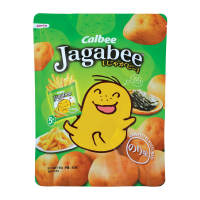
Calbee Jagabee Seaweed Pouch Potato Chips Sticks
$5.20
Buy on Lazada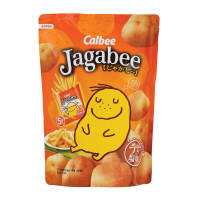
Calbee Jagabee Original Pouch Potato Sticks Snack
$5.20
Buy on Lazada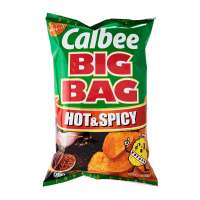
Calbee Big Bag Hot And Spicy Potato Chips Snack
$5.20
Buy on Lazada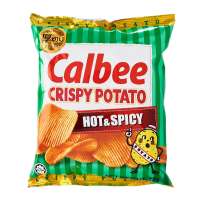
Calbee Crispy Hot And Spicy Potato Chips
$2.40
Buy on Lazada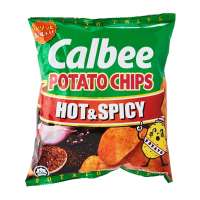
Calbee Hot And Spicy Potato Chips
$2.40
Buy on Lazada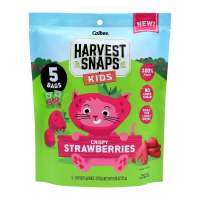
Calbee Harvest Snaps Healthy Kids Snack (Crispy Strawberry)
$9.35
Buy on Lazada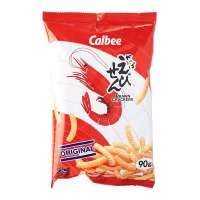
Calbee Original Prawn Crackers
$2.37
Buy on Lazada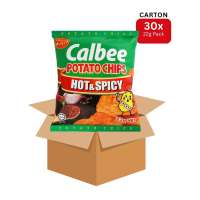
Calbee Hot And Spicy Potato Chips (Carton Of 30 X 22G)
$33.00
Buy on LazadaAbout Calbee
Overview
Calbee, Inc. (Japanese: カルビー株式会社, Karubī Kabushiki-gaisha) is a major Japanese food manufacturer best known internationally for its potato chips, shrimp crackers, vegetable snacks and breakfast cereals. Founded in 1949, the company has grown from a domestic confectionery producer into a multinational group with operations across Asia, North America, Europe and Oceania.1 Its most recognisable brands include Calbee Potato Chips, Kappa Ebisen, JagaRico, Jagabee, Sapporo Potato and Frugra.2
Calbee distinguishes itself by combining Japanese food-manufacturing expertise with an emphasis on natural ingredients, product innovation and taste.2 The company reports its principal business as the production and sale of snacks and other foods.3
Basic information
| Item | Details |
|---|---|
| Company | Calbee, Inc. |
| Japanese name | カルビー株式会社 |
| Founded | April 30, 1949 |
| Headquarters | Tokyo, Japan |
| Industry | Food & beverage / snack foods |
| Main products | Potato chips, potato snacks, shrimp snacks, corn/flour/bean snacks, cereals |
| CEO | Makoto Ehara |
| Fiscal year | Ends March 31 |
| Employees | 6,974 consolidated; 3,711 parent company, as of March 31, 2026 |
| FY2026 consolidated net sales | ¥340.2 billion |
| Overseas markets | 11 markets |
| Listed company | Tokyo Stock Exchange |
Origin of the name
The name Calbee is a portmanteau derived from two nutritional terms: “Cal” for calcium and “bee” for vitamin B1. The company adopted the name Calbee Confectionery Co., Ltd. in 1955 to express an aspiration to create products that contribute to health and nutrition.4 Unlike many invented brand names, Calbee was deliberately constructed around a health-and-nutrition concept.
Founding and early history
Calbee traces its origins to Hiroshima, Japan, where predecessor Matsuo Food Processing Co., Ltd. was established in 1949 by Takashi Matsuo.5 In its early years, the company produced caramel and rice crackers rather than the potato snacks for which it is now known. A significant early product was Kappa Arare, introduced in 1955, but the company’s breakthrough came with the launch of Kappa Ebisen in 1964.6
Kappa Ebisen
Kappa Ebisen is a shrimp-flavoured snack made by incorporating fresh shrimp into wheat dough. It became one of Calbee’s defining products and helped establish the company’s reputation for innovative snack foods.7 Following this success, Calbee began exporting Kappa Ebisen to Southeast Asia and Hawaii in 1966, expanded to North America in 1967, and established its first North American subsidiary in 1970.8
Transformation into a potato-snack manufacturer
The most significant shift in Calbee’s history was its move into potato-based snacks. In 1972, the company introduced Sapporo Potato, its first product made from fresh potatoes, followed by the launch of its flagship Potato Chips line in 1975.9
Rather than relying solely on external suppliers, Calbee developed expertise across the entire potato value chain, from variety development and cultivation to processing and retail. As of FY2026/3, the company works with approximately 1,600 contract farms and procures around 371,000 tonnes of potatoes domestically, equivalent to roughly 19% of Japan’s total potato production.10 This integration of agricultural sourcing and raw-material technology remains a core component of its business model.
Major product portfolio
Calbee Potato Chips
Introduced in 1975, Calbee Potato Chips is the company’s flagship product family. Flavours such as Seaweed Salt (1976) and Consommé Punch (1978) followed the original launch.11 According to FY2026 data, Calbee holds a 72.3% share of Japan’s potato-based snack market based on cumulative nationwide retail sales value.12
JagaRico
Launched in 1995, JagaRico is a stick-shaped potato snack characterised by a crunchy texture. Its development allowed Calbee to utilise potatoes that were not suitable for conventional chip production, reflecting the company’s philosophy of efficient resource use.13
Jagabee
Introduced in 2006, Jagabee uses cut potato pieces to replicate the texture of eating an actual potato. The product has since been sold in multiple overseas markets.14
Kappa Ebisen
Dating back to 1964, Kappa Ebisen was instrumental in transforming Calbee into a major snack company.15 The brand has been adapted for various international markets, demonstrating Calbee’s strategy of adjusting Japanese-developed products to suit local consumer preferences.16
Sapporo Potato
Sapporo Potato was Calbee’s first fresh-potato product when it launched in 1972. The name references Sapporo and Hokkaido, regions strongly associated with potato farming in Japan.17
Frugra
Calbee entered the cereal business in 1988 and launched Fruit Granola, now known as Frugra, in 1991. The brand helped establish Calbee as the number one player in Japan’s domestic cereal market.18
Brand overview
| Brand | Main category | Key characteristic |
|---|---|---|
| Calbee Potato Chips | Potato chips | Flagship potato-chip franchise |
| JagaRico | Potato snack | Stick-shaped, crunchy |
| Jagabee | Potato snack | Potato-piece texture |
| Kappa Ebisen | Shrimp snack | One of Calbee’s oldest iconic brands |
| Sapporo Potato | Potato snack | Long-running potato-based brand |
| Frugra | Breakfast cereal | Fruit-and-granola cereal |
| Harvest Snaps | Bean/vegetable snack | Important North American brand |
| miino | Bean snack | Individual/resealable snack format |
Calbee identifies Potato Chips, JagaRico, Jagabee, Kappa Ebisen, Sapporo Potato and cereals as its core Japanese product categories.19
Corporate philosophy and DNA
Calbee’s corporate philosophy centres on “harnessing nature’s gifts, bringing taste and fun, and contributing to healthy lifestyles”.20 This ethos informs its focus on agricultural ingredients, manufacturing technology, enjoyable eating experiences and expansion into healthier product categories.
A key element of the company’s identity is the utilisation of previously underused food resources, such as converting whole or imperfect potatoes into snacks and transforming beans and vegetables into savoury products. Calbee describes this approach as part of its corporate DNA, tracing it back to founder Takashi Matsuo.21
Domestic market position
Calbee maintains a dominant position in its home market. For FY2026/3, the company reported consolidated net sales of ¥340.2 billion and held leading market shares across multiple categories: 72.3% in potato-based snacks, 56.4% in flour-based snacks, 21.7% in corn-based snacks and 58.9% in bean-based snacks. It ranks number one in both the overall snack and cereal markets in Japan.22 Seven of its brands generate more than ¥10 billion in annual sales.23
Overseas expansion
Although Calbee has operated internationally for decades, its overseas expansion accelerated significantly after 2010. The company currently operates in 11 markets, including Singapore, Thailand, Indonesia, the United States, South Korea, mainland China, Hong Kong, Australia, New Zealand and the United Kingdom.24
Its international strategy combines Japanese technology with local manufacturing, flavours and consumer preferences rather than simply exporting identical Japanese products.25
United States
Calbee entered the US market in 1970. Its North American portfolio includes Harvest Snaps, which the company describes as a flagship US brand, alongside Shrimp Chips, JagaRico, Asian Style Chips and Takoyaki Ball.26 Products are developed to fit local eating habits while applying Calbee’s manufacturing expertise.
South Korea
South Korea is a key market where Calbee achieved significant success with the Honey Butter Chip, launched in 2014. The product demonstrated the company’s ability to develop items specifically suited to local tastes using its proprietary technology and know-how.27
China
China is a priority market where Calbee both imports products and manufactures locally. Items such as Jagabee and Frugra are produced in China,28 and in May 2026 the company announced the commencement of local OEM production for Frugra to strengthen its Chinese business.
United Kingdom
In the UK, Calbee acquired Seabrook, a well-known British potato-chip brand, to broaden its portfolio and establish a stronger platform for growth. This acquisition illustrates a strategy of integrating established local brands alongside its own.
Relationship with PepsiCo
In 2009, Calbee formed a business and equity alliance with PepsiCo, which included Japan Frito-Lay becoming a Calbee subsidiary. This partnership strengthened Calbee’s position in the Japanese snack industry while connecting it to a global food-and-beverage network. Calbee remains an independent, publicly listed Japanese company.
Public listing and structure
Calbee has been listed on the First Section of the Tokyo Stock Exchange since 2011. Headquartered in Tokyo, its corporate structure encompasses snack manufacturing, cereals, potato procurement, logistics, overseas operations, food and health initiatives, and agricultural activities.
Competitive advantages
Calbee’s competitive edge rests on five pillars:
- Potato expertise: Comprehensive knowledge spanning varieties, farming, processing and finished products.
- Product innovation: Continuous creation of new shapes, textures, flavours and formats, from Kappa Ebisen to Frugra.
- Strong brands: A diversified portfolio that reduces dependence on any single product.
- Japanese manufacturing know-how: Transfer of domestic technologies to overseas businesses with local adaptation.
- Raw-material control: Direct relationships with farmers and agricultural research ensuring quality and supply of potatoes.
Business model
Calbee operates an integrated value chain covering ten processes, from natural-ingredient development to delivery of finished products:
- Agriculture and sourcing (potato, bean, corn, grain)
- Ingredient and variety research
- Food processing technology
- Product development
- Manufacturing
- Branding and marketing
- Retail, e-commerce and food service
- Consumer engagement
Historical evolution
- 1949–1960s: Established in Hiroshima; produced caramel, rice crackers and Kappa Ebisen.
- 1970s: Launched Sapporo Potato and Potato Chips, transforming into a major potato-snack manufacturer.
- 1980s–1990s: Diversified into cereals, built agricultural and logistics infrastructure, and launched JagaRico.
- 2000s: Strengthened portfolio with Jagabee and formed PepsiCo alliance.
- 2010s: Accelerated global expansion across Asia, North America and Europe.
- 2020s: Focused on overseas growth, agribusiness, food and health, and sustainability.
Current strategic direction
As of 2026, Calbee operates as a global food company built around snack foods, agricultural expertise and product-development technology. While its Japanese core remains strong, the company is expanding internationally and developing agribusiness and food-and-health segments. Its long-term strategy focuses on three dimensions:
- Defending and innovating within its Japanese core brands.
- Building stronger businesses in North America, Greater China, Asia-Pacific and Europe.
- Expanding beyond conventional snacks into agriculture, natural ingredients and health-related products.
Brand positioning
| Dimension | Calbee’s positioning |
|---|---|
| Origin | Japanese |
| Core category | Snacks & cereals |
| Hero ingredient | Potato |
| Brand promise | Taste + fun |
| Personality | Playful, approachable, innovative |
| Functional strength | Ingredient and manufacturing expertise |
| Emotional appeal | Enjoyable everyday snacking |
| Global strategy | Japanese expertise adapted locally |
| Innovation style | New flavors, textures, formats and ingredients |
| Corporate theme | Harnessing nature’s gifts |
Brand architecture
Calbee’s portfolio is structured around several core categories, though specific offerings vary by country to accommodate local preferences:
- Potato snacks: Calbee Potato Chips, JagaRico, Jagabee, Sapporo Potato
- Savoury snacks: Kappa Ebisen
- Cereal: Frugra
- Plant/bean snacks: miino, Harvest Snaps
- Local/global brands: Honey Butter Chip, Seabrook and market-specific products
Notable facts
- The name Calbee combines calcium and vitamin B1.
- Early products included caramel and rice crackers before the company focused on potatoes.
- Kappa Ebisen (1964) predates Calbee Potato Chips (1975) by more than a decade.
- International exports began in the 1960s, with a North American subsidiary established in 1970.
- The company partners with approximately 1,600 contract potato farms in Japan.
- Operations extend beyond snacks to include cereals, agriculture, logistics and food-and-health initiatives.
- Products are adapted for local tastes, exemplified by Honey Butter Chip in Korea and Harvest Snaps in North America.
For further details on strategy, financial performance and governance, Calbee publishes an annual Integrated Report.
References
- Corporate Data|Calbee
- Calbee: At a Glance|Calbee
- Our Business|Calbee
- Calbee
- Digest|Calbee
- History|Calbee
- Calbee’s Corporate DNA|Calbee
- Product History|Calbee
- Products (Overseas)|Calbee
- Products(Japan)|Calbee
- 8Calbee Group Integrated Report 2025MessageOu
- Integrated Report|Calbee
- IR Documents|Calbee
- IR・投資家情報|カルビー
- News|Calbee
- Investor Relations|Calbee
- Business Risks|Calbee
- Integrated Report|Calbee
- Products Depelopment Story|Calbee
- Investor Relations|Calbee
- CEO Message|Calbee
- Earnings Presentation|Calbee
- IR資料室|カルビー
- IR資料室|カルビー
- IR・投資家情報|カルビー
- 決算説明会資料|カルビー
- Financial Book|Calbee
- Calbee – About Us