Shop on Lazada
Milo products
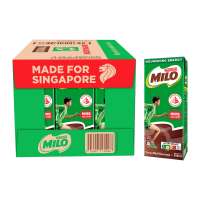
Milo Chocolate Malt Milk UHT Packet Drink 200ML X 24 - Case
$14.95$19.00
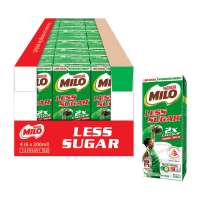
Milo Less Sugar Chocolate Malt Milk UHT Packet Drink 200ML X 24- Case
$16.95$20.59
![[Cartons] MILO UHT Chocolate Malted Milk Original (4 x 6 x 200ml)](https://sg-live.slatic.net/p/84dec68f646c21ad8cfeee79974acda9.png_200x200q80.jpg)
[Cartons] MILO UHT Chocolate Malted Milk Original (4 x 6 x 200ml)
$30.90$38.00
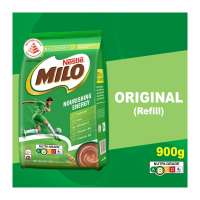
Milo Original Chocolate Malt Powder With Milk - 900G Refill Pack
$10.85
Buy on Lazada
Milo 3In1 Chocolate Malt Powder With Milk - 15 Sachets
$7.95
Buy on Lazada
MILO PROTEIN Chocolate Malt Milk Bottled Beverage 500ML x 24 - Case
$72.00
Buy on Lazada
Milo Chocolate Malt Milk UHT Packet Drink 125ML X 40 - Case
$27.45$28.76
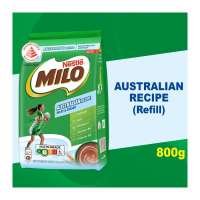
Milo Australian Recipe Chocolate Malt Powder With Milk - 800G Refill Pack
$14.15$16.25
About Milo
Overview
Milo is a chocolate malt beverage brand owned by Nestlé. Originally formulated in Australia in 1934 as a nutritional supplement for children during the Great Depression, it has since grown into one of the world’s most widely consumed malt-based drinks.1 The product is currently sold in more than 40 countries, with particularly strong market penetration across Asia, Oceania, Africa and Latin America.2
| Attribute | Details |
|---|---|
| Brand | Milo |
| Owner | Nestlé |
| Product Type | Chocolate malt beverage |
| Introduced | 1934 |
| Country of Origin | Australia |
| Inventor | Thomas Mayne |
| Availability | More than 40 countries |
| Main Ingredients | Malted barley, cocoa, milk powder, sugar, vitamins and minerals |
| Tagline | “Energy to Go Further”, “Champion Energy” (varies by market) |
History
Australian industrial chemist Thomas Mayne invented Milo in 1934. Amidst the nutritional deficiencies prevalent among children during the Great Depression, Nestlé tasked Mayne with developing a palatable drink that could deliver essential energy, vitamins and minerals. The product debuted at the Sydney Royal Easter Show and achieved immediate commercial success. Its name references Milon (Milo) of Croton, an ancient Greek wrestler renowned for his exceptional strength.3
As Nestlé expanded its international operations, Milo found significant success throughout Southeast Asia, Africa and Oceania. Over subsequent decades, regional markets developed distinct recipes and serving conventions to align with local taste preferences.4
Brand Philosophy
The brand promotes healthy, active lifestyles alongside balanced nutrition and physical fitness for children and young adults. Rather than positioning itself exclusively as a beverage, Milo emphasises character development through sport, focusing on confidence, resilience, teamwork and daily activity via youth programmes and sponsorships.5
Products
Product formats vary significantly by market.
Powdered Drink Mix
The traditional chocolate malt powder designed to be mixed with hot or cold milk or water.
Ready-to-Drink (RTD)
Pre-packaged bottles and cartons intended for convenient consumption.
Snack Products
Selected markets offer extended product lines including snack bars, breakfast cereals and energy snacks.
Specialty Variants
Certain regions provide specific formulations such as reduced-sugar versions, whole grain variants, plant-based or fortified options, and professional food-service formats.6
Ingredients
While formulations differ regionally, core ingredients typically include malted barley, cocoa, milk powder, sugar and vegetable oils. The beverage is commonly fortified with calcium, iron, vitamin D and B vitamins (B2, B3, B6 and B12) to support normal growth and energy metabolism within a balanced diet.
Global Presence
Milo maintains a substantial presence across Australia, New Zealand, the Philippines, Malaysia, Singapore, Indonesia, Thailand, Vietnam, Nigeria, Kenya, Ghana, South Africa, Colombia, Mexico, Brazil, various Middle Eastern nations and numerous Pacific island states. Each market frequently features a unique flavour profile and recipe adapted to local consumer preferences.
Milo in the Philippines
Introduced to the Philippines in 1964, Milo has become one of the nation’s most prominent beverage brands. Nestlé Philippines has anchored the brand in sports development and youth engagement, supporting generations of athletes through initiatives such as the Milo Marathon, Milo Sports Clinics, school sports partnerships and community fitness programmes. This long-standing campaign encourages discipline and physical activity among Filipino children.7
Sports Sponsorship
Investment in sport remains a defining characteristic of the brand. Major initiatives encompass national marathons, basketball programmes, swimming clinics, football, volleyball, athletics, gymnastics, badminton, martial arts and school competitions. Millions of children worldwide, particularly in Southeast Asia, have participated in Milo-sponsored sporting activities.
Marketing
Advertising typically features young athletes, families and schoolchildren, highlighting themes of teamwork, perseverance, healthy living and everyday achievement. The concept of “Champion Energy” is frequently employed to associate the beverage with physical determination and active participation.
Popular Culture
Milo has achieved iconic status within the food culture of several nations. Notable cultural touchstones include:
- Milo Dinosaur: A popular beverage in Malaysia and Singapore consisting of iced Milo topped with an extra spoonful of undissolved powder.
- Iced Milo: A staple menu item in cafés and restaurants throughout Asia.
- Dry Consumption: Eating Milo powder directly from the tin remains a nostalgic practice for many consumers.
These regional adaptations have embedded the brand deeply into everyday culinary traditions across multiple countries.
Nutrition
Milo is marketed as a source of energy and nutrients, particularly when prepared with milk. Depending on the specific formulation, it may provide carbohydrates, protein (when mixed with milk), calcium, iron, B vitamins and vitamin D. Nutritional content varies by country, and whilst some versions contain added sugars, many markets now offer lower-sugar alternatives.
Milestones
| Year | Event |
|---|---|
| 1934 | Milo launched in Australia |
| 1964 | Introduced in the Philippines |
| 1974 | First Milo Marathon in the Philippines |
| 1983 | Launch of Milo Sports Clinics |
| 1988 | Launch of Milo Little Olympics |
| 2000s–Present | Expansion into ready-to-drink products, snack bars and reduced-sugar variants in various markets |
Legacy
For over 90 years, Milo has evolved from a Depression-era nutritional supplement into one of Nestlé’s flagship global brands. Its combination of chocolate-malt flavour, sports-centric identity and enduring youth programmes has established it as a household name in many regions. Whilst recipes and marketing strategies differ locally, the brand consistently champions energy, activity and sporting participation.8
References
- Our Online range of Milo Chocolate drinks | Nestlé Family ME
- Vegemite is recognised globally – but how many people know Milo was invented in Australia?
- Milo Professional Beverages Brand | Nestlé Professional
- MILO® | Nestlé Philippines
- MILO Heritage – Our Champion Journey & MILO History | MILO PH
- Unlocking the Goodness of MILO | Nestlé Philippines
- Our Brands: MILO | Nestlé Philippines
- Explore our MILO® Products | Nestlé Professional