Shop on Lazada
CARTELO products
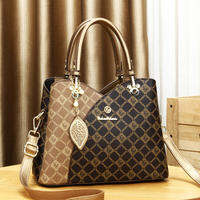
CARTELO | Commuter Elegant Shoulder Tote Bag
$119.68
Buy on Lazada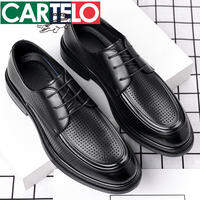
CARTELO | Breathable Business English Style Round Toe Wide Fit Mens Leather Shoes
$51.25$106.56
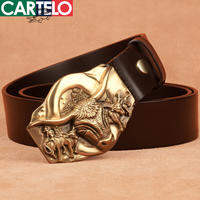
CARTELO | Solid Brass Real Leather Mens Belt with Sliding Buckle
$35.94$73.28
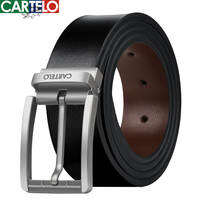
CARTELO | Leather Belt for Men Genuine Black Leather Business Casual
$16.28
Buy on Lazada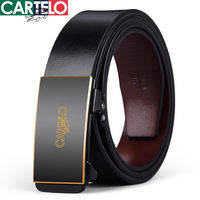
CARTELO | Mens Genuine Leather Belt No-buckle Interior Buckle Crocodile Pattern
$14.84$29.10
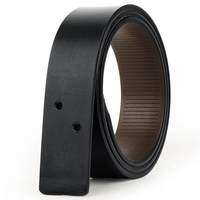
CARTELO | Mens Genuine Leather Belt with Automatic Buckle No Hair
$8.14$15.36
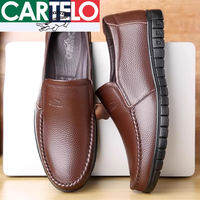
CARTELO | Soft Anti-Slip Genuine Leather Mens Casual Shoes
$45.81$161.19
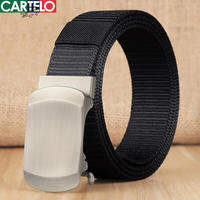
CARTELO | Youthful Leather Belt with Buckleless Design Nylon Fabric Outdoor Golf Belt
$13.35$20.52
About CARTELO
CARTELO, also referred to as CARTELO Crocodile or simply Cartelo, is a fashion and apparel brand with origins in Singapore. Established in 1947, it is particularly associated with casual wear and menswear, and is distinguished by its crocodile emblem. The brand has historically maintained a significant presence across various Asian markets, including Singapore, China, and India. It is an independent entity and should not be confused with Lacoste or other brands utilising similar crocodilian imagery.
Overview
| Field | Information |
|---|---|
| Brand name | CARTELO / CARTELO Crocodile |
| Origin | Singapore |
| Founded | 1947 |
| Founder / principal figure | Dr Hian-Tsin Tan (also rendered as Tan Hian Tsin) |
| Industry | Fashion and apparel |
| Core categories | Casualwear, menswear, shirts, T-shirts, trousers, outerwear, accessories |
| Signature symbol | Crocodile |
| Major historical markets | Singapore, China, India and other Asian markets |
| Chinese-market name | 卡帝乐鳄鱼 |
| Chinese mainland entry | 1993 |
| Notable Chinese operating company | Shanghai Eastern Crocodile Apparels Co., Ltd. |
Contemporary reporting and Superbrands documentation confirm the brand’s 1947 founding date and Singaporean origin.
History
Foundation in Singapore
The history of CARTELO traces back to 1947 in Singapore. The brand evolved from a Singapore-based Crocodile clothing business linked to Dr Hian-Tsin Tan, whom Superbrands identifies as the founder of CARTELO Crocodile. Contemporary reports from China Daily similarly cite Tan Hian Tsin as one of the founders of the Singapore-based Crocodile line.1
The company became notable for adopting the crocodile as its primary visual identity, placing CARTELO among a distinct group of 20th-century Asian and international apparel brands that utilised crocodilian imagery.
A significant historical distinction is that CARTELO and Lacoste developed independently. Superbrands notes that the Crocodile brand in Singapore, Lacoste in France, and Izod in the United States all emerged separately during the 1940s with branding centred on crocodile or alligator motifs.
Expansion across Asia
In the decades following its establishment, the Singapore-based business expanded beyond its domestic market. Reports describe Crocodile International as having built a substantial international distribution network, with operations spanning numerous Asian countries. By the early 2000s, the company was reported to operate hundreds of stores and galleries internationally.
Market positioning for CARTELO varied by region. For instance, a 2003 Indian business report characterised Cartelo as a premium fashion brand aimed at fashion-conscious, upper-class consumers, featuring products made from internationally recognised fabrics.2
Entry into China
China emerged as one of CARTELO’s most critical overseas markets.
The brand entered mainland China in 1993.8 Contemporary sources indicate that Shanghai Eastern Crocodile Apparels Co., Ltd. was established in connection with this expansion.16 A Singapore High Court judgment further records that Cartelo Singapore Pte Ltd, an associate company of Singapore Crocodile, incorporated a wholly owned subsidiary in Shanghai in 1994.
CARTELO subsequently developed an extensive retail network in China. Superbrands material has cited more than 1,000 exclusive shops and boutiques, while other historical sources provide higher figures depending on the year and outlet definition used.
In the Chinese market, the brand is known as:
卡帝乐鳄鱼
This translates roughly to “Cartelo Crocodile”.
The crocodile trademark
A defining aspect of CARTELO’s history is its relationship with other fashion brands using crocodile logos, most notably Lacoste.
CARTELO’s use of the crocodile logo predates Lacoste’s expansion into many Asian markets. According to contemporary reporting, CARTELO registered its crocodile figure and English lettering in Singapore in 1951.3
As Lacoste expanded into Asia, the two companies became involved in trademark disputes, particularly in China where both sought to protect their respective identities. Reports from China Daily state that the brands reached an understanding in 1983 regarding their trademarks. Tan Hian Tsin noted that the CARTELO and Lacoste crocodiles could be distinguished by their orientation and other branding characteristics.4
Despite this earlier agreement, disputes resurfaced as both brands expanded in China during the 1990s and early 2000s. Intellectual property proceedings in the Philippines also record a CARTELO AND CROCODILE DEVICE trademark application filed by Crocodile International, although this specific application was voluntarily withdrawn in 2009.10
Brand identity
CARTELO’s identity has historically been anchored by several key elements:
The crocodile
The crocodile serves as the brand’s defining visual element, providing CARTELO with a recognisable identity that features prominently in its traditional logo and apparel.
Casual and everyday fashion
Rather than haute couture, CARTELO has traditionally been associated with casual clothing and menswear. Its product range has typically included shirts, T-shirts, trousers, jackets, and other everyday apparel.
Asian internationalism
While Singapore is the brand’s historical birthplace, CARTELO’s development has been intrinsically linked to the broader Asian market. China, in particular, became a pivotal market following the brand’s entry in 1993.
Accessible premium positioning
CARTELO’s market positioning has varied by country and era. While positioned as mainstream casualwear in some regions, historical reporting from India specifically characterised Cartelo as a premium line targeting affluent, fashion-conscious consumers.2
Products
Historically, CARTELO’s product range has encompassed:
- Men’s shirts
- Polo shirts
- T-shirts
- Casual trousers
- Jeans and bottoms
- Jackets and outerwear
- Sweaters and knitwear
- Sports and casual clothing
- Bags and luggage
- Wallets and small leather goods
- Other fashion accessories
Trademark filings indicate that the brand’s commercial scope extends beyond clothing to include items such as backpacks, handbags, wallets, suitcases, umbrellas, and other accessories.9
Superbrands material also references specialised fabrics associated with the brand, including anti-ultraviolet, “ever-cool”, and anti-radiation fabrics.5
CARTELO in China
China represents a particularly significant chapter in CARTELO’s history. Following its 1993 market entry, the brand established a comprehensive distribution and retail infrastructure comprising:
- Department store counters
- Stand-alone stores
- Flagship stores
- Shopping centre boutiques
- Online retail channels
Historical sources describe the brand as operating more than 1,000 shops and boutiques in China, with some industry sources citing over 2,000 outlets at peak expansion points. These figures should be regarded as historical data rather than current store counts, as they refer to varying years and definitions of retail outlets.14
The Shanghai operation has been central to the brand’s Chinese business, with Singapore High Court judgments confirming the corporate relationship between Cartelo Singapore and its Shanghai subsidiary.
CARTELO in India
CARTELO maintained a presence in India through Crocodile Products Private Limited, a joint venture involving Crocodile International.
In 2003, The Economic Times reported plans to introduce CARTELO into selected Indian galleries as a premium fashion line, distinguishing it from the company’s other brands. At that time, the broader Crocodile business reportedly operated dozens of exclusive galleries across the country.2
CARTELO in the Philippines
CARTELO has had documented trademark activity in the Philippines. Proceedings from the Philippine Intellectual Property Office record an application for the mark “CARTELO AND CROCODILE DEVICE”, filed in 1999 by Crocodile International Pte. Ltd., Inc. This application was later voluntarily withdrawn, and the opposition proceeding was dismissed as moot and academic in 2009.10
While this evidences historical intellectual property activity, it does not in itself establish the brand’s current retail presence in the Philippines. However, secondary marketplaces and e-commerce platforms in the Philippines have listed CARTELO products, including polo shirts and dresses, indicating some level of product circulation in the market.121315
Corporate history
It is important to distinguish between the CARTELO brand, the wider Crocodile International business, and specific legal entities carrying the CARTELO name.
For example, CARTELO CROCODILE PTE LTD was incorporated in Singapore on 13 January 1996. Singapore corporate records list its principal activity as the wholesale of adult clothing, but this specific legal entity was subsequently struck off in 2017.11
The striking off of this entity does not necessarily imply that the CARTELO trademark or wider brand ceased to exist; a fashion brand and a specific corporate entity are distinct legal concepts. The historical relationship is complex, as CARTELO has operated through various corporate entities, subsidiaries, licensees, and distributors across different jurisdictions.4
CARTELO vs Lacoste
Due to the shared use of crocodile imagery, the two brands are occasionally confused.
| CARTELO | Lacoste | |
|---|---|---|
| Origin | Singapore | France |
| Established | 1947 | 1933 |
| Historical founder | Dr Hian-Tsin Tan / Tan Hian Tsin | René Lacoste and André Gillier |
| Main historical identity | Crocodile | Crocodile |
| Historical strength | Asian markets | Global |
| Traditional positioning | Casual / menswear / premium casual | Sportswear / premium lifestyle |
| Relationship | Independent brand | Independent brand |
Crucially, CARTELO is not a subsidiary or offshoot of Lacoste. Historical reporting consistently describes them as separate businesses that developed independently before encountering trademark disputes.
Name and logo
The brand name is generally stylised as CARTELO. It is frequently accompanied by a crocodile device and, particularly in Chinese-speaking markets, the name 卡帝乐鳄鱼.
Some secondary Chinese sources suggest the name CARTELO was constructed from a combination of “car”, “tel”, and “unisex”. However, this explanation is found primarily in secondary brand profile material rather than primary documentation and should not be treated as firmly established historical fact.6
Historical significance
CARTELO occupies a notable place in fashion history as a Singaporean apparel brand that developed an international Asian footprint decades before the recent rise of Southeast Asian fashion labels.
Its history is significant for several reasons:
- Its 1947 Singapore origin7
- Early adoption and registration of a crocodile trademark3
- Successful expansion throughout Asian markets
- Major commercial development in mainland China post-19938
- Establishment of a large historical Chinese retail network14
- Long-standing competition and trademark disputes with other crocodile-logo brands4
- Evolution from traditional casualwear towards premium fashion positioning in select markets2
The brand’s narrative is considerably more complex than describing CARTELO merely as a “Chinese clothing brand”; its historical roots are unequivocally Singaporean, while China became one of its most important commercial markets.6
Timeline
- 1947: Crocodile/CARTELO business established in Singapore.7
- 1951: Singapore Crocodile business registers its crocodile figure and English lettering.3
- 1983: Historical agreement reported concerning the respective crocodile trademarks of CARTELO/Crocodile and Lacoste.4
- 1993: CARTELO enters mainland China.8
- 1994: Cartelo Singapore establishes Shanghai subsidiary, Shanghai Eastern Crocodile Apparels Co., Ltd.
- 1996: CARTELO CROCODILE PTE LTD incorporated in Singapore.11
- 1998: CARTELO obtains trademark acknowledgement/protection in China under the “Cartelo Crocodile” designation.9
- 1999: CARTELO and crocodile-device trademark application filed in the Philippines.10
- 2000s: CARTELO develops major retail presence in China, with historical sources reporting over 1,000 outlets.
- 2003: CARTELO positioned as a premium fashion line in India whilst continuing Chinese expansion.2
- 2009: Philippine trademark application voluntarily withdrawn.10
- 2017: Singapore legal entity CARTELO CROCODILE PTE LTD struck off the register.11
References
- The founder, Dato’ Dr Tan, and the chairman
- (CARTELO)卡帝乐鳄鱼官网 _卡帝乐鳄鱼加盟_全球时尚品牌网
- Notice of Allowance for Cartelo
- CARTELO CROCODILE PTE LTD (199600312D) – Singapore Company
- 卡帝乐鳄鱼(CARTELO):国际知名休闲男装品牌的发展与成就
- 卡帝乐鳄鱼(CARTELO)标志图片及品牌介绍_标志网
- (CARTELO)卡帝乐鳄鱼官网 _卡帝乐鳄鱼加盟_全球时尚品牌网
- CARTELO Trademark of CROCODILE INTERNATIONAL PTE LTD – Registration Number 3230123 – Serial Number 76468224 :: Justia Trademarks
- CARTELO – Crocodile International Pte Ltd Trademark Registration
- CARTELO – Crocodile International Pte Ltd Trademark Registration
- CARTELO CROCODILE PTE LTD (199600312D)
- 100+ Cartelo For Sale | Tshirts & Polo Shirts | Carousell Philippines
- Cartelo For Sale | Dresses | Carousell Philippines
- CARTELO是什么牌子_卡帝乐鳄鱼品牌是什么档次?-百强排行网
- CARTELO Brand Men’s T-shirt Fashion Men’s Clothing Summer Sports – TikTok Shop Philippines
- Shanghai Cartelo Crocodile Industries Co Ltd – Company Profile and News – Bloomberg Markets