Shop on Lazada
Catch Seafood products
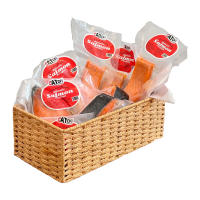
Catch Seafood Salmon Portion Boneless 150Gx6PCS - Frozen
$27.22$31.00
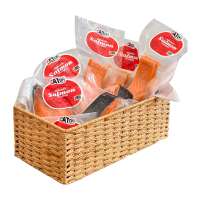
Catch Seafood Salmon - (150G X 9Pcs) - Frozen
$40.35$43.80
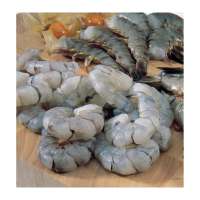
Catch Seafood Jumbo Peeled Prawns Family pack - Frozen
$22.99$27.50
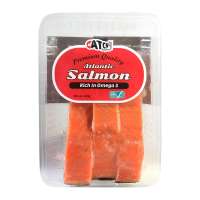
Catch Seafood Premium Salmon Portion 450g - Frozen
$14.12$18.31
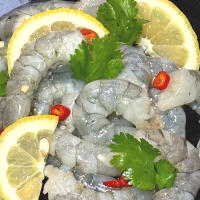
Catch Seafood Jumbo Peeled Prawns - Frozen
$6.99$9.08
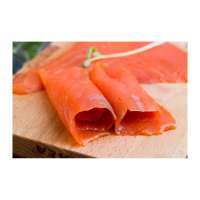
Catch Seafood Norwegian Smoke Salmon - Frozen
$7.61$8.17
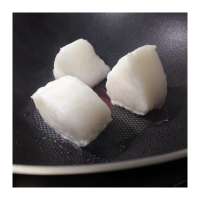
Catch Seafood Natural Cod Poke Cube Chilean Seabass - Frozen
$28.25
Buy on Lazada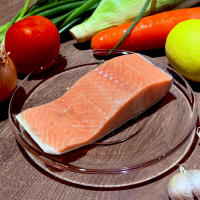
Catch Seafood Alaskan Wild Caught Salmon Skin On - Frozen
$8.26$19.17
About Catch Seafood
Catch Seafood is a Singapore-based seafood brand specialising in frozen seafood and convenient food products for home cooking. The brand is closely associated with The Fish Net Pte. Ltd., a local seafood supply and trading company. Its products are sold directly to consumers as well as through retail and online channels, maintaining a significant presence on NTUC FairPrice and Shopee Singapore.1
Overview
| Category | Details |
|---|---|
| Brand | Catch Seafood |
| Market | Singapore |
| Business type | Seafood / frozen food brand |
| Associated company | The Fish Net Pte. Ltd. |
| Industry | Seafood supply, trading and retail |
| Main product focus | Frozen fish, prawns, shellfish and ready-to-cook seafood |
| Other products | Meat, marinated products and ready-to-cook items |
| Distribution | E-commerce, supermarkets, restaurants, hotels and food-service customers |
| Singapore address | 9 Tagore Lane, #01-11, 9@Tagore, Singapore 787472 |
| Website | Catch Seafood online shop |
| Positioning | Convenient, everyday seafood with an emphasis on freshness and value |
The brand’s website states that Catch Seafood employs blast freezing at the point of capture to preserve the freshness of imported seafood. It also offers bulk packs and bundles targeted at value-conscious households.
Company background
The origins of Catch Seafood are linked to The Fish Net Pte. Ltd. Company information indicates that The Fish Net traces its roots to 2003, beginning as a small business specialising in lobster supply before expanding into a broader seafood supplier offering over 150 products across seafood, shellfish, marinated meats and ready-to-cook foods.2
The Fish Net was incorporated as a private limited company in Singapore in July 2014, with seafood supply and trading listed as its principal business activity.14
Catch Seafood functions primarily as the consumer-facing brand within this wider seafood supply operation. Product listings on FairPrice consistently identify The Fish Net as the importer or distributor of Catch Seafood products.3 Consequently, the brand operates not merely as a supermarket private label but as an extension of a dedicated seafood importing, distribution and supply business.
Business model
Catch Seafood operates across both B2C and B2B channels. Its website indicates that it supplies private households, seafood retail outlets, restaurants and hotels. The brand also describes itself as working with sustainable food partners and supplying established restaurants, distributors, retail outlets and online platforms in Singapore.4
This operational structure comprises three overlapping layers: seafood sourcing, distribution and food service, and consumer retail. This model allows Catch Seafood to leverage an existing seafood supply network while maintaining a distinct retail brand identity.
Product portfolio
Rather than focusing on a single signature species, Catch Seafood maintains a broad assortment. FairPrice currently lists more than 150 Catch Seafood products, covering fish, prawns, shellfish and other seafood categories.26
Fish
The range includes both farmed and wild-caught varieties such as salmon, barramundi, Pacific dory, grouper, saba mackerel, cod, haddock, halibut, swordfish, snapper, mahi mahi, tuna, black cod and trout.22 Specific offerings include Chilean salmon portions, Vietnamese Pacific dory and wild-caught tuna products.57
Prawns and shrimp
Prawns and shrimp constitute a major category, including sea prawns, tiger prawns, peeled prawns, prawn meat, jumbo prawns, baby shrimp and broken shrimp.2324 Certain products are sold in 1 kg family or value packs, reinforcing the brand’s positioning around everyday household cooking and value.
Shellfish and prepared items
The portfolio includes crab, crab meat, clams, oysters, squid and calamari.21 Catch Seafood also sells prepared items such as breaded oysters, indicating a proposition that extends beyond raw seafood ingredients.9
Frozen food positioning
A defining characteristic of Catch Seafood is its emphasis on frozen seafood rather than fresh seafood sold immediately after landing. The brand states that it uses blast freezing at the point of capture to seal in freshness.12
Individual product descriptions reinforce this approach. For example, Catch Seafood’s Alaskan salmon is described as being portioned and flash frozen at peak freshness, while its haddock uses flash-freezing technology intended to retain texture and quality.1011
This approach offers several advantages for Singapore consumers:
- Longer shelf life
- Greater convenience
- More predictable availability
- Easy portion control
- Ability to source seafood internationally
- Reduced dependence on daily fresh fish supply
The brand’s proposition focuses on international seafood preserved at high quality and made convenient for everyday cooking, rather than same-day catch freshness.
Sourcing and international range
Catch Seafood sources products from numerous countries rather than restricting its catalogue to a single origin. FairPrice listings show products originating from Vietnam, Chile, Indonesia, Norway, China, the United States, Japan, New Zealand, Thailand, Canada, Malaysia, Taiwan and France.16
Specific examples of international sourcing include:
- Salmon portions sourced from Chile5
- Pacific dory products sourced from Vietnam7
- Wild-caught Alaskan salmon products from the United States10
- Breaded oyster products from Japan9
- Mahi mahi products from Indonesia3
This international sourcing strategy brings seafood from multiple fishing and aquaculture regions into the Singapore retail market.
Brand philosophy
Catch Seafood’s messaging centres on three core concepts:
Freshness
The brand emphasises preserving seafood freshness through freezing technology, specifically highlighting blast freezing at the point of capture on its website.12
Natural products
Catch Seafood frequently describes its products as 100% natural, with individual items advertised as having no treatments or preservatives. This should be understood as product-specific marketing language rather than a universal claim applying identically to every item in the catalogue.
Convenience
The brand sells seafood in consumer-friendly formats including individually portioned fish, skinless and boneless cuts, cubed tuna, peeled prawns, family packs, value packs, marinated products and ready-to-cook items.8 These formats cater to consumers seeking seafood without extensive preparation.
Target market
Catch Seafood targets the mass-to-mid-market household consumer rather than exclusively premium seafood buyers. Its assortment includes both premium items and affordable everyday products, with FairPrice listings featuring small individual portions alongside large 1 kg value packs.19
The brand’s website explicitly promotes value-for-money bundles and bulk purchasing.15 Core customers likely include families, working professionals, home cooks, regular frozen seafood buyers, budget-conscious consumers and those seeking convenient protein sources. The brand’s positioning can be summarised as good-quality international seafood made convenient for everyday Singapore cooking.
Retail presence
Catch Seafood maintains substantial retail accessibility in Singapore. The brand has a significant catalogue on NTUC FairPrice, where more than 150 products are currently listed.218
It also operates a dedicated Shopee Singapore store carrying salmon, prawns, tuna, dory, cod, crab and other products, identifying Catch Seafood as a supplier and distributor serving local consumers.25 Additionally, Catch Seafood operates its own online shop delivering to addresses throughout Singapore.1
This multi-channel distribution model encompasses its own website, supermarkets, e-grocery platforms, marketplaces and food-service distribution.
Product architecture
Catch Seafood utilises different formats to address varying consumer needs:
- Individual portions: Designed for smaller households and convenient weekday meals.
- Family packs: Larger quantities intended for families and regular consumption.
- Bulk packs: Often around 1 kg, aimed at value and frequent cooking.
- Ready-to-cook products: Marinated or prepared items that reduce preparation time.
- Premium seafood: Products such as wild salmon, black cod, tiger prawns and specialty crab items that broaden the range upward.
This structure supports a “one-stop seafood freezer” positioning rather than dependence on a single hero product.
Sustainability
Sustainability features in Catch Seafood’s stated brand messaging, with the brand claiming to work with sustainable food partners to bring natural seafood to consumers.4
However, there is a distinction between stating that the company works with sustainable suppliers and having every individual product independently certified as sustainable. Public product information does not establish that the entire Catch Seafood portfolio carries a single universal sustainability certification. Sustainability is therefore best described as a brand-level sourcing objective, with credentials requiring assessment on a product-by-product basis.
Relationship with The Fish Net
The Fish Net Pte. Ltd. is a Singapore seafood supply and trading business with a history beginning in 2003.2 Catch Seafood’s website identifies The Fish Net Pte. Ltd. at the same Tagore Lane address,12 and FairPrice product pages identify The Fish Net as the importer or distributor of Catch Seafood products.17
The relationship can be represented as follows:
The Fish Net Pte. Ltd. → Seafood sourcing, importing and distribution → Catch Seafood → Retail, online and food-service consumers.
This underlying supply chain capability constitutes a significant competitive advantage for the brand.
Distribution infrastructure
The brand is based at 9 Tagore Lane, #01-11, 9@Tagore, Singapore 787472.12 Recruitment information reveals operational roles such as warehouse supervisor and delivery driver, with responsibilities involving frozen seafood receiving, inventory management, dispatch and delivery.13
This indicates that Catch Seafood is supported by a physical seafood warehousing and distribution operation rather than functioning solely as a marketing label attached to third-party products.
Market positioning
Catch Seafood occupies a middle ground in the Singapore seafood market:
| Position | Catch Seafood’s approach |
|---|---|
| Fresh seafood market | Competes through frozen convenience rather than same-day freshness |
| Premium seafood brands | Offers premium products alongside a substantial value range |
| Supermarket private labels | Maintains strong supermarket presence while being associated with a specialist supplier |
| Online seafood sellers | Combines direct online sales with physical retail distribution |
| Food-service suppliers | Retains B2B and food-service capabilities behind the consumer brand |
Its primary differentiator is scale, assortment and convenience rather than a narrow premium or artisanal identity.
Strengths and limitations
Strengths
- Broad product selection: With more than 150 products listed at FairPrice, the brand offers considerably more breadth than typical single-product seafood brands.19
- Strong distribution: Products are available through major retail and online channels, while the underlying company also supplies restaurants and hotels.20
- International sourcing: The ability to offer seafood from numerous countries rather than relying on a single origin.21
- Convenience: Portioned, boneless, skinless, peeled and ready-to-cook products reduce preparation time.
- Value positioning: Bulk and family packs make the brand relevant to regular household seafood consumption.
Limitations
The breadth of the portfolio presents branding challenges. Because the range spans from inexpensive dory and shrimp to wild salmon and specialty seafood, Catch Seafood cannot be categorised purely as a premium, sustainable, gourmet or low-cost brand. It is more accurately understood as an accessible, broad-spectrum seafood brand.
Additionally, because products originate from multiple sources and employ different sourcing methods, quality and sustainability characteristics may vary between individual items. Consumers are advised to review specific product details regarding country of origin, species, preparation and sourcing rather than treating the entire catalogue as homogeneous.
References
- Catch Seafood
- Catch Seafood | All The Latest Products | NTUC FairPrice
- Catch Seafood Wild Caught Mahi Mahi Portion | NTUC FairPrice
- Catch Seafood Prawn Meat Without Shell – Large | NTUC FairPrice
- Catch Seafood Salmon Portion | NTUC FairPrice
- Catch Seafood | All The Latest Products | NTUC FairPrice
- Catch Seafood Pacific Dory Fillet | NTUC FairPrice
- Catch Seafood Tuna Cube | NTUC FairPrice
- Catch Seafood Oyster Breaded Extra Large | NTUC FairPrice
- Catch Seafood Wild-Caught Alaskan Keta Salmon (Value Pack) | NTUC FairPrice
- Catch Seafood Haddock Cod Fillet – Skinless | NTUC FairPrice
- Contact Us | Catch Seafood
- Join Us | Catch Seafood
- THE CATCH SEAFOOD RESTAURANT & BAR PTE. LTD. (201410633N) – Singapore Company
- SIGNATURE CATCH SEAFOOD PTE. LTD. (202403582H)
- Shop | Catch Seafood
- Shop Catch Seafood For Everyday Great Value | NTUC FairPrice
- | FairPrice Singapore
- Shop Catch Seafood For Everyday Great Value | NTUC FairPrice
- Shop Catch Seafood For Everyday Great Value | NTUC FairPrice
- Catch Seafood Wild Crab meat Special | NTUC FairPrice
- Catch Seafood Swordfish Steak (Frozen) | NTUC FairPrice
- Catch Seafood Prawn Meat Without Shell – Large | NTUC FairPrice
- Catch Seafood Large Prawn Meat Tail On | NTUC FairPrice
- Buy Catch Seafood Full Product Range | Brand Selection – Lazada Singapore