Shop on Lazada
Chloé products
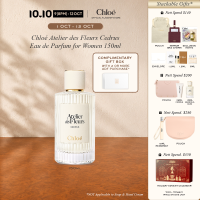
Chloé Atelier des Fleurs Cedrus Eau de Parfum for Women 150ml | 50ml
$347.00$385.00
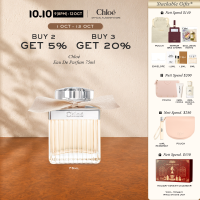
Chloé Eau De Parfum 75ml | 50ml | 30ml | 5ml
$214.00$230.00
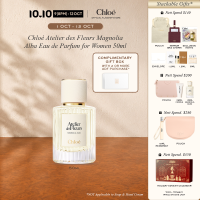
Chloé Atelier Des Fleurs Magnolia Alba Eau De Parfum For Women 50ml | Symbol of Beauty | Crisp Creamy Green Perfume
$204.00$215.00
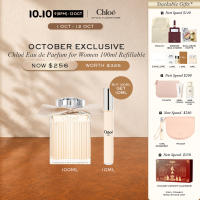
Oct Only | Buy 100ml Get 10ml - Chloé Eau de Parfum for Women 100ml Refillable | Chloé Iconic Signature Eau De Parfum For Women 100ml Refillable | Lychee Damascena Rose Amber | A Powdery Honeyed Rose Perfume
$256.00$325.00
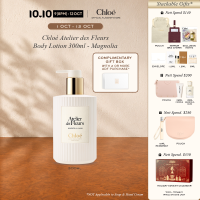
Chloé Atelier des Fleurs Body Lotion 50ml | 300ml - Cedrus | Santalum | Magnolia
$109.00$115.00
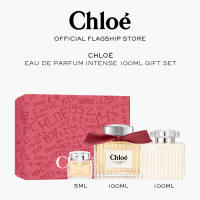
Chloé Eau de Parfum Intense 100ml Gift Set (Chloé EDP Intense 100ml + Body Lotion 100ml + Mini 5ml) | Worth $410
$203.00$290.00
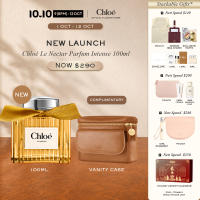
Chloé Le Nectar Parfum Intense for Women (100ml | 50ml | 300ml )
$290.00
Buy on Lazada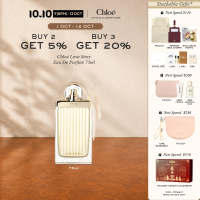
Chloé Love Story Eau De Parfum | Stephanotis Jasmine Orange Blossom Cedarwood | An Unforgettable Orange Blossom An Essence Of Seduction Perfume (30ml | 50ml | 75ml)
$184.00$230.00
About Chloé
Chloé is a French luxury fashion house established in Paris in 1952 by Gaby Aghion. The brand holds a significant place in fashion history as a pioneer of luxury ready-to-wear, offering garments with the quality and craftsmanship of haute couture but designed as finished pieces rather than made-to-measure items.1 Today, Chloé operates under the Swiss luxury group Richemont, with Chemena Kamali serving as Creative Director and Laurent Malecaze as CEO. The house continues to define itself through free-spirited femininity, effortless style, and Parisian elegance.2
Basic information
| Chloé | |
|---|---|
| Full name | Chloé |
| Founded | 1952 |
| Founder | Gaby Aghion |
| Founded in | Paris, France |
| Industry | Luxury fashion |
| Parent company | Richemont |
| CEO | Laurent Malecaze |
| Creative Director | Chemena Kamali |
| Headquarters | Paris, France |
| Main categories | Ready-to-wear, handbags/leather goods, shoes, jewellery, eyewear, fragrances, childrenswear |
| Positioning | French luxury / contemporary femininity |
| Known for | Romantic silhouettes, fluid dresses, feminine blouses, leather goods, handbags, bohemian/Parisian style |
Richemont currently lists Chloé’s product categories as ready-to-wear, leather goods, shoes, fragrances, eyewear, jewellery and childrenswear.3
The founder: Gaby Aghion
The origins of Chloé lie with Gaby Aghion, born Gabriella Hanoka in Alexandria, Egypt. From a cosmopolitan background, she relocated to Paris with her husband, Raymond Aghion, in 1945.4 In the post-war era, the Parisian luxury fashion landscape was dominated by haute couture, characterised by highly formal, structured garments produced exclusively for individual clients.
Aghion identified an opportunity to offer an alternative that was luxurious yet easier to wear, feminine without being restrictive, and sophisticated but relaxed. She sought to create beautifully made, modern clothing available as ready-to-wear rather than overly formal attire. In 1952, she presented her first collection, establishing Chloé as one of the earliest luxury ready-to-wear houses.5 This philosophy positioned the brand as a vital bridge between traditional haute couture and modern luxury fashion, allowing women to purchase beautifully designed luxury clothing without commissioning bespoke pieces.
The name “Chloé”
Rather than using her own surname, Aghion named the house Chloé after a friend, reportedly favouring the name for its feminine and youthful character which suited the atmosphere she wished to cultivate.6 In French, the name is pronounced approximately “KLOH-ay”.
Jacques Lenoir and business development
In 1953, Gaby Aghion formed a partnership with Jacques Lenoir. Their collaboration was complementary: Aghion focused on creative and artistic direction, while Lenoir managed the commercial and business infrastructure.7 This division of labour allowed Aghion to develop the house’s identity while Lenoir built the operational foundation necessary for its early success.
Café de Flore and unconventional beginnings
A defining element of Chloé’s early history is its association with Café de Flore, the iconic Left Bank venue frequented by artists and intellectuals. In 1957, Chloé held its first fashion show for the Spring/Summer 1958 collection at this location.8 By presenting collections in lively cafés rather than intimidating couture salons, the house signalled that its fashion was intended for a younger, more independent woman connected to real life, culture, and Parisian social society.
The early Chloé aesthetic
From its inception, Chloé developed a distinct visual language that has persisted through various creative tenures. Core characteristics include:
- Softness: A preference for movement and fluidity over rigid tailoring.
- Femininity: An emphasis on female form without reliance on traditional formalwear structures.
- Light fabrics: Extensive use of silk and lightweight materials.
- Youthfulness: A deliberate avoidance of overly mature or conservative imagery.
- Effortlessness: Garments designed to appear elegant without seeming excessively constructed.
- Romanticism: Recurring elements of flowing shapes, delicate fabrics, and romantic detailing.
The 1960s: A generation of young designers
During the 1960s, Aghion became known for identifying and nurturing young creative talent. Designers who worked with Chloé during this period included Gérard Pipart, Maxime de La Falaise, Michèle Rosier, Graziella Fontana, and Karl Lagerfeld.9 Rather than being defined permanently by a single visionary, Chloé evolved into a platform where successive generations could reinterpret femininity, making it a training ground for major industry figures.
Karl Lagerfeld and the transformation of Chloé
Karl Lagerfeld remains one of the most historically significant designers associated with the house, having first collaborated with Chloé in the 1960s before returning as its primary creative force in the early 1990s.10 Lagerfeld expanded the brand’s vocabulary beyond softness and romanticism to incorporate historical references, classical imagery, theatricality, sensuality, pop culture, and elaborate prints. During his later tenure, the brand became closely linked with the supermodel era of the 1990s.10 His enduring influence is acknowledged by current Creative Director Chemena Kamali, who has described her mission as building upon the vision established by both Gaby Aghion and Karl Lagerfeld.11
Stella McCartney: The youthful revolution
A pivotal moment occurred in 1997 when Stella McCartney was appointed Creative Director at the age of 25.12 McCartney shifted the tone of the house significantly, retaining its femininity while injecting a sexier, younger, and more rebellious British sensibility. Her work combined vintage lingerie, tailoring, rock ‘n’ roll, Britpop, streetwear, and glamour, introducing what the house describes as a “sexier, rock ‘n’ roll attitude.”13 This era was commercially vital, attracting a new generation of luxury consumers to the brand.
Phoebe Philo and the modern Chloé woman
Following McCartney’s departure in 2001, her close friend and former colleague Phoebe Philo succeeded her as Creative Director.14 Philo’s tenure is considered one of the most influential in the brand’s history, emphasising understated luxury, sensuality, relaxed silhouettes, and practical sophistication. Crucially, this period established Chloé as a major handbag house. The launch of the Paddington bag in 2005 created one of the defining “It bags” of the decade, characterised by its oversized padlock and substantial leather construction.15 This success cemented a business model combining a strong ready-to-wear identity with highly desirable accessories.
The Chloé handbag era
Handbags became central to Chloé’s identity throughout the 2000s and 2010s. Key models include:
- Paddington: Introduced under Phoebe Philo in 2005; known for its large padlock and relaxed, heavy-leather construction.
- Marcie: Launched around 2010; associated with a softer, equestrian-inspired aesthetic.
- Faye: A refined design distinguished by its metal ring and chain detailing.
- Nile: Recognisable for its sculptural, bracelet-like handle.
- Woody: A casual tote family reflecting the house’s relaxed summer and Parisian aesthetic.
The current Chloé website continues to feature heritage lines such as the Paddington, Marcie, and Faye alongside newer designs.16
Clare Waight Keller
Clare Waight Keller became Creative Director in 2011, maintaining the brand’s romantic identity while introducing a slightly more sophisticated and utilitarian interpretation of femininity. Her tenure produced key pieces including the Faye bag and emphasised the contrast between delicate details and adventurous elements.17 Waight Keller also maintained a professional connection with future Creative Director Chemena Kamali, who served as her Design Director after rejoining Chloé in 2012.17
Natacha Ramsay-Levi
Appointed in 2017, Natacha Ramsay-Levi brought a modern, fashion-forward, and sharper interpretation to the house while retaining its core femininity. She remained at the creative helm until 2020, with the brand’s official history noting her emphasis on Gaby Aghion’s original sense of mission and intelligence.18
Gabriela Hearst and sustainability
Gabriela Hearst became Creative Director in 2020, marking a shift towards positioning Chloé as a mission-driven luxury company. Her tenure integrated sustainability and social impact into the core strategy, focusing on responsible materials, craftsmanship, longevity, and natural fibres.19 This period moved sustainability from a secondary consideration to a central pillar of the brand’s corporate and creative identity.
Chloé today: Chemena Kamali
In 2023, Chloé appointed Chemena Kamali as Creative Director.12 Her appointment is notable due to her extensive history with the house: she began her career there on Phoebe Philo’s team, returned in 2012 as Design Director for Clare Waight Keller, later served as Women’s Ready-to-Wear Design Director at Saint Laurent, and rejoined Chloé as Creative Director in 2023.20 Her debut collection, Winter 2024, was presented during Paris Fashion Week in February 2024.21 As of 2026, Kamali remains Creative Director, representing an institutional memory that bridges the eras of Philo and Waight Keller.22
Design philosophy
Chloé’s design philosophy is anchored in several key concepts:
Effortless femininity
Richemont describes the house’s identity as “effortless femininity,” emphasising a soft, sensual, relaxed, and confident aesthetic rather than rigid formality.23
Romanticism
Romantic dresses, flowing fabrics, delicate details, and soft silhouettes have been consistent throughout the brand’s history.
Freedom
Central to the brand is the idea of freedom, originating from Gaby Aghion’s desire to liberate women from restrictive fashion. The contemporary house frames this as the freedom for women to express themselves and follow their intuition.24
Parisian attitude
Chloé interprets Parisian style as less formal than stereotypical luxury, leaning instead towards a Left Bank aesthetic that is artistic, youthful, cultured, and relaxed.
Youthfulness
Despite its heritage status, Chloé has historically empowered young designers, preventing the brand from becoming overly conservative.
Visual aesthetic
A typical Chloé aesthetic encompasses flowing dresses, silk blouses, lace, ruffles, soft tailoring, wide-leg trousers, feminine blazers, delicate prints, suede, leather, natural textures, relaxed handbags, gold-toned hardware, soft neutral colours, earthy shades, and romantic detailing. While often associated with bohemian style, the broader identity is more accurately understood as luxurious femininity expressed through freedom, movement, and ease.
Product universe
Chloé’s current product ecosystem extends beyond ready-to-wear to include:25
- Ready-to-wear: Core collections including dresses, tops, jackets, trousers, skirts, denim, knitwear, and outerwear.
- Handbags & leather goods: One of the brand’s strongest commercial categories.
- Shoes: Sandals, sneakers, ballet flats, boots, loafers, pumps, and espadrilles.
- Jewellery: Necklaces, earrings, rings, and bracelets.
- Eyewear: Sunglasses and optical frames.
- Fragrance: A major component of the brand’s beauty identity.
- Childrenswear: A dedicated children’s fashion offering.
Fragrances
Chloé maintains a significant presence in the fragrance market. The flagship Chloé fragrance is closely associated with the house’s feminine and floral identity. Other key fragrance families include Nomade, Love Story, and Atelier des Fleurs, all of which are listed on the current website.26 This category allows the brand’s aesthetic to reach consumers beyond those purchasing ready-to-wear or leather goods.
Sustainability
Sustainability has become increasingly integral to Chloé, particularly accelerating during Gabriela Hearst’s tenure as the company embraced a mission-driven approach.27 Current initiatives highlight sustainable materials, responsible sourcing, craftsmanship, social initiatives, community engagement, longevity, and artisanal techniques. Richemont specifically notes Chloé’s use of sustainable materials and hand-crochet techniques as part of its savoir-faire.28 The house also operates the Women Forward sustainability and social-impact framework.
Relationship with Richemont
Chloé is part of Richemont, a major global luxury group with a portfolio spanning jewellery, watches, fashion, and accessories. Having been integrated into the group following the acquisition of its former parent company, Chloé is now directly presented as one of Richemont’s maisons.29 This structure provides access to global infrastructure while allowing the house to retain its distinctive fashion identity.
Place in fashion history
Chloé’s historical significance extends beyond individual collections. It helped legitimise luxury ready-to-wear by challenging the notion that luxury fashion must be rigid and made-to-measure.30 Furthermore, it has served as a training ground for an extraordinary succession of creatives, including Gaby Aghion, Karl Lagerfeld, Stella McCartney, Phoebe Philo, Hannah MacGibbon, Clare Waight Keller, Natacha Ramsay-Levi, Gabriela Hearst, and Chemena Kamali. Each generation has reinvented the brand’s interpretation of femininity, from Aghion’s relaxed luxury and Lagerfeld’s glamorous romanticism to McCartney’s youthful sexuality, Philo’s understated modernity, Waight Keller’s romantic sophistication, Ramsay-Levi’s contemporary cool, Hearst’s purposeful sustainability, and Kamali’s renewed emotional femininity.
Iconic eras
| Era | Creative figure | Significance |
|---|---|---|
| 1952–1960s | Gaby Aghion | Birth of luxury ready-to-wear |
| 1960s–1980s | Karl Lagerfeld & others | Establishment of Chloé’s romantic identity |
| 1992–1997 | Karl Lagerfeld | Supermodel-era glamour |
| 1997–2001 | Stella McCartney | Youthful, sexy, rock-inspired Chloé |
| 2001–2006 | Phoebe Philo | Modern femininity + handbag revolution |
| 2006–2011 | Hannah MacGibbon | Romantic, understated luxury |
| 2011–2017 | Clare Waight Keller | Refined femininity + Faye |
| 2017–2020 | Natacha Ramsay-Levi | Modern, intellectual Chloé |
| 2020–2023 | Gabriela Hearst | Sustainability + purpose |
| 2023–present | Chemena Kamali | Return to emotional, youthful Chloé |
The official Chloé timeline confirms these major creative transitions.31
Brand DNA
If Chanel is associated with timeless Parisian sophistication, Dior with couture femininity, and Saint Laurent with Parisian sensuality and rebellion, Chloé is broadly understood as luxury femininity made effortless, romantic, and free-spirited. This thread connects the brand from its founding in 1952 to the present day.
Chloé in 2026
As of 2026, Chloé remains a major French luxury fashion house under Richemont, led creatively by Chemena Kamali and operationally by CEO Laurent Malecaze. Richemont lists a 182-store network globally, with product categories spanning ready-to-wear, leather goods, shoes, fragrances, eyewear, jewellery, and childrenswear.32 The house balances heritage and modernity, drawing on foundational design codes while developing sustainability initiatives and global retail. Current communications include campaigns such as Chloé à la Plage, and the website continues to foreground heritage products like the Paddington alongside contemporary collections.33
Ultimately, Chloé distinguishes itself by treating femininity not as restrictive or overly formal, but as relaxed, sensual, emotional, and free.34
References
- Chloé | Our Maisons
- Maison Chloé: the French fashion brand history – Chloé Official Website
- Chloé
- Gaby Aghion
- Chloe
- From the Paddington to the Marcie, a History of Chloé Handbags
- Chloe
- Story – Maison Chloé
- Chloe
- Chloé opens its first boutique in Australia | Media
- Richemont announces Laurent Malecaze as new President & CEO of Chloé
- Chloé announces the appointment of Chemena Kamali as Creative Director | Media
- A Look Back at Chloé’s Revered Designers, From Karl Lagerfeld to Stella McCartney
- The Best of Chloé in Vogue | Vogue
- Chloé at 60: the story of a fashion legend | Paris fashion week autumn/winter 2012 | The Guardian
- chloe.com
- chloe.com
- chloe.com
- chloe.com
- chloe.com
- chloe.com
- chloe.com
- chloe.com
- chloe.com
- Maison Chloé:历史悠久的法国时尚品牌 – Chloé 官方网站
- Chloé – fashionabc
- Chloé – Comité Colbert
- Chloé – Comité Colbert
- Client Director Europe, Paris, France | Richemont Careers
- Merchandising Coordinator – Temp, Dubai, United Arab Emirates | Richemont Careers
- ALTERNANCE – Assistant(e) de Direction – SEPT (H/F/X), Paris, France | Richemont Careers
- Temporary Stylist, Palm Beach, United States of America | Richemont Careers
- Sales Associate – Bicester (Fixed Term), Bicester, United Kingdom | Richemont Careers
- Sales Associate – Bicester, Bicester, United Kingdom | Richemont Careers