Shop on Lazada
Clarins products
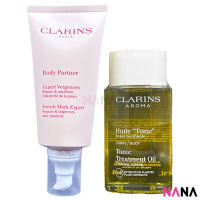
Clarins Pregnancy Set:Huile ″Tonic″ Body Treatment Oil 100ml + Body Partner Stretch Mark Expert 175ml
$130.20$176.00
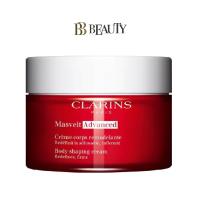
Clarins Masvelt Advanced Body Shaping Cream 200ml (New)
$64.51$105.05

CLARINS Double Serum V9 Anti‑Aging Firming Boost Collagen (50ml / 75ml / 50ml + 20ml)
$208.99$459.00
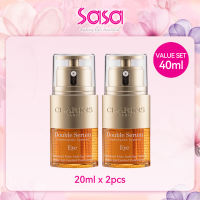
CLARINS Double Serum Eye Global Age‑Control Concentrate Anti‑Aging Firming Brighten Eye Contour (20ml / 20ml x 2)
$151.99$335.00
![Official Authentic Clarins Double Serum Face & Eyes Collection Set (50ml + 20ml) [VALUE DUO SET]](https://my-live-01.slatic.net/p/f78596de3d28669ce4d0fa3eb696bff0.png_200x200q80.jpg)
Official Authentic Clarins Double Serum Face & Eyes Collection Set (50ml + 20ml) [VALUE DUO SET]
$57.95$99.00
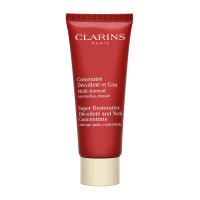
Clarins Super Restorative Decollete and Neck Concentrate 2.5oz 75ml
$105.90$180.00
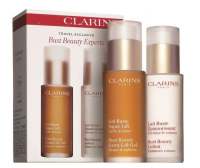
CLARINS Bust Beauty Extra-lift Gel (50ml) & Bust Beauty Lotion (50ml)
$140.00$212.00
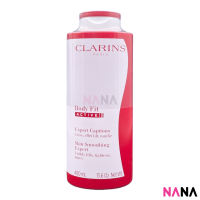
Clarins Body Fit Active Skin Smoothing Expert 400ml
$94.50$128.00
About Clarins
Clarins is a French luxury beauty brand best known for skincare, facial and body treatments, make-up, and spa-inspired beauty rituals. Founded in Paris in 1954 by Jacques Courtin-Clarins, the brand built its identity around the combination of plant science, cosmetic research, professional treatment techniques, and close attention to customers’ needs. Today, Clarins is the flagship brand of the privately held, family-owned Groupe Clarins, and its products are sold in nearly 150 countries.1
The brand’s positioning is defined as French premium skincare where botanical ingredients, scientific research, and hands-on beauty expertise meet.
Basic profile
| Category | Details |
|---|---|
| Brand | Clarins |
| Origin | France |
| Founded | 1954 |
| Founder | Jacques Courtin-Clarins |
| Headquarters | Paris, France |
| Parent company | Groupe Clarins |
| Ownership | Courtin family / privately owned |
| Core categories | Skincare, body care, make-up, men’s skincare, spa/beauty treatments |
| Key philosophy | Plant science + efficacy + customer dialogue |
| Signature positioning | Premium French beauty / botanical skincare |
| Most famous product | Double Serum |
| Major markets | Europe, Asia, North America and other international markets |
| International reach | Nearly 150 countries |
Groupe Clarins currently describes itself as a French family-owned company with about 8,000 employees worldwide, with 93% of its products exported to nearly 150 countries. The group states that Clarins is the No. 1 premium/high-end skincare brand in Europe, according to its cited market data.2
Origins and history
Clarins has an unusual origin compared with many luxury cosmetics brands. It did not begin primarily as a perfume company or a traditional cosmetics manufacturer but rather as a beauty institute. In 1954, Jacques Courtin-Clarins opened his first beauty institute on Rue Tronchet in Paris. His concept was to connect beauty, well-being and science, rather than treating cosmetics simply as decorative products.3
Courtin-Clarins had studied medicine and was interested in creating a more holistic approach to beauty. His early experience with clients was particularly important; he observed their concerns directly and used this feedback to develop treatments and products. This established a defining characteristic of the brand: it developed from treatment expertise into products, and subsequently into a global skincare company. That heritage remains visible today in Clarins’ emphasis on massage techniques, application methods, spa treatments and professional beauty rituals.
Brand name and ownership
The brand is named after its founder, Jacques Courtin-Clarins. “Clarins” eventually became the name of the beauty brand and subsequently the wider family-owned corporate group, Groupe Clarins. The Courtin family has remained closely involved with the company across generations. Although Clarins was eventually publicly listed, Christian and Olivier Courtin later took the company private, with the group now wholly owned by the Courtin family.4
This family ownership is central to Clarins’ identity, as the company emphasises long-term development, independence and entrepreneurial continuity.
Philosophy and approach
Clarins’ philosophy comprises several interconnected ideas:
- Nature: Plants are fundamental to the brand’s identity. Clarins researches botanical ingredients and uses plant extracts extensively in its formulas.
- Science: Rather than positioning itself as purely “natural beauty”, Clarins combines botanical ingredients with cosmetic science, biology, phytochemistry and formulation research.
- Touch: Because Clarins originated in a beauty institute, massage and application technique are unusually important to the brand.
- Customer dialogue: The company has historically emphasised listening to customers and using their feedback to improve products.
- French beauty: Clarins has cultivated an image of French-made, French-developed premium beauty while maintaining a highly international business.
The company summarises its approach as delivering true beauty results powered by plant science and an ongoing dialogue with women.5
Plant science
Plant science is considered the most significant element of Clarins’ brand DNA. The company describes plant science as being at the heart of its operations, with a research organisation that includes a phytochemistry laboratory focused on plant extracts. Researchers investigate hundreds of new ingredients through a process spanning extraction, laboratory analysis, biological evaluation, formulation and finished cosmetic production.6
Teams include specialists such as phytochemists, biologists, toxicologists, botanists and ethnobotanists. Various plant parts—including leaves, flowers, fruits and stems—are studied to determine which molecules and extracts may be useful in cosmetic formulations.7 Consequently, ingredients such as turmeric, harungana, yellow gentian, teasel, horse chestnut, ginger lily, leaf of life, giant Provençal reed, and various botanical oils and extracts appear frequently in Clarins products. The brand’s approach is therefore described as “plant-powered science” rather than simply “natural cosmetics”.
Scientific positioning
Clarins occupies a distinct position in the beauty market between traditional botanical beauty and modern cosmetic science. It does not generally compete with pharmaceutical-style dermatological brands by presenting itself primarily as clinical skincare. Instead, its proposition is that nature provides the ingredients while science determines how to use them effectively. Clarins describes its research philosophy as combining nature, innovation and biomimicry.8
This distinction differentiates Clarins from brands such as La Roche-Posay, Estée Lauder, Lancôme, Sisley or Dr. Barbara Sturm. Its identity focuses on the whole sensory and treatment experience surrounding skincare rather than solely on active ingredients.
Institute heritage and application
The Clarins Institut is a major part of the company’s heritage. Because the company started as a physical beauty institute, Clarins developed proprietary methods of applying products through massage and manual techniques. This created the concept that a Clarins product involves not just formulation but also movement, pressure, massage technique and sensory experience.
This heritage explains why Clarins has historically placed significant emphasis on facial massage, body massage, application techniques, professional treatments, spa experiences and beauty consultations. It differentiates the brand from competitors whose identity is based almost entirely on formulation.
Product development and portfolio
Early innovations
Clarins was an early pioneer in selling pure plant extracts and plant-based body oils through perfume and cosmetic retail channels. One of the historically important products was Tonic Body Treatment Oil.9 Body care became particularly important to the brand, which developed a reputation for products intended to improve the appearance and feel of the body, including body oils, creams, firming products, slimming and body-contouring products, and bath and shower items.
Rise of premium skincare
During the late 20th century, Clarins evolved from a Parisian beauty institute into an international premium cosmetics company. Skincare expertise became the centre of the business while make-up, men’s products and other categories expanded. Clarins became particularly strong in European prestige skincare before expanding internationally to operate across nearly 150 countries.10
Distribution has traditionally included department stores, beauty retailers, perfumeries, Clarins boutiques, spas, institutes, e-commerce platforms and selected specialty retailers, constituting a classic prestige beauty distribution model.
Double Serum
Double Serum is widely regarded as the product most representative of Clarins. Launched in 1985 when the serum category was relatively new, it featured a dual-phase formulation containing separate water- and oil-compatible components.11 The concept allowed Clarins to formulate ingredients with different properties in the same product, utilising a hydrophilic phase and a lipophilic phase. The distinctive dual-chamber bottle design became an instantly recognisable visual signature.
Clarins has repeatedly reformulated Double Serum as research and ingredient technology evolved. The current generation is positioned around plant science and modern research, including epigenetics. Clarins states that the current Double Serum contains 22 plant extracts and 5 active molecules, with research spanning five years and six patents associated with the technology.12 Highlighted ingredients include turmeric, organic harungana, teasel, ginger lily, leaf of life, horse chestnut, plant-derived squalane, acetylated hyaluronic acid and peptides. The product addresses multiple visible signs associated with skin aging, including firmness, wrinkles, radiance, hydration and pores.13 Double Serum serves as both the brand’s hero product and technological symbol.
Major product categories
Clarins covers a broad beauty portfolio:
- Facial skincare: The core category, addressing anti-aging, firming, hydration, radiance, uneven skin tone, dryness, sensitivity, eye care, cleansing, exfoliation, serums, moisturisers and masks.
- Body care: A historical strength connected to the brand’s spa and massage heritage, including body oils, firming treatments, moisturisers, exfoliators, contouring products and bath/shower items.
- Make-up: Expanded as a natural extension of skincare philosophy, including foundation, concealer, blush, mascara, lip products, eye products, primers and skin-enhancing products. Clarins approaches make-up from a skincare-oriented perspective rather than as a trend-driven colour cosmetics house.14
- Men’s skincare: Marketed under ClarinsMen, focusing on cleansing, hydration, shaving, after-shave care, anti-aging, eye care and body care.15
Portfolio segmentation
Clarins has structured its portfolio to address different demographics and price points:
- My Clarins: A younger-oriented skincare range introduced to reach consumers beginning their skincare journey, described as a new-generation line for younger women.16
- Clarins: The core prestige skincare range.
- Clarins Precious: The ultra-premium luxury skincare line.
This architecture allows the company to compete at multiple price levels while preserving the same botanical and scientific heritage.
Brand identity and consumer relationship
Visually and emotionally, Clarins is associated with botanical themes, clinical-but-luxurious aesthetics, Parisian heritage, sensory textures, mature sophistication and responsible luxury. Historically, the brand has appealed strongly to adult premium-skincare consumers who value healthy-looking skin, long-term care, visible but natural-looking results and trusted heritage. However, ranges such as My Clarins demonstrate efforts to broaden demographic reach.
An integral element of Clarins’ corporate philosophy is listening to women. Historically, the company developed an early version of customer relationship management by placing customer cards inside product packaging to capture needs and preferences.17 This reflects a broader philosophy of listening, understanding, formulating and improving, rather than simply researching, manufacturing, advertising and selling. This customer-dialogue approach remains part of the stated brand philosophy.18
Marketing and luxury positioning
Clarins’ communication emphasises beauty and well-being rather than transformation. Messaging commonly revolves around skin health, radiance, confidence, self-care, nature, French expertise, scientific innovation and responsible beauty. This gives the brand a softer personality than highly clinical skincare brands.
Within the French luxury landscape, Clarins differs from fashion-led houses like Chanel or Dior. While those brands derive status from couture and iconic fashion, Clarins’ luxury is based more heavily on expertise, efficacy, plant science and treatment heritage.
Sustainability and manufacturing
Sustainability has become increasingly important to Clarins, which describes its broader purpose as “making life more beautiful, passing on a more beautiful planet”.19 Environmental initiatives include sustainable plant sourcing, biodiversity protection, regenerative agriculture, reduced packaging impact, recyclable packaging, recycled materials, sustainable forestry and research into plant cultivation.
Clarins operates Domaine Clarins sites for growing and researching plants. One newer site near Nîmes spans 115 hectares and is intended for regenerative agriculture and plant research.20 The company reported that in 2025, 80% of plants used in Clarins skincare products were organic, with targets for further expansion of regenerative agriculture.21
It is important to note that Clarins is not solely a natural or organic cosmetics brand. Products combine plant extracts with synthetic or isolated cosmetic ingredients, biotechnology and formulation technology depending on the specific item.22 The proposition is best understood as nature-inspired premium skincare that is scientifically formulated.
France remains central to manufacturing. The company established its facility at Pontoise, where products are developed and manufactured for worldwide distribution.23 Laboratories bring together specialists in formulation, plant science and cosmetic research, combining Parisian heritage with French manufacturing and global distribution.
Corporate structure
Unlike some major luxury beauty brands owned by conglomerates, Clarins has retained its family-owned character. Christian and Olivier Courtin took the company private to preserve independence and pursue long-term development. This allows Clarins to position itself around long-term thinking, family heritage, independence, entrepreneurial culture and French identity.
Distinctions exist between the entities:
- Clarins: The consumer beauty brand selling skincare, body care, make-up, men’s products and related services.
- Groupe Clarins: The parent company owning and operating the Clarins business and other activities, identifying Clarins and myBlend as its two beauty brands.24
Market position
Clarins occupies the prestige and luxury skincare segment. A simplified competitive map places it above mass beauty brands like L’Oréal Paris and Olay, alongside premium peers like Clinique and Lancôme, and below ultra-luxury brands like La Prairie. It differs from dermatological brands like SkinCeuticals and niche natural brands like Tata Harper. Clarins is distinctive for combining prestige skincare, botanical expertise and spa heritage.
Key competitive advantages include:
- Authentic heritage originating as a beauty treatment institute.
- Centrality of plants and botanical research since inception.
- Combination of nature with science, avoiding exclusive positioning as either “natural” or “clinical”.
- Strong association with the Double Serum hero product.
- Family ownership reinforcing an independent French identity.
Iconic products beyond Double Serum include Tonic Body Treatment Oil, the Multi-Active franchise, Beauty Flash Balm, eye care treatments, and skincare-infused make-up.
Timeline
- 1954: Jacques Courtin-Clarins opens his Paris beauty institute.25
- 1960s: Development of plant-based skincare and body-care products.
- 1970s–80s: Acceleration of international expansion.
- 1985: Launch of Double Serum, which becomes the signature product.26
- 1990s: Emergence as a major European prestige skincare player.
- 1990s–2000s: Expansion into make-up and men’s skincare.
- 2010s: Increased emphasis on sustainability, plant research and responsible beauty.
- 2018: Launch of My Clarins for a younger consumer segment.27
- 2020s: Greater investment in plant science, regenerative agriculture, premiumisation and scientific research.
- 2024: Clarins celebrates its 70th anniversary.28
- 2025: Double Serum celebrates its 40th anniversary.29
Current status
As of 2026, Clarins operates as a global French premium skincare house with botanical science at its core. While significantly larger than the original Paris institute, the fundamental concept remains consistent: listening to customers, studying nature, applying science, and turning skincare into a beauty treatment. The group operates in nearly 150 countries, employs around 8,000 people, and remains family-owned.
Current strategic direction emphasises plant science, scientific innovation, luxury skincare, responsible beauty and global expansion, particularly in Asia and the Americas.30
References
- Our history – Clarins Group
- Clarins – Clarins Group
- About Clarins – Clarins Group
- Our purpose – Clarins Group
- 70 years of internationally acclaimed know-how made in France – Clarins Group
- Plant-Powered Beauty – Clarins Group
- What added benefits to plant extracts provide? – Clarins
- Expertise and Innovation – Clarins
- Double Serum, the anti-aging icon, celebrates its 40th birthday – Clarins Group
- Double Serum – A New Generation of an Icon | CLARINS®
- Double Serum – A New Generation of an Icon®
- Caring for the planet – Clarins Group
- 70 Years – Clarins
- Paris Agreement: 10 Years on, Clarins continues its ambitious decarbonization path – Clarins Group
- Clarins We Care 2030: Our Commitment to People, Planet, and Purpose – Clarins Group
- Double Serum, the power to change your skin’s future – Clarins Group
- Clarins achieves B Corp™ status, marking a major step in its commitment to a more sustainable future – Clarins Group
- Clarins’ double innovation: ever more ambitious scientific research – Clarins Group
- History | Groupe Clarins
- Notre histoire – Groupe Clarins
- Clarins – Groupe Clarins
- Our 2030 Ambition – Clarins Group
- 10 Reasons to Trust Clarins – Clarins
- 10 Reasons to Trust Clarins – Clarins
- Our Commitment to Sustainability – Clarins
- We Trust – Our Values – Clarins
- Clarins Responsible Beauty: Commited to responsible sourcing | CLARINS®
- Environmental Responsibility – Clarins
- Our Commitments – Clarins
- What added benefits do plant extracts provide? – Clarins