Shop on Lazada
Mary Kay products
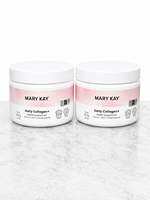
Mary Kay Daily Collagen Powder
$102.00
Buy on Lazada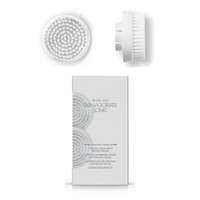
💯 Original Mary Kay Cleansing Brushes for Skinvigorate Sonic Machine
$43.50$45.00
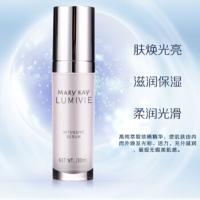
LumiVie™ Intensive Serum 30ml
$89.00
Buy on Lazada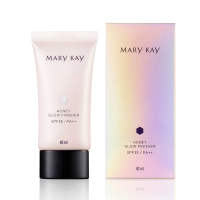
Honey Glow Finisher 40 ml
$39.80
Buy on Lazada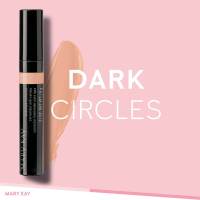
Mary Kay® Undereye Corrector 6g
$16.60
Buy on Lazada
Mary Kay® TimeWise 3D™ Foundation Matte 30ml
$28.00
Buy on Lazada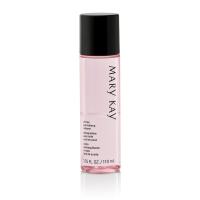
Mary Kay® Oil-Free Eye Makeup Remover
$24.50
Buy on LazadaAbout Mary Kay
Mary Kay Inc. is an American beauty and direct-selling company best known for its skin-care products, cosmetics, fragrances and women-focused entrepreneurship model. Founded by Mary Kay Ash in 1963 in Dallas, Texas, the company grew from a small cosmetics business into a global brand operating in more than 40 markets.1 Its distinctive identity is strongly associated with the colour pink, the Pink Cadillac career-car programme, independent beauty consultants and a philosophy of empowering women through entrepreneurship.
Today, Mary Kay remains a family-owned and family-operated private company. Its CEO is Ryan Rogers, a grandson of Mary Kay Ash, who was appointed to the role in 2023.2
Basic information
| Field | Information |
|---|---|
| Company name | Mary Kay Inc. |
| Brand | Mary Kay |
| Founded | 13 September 1963 |
| Founder | Mary Kay Ash |
| Headquarters | Dallas area, Texas, United States |
| Industry | Cosmetics, skin care, beauty, direct selling |
| Ownership | Family-owned |
| Business model | Direct selling |
| Current CEO | Ryan Rogers |
| Markets | 40+ markets globally |
| Main products | Skin care, colour cosmetics, fragrances; selected markets also offer nutritional products |
| Brand symbol | Pink |
| Famous incentive | Pink Cadillac career-car programme |
History
Founding
Mary Kay Ash was born in Texas in 1918. Before establishing her own company, she spent many years working in direct sales and became frustrated by the limited opportunities available to women in business, as well as by situations in which less-qualified male colleagues were promoted ahead of her.4
When she retired from direct selling in 1963, Ash originally intended to write a book about how women could succeed in the business world. While preparing the manuscript, she compiled two lists: aspects she appreciated about the companies she had worked for, and areas where she believed those organisations could improve. The result served as a blueprint for a new enterprise.
Ash envisioned a business in which women could build their own enterprises, enjoy flexible working arrangements, receive recognition for their achievements, develop leadership skills, earn income through product sales and be treated according to the Golden Rule. Using approximately US$5,000 of her savings, she founded Beauty by Mary Kay on 13 September 1963 in Dallas, Texas, with assistance from her children, including her son Richard Rogers. The original store occupied only about 500 square feet.5
The initial product line was relatively small, comprising a basic skin-care system, foundation and a collection of colour cosmetics.6
Early growth
Mary Kay’s original strategy was unusual for its era. Rather than relying primarily on conventional retail stores, the company built a network of Independent Beauty Consultants who demonstrated and sold products directly to customers. This model allowed clients to receive personalised beauty advice while enabling consultants to operate with considerable independence.
The company expanded rapidly during the 1960s and 1970s, developing a distinctive culture of recognition, awards and incentives for its sales force.
Mary Kay Ash
Mary Kay Ash is widely regarded as being as central to the brand as the products themselves. She positioned the company around the idea that business could serve as a vehicle for women’s independence and personal development. Her leadership philosophy emphasised encouragement over intimidation and recognition over purely financial rewards.
The Golden Rule
The company’s most famous principle is to treat others as one would wish to be treated. Mary Kay presents this as a central ethical tenet governing its business culture.7
Go-Give philosophy
Ash encouraged people to offer assistance and recognition without expecting an immediate return. This ethos became known within the organisation as the Go-Give Spirit.
Recognition
Recognition became integral to the Mary Kay culture. Consultants could receive awards, jewellery, trips and other incentives for their achievements, deliberately designed to make sales accomplishments highly visible and celebratory.
Women’s empowerment
Ash’s central mission was to enrich women’s lives. Mary Kay continues to describe women’s entrepreneurship and empowerment as fundamental components of its corporate identity.8
The Pink Cadillac
One of the most recognisable features of Mary Kay is its pink automobile programme. In 1969, the company introduced its career-car concept, awarding the first five Cadillac vehicles at that year’s Seminar. The distinctive shade eventually became known as Mary Kay Pink Pearl.9
The car served multiple purposes: as a reward recognising successful members of the independent sales organisation; as motivation providing a highly visible goal for consultants; as marketing, since a pink Cadillac naturally attracted attention; and as a visual anchor for brand identity. Over time, the vehicle became one of the most recognisable symbols of direct selling.
It is important to note that the car is not simply a free luxury vehicle given to every consultant. Qualification depends on Mary Kay’s career-car programme and applicable market-specific requirements.
Business model
Mary Kay is primarily a direct-selling company. Instead of relying exclusively on supermarkets, department stores or traditional beauty retailers, it distributes products through a network of Independent Beauty Consultants and related independent sales-force members.10
In some markets, customers can purchase through a consultant’s online storefront or other digital channels associated with the consultant. Mary Kay Malaysia, for example, states that its products are available through Independent Beauty Consultants.11
The basic distribution structure flows from Mary Kay Inc. to the Independent Beauty Consultant and then to the customer. A consultant may purchase or obtain products for resale, demonstrate items, recommend skin-care routines, sell to customers, develop a client base, participate in training, qualify for recognition and incentives, and, depending on market and programme rules, build a sales organisation. Mary Kay describes its consultants as independent small-business owners rather than traditional employees.12
Classification as direct selling and MLM
Mary Kay describes itself primarily as a direct-selling company. Its model allows independent consultants to sell products directly to customers, and those who participate in recruiting or building organisations may potentially earn commissions according to the applicable compensation plan.13
The broader industry often categorises businesses with person-to-person sales and recruitment-based compensation as multi-level marketing (MLM) or network marketing. The U.S. Federal Trade Commission explains that MLM businesses generally involve direct product sales and, in some cases, compensation connected with recruiting other distributors.14 However, MLM and pyramid scheme are not synonymous; the FTC explicitly distinguishes legitimate MLM structures from illegal pyramid schemes.
A neutral description would characterise Mary Kay as a family-owned beauty company whose primary distribution system is direct selling using a large independent sales force, with an opportunity structure commonly discussed in the context of MLM and direct selling. This distinction matters because the economics of being a consultant can differ significantly from those of a conventional salaried employee.
Products
Although Mary Kay began with a relatively small skin-care and cosmetics collection, its product portfolio has since become extensive. The global range currently includes nearly 800 skin-care, colour-cosmetic and signature-fragrance products, with skin care representing approximately 60% of the portfolio.15
Major categories
Skin care includes cleansers, moisturisers, serums, eye products, masks, exfoliators, anti-ageing formulations and specialised treatment products.
Makeup encompasses foundation, concealer, powder, blush, eye shadow, mascara, eyeliner, lipstick and lip gloss.
Fragrance covers women’s and men’s scents as well as other fragranced products.
Body and personal care comprises body-care items and related beauty products.
Nutrition products are offered in certain markets.
The exact product range varies considerably from one country to another.16
Major product lines
Several product families are particularly well known within the Mary Kay portfolio.
TimeWise
TimeWise is one of the company’s major skin-care franchises, especially associated with age-minimising and daily skin-care products.
Clinical Solutions
Clinical Solutions is a science-focused skin-care range designed around specific skin concerns. Mary Kay describes its Clinical Solutions and IntelliDerm products as part of its high-science skin-care portfolio.17
Clear Proof
Clear Proof is a skin-care line aimed primarily at blemish-prone skin.
Satin Hands
Satin Hands is a well-known hand-care system.
Mary Kay fragrances
Fragrance has remained an important component of the brand, with some classic scents staying in the portfolio for many years.18
Research and science
Mary Kay operates substantial product-development and research activities alongside its sales operations. The company reports holding more than 1,600 patents and investing heavily in skin-health and product research.19
Its Global Academy of Innovation and Science, led by Chief Scientific Officer Dr Lucy Gildea, conducts research in areas including skin ageing, pigmentation biology, skin-barrier health, redness, pollution, dermal biology, cosmetic formulation and nutritional science.20 Researchers also collaborate with dermatologists, academic institutions and other scientific organisations.
The company operates the Richard R. Rogers Manufacturing/R&D Center in Lewisville, Texas, which manufactures skin-care, cosmetic and fragrance products.21 According to Mary Kay’s 2025 sustainability report, the facility can produce approximately 1.1 million units per day.22
International expansion
Although founded as an American company, Mary Kay eventually developed into an international beauty business. Key milestones include its establishment in Dallas, Texas, in 1963; entry into Australia as its first international market in 1971; expansion into Canada in 1978; entry into Argentina as its first Latin American market in 1980; and entry into Germany as its first European market in 1986. During the 1990s and 2000s, the company expanded further throughout Europe, Asia and Latin America, and today operates in more than 40 markets globally.23
China has become an especially important market. The company has invested substantially in its Chinese operations, including a corporate facility in Shanghai.24
Ownership and leadership
Mary Kay has an unusual ownership history. The company went public in 1968 and was listed on the New York Stock Exchange in 1976, but returned to private family ownership in 1985.25 It therefore differs from publicly traded beauty giants such as L’Oréal, Estée Lauder or Coty. As of 2026, the company describes itself as family-owned and family-led.
The current CEO is Ryan Rogers, Mary Kay Ash’s grandson, who assumed the role in 2023.26 Richard R. Rogers, Mary Kay Ash’s son and co-founder, was another pivotal figure in the company’s history. He served as CEO and later chairman, remaining central to the family business until his death in 2026.
Brand identity
Mary Kay possesses one of the strongest visual identities in the direct-selling industry.
Pink
Pink is arguably the single most recognisable Mary Kay brand element. The company began using pink packaging in the 1960s partly because most American bathrooms at the time were white, allowing pink products to stand out on countertops.27
Recognition culture
The business culture emphasises awards, jewellery, trophies, ceremonies, leadership recognition, career cars and public celebration of achievement.
Personal selling
Unlike many modern mass-market cosmetics brands, Mary Kay traditionally emphasises personal relationships between consultants and customers. A consultant may function simultaneously as beauty adviser, salesperson, customer-service representative and independent entrepreneur. That personal relationship forms a major part of the brand’s differentiation.
Philosophy
The company identifies several core principles that collectively are sometimes referred to as The Mary Kay Way.
Golden Rule
Do what is right, honourable and ethical.
Go-Give Spirit
Give to others without expecting something immediately in return.
Make Me Feel Important
Mary Kay Ash believed people wanted to feel valued and appreciated.
Balanced Priorities
The traditional philosophy places faith first, family second and career third.28
Social impact and women’s empowerment
Women’s empowerment has been part of the company’s stated mission since its founding, rather than merely a marketing theme. Mary Kay has supported initiatives involving women’s entrepreneurship, cancer awareness and research, domestic-violence prevention, education, environmental sustainability and youth empowerment.
The Mary Kay Foundation, established by Mary Kay Ash in 1996, was created to support cancer research and efforts to prevent domestic violence.29 The company has also participated in broader international women’s entrepreneurship initiatives. Its 2024 sustainability reporting, for example, indicated that more than 600,000 women had been positively impacted through the Women’s Entrepreneurship Accelerator as of December 2023.30
Sustainability
Mary Kay has increasingly incorporated environmental sustainability into its corporate strategy. Initiatives have included recycling, reducing manufacturing waste, water conservation, tree planting, sustainable packaging efforts and environmental programmes at manufacturing facilities.
The company has partnered with the Arbor Day Foundation on tree-planting initiatives and reports having planted its one-millionth tree through this partnership.31 Its 2025 sustainability report describes the organisation as having more than 3,500 corporate employees globally, operating in over 40 markets and holding more than 1,400 patents across products, technologies and packaging designs.32
Position in the beauty industry
Mary Kay occupies a distinctive position because it functions simultaneously as a beauty brand, a direct-selling company, an entrepreneurship platform and a women’s-empowerment brand. Traditional beauty companies generally concentrate on moving product through retailers to consumers, whereas Mary Kay’s historical model routes product through independent consultants and personal relationships before reaching the consumer. This gives the company a different competitive identity from brands that depend primarily on department stores, pharmacies, supermarkets, specialty beauty retailers or mass e-commerce.
The company states that it is one of the world’s largest direct sellers of skin care and colour cosmetics. Its sustainability reporting cites Euromonitor as ranking Mary Kay as the world’s number-one direct-selling skin-care and colour-cosmetics brand based on 2023 value sales.33
Factors behind prominence
Mary Kay’s historical strength derived from combining several elements. Beauty products gave consultants something tangible to sell; direct selling created a distribution network without total dependence on traditional retail; personal relationships enabled demonstrations and individualised recommendations; recognition through awards, jewellery and cars provided psychological and social incentives; pink branding made the company instantly recognisable; women’s entrepreneurship gave the business a social mission beyond cosmetics; and Mary Kay Ash’s personality made the founder herself a central part of the brand story. This combination is what renders Mary Kay historically significant in American business.
Criticism and controversies
Because Mary Kay uses direct selling and an opportunity structure involving independent consultants, it has been discussed alongside the broader MLM and network-marketing industry. Critics of MLMs commonly question participants’ income potential, recruitment incentives, purchasing requirements and the financial outcomes experienced by lower-level participants.
The FTC warns consumers that some MLMs can operate as illegal pyramid schemes and recommends examining carefully whether participants’ income derives primarily from retail sales to outside customers or from recruitment and purchases within the network.34 This does not, by itself, establish that Mary Kay is an illegal pyramid scheme. Mary Kay describes itself as a direct-selling company, and its compensation arrangements vary by market. For example, its Canadian 2025 earnings disclosure states that the majority of independent sales-force members derive their primary profit from product sales to customers, while commissions may additionally be available to eligible consultants who recruit and develop others.35
Consequently, when evaluating the Mary Kay opportunity, it is useful to distinguish the consumer cosmetics business from the economics of becoming an independent consultant.
Summary
Mary Kay Inc. is a Texas-founded, family-owned American beauty company established by Mary Kay Ash in 1963. It became famous for combining skin care and cosmetics with a direct-selling model built around independent beauty consultants, particularly women entrepreneurs. The brand developed a distinctive pink visual identity and became known for its Pink Cadillac career-car programme, elaborate recognition culture and philosophy of women’s empowerment. Over more than six decades, Mary Kay expanded internationally and developed a large portfolio of skin care, colour cosmetics and fragrances supported by substantial research and manufacturing operations. Today, the company operates in more than 40 markets and remains one of the world’s best-known direct-selling beauty brands.36
References
- Our History – Mary Kay | Official Site
- FAQs – Mary Kay | Official Site
- Home Page – Mary Kay | Official Site
- Creating a Better
- Our Founder: Mary Kay Ash – Mary Kay | Official Site
- MK Milestones
- Mission and Values – Mary Kay | Official Site
- Why Mary Kay
- 60+ Years of Empowering Women Through Direct Sales with Mary Kay – Mary Kay News Hub W
- 2025 EARNINGS REPRESENTATION /
- Products – Mary Kay | Official Site
- Research Updates – Mary Kay | Official Site
- Global Academy of Innovation and Science – Mary Kay | Official Site
- The Heart of Innovation – Mary Kay | Official Site
- David Holl – Mary Kay | Official Site
- Our Leadership – Mary Kay | Official Site
- SUSTAINABILITY REPORT
- About Mary Kay Ash
- Mary Kay Releases 2026 Sustainability Report Highlighting Transformative Progress Across Social, Economic, and Environmental Impact Globally – MediaConnect
- Mary Kay Releases 2026 Sustainability Report Highlighting Transformative Progress Across Social, Economic, and Environmental Impact Globally
- Mary Kay | Company Overview & News
- Q & A with Ryan Rogers, Mary Kay CEO
- Mary Kay Extends Winning Streak With Fourth Year as #1 in Global Direct Selling Beauty – Mary Kay News Hub W
- Mary Kay Named #1 Skin Care and Color Cosmetics Brand in the World
- Who Owns Mary Kay Cosmetics? The Rogers Family – LegalClarity
- 新闻中心-详情 六十余载直销路,赋能女性绽光芒——玫琳凯的初心与使命
- Mary Kay Celebrates Six Decades of Women Empowerment
- CSRWire – Mary Kay Unveils 2025 Sustainability Report, Underscoring Key Milestones Across Social, Economic, and Environmental Spheres
- Mary Kay publikuje sprawozdanie na temat zrównoważonego rozwoju z 2025 r., podkreślając kluczowe dokonania w sferze społecznej, gospodarczej i środowiskowej | Polska Agencja Prasowa SA
- Mary Kay Unveils 2025 Sustainability Report, Underscoring Key Milestones Across Social, Economic, and Environmental Spheres – Mary Kay News Hub
- One, Two, Three-peat: Mary Kay Inc. Named #1 Direct Selling Brand of Skin Care and Color Cosmetics in the World for Three Years in a Row – Mary Kay News Hub
- One, Two, Three-peat: Mary Kay Inc. Named #1 Direct Selling Brand of Skin Care and Color Cosmetics in the World for Three Years in a Row – Mary Kay News Hub
- One, Two, Three-Peat: Mary Kay Inc. Named #1 Direct Selling Brand of Skin Care and Color Cosmetics in the World for Three Years in a Row
- Mary Kay Named #1 Direct Selling Color Cosmetics Brand for 3rd Consecutive Year
- Dr. Lucy Gildea and Tara Eustace – Direct Selling News
- Tara Eustace