Shop on Lazada
Clementoni products

Clementoni Puzzle Glue 200ml
$19.90
Buy on Lazada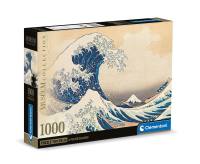
Clementoni 1000Pcs Museum Collection Jigsaw Puzzle Hokusai The Great wave
$30.90
Buy on Lazada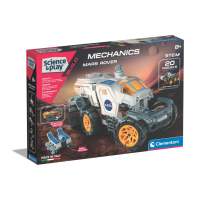
Clementoni - NASA Rover Martian | STEM Educational Toys For Kids
$79.90
Buy on Lazada
Clementoni 1000Pcs Panorama Jigsaw Puzzle Lake Wanaka Tree
$30.90
Buy on Lazada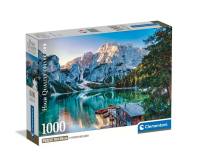
Clementoni 1000Pcs Jigsaw Puzzle Emerald Lake Braies
$30.90
Buy on Lazada
Clementoni Super Anatomy
$49.90
Buy on Lazada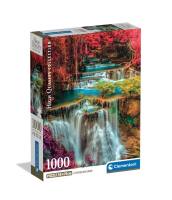
Clementoni 1000Pcs Jigsaw Puzzle Colourful Thai Falls
$30.90
Buy on Lazada
Clementoni 1000Pcs Style In The City Collection Paris Jigsaw Puzzle
$30.90
Buy on LazadaAbout Clementoni
Clementoni is an Italian family-owned manufacturer of toys and games, best known for its educational toys, jigsaw puzzles, board games, science kits, creative activities and developmental games for children. Headquartered in Recanati, Marche, Italy, the company has grown from a small domestic board-game maker into an international consumer brand with distribution in more than 80 countries.1
The company’s central philosophy combines play, learning, creativity and personal development. This educational positioning, particularly through its long-running Sapientino line, has defined the Clementoni brand since the 1960s.2
Company profile
| Category | Information |
|---|---|
| Company | Clementoni S.p.A. |
| Industry | Toys, games, educational products |
| Country of origin | Italy 🇮🇹 |
| Founded | 1963 |
| Founder | Mario Clementoni |
| Headquarters | Recanati, Marche, Italy |
| Ownership | Family business |
| Main markets | Italy and international markets |
| Best known for | Puzzles, educational games, Sapientino, science kits |
| Core philosophy | Learning through play |
| International reach | 80+ countries |
| Major production base | Recanati, Italy |
| Official website | Clementoni.com |
Clementoni identifies 1963 as its founding year. The business was established by Mario Clementoni together with his wife Matilde, initially focusing on board games.3
History
The beginning: 1963
Clementoni was founded in 1963 in Recanati, in Italy’s Marche region. Founder Mario Clementoni had previously worked in the musical-instrument sector in Pesaro and recognised that the Italian board-game market was underdeveloped. The company’s earliest products were manufactured on a small, almost artisanal scale.4
One of the first significant releases was Tombola della Canzone, a variation of the traditional Italian tombola game incorporating popular songs. It became Clementoni’s first major commercial success.5
This formative period established a defining characteristic of the company: rather than manufacturing conventional toys alone, Clementoni sought to translate cultural, educational and entertainment concepts into playable formats.
Sapientino: the product that defined Clementoni
A pivotal moment in the company’s history occurred in 1967 with the introduction of Sapientino. This educational game was based on logical associations, requiring children to answer questions by connecting corresponding points using electrical contacts. Clementoni regards Sapientino as a landmark product and one of its most recognisable creations.6
The concept was significant because it integrated entertainment, basic education, problem solving, memory, logical association and hands-on interaction. This combination laid the foundation for the brand’s enduring identity of “learning by playing”. Rather than remaining a single product, Sapientino evolved into an extensive educational family whose philosophy continues to influence Clementoni’s offerings today.7
Expansion during the 1970s
During the 1970s, Clementoni began expanding beyond the Italian market. Jigsaw puzzles emerged as a particularly important category; the company states that internationalisation began during this decade, with puzzles becoming a key export product.8
Clementoni also collaborated with internationally recognised entertainment properties. Historical records document the production of games linked to Disney franchises and a later collaboration with Texas Instruments regarding the Italian distribution of Grillo Parlante.9
These developments helped transform Clementoni from a domestic toy maker into a company with an increasingly international outlook.
The 1980s: education, technology and mass-market games
The 1980s saw a considerable broadening of the product portfolio. Among the notable releases was Il Grillo Parlante, an early talking electronic educational toy. Clementoni’s historical archive describes it as the first talking toy of its kind in its market context and credits the company with turning it into a widely remembered success in Italy.10
During this decade, the company continued to develop educational games, quiz games, children’s activity products, licensed entertainment games, family board games and electronic learning products. Consequently, Clementoni moved beyond the traditional distinction between a board-game manufacturer and a general toy company.
The 1990s: science, creativity and early technology
The 1990s marked another significant period of diversification, as Clementoni introduced or expanded several categories aimed at combining play with practical learning.
Science & Play
The Scienza & Gioco line introduced children to subjects including astronomy, electricity, botany, physics, chemistry and engineering. Early titles included themes such as The Solar System, Electricity and Botany in the Garden.11
Creative products
Clementoni also developed creative activity ranges such as Crea Idea, covering crafts, jewellery making, candle making, paper art and other hands-on projects.12
Children’s computers
The company entered the children’s educational computing market with Computer Kid, which subsequently became a broader product line and remained in the catalogue for many years.13
This era reinforced Clementoni’s positioning around STEAM-like learning, even before that terminology became widespread in the toy industry.
Clementoni and puzzles
Although strongly associated with educational toys, jigsaw puzzles remain one of Clementoni’s most internationally recognisable business segments. The puzzle portfolio encompasses children’s puzzles, family puzzles, adult puzzles, art puzzles, licensed-character puzzles, landscape and travel imagery, and high-piece-count puzzles of increasing complexity.
The puzzle business was instrumental in establishing Clementoni outside Italy and remains a core component of its international identity. The company specifically identifies puzzles as a primary vehicle for its expansion during the 1970s.14
Today, Clementoni competes in the global jigsaw-puzzle market alongside brands such as Ravensburger, Educa and Trefl.
Modern Clementoni
In the 2000s and 2010s, Clementoni increasingly combined traditional physical play with digital technology. The company experimented with educational tablets, apps, digital content, interactive toys, electronic learning systems, and augmented and virtual-reality experiences.
Clementoni states that it developed its first tablet containing educational content, featuring apps produced by its internal R&D team and a safe-browsing system.
This reflects a key characteristic of the modern company: rather than viewing digital technology solely as a competitor to physical toys, Clementoni seeks to integrate physical play with digital learning.
Product categories
Clementoni’s current portfolio extends far beyond its original board games.
🧩 Puzzles
Arguably the company’s most globally recognisable category, ranging from children’s puzzles to sophisticated adult editions, including licensed entertainment and artwork.
🧠 Educational games
The Sapientino family remains central to the brand’s educational identity. These products typically focus on language, mathematics, logic, observation, memory, general knowledge and preschool development.
🔬 Science and STEM
The Science & Play ecosystem introduces scientific principles through experiments and construction, covering chemistry, physics, astronomy, robotics, mechanics, engineering and biology.
⚙️ Mechanics and construction
The Laboratorio di Meccanica line enables children to construct models and explore principles of mechanics, physics and engineering. Clementoni reports that this range grew from a single product in 2015 to more than 20 products by 2023.15
🎨 Creative activities
Craft-oriented toys designed to develop imagination, fine motor skills, artistic expression, design skills and hands-on creativity.
👶 Early-childhood products
Toys for babies and younger children designed around specific developmental stages.
🎲 Board and family games
Traditional board games remain part of the company’s heritage, while contemporary products incorporate popular characters, television franchises and other licensed properties.
Educational philosophy
Clementoni’s most distinctive attribute is arguably its underlying philosophy rather than any individual product. The company views play as a mechanism for discovery, experimentation, imagination, learning and growth, describing its purpose as creating experiences that help both children and adults develop through play.16
This philosophy is evident across the portfolio:
- Puzzle: observation, patience and spatial reasoning
- Sapientino: knowledge and logical association
- Science & Play: experimentation and scientific reasoning
- Creative kits: imagination and fine motor skills
- Mechanical construction: engineering and problem solving
Consequently, Clementoni is frequently perceived as an educational toy brand rather than a purely entertainment-oriented manufacturer.
Research and development
Clementoni places considerable emphasis on internal product development. The company states that its products are devised, designed and developed internally by a Research & Development department comprising more than 70 researchers.17
This capability is critical for balancing educational value with entertainment value. A product that teaches effectively but lacks engagement is unlikely to succeed as a toy, while a highly entertaining product with little developmental value would contradict the brand’s historical positioning. Clementoni therefore aims to embed education within the game mechanic itself, rather than simply appending educational information to conventional toys.
Quality and safety
Toy safety is a central element of Clementoni’s corporate positioning. The company operates a Quality Management System compliant with UNI EN ISO 9001:2015, emphasising product safety and regulatory compliance.18
Its quality strategy encompasses product safety, regulatory compliance, quality control, product specifications, manufacturing processes and continuous improvement. Product development and quality assurance are closely integrated with internal R&D capabilities.19
Made in Italy
Despite its international reach, Clementoni retains a strong connection to its Italian manufacturing base. Approximately 90% of its toys are produced in Italy, primarily at facilities in Recanati, and roughly 40% of its suppliers are based in the Marche region.
This results in a distinctive combination of Italian manufacturing heritage and international distribution. The company describes its production chain as relatively short despite maintaining a substantial global presence.
International presence
Clementoni is no longer primarily an Italian company in terms of market reach. Its products are distributed in 83 countries worldwide, with an operational presence in Hong Kong. Exports account for approximately 65% of total turnover.
International appeal is partly driven by products that are readily exportable, including puzzles, educational games, science kits, licensed-character products and preschool toys. The brand thus combines a distinctly Italian heritage with a globally oriented portfolio.
Family ownership and management
Clementoni remains a family business. Members of the Clementoni family hold several key leadership positions:
- Giovanni Clementoni — Chief Executive Officer
- Patrizia Clementoni — Chairman of the Board
- Stefano Clementoni — Managing Director, Clementoni Asia
- Pierpaolo Clementoni — Consumer Research & Insight Director
This continuity ensures that the corporate identity remains closely aligned with the philosophy of founder Mario Clementoni.
Sustainability
Environmental considerations have been increasingly incorporated into corporate strategy. Clementoni has obtained ISO 14001 environmental-management certification and identifies respect for people and the environment as core corporate commitments.
The emphasis on Italian manufacturing and a localised supplier base is also presented as part of this broader sustainability approach.
Important milestones
| Year | Milestone |
|---|---|
| 1963 | Clementoni founded in Recanati |
| 1963 | Tombola della Canzone becomes an early major success |
| 1967 | Sapientino introduced |
| 1970s | Expansion into international markets and puzzles |
| 1970s–80s | Major licensed products and entertainment games |
| 1980s | Educational/electronic products expand |
| 1990s | Science, creativity and children’s computing become major areas |
| 1997 | Scienza & Gioco develops into an important educational line |
| 2015 | Laboratorio di Meccanica introduced |
| 2020 | Interactive storytelling products expand |
| 2023 | Storia della Vita sulla Terra combines physical play with digital/VR/AR elements |
| Today | International toy and game company with a strong educational and puzzle identity |
Brand identity
Clementoni’s brand identity is built upon five major concepts:
Heritage
The company emphasises its long history and Italian roots.
Competence
It positions itself as a specialist in toys, games and child development.
Respect
The company highlights respect for people, diversity and the environment.
Passion
Children’s happiness and curiosity are presented as central motivations.
Team spirit
Collaboration is a recurring theme in corporate culture.
Together, these elements create a brand image distinct from companies focused primarily on entertainment, collectibles or character franchises.
Distinctive characteristics
Clementoni can be summarised as an Italian toy company that integrates learning into the fun of play. Its competitive identity arises from the intersection of Italian heritage, educational philosophy, puzzles, science and STEM, creative play, family games and digital innovation.
This combination has allowed the brand to remain relevant across generations. A consumer might encounter Clementoni through a Sapientino educational game in childhood, a Science & Play experiment in later years, and eventually an adult jigsaw puzzle. The brand is designed to accompany consumers across different life stages rather than targeting a single age group, with products described as supporting children’s growth while extending the play philosophy to adults.
Clementoni today
As of 2026, Clementoni operates as a multigenerational Italian educational-toy and puzzle company with global distribution. Traditional strengths in puzzles, educational games and hands-on play remain vital, while newer products increasingly incorporate digital technology, apps, augmented reality, virtual reality, interactive storytelling, STEM, engineering and contemporary entertainment licences.
The company has identified virtual reality, big data and artificial intelligence as technologies likely to influence the future of play, while emphasising its commitment to preserving the manual, creative and natural aspects of children’s play.
Founded by Mario Clementoni in 1963, the company grew from a small Recanati board-game manufacturer into one of Italy’s best-known toy companies. Sapientino established its educational identity in the 1960s; puzzles drove international expansion; and subsequent science, creative, electronic and digital products broadened the portfolio. Today, Clementoni combines Made-in-Italy manufacturing, family ownership, internal R&D and international distribution, maintaining its core belief that play serves as a serious tool for learning and development.
References
- Clementoni: National Leader in the Production of Games and Toys
- Guardiamo avanti – Clementoni
- In gioco da 60 anni – Clementoni
- Clementoni
- The Quality
- Our People | The importance of Teamwork | Clementoni Online Store
- Celementoni – Hack-A-Toy
- CLEMENTONI S.P.A. – LEI: 815600858736EE7D6192
- La storia di un’azienda che non ha mai smesso di giocare | Forbes Italia
- SIUSA – Clementoni spa
- SIUSA – Clementoni spa
- Clementoni: Leader Nazionale nella Produzione di Giochi e Giocattoli – Clementoni
- Clementoni | Website and Official Online Store
- Clementoni | Sito e Shop Online Ufficiale
- Legal Notes – my frame me UP
- Note Legali – my frame me UP
- Clementoni | LinkedIn
- CLEMENTONI S.P.A., Partita IVA: 00092380435, Fatturato, Dipendenti, PEC
- Scheda dossier – Imprese