Shop on Lazada
Clinique products
![[10.10 Exclusives] Clinique Moisture Surge Hero Set (Worth $199)](https://sg-live.slatic.net/p/c48b49963f570958a58e6c92352f5ae2.jpg_200x200q80.jpg)
[10.10 Exclusives] Clinique Moisture Surge Hero Set (Worth $199)
$130.00$199.00
![Clinique Moisture Surge 100-Hour Auto-Replenishing Hydrator - Moisturizer 15ml 30ml 50ml | Deep Hydration Glowing Skin [Best Seller]](https://sg-live.slatic.net/p/7126b8faf52f02e09a987ca41f101458.jpg_200x200q80.jpg)
Clinique Moisture Surge 100-Hour Auto-Replenishing Hydrator - Moisturizer 15ml 30ml 50ml | Deep Hydration Glowing Skin [Best Seller]
$81.00
Buy on Lazada
Clinique Even Better Powder Makeup Water Veil SPF 27/PA++++ Refill 10g | Lightweight Natural Finish Protects against UV damage
$68.00
Buy on Lazada![Clinique Dramatically Different - Moisturizer 75ml 125ml | Lotion Gel Jelly Daily Hydration Moisture Barrier Repair [Best Seller]](https://sg-live.slatic.net/p/e79828853387ae31b89d7d10056ddf4a.jpg_200x200q80.jpg)
Clinique Dramatically Different - Moisturizer 75ml 125ml | Lotion Gel Jelly Daily Hydration Moisture Barrier Repair [Best Seller]
$75.00
Buy on Lazada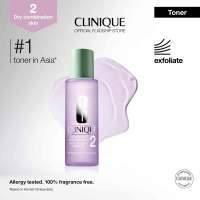
Clinique Clarifying Lotion Twice A Day Exfoliator - Toner 60ml 200ml 400ml | 5 Skin-Typed Formulas Oily Dry Sensitive Combination
$82.00
Buy on Lazada![[NEW] Clinique Even Better Clinical Dark Spot Clearing Serum 30ml 50ml & 75ml | Brightening Reduce Dark Spots Dullness Swallowness](https://sg-live.slatic.net/p/93437d7273a59a853eb5718303b2515d.png_200x200q80.jpg)
[NEW] Clinique Even Better Clinical Dark Spot Clearing Serum 30ml 50ml & 75ml | Brightening Reduce Dark Spots Dullness Swallowness
$222.00
Buy on Lazada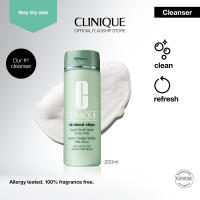
Clinique All About Clean Liquid Facial Soap - Cleanser 200ml | 3 Skin-Typed Formulas Oily Dry Mild
$46.00
Buy on Lazada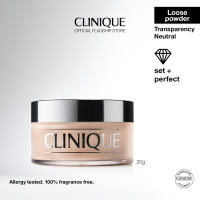
Clinique Blended Face Powder 25g | Translucent Setting Powder
$69.00
Buy on LazadaAbout Clinique
Clinique is an American prestige beauty brand best known for its dermatologist-guided skincare, makeup, and fragrance. Founded in New York City in 1968, Clinique was established on the premise that skincare could be approached scientifically and customised to individual skin needs, a concept that was relatively revolutionary for the beauty industry at the time. It is owned by The Estée Lauder Companies.1
The brand’s identity is built around three core pillars: dermatological expertise, safety, and simplicity. Its skincare and makeup are marketed as allergy tested and 100% fragrance free, with formulas designed to deliver results without unnecessarily irritating the skin.2
Brand profile
| Category | Information |
|---|---|
| Brand | Clinique |
| Full corporate name | Clinique Laboratories, LLC |
| Founded | 1968 |
| Founded in | New York City, United States |
| Parent company | The Estée Lauder Companies |
| Industry | Prestige beauty / cosmetics |
| Main categories | Skincare, makeup, fragrance |
| Core positioning | Dermatologist-guided, science-focused beauty |
| Key claims | Allergy tested; 100% fragrance free |
| Signature philosophy | Simple, safe, effective skincare |
| Major markets | International |
| Current global president | Michelle Freyre, Global Brand President, Clinique and Origins3 |
Clinique describes itself as a brand “in service of all skin”, offering products intended for different skin types, concerns, ages, and ethnicities. Corporate materials state that the brand is sold in approximately 140 countries and territories, although The Estée Lauder Companies’ current corporate brand page separately lists 107 countries, indicating that geographic figures may vary depending on reporting methodology or date.4
History
Origins: the question that created Clinique
The brand’s origins trace back to 1967, when Vogue beauty editor Carol Phillips published an article titled “Can Great Skin Be Created?” featuring New York dermatologist Dr Norman Orentreich. The article challenged conventional approaches to beauty products; rather than treating skincare as merely a collection of creams and cosmetics, Phillips and Orentreich approached it through the lens of skin science, routines, diagnosis, and dermatology.5
The article attracted the attention of the Lauder family. Leonard Lauder facilitated the involvement of Phillips and Orentreich in developing a new beauty concept within The Estée Lauder Companies. The answer to the original question—Can great skin be created?—became the foundation of Clinique: yes.6
1968: Clinique launches
Clinique was introduced at Saks Fifth Avenue in New York in September 1968. It launched with an unusually large assortment of 117 skincare and cosmetic products and presented itself as a new type of prestige beauty brand based on dermatological expertise rather than traditional cosmetic glamour alone.7
The launch established several concepts that would become central to the brand:
- Dermatologist involvement
- Allergy testing
- Fragrance-free formulas
- Individualised skincare
- A systematic daily routine
- Clinical-looking presentation
- Education and consultation at the beauty counter
Clinique thus occupied a distinctive position as a prestige luxury beauty brand presented through the visual language of medicine and science.
Key figures
Dr Norman Orentreich
Dr Norman Orentreich was a prominent New York dermatologist and one of the key scientific figures behind Clinique. His philosophy emphasised a straightforward skincare routine: Cleanse → Exfoliate → Moisturise. This became the basis for Clinique’s famous 3-Step Skin Care System.8 His contribution helped establish the brand’s scientific credibility and its emphasis on treating skincare as a routine rather than simply selling individual beauty products.
Carol Phillips
Carol Phillips, the Vogue beauty editor, was another crucial figure in the brand’s creation. Her collaboration with Orentreich produced the article that inspired Clinique, and she helped translate dermatological thinking into concepts consumers could understand and incorporate into their everyday beauty routines.9
Evelyn Lauder
Evelyn Lauder, a member of the Estée Lauder family, played an important role in developing the brand. She conceived the name Clinique after seeing signs reading “Clinique Esthétiques” during a visit to Paris. The name was intended to evoke a clinical, professional approach while retaining a sense of French beauty sophistication.10 She also helped develop Clinique’s distinctive retail identity, including the white lab coats worn by Clinique Consultants.
Philosophy
Clinique’s fundamental philosophy can be summarised as science, simplicity, safety, and personalisation. The brand states that its products are dermatologist guided, allergy tested, and 100% fragrance free.11 Its current “Clinique Clean” philosophy emphasises avoiding ingredients such as parabens and phthalates, as well as fragrance, and evaluating formulas through extensive testing.12
It is important to note that “fragrance free” does not mean Clinique products have no smell whatsoever; rather, the claim refers to the intentional absence of added fragrance in the formulation. Clinique’s positioning differs from brands that primarily sell beauty through luxury ingredients, celebrity association, strong perfume, fashion, natural or organic storytelling, or elaborate rituals. Instead, Clinique aims to make beauty feel clinical, trustworthy, understandable, and functional.
The 3-Step Skin Care System
The 3-Step Skin Care System is arguably the single most important concept in Clinique’s history. The basic sequence comprises three stages:
- Cleanse: Remove dirt, oil, makeup, and other impurities.
- Exfoliate: Use Clinique’s Clarifying Lotion to help remove dead surface cells and prepare the skin.
- Moisturise: Apply a moisturiser to help maintain the skin’s moisture balance.
Clinique’s original concept was that the routine should be adapted to the individual’s skin type rather than assuming that one product works for everyone.13 This approach transformed the skincare counter from a place to purchase cosmetics into something closer to a personalised consultation service.
Skin-type approach
One of Clinique’s most recognisable ideas is its emphasis on skin typing. Rather than simply asking customers what product they want, Clinique traditionally sought to determine characteristics such as dryness, oiliness, combination skin, sensitivity, dehydration, uneven skin tone, acne concerns, and signs of ageing.
Historically, Clinique used a device called the “Clinique Computer”, a non-electronic system of levers used by Consultants to help determine a customer’s skin type and appropriate routine.14 This represented an early example of personalisation in beauty retail.
Product categories
Clinique has developed into a comprehensive beauty portfolio spanning skincare, makeup, and fragrance.
Skincare
Skincare is the heart of the brand. Major categories include cleansers, exfoliators, toners and clarifying lotions, moisturisers, serums, eye care, masks, makeup removers, sunscreen, acne products, anti-aging products, and products targeting uneven skin tone and redness. Some of the brand’s best-known skincare franchises include the 3-Step Skin Care System, Dramatically Different, Moisture Surge, Take The Day Off, and Even Better.15
Makeup
Clinique is also a major makeup brand. Its portfolio includes foundation, concealer, powder, blush, mascara, eyeliner, eyeshadow, lipstick, lip gloss, and lip balm. A distinctive characteristic is Clinique’s skin-first approach to makeup; the company states that its makeup is developed with skincare considerations and that its eye makeup is subject to ophthalmologist testing, including suitability for sensitive eyes and contact-lens wearers.16
Fragrance
Although Clinique is particularly associated with skincare, it also maintains a fragrance business. The most famous example is Clinique Happy, introduced as a bright, youthful fragrance that became one of the brand’s most recognisable products.23 This creates an interesting contrast with Clinique’s skincare philosophy: whilst the skincare and makeup lines are positioned as 100% fragrance free, fragrance is offered separately as a distinct product category.
Iconic products
Several products have become closely associated with the Clinique brand over the decades.
Dramatically Different Moisturizing Lotion+
Arguably one of Clinique’s most recognisable products, its yellow appearance and simple bottle design have made it almost synonymous with the brand. The Estée Lauder Companies currently states that a bottle of Dramatically Different Moisturizing Lotion+ is sold globally every 7.5 seconds.17
Moisture Surge
The Moisture Surge franchise represents Clinique’s focus on hydration and has become one of the brand’s major modern skincare lines.
Take The Day Off
The Take The Day Off range focuses on makeup removal, particularly for long-wearing and waterproof makeup.
Even Better
The Even Better franchise focuses specifically on uneven skin tone and complexion concerns.
Almost Lipstick in Black Honey
Black Honey is perhaps Clinique’s most culturally iconic makeup product. Despite its name and dark appearance in the tube, the product produces a relatively sheer berry effect on the lips. It originally debuted in 1971 and later experienced major resurgences in popularity, particularly through social media.11 Black Honey demonstrates that whilst the company is strongly associated with clinical skincare, it has also created products with substantial fashion and cultural appeal.
Visual identity
Clinique’s visual identity is deliberately distinct from many luxury beauty brands. Its aesthetic traditionally emphasises white, pale green, clean typography, minimal packaging, laboratory and medical imagery, simple product names, and white lab coats. The pale green packaging was selected partly because it conveyed a soothing quality.18
This creates a recognisable visual message that communicates clinical authority rather than extravagant luxury, reinforcing the idea that the products are skincare rather than simply cosmetics.
Clinical image and positioning
The name, packaging, lab coats, dermatologist association, allergy testing, and systematic routines all reinforce the central idea that beauty should be based on skin science. This was especially innovative in the late 1960s, when prestige cosmetics were often marketed primarily through glamour, femininity, celebrities, fashion, and aspirational lifestyles. Clinique introduced an alternative model based on trust and skin understanding, a distinction that became one of its most important competitive advantages.
Allergy testing
“Allergy Tested” is one of Clinique’s most prominent brand claims. The company states that its products undergo extensive testing and that it has performed millions of allergy-testing applications over its history.19 However, “allergy tested” does not mean a product cannot cause an allergic reaction; it means the product has undergone testing designed to evaluate its potential to cause such reactions. Individual reactions can still occur. Clinique’s brand identity was built around reducing unnecessary irritation and improving product safety, rather than promising universal tolerance.
Dermatologist positioning
Clinique is often described as a dermatologist-guided or dermatologist-developed brand. It is not a medical treatment or prescription dermatology company, but a prestige beauty company whose product development and philosophy have historically incorporated dermatological expertise. Current communications emphasise that the brand has been “dermatologist guided since 1968”.20 This positioning allows Clinique to occupy territory between traditional luxury cosmetics and clinical skincare.
Target customers
Historically, Clinique was strongly associated with women shopping at department stores. Today, its positioning is considerably broader. The company states that its products are designed for different skin types, concerns, ages, and ethnicities, as well as for both women and men.21 Its appeal tends to be particularly strong among consumers who value reliability, simplicity, dermatologist association, and relatively conservative formulations. It is also a brand that can serve as an entry point to prestige skincare due to its relatively easy-to-understand routines.
Men’s skincare
Clinique was an early participant in prestige men’s skincare. In 1976, The Estée Lauder Companies introduced Skin Supplies for Men, giving Clinique a dedicated men’s skincare proposition.22 This was notable because prestige cosmetics had historically focused heavily on women. Today, Clinique continues to offer skincare intended for men whilst increasingly presenting its overall brand as being for all skin, rather than defining skincare primarily by gender.
Parent company
Clinique belongs to The Estée Lauder Companies (ELC), one of the world’s major prestige beauty groups. ELC’s portfolio includes brands such as Estée Lauder, Clinique, M·A·C, La Mer, Bobbi Brown, Jo Malone London, Aveda, Origins, The Ordinary, Dr.Jart+, and Too Faced.12 The parent company describes its brands as having distinct positioning within the global prestige beauty market. Within that portfolio, Clinique occupies a distinctive position because its identity is built around dermatological science and accessible clinical beauty rather than ultra-luxury skincare.
Market position
Clinique can be understood by its placement across several beauty categories:
| Position | Clinique’s approach |
|---|---|
| Luxury | Prestige rather than ultra-luxury |
| Science | Very strong |
| Dermatology | Central to brand identity |
| Natural/organic | Not its primary positioning |
| Fragrance | Fragrance-free skincare; separate fragrance category |
| Makeup | Strong secondary/parallel category |
| Personalisation | Historically very important |
| Mass market | No; primarily prestige |
| Clinical appearance | Very strong |
| Fashion-driven | Less central than brands such as M·A·C |
This combination makes Clinique particularly distinctive within The Estée Lauder Companies portfolio.
Differentiating factors
Five major elements define the brand:
- Built around dermatology: Clinique was not created as a traditional cosmetics label; its foundation was a collaboration between beauty journalism and dermatology.
- Systematic skincare: The 3-Step System transformed skincare into a structured daily routine.
- Emphasis on safety: Allergy testing and fragrance-free formulas became central elements of the brand’s identity.
- Personalisation: Skin typing and individualised recommendations were important parts of the original retail experience.
- Clinical credibility meets prestige: Clinique is neither a pharmaceutical company nor a conventional glamour-focused cosmetics brand, occupying a middle ground that is arguably the essence of the brand.
Brand personality
Clinique’s brand personality can be described as scientific, clean, trustworthy, calm, professional, knowledgeable, understated, and practical. It generally avoids the aggressive luxury language used by some high-end beauty brands. Instead of emphasising indulgence, glamour, or exclusivity, Clinique communicates that it understands skin and can build simple routines for it. This consistency has allowed the brand to maintain a recognisable identity for more than five decades.
Strengths
- Strong scientific heritage: The connection to Dr Norman Orentreich and the 1968 launch gives Clinique genuine historical credibility in dermatologist-guided beauty.24
- Extremely recognisable branding: The green packaging, white lab coats, clean typography, and clinical aesthetic are immediately identifiable.
- Simple routines: The 3-Step concept makes skincare relatively easy for beginners to understand.
- Broad product portfolio: Consumers can build a complete routine—from cleanser to moisturiser, sunscreen, makeup, and more—within the same brand.
- Long-term consumer trust: Clinique has existed since 1968 and has maintained a consistent core philosophy.
- Strong hero products: Products such as Dramatically Different Moisturizing Lotion+, Moisture Surge, Take The Day Off, and Black Honey provide recognisable anchors for the brand.
Potential weaknesses and criticisms
- Conservative clinical image: Consumers seeking highly luxurious, trendy, “clean beauty”, botanical, or experiential products may find Clinique less exciting.
- Traditional perception: Its department-store heritage and classic packaging can make it appear more mature compared with newer digitally native skincare brands.
- Limitations of “fragrance free”: Although fragrance-free formulations can benefit some consumers, individual skin reactions vary, and no cosmetic brand can guarantee universal suitability.
- Expanded competition: Clinique now competes not only with traditional prestige brands but also with dermatologist-founded brands, pharmacy skincare, Korean skincare, ingredient-focused brands, direct-to-consumer brands, and social-media-driven skincare companies, making its original clinical positioning less unique than in 1968.
Cultural significance
Clinique is historically important for helping to establish a new category of beauty: prestige skincare with a scientific and dermatological identity. Before Clinique, prestige beauty was heavily associated with cosmetics, fragrance, glamour, and luxury. Clinique helped normalise the idea that a beauty counter could function more like a skin consultation clinic.
Its influence is visible in the modern beauty market, where terms such as dermatologist tested, clinical skincare, sensitive skin, fragrance free, active ingredients, skin barrier, and personalised skincare have become mainstream. Whilst Clinique was not responsible for all these developments, its early positioning helped establish the commercial appeal of science-based beauty.
Clinique today
Clinique remains a major global prestige beauty brand under The Estée Lauder Companies. Its core identity has remained consistent since 1968: dermatologist-guided, allergy tested, fragrance free, and results-oriented skincare and makeup. The brand has expanded beyond its original 3-Step concept to address modern concerns such as hydration, hyperpigmentation, acne, redness, ageing, sun protection, and dark circles.25
Clinique has also embraced digital commerce and newer retail channels. For example, The Estée Lauder Companies announced Clinique’s launch in the U.S. Amazon Premium Beauty Store in 2024, demonstrating how the historically department-store-oriented brand has adapted to modern shopping behaviour.10
More than 55 years after its launch, Clinique remains one of the defining names in dermatologist-guided prestige beauty, having fundamentally changed how consumers think about skincare: moving from purchasing products based on promises of beauty towards following structured, scientifically informed routines based on individual skin needs.
References
- Clinique – The Estée Lauder Companies Inc.
- Clinique Careers: About Clinique LP – Collection | Clinique
- Dermatologist guided solutions for remarkable skin results.
- Meet Clinique Collection | Clinique
- Carol Phillips and the Creation of Clinique | Clinique
- Dr. Norman Orentreich, Pioneer of Allergy Science | Clinique
- Meet Clinique Collection | Clinique
- Customer Care – Corporate Information | Clinique Australia
- Découvrir Clinique | Clinique
- Clinique Launches in the U.S. Amazon Premium Beauty Store – The Estée Lauder Companies Inc.
- Clinique Turned Its Famous Black Honey Lip Shade Into a Full Collection
- Estée Lauder Companies
- el-20240630
- A brief history of Clinique | Fashion | The Guardian
- Clinique – The Estée Lauder Companies Inc.
- Clinique – Las Empresas Estée Lauder Inc.
- Dermatologist guided solutions for remarkable skin results.
- Dermatologist guided solutions for remarkable skin results.
- Carol Phillips and the Creation of Clinique | Clinique
- Dermatologist guided solutions for remarkable skin results.
- Dermatologist guided solutions for remarkable skin results. | Clinique
- Clinique | Official Site | Custom-fit Skin Care, Makeup, Fragrances & Gifts
- Clinique Perfumes And Colognes
- Meet Clinique Collection | Clinique Hong Kong
- Today is a special day in Clinique’s history, which forever changed the beauty industry. Learn more from Michelle Freyre, Global Brand President, Clinique and Origins, below. | The Estée Lauder Companies Inc. | 39 comments