Shop on Lazada
Coles products
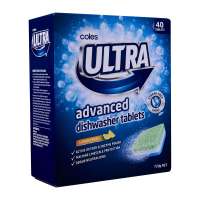
Coles Ultra Advanced Dishwasher 40 Tablets
$14.37$16.90
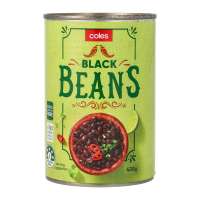
Coles Black Beans 420g
$2.98$3.50
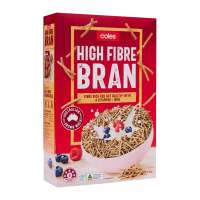
Coles High Fibre Bran 530g
$8.41$9.90
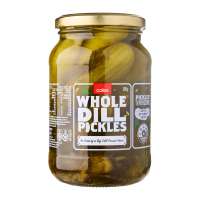
Coles Whole Dill Pickles Gherkins 500G
$7.57$8.90
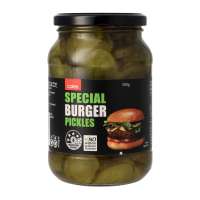
Coles Special Burger Pickles 500G
$7.65$9.00
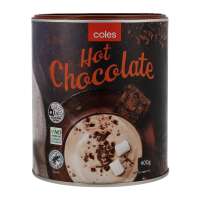
Coles Drinking Hot Chocolate 400g
$10.20$12.00
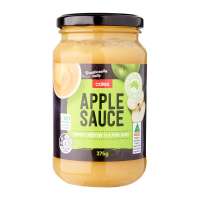
Coles Apple Sauce 375G
$5.10$6.00
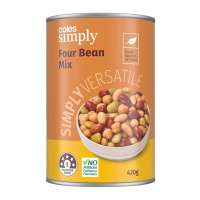
Coles Simply Four Bean Mix 420g
$3.40$4.00
About Coles
Overview
Coles Group, widely recognised by its flagship supermarket brand Coles, ranks among Australia’s largest and most prominent retail enterprises. Its core supermarket division retails groceries, fresh produce, household essentials and general merchandise, while the broader group encompasses liquor retailing, e-commerce, financial services and retail media. The business traces its origins to 9 April 1914, when George James Coles established the first Coles store in Collingwood, Melbourne.1
In contemporary Australian commerce, Coles is synonymous with grocery shopping, supermarket convenience, value pricing and private-label goods. From its beginnings as a small variety store, it has developed into a large-scale omnichannel retailer serving millions of customers through both physical outlets and digital platforms.
Key facts
| Category | Information |
|---|---|
| Brand name | Coles |
| Company | Coles Group Limited |
| Industry | Retail / Supermarkets / Grocery |
| Country of origin | Australia |
| Founded | 9 April 1914 |
| Founder | George James Coles (G.J. Coles) |
| First store | Smith Street, Collingwood, Victoria |
| Headquarters | Melbourne, Victoria, Australia |
| Main market | Australia |
| Parent company | Coles Group Limited |
| Public listing | Australian Securities Exchange (ASX) |
| Main business | Supermarkets and grocery retail |
| Major competitor | Woolworths |
| Current supermarket network | About 860 stores in FY2025 |
| Current liquor network | About 998 stores in FY2025 |
| Employees | More than 115,000 across the Group |
| Major loyalty program relationship | Flybuys |
The FY2025 Coles Group annual report identifies the company as one of Australia’s leading grocery retailers, operating 860 supermarkets and 998 liquor stores alongside its digital platforms.2
Business scope
Fundamentally, Coles is a supermarket chain. A typical Coles supermarket stocks:
- Fresh fruit and vegetables
- Meat and seafood
- Milk and dairy products
- Bread and bakery items
- Frozen foods
- Canned and packaged foods
- Snacks and confectionery
- Beverages
- Baby products
- Pet food
- Cleaning products
- Personal-care products
- Household goods
- General merchandise
However, the modern Coles enterprise extends well beyond traditional supermarket retailing. Coles Group defines its supermarket business as comprising fresh food, groceries and general merchandise, integrated with Coles Online, Coles Financial Services and Coles 360 retail-media services.3 Consequently, customers engage with Coles through physical supermarkets, online shopping, home delivery and Click & Collect services.
Foundation: 1914
The history of Coles begins with George James Coles, commonly known as G.J. Coles. On 9 April 1914, he opened the inaugural Coles store on Smith Street in Collingwood, Victoria, an inner suburb of Melbourne. This original outlet was not the modern supermarket familiar to Australians today; rather, it operated as a variety store offering a wide assortment of goods at relatively low prices.4
G.J. Coles’ business philosophy centred on providing ordinary Australian families with useful products at affordable prices. This historical ethos can be summarised as:
Value, affordability, convenience and service.
This emphasis on value has remained a defining element of the Coles identity for over a century.
Transition from variety store to supermarket
During its early decades, Coles expanded beyond its original variety-store model. The company experimented with discount pricing, product displays, sales catalogues, large-format stores, self-service shopping, new distribution systems and private-label products.
A pivotal shift occurred during the 1950s when Coles began converting stores to self-service formats. This allowed customers to select products directly rather than relying on shop assistants to retrieve goods, marking a significant step towards the modern supermarket model.5
1960: The supermarket era
In 1960, Coles opened what it describes as Australia’s first freestanding supermarket in North Balwyn, Victoria. Designed to enable customers to complete most of their weekly household shopping in a single location, this concept transformed Coles from primarily a variety retailer into a major food and grocery retailer.6
Expansion during the 1970s
Throughout the 1970s, Coles focused heavily on value and discounting. A key development was the introduction of the Farmland range of private-label food products, which allowed Coles to sell goods under its own brands rather than relying exclusively on national manufacturers.7
In 1971, Coles launched a major price-reduction programme covering thousands of products. This cemented a recurring theme in subsequent marketing: Coles competing on price and value.
Technology and diversification: The 1980s
The 1980s brought significant technological and corporate changes. In 1982, Coles introduced electronic scanning technology in its stores, improving checkout efficiency and enabling itemised receipts.8
Coles also diversified beyond supermarkets, expanding its liquor operations to include brands such as Liquorland and Vintage Cellars, alongside acquisitions in other retail categories.
Coles Myer
A major corporate milestone occurred on 25 July 1985, when Coles merged with Myer Emporium to form Coles Myer Limited,9 creating one of Australia’s largest retail groups.
The Coles Group era
The company subsequently underwent a complex period of acquisitions, restructuring and divestments. Coles Myer sold its Myer department store business in 2006, refocusing on food and core retail.
In 2007, Wesfarmers acquired Coles Group in a transaction valued at approximately A$19.3 billion. This acquisition created major retail divisions including Coles, Kmart and Target under the Wesfarmers corporate structure.10 This period proved critical in Coles’ modern history, as Wesfarmers invested heavily in revitalising the supermarket business.
The “Down Down” era
Under Wesfarmers ownership, Coles executed a significant turnaround. One of its most recognisable marketing campaigns became:
“Down Down”
This campaign emphasised permanently lower prices and became strongly associated with Coles’ competitive positioning. Concurrently, Coles invested in new supermarket formats, fresh-food presentation, supply-chain improvements, store renovations, customer service, private-label products, online shopping and responsible sourcing. The company also developed various animal-welfare and responsible-sourcing initiatives during this period.11
Return to independent listing
A major turning point arrived in 2018 when Wesfarmers decided to separate Coles from its broader portfolio. The demerger was approved in November 2018, and Coles Group returned to the Australian Securities Exchange on 21 November 2018 as an independently listed company.12
This established the current corporate structure. Coles is no longer owned by Wesfarmers; it operates as an independent publicly listed Australian company, Coles Group Limited.
Coles Group vs Coles
It is important to distinguish between the two entities:
Coles
Typically refers to the supermarket brand visible on store signage and shopping websites.
Coles Group
Refers to the broader publicly listed company that owns and operates multiple businesses and brands. Its operations include:
Supermarkets
- Coles
- Coles Local
- Coles Online
Liquor
- Liquorland
- Liquorland Cellars
- Liquorland Warehouse
Other businesses and services
- Coles Financial Services
- Coles 360
- Swaggle
- QuiteLike
- Flybuys relationship
The company has been consolidating parts of its liquor portfolio. In 2025, Coles announced a national rollout of “Simply Liquorland”, involving the conversion of Vintage Cellars and First Choice Liquor Market stores towards the Liquorland brand.13
Coles supermarkets
The supermarket business remains the core of the company. Coles describes its operation as a full-service supermarket retailer. As of FY2025, it operated approximately 860 supermarkets across Australia.14 Store formats range from conventional large supermarkets to smaller convenience-oriented outlets.
Coles Local
Coles Local is a smaller-format concept designed for urban and convenience-focused shopping environments. Compared with large suburban supermarkets, these stores generally emphasise convenience, fresh food, ready-to-eat products, smaller shopping trips and urban locations.
Coles Online
Coles has developed into a significant omnichannel retailer. Customers can shop via Coles’ digital platform with options including home delivery, same-day delivery in eligible locations, overnight services, Click & Collect and online grocery ordering. Coles Online functions as a vital extension of the physical supermarket network rather than a separate business.15
Coles Brand private-label range
A central component of Coles’ identity is Coles Brand, its own range of products sold under the Coles name. This range encompasses hundreds of items, including everyday staples such as milk, bread, pantry products, snacks, dips, desserts, frozen foods and household goods. Product-development teams utilise testing and tasting processes before new items reach shelves.
Private-label products are strategically significant as they allow Coles to compete on price, quality and differentiation, while providing greater control over the product assortment presented to customers compared to selling third-party brands.
Pricing strategy
Price is arguably one of the most critical elements of Coles’ brand identity. Its competitive proposition has historically centred on:
Value → Convenience → Quality → Freshness
The company has repeatedly utilised price campaigns, most notably Down Down, to reinforce this positioning. Coles competes particularly closely with Australia’s other major supermarket chain, Woolworths. Together, these two companies hold a dominant position in Australian supermarket retail, meaning Coles’ pricing decisions significantly impact Australian consumers and food suppliers.
Fresh food positioning
Coles places strong emphasis on fresh food. Its supermarket proposition includes fruit and vegetables, meat, bakery items, deli products, seafood and dairy. The company highlights Australian sourcing, with corporate history noting that sourcing policies have resulted in high proportions of Australian-sourced fresh produce, meat, milk and eggs.16
Fresh food is strategically important as it differentiates full-service supermarkets from retailers focused solely on packaged groceries.
Liquor business
Coles Group maintains a substantial liquor business. Historically, the portfolio included Liquorland, Vintage Cellars and First Choice Liquor Market. The company has restructured these banners around the Liquorland brand. The liquor operation is now a major component of Coles Group, with the FY2025 annual report recording 998 liquor stores.17
Flybuys
Coles is closely associated with Flybuys, one of Australia’s major loyalty programmes. Coles holds a 50% shareholding in Loyalty Pacific, the entity associated with Flybuys, and is a significant participating partner. According to Coles Group, Flybuys has more than nine million active members.18
For Coles, loyalty data facilitates customer retention, personalised offers, promotions, understanding of shopping behaviour and reward programmes.
Coles Financial Services
The company has extended its brand into financial services through Coles Financial Services, offering products including insurance, credit cards and personal loans. This represents an example of Coles leveraging its consumer brand beyond grocery retail.19
Coles 360
Coles 360 is Coles’ retail-media business, enabling brands and suppliers to advertise to consumers through the Coles ecosystem. Opportunities include advertising connected to Coles stores, digital platforms, customer data and shopping journeys. Retail media has become an increasingly important business model for major supermarkets due to their possession of extensive first-party shopping data.
Brand identity
Coles’ brand identity is strongly associated with several key concepts:
Australian heritage
Coles has operated for more than 110 years, giving it an unusually long history among Australian consumer brands. The company celebrated its 110th anniversary in April 2024.20
Value
Affordable groceries and competitive prices have been central to the company’s positioning since its early history.
Freshness
Fresh produce and fresh food are major components of its supermarket proposition.
Everyday family shopping
Coles traditionally positions itself as a supermarket for ordinary household shopping rather than a specialist retailer.
Convenience
The business increasingly combines physical supermarkets with online ordering, delivery and Click & Collect services.
Logo and visual identity
The Coles visual identity has evolved considerably throughout its history. The modern brand is characterised by a red-and-white visual identity, featuring the word “Coles” in a distinctive lowercase logo. This intentionally simple and highly visible identity is designed to function across store signage, shopping bags, packaging, websites, mobile applications, advertising and private-label products.
Corporate scale
Coles operates as a large-scale national logistics and technology enterprise. Its infrastructure comprises supermarkets, distribution centres, automated distribution centres, customer fulfilment centres, online platforms, supplier networks, cold-chain logistics, warehousing and delivery operations.
The FY2025 report states that Coles employs more than 115,000 team members, works with more than 8,000 suppliers, and has more than 400,000 shareholders.21 This scale is essential for reliably moving enormous quantities of products from suppliers to stores daily.
Supply chain
Behind every Coles supermarket lies a comprehensive supply-chain network linking farmers, suppliers, distribution centres, stores and customers. The company operates an integrated supply chain and national distribution-centre network.
Coles has also invested in automation and advanced distribution technology. For example, in 2019 it announced partnerships with Witron and Ocado to develop automated distribution and fulfilment capabilities.22
Sustainability and community involvement
Coles participates in broader Australian social and environmental issues through initiatives covering responsible sourcing, animal welfare, food waste, Australian agriculture, community partnerships and support for small businesses.
Historically, Coles has emphasised charitable giving. During the Great Depression, the company donated a substantial share of profits to hospitals, nursing homes and unemployment-relief efforts.23 This demonstrates continuity between the company’s early history and its modern corporate-responsibility programmes.
Cultural significance
For many Australians, Coles is integral to everyday life, encompassing weekly grocery shopping, school lunches, family dinners, Christmas shopping, fresh produce purchases and online grocery delivery. Because supermarkets are involved in such routine activities, brands like Coles maintain a strong presence in popular culture. Its advertising campaigns, products, mascots, loyalty programmes and price promotions are familiar to generations of Australians.
Main competitor: Woolworths
Coles’ primary competitor is Woolworths. The two companies compete across grocery prices, fresh food, private-label products, supermarket locations, online grocery shopping, loyalty programmes, home delivery, advertising and supplier relationships.
This rivalry is often described as Australia’s supermarket duopoly, although other retailers such as Aldi, Costco, IGA and independent supermarkets also compete in the market. Coles occupies a position comparable to a national supermarket giant rather than a niche grocery retailer.
Significance
Coles is significant for several reasons:
- Economic importance: It is one of Australia’s largest retailers and employers.
- Consumer importance: Groceries are essential purchases, so supermarket prices directly affect household budgets.
- Agricultural importance: Coles works with thousands of suppliers and Australian farmers.
- Retail innovation: It has helped introduce and popularise self-service, electronic scanning, private labels, online grocery shopping and automated logistics in Australian retail.
- Cultural importance: After more than a century, the Coles name is deeply embedded in Australian everyday life.
Current status
As of the FY2025 reporting period, Coles Group describes itself as a leading Australian retailer with a national network of approximately 860 supermarkets and 998 liquor stores, supported by digital platforms and a large supply chain. It employs more than 115,000 people and works with more than 8,000 suppliers.24
Its strategic direction increasingly combines physical stores, online shopping, loyalty data, automation, private-label products and retail media. Modern Coles is evolving from a traditional supermarket chain into a technology-enabled omnichannel retail company.
Timeline
| Year | Event |
|---|---|
| 1914 | G.J. Coles opens the first Coles store in Collingwood |
| 1921 | G.J. Coles & Co. is incorporated |
| 1927 | Company becomes publicly listed |
| 1950s | Coles begins converting stores to self-service |
| 1960 | First freestanding Coles supermarket opens in North Balwyn |
| 1971 | Major permanent price-reduction programme launched |
| 1982 | Electronic scanners introduced |
| 1985 | Coles Myer is created |
| 1990s | Online-shopping experiments begin |
| 2003–04 | Coles develops Coles Express convenience/fuel network |
| 2006 | Myer is sold; company becomes Coles Group |
| 2007 | Wesfarmers acquires Coles Group |
| 2018 | Coles is demerged from Wesfarmers |
| 21 Nov. 2018 | Coles Group relists independently on the ASX |
| 2019 | Coles announces automation partnerships with Witron and Ocado |
| 2024 | Coles celebrates its 110th anniversary |
| 2025 | Coles announces national rollout of the Simply Liquorland strategy |
References
- Our history | Coles
- About us | Coles Group
- 2025 Annual Report
- 2025 Annual Report
- Biography – Sir George James Coles – Australian Dictionary of Biography
- Our history | Coles Group
- 20 September 2019
- Acquisition of Coles
- Media releases | Coles Group
- View Coles Brand everyday essential products | Coles
- Investors | Coles Group
- Annual General Meeting | Coles Group
- Coles Group Ltd 2025 Annual Report with Sustainability Disclosures – Free PDF
- Coles : Annual Report | MarketScreener
- Media releases | Coles Group
- Media releases | Coles Group
- About us | Coles Group
- Reports | Coles Group
- Executive leadership team | Coles Group
- Sustainability Report | Coles Group
- Results and presentations | Coles Group
- Biography – Sir Edgar Barton Coles – Australian Dictionary of Biography
- Sir Edgar Barton ‘EB’ Coles, National Portrait Gallery
- Sir George Coles KT CBE, National Portrait Gallery
- Appendix 6 – Time Line of Retail Grocery Trends – Parliament of Australia