Shop on Lazada
Creed products
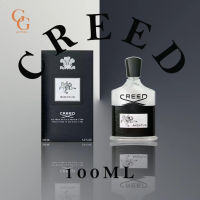
Creed Aventus for Men EDP Spray 100ml | The Perfume Shop
$110.00$300.00
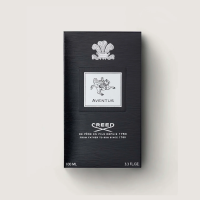
Creed Aventus Eau de Parfum for Men 100ml
$202.50$650.00
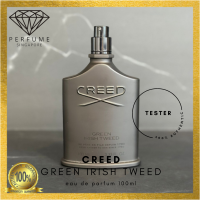
Creed - Green Irish Tweed 100ml EDP - TESTER (No Cap) - For Men - 100% Authentic Premium Fragrances by Perfume Singapore
$238.00$400.00
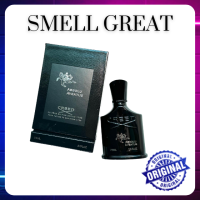
⭐75ML EDP CREED ABSOLU AVENTUS - Perfume for Men
$139.99
Buy on Lazada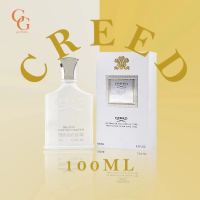
Creed Silver Mountain Water For Unisex EDP Spray 100ml | The Perfume Shop
$110.00$300.00
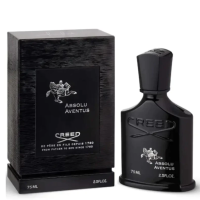
CREED ABSOLU AVENTUS Eau De Parfum 100ml for Men HQ New in Box
$40.50$300.00
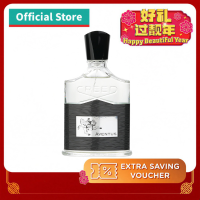
【Original】 Creed Aventus EDP 100ml | 100% Authentic |
$42.57$254.00
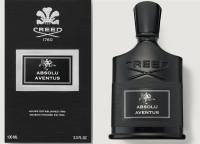
Absolu Aventus by Creed for Men Eau de Parfum 100ml (2025)
$225.00$575.00
About Creed
Creed (officially The House of Creed) is a historic luxury fragrance house renowned for high-end perfumes, particularly its best-selling Aventus, Green Irish Tweed, Silver Mountain Water, and Millesime Imperial. The house presents itself as combining British tailoring heritage with French haute parfumerie, positioning its fragrances at the luxury and niche end of the market.1
As of 2026, Creed is owned by L’Oréal. L’Oréal completed its acquisition of Kering Beauté, including Creed, on 31 March 2026.272830 Prior to this transaction, Creed had been acquired by Kering in 2023.2
Basic information
| Name | The House of Creed / Creed |
| Industry | Luxury fragrance / haute parfumerie |
| Claimed founding | 1760 |
| Founder | James Henry Creed |
| Origins | London, England |
| Later base | Paris, France |
| Current owner | L’Oréal |
| Former owner | Kering |
| Known for | Luxury perfumes and artisanal fragrance-making |
| Most famous fragrance | Aventus |
| Notable fragrances | Green Irish Tweed, Silver Mountain Water, Millésime Impérial, Viking, Original Santal, Aventus for Her |
| Current positioning | Luxury / high-end niche fragrance |
Brand identity and origins
Creed is a French-based luxury perfume house with claimed British origins. Unlike brands established specifically as perfume companies, Creed’s official historical narrative begins with James Henry Creed’s tailoring business in London in 1760.3
The house states that its early clientele included British royalty and aristocracy, and that its tailoring heritage eventually evolved into a tradition of bespoke fragrance creation. Creed describes this heritage as the convergence of British precision and French perfumery expertise.2
This distinction is central to understanding Creed’s identity. The brand is not marketed simply as a perfume manufacturer; its mythology is built around aristocratic heritage, bespoke craftsmanship, rare natural ingredients, traditional perfume-making, exclusivity, French luxury, family continuity, and understated sophistication. Consequently, its fragrances are positioned as luxury objects rather than ordinary mass-market perfumes.2021
Historical narrative
The 1760 origin story
According to Creed’s official history, James Henry Creed founded the house in London in 1760, establishing a business on Conduit Street. The original enterprise was a tailoring house rather than a modern perfume company.3
Creed states that the business served British royalty and aristocracy, eventually becoming associated with scented garments and accessories. One of the most cited stories concerns perfumed leather gloves. The house’s historical narrative connects these scented gloves with King George III, stating that this tradition led to the creation of Royal English Leather in 1781.4
This lineage underpins Creed’s branding emphasis on the progression from British tailoring to aristocracy, scented leather, and finally haute parfumerie. The house’s story is framed not merely as continuous perfume production since 1760, but as the transformation of a prestigious tailoring tradition into a luxury fragrance tradition.2223
Royal connections
Royal associations are fundamental to Creed’s identity. The house claims to have supplied members of European royalty and aristocracy, including connections to King George III, Queen Victoria, Empress Eugénie, Napoleon III, and other European royal courts. Creed’s historical material states that Queen Victoria appointed the house as an official supplier to the Royal Household.5
These royal associations became a major component of Creed’s later luxury positioning. Its prestige was historically built through private commissions, aristocratic clients, and bespoke craftsmanship rather than modern celebrity marketing.1718
Relocation to Paris
A significant turning point occurred in the 19th century when the Creed business became established in Paris. Creed dates its move to Paris to 1854, associating the relocation with the patronage of Napoleon III and Empress Eugénie.6
This transition is vital to the brand’s modern identity, explaining why Creed is simultaneously presented as British in heritage and French in perfumery. Today, Creed describes itself as a house where British tailoring meets French savoir-faire. The brand’s French identity became increasingly important as its perfume activities developed.22
Transition from tailoring to perfumery
For much of its early history, Creed was not exclusively a perfume company in the modern sense. Its evolution progressed from tailoring to fashion, scented accessories, bespoke fragrances, and finally a luxury perfume house. This distinguishes Creed from houses such as Guerlain, which developed more directly around perfumery.
Creed’s modern narrative emphasises that fragrances were historically created for individual clients and occasions rather than for a mass market. This concept survives today in Creed’s positioning as a luxury niche fragrance house.822
Family succession
The brand’s identity has traditionally emphasised family succession. Creed describes its history as spanning seven generations, with craftsmanship passed from one generation to the next.7
Olivier Creed
Olivier Creed became the central figure in the modern development of Creed. He is credited with transforming the house from a relatively obscure heritage perfume maker into an internationally recognised luxury fragrance brand. Under his creative direction, several fragrances were released that established modern Creed’s reputation, including Green Irish Tweed, Silver Mountain Water, and Aventus. Creed’s own history credits Olivier with expanding the business from approximately 1,000 bottles into a major international house.715
Erwin Creed
Erwin Creed, Olivier’s son, represents the next generation of the family. He became increasingly involved in the development of Creed’s fragrances and the continuation of the house’s traditional techniques.15
Historical verification
While Creed maintains that the house was founded in 1760 and presents a continuous history extending through seven generations, this narrative has been subject to scrutiny. Independent researchers and perfume historians have questioned aspects of the company’s traditional account, particularly the claim that Creed operated continuously as a perfume house from 1760.
Some investigations suggest that the modern Creed perfume business emerged significantly later, particularly during the 20th century, and that parts of the traditional family narrative are difficult to independently substantiate.6
Consequently, there are effectively two narratives regarding the house’s origins:
- Official Narrative: A 1760 London tailoring house serving royal clients, evolving through generations of craftsmanship into a Paris-based haute parfumerie.
- Critical Interpretation: While the Creed family’s association with tailoring may be historically valid, the continuous history of Creed as a perfume house is complex and has been challenged by independent research.
The 1760 date is therefore best understood as the house’s claimed founding date rather than an uncontested fact regarding the modern perfume business.618
Modern fragrance development
Modern Creed as a major international perfume brand is largely associated with Olivier Creed. During the latter half of the 20th century, the house developed fragrances that would become modern classics.15
Key releases include:
- Green Irish Tweed: A fresh, green fragrance associated with Irish countryside imagery and traditional gentlemanly elegance.26
- Millésime Impérial: A luminous, salty citrus-and-fruity fragrance known for its elegant, almost mineral character.
- Silver Mountain Water: A crisp, clean fragrance inspired by alpine landscapes, combining metallic and mineral impressions with citrus and musky facets.
- Aventus: The fragrance that most dramatically altered Creed’s commercial trajectory.1516
Aventus
Creed launched Aventus in 2010, stating that Olivier Creed created it to mark the house’s 250th anniversary.7 Its concept was built around themes of strength, power, success, ambition, leadership, and contemporary masculinity.
The official note structure includes:16
- Top: Apple, blackcurrant, pineapple, bergamot
- Heart: Jasmine, birch, juniper
- Base: Oakmoss, vanilla, ambergris
The combination of fruity pineapple, smoky birch, and a woody mossy base became distinctive. Aventus helped transform Creed from a specialised luxury perfume house into one of the most recognisable names in modern niche perfumery.1517
Factors in Aventus’ prominence
Aventus occupies an unusual position in fragrance culture; while expensive and positioned as niche luxury, it achieved mainstream awareness. Contributing factors include:
- Distinctive Scent Profile: The pineapple and birch combination became a recognisable signature.
- Luxury Positioning: Price and presentation reinforce exclusivity.
- High-Status Associations: Creed has cultivated associations with influential and affluent clients.
- Men’s Fragrance Culture: Aventus became a defining fragrance of the modern men’s niche perfume boom.
- Online Communities: Social media and fragrance forums expanded awareness of niche perfumery.
Manufacturing philosophy
Creed’s perfume philosophy centres on what it terms the Art of Millésime. The house describes this as an artisanal process involving exceptionally selected natural ingredients, including Bulgarian, Turkish, and Moroccan rose; Florentine iris; Calabrian bergamot; Haitian vetiver; Bourbon vanilla; Italian jasmine; and ambergris-related materials.9
Creed states that ingredients are hand-weighed, mixed, and macerated, preserving a traditional approach distinct from industrial perfume production.9 Some rare natural ingredients are reportedly aged at facilities near Fontainebleau, France.8
The term millésime generally relates to a vintage or year of production. In Creed’s context, it implies that perfume should possess qualities analogous to fine wine: carefully selected raw materials, craftsmanship, and individuality. This philosophy underpins the brand’s luxury pricing.89
Fragrance portfolio
Creed’s portfolio extends beyond Aventus across several categories.192425
Men’s / Traditionally Masculine
- Aventus
- Green Irish Tweed
- Silver Mountain Water
- Millésime Impérial
- Viking
- Original Santal
- Himalaya
- Royal Oud
- Bois du Portugal
- Erolfa
Women’s / Traditionally Feminine
- Aventus For Her
- Love in White
- Love in Black
- Spring Flower
- Wind Flowers
- Carmina
Gender-Neutral / Unisex
A considerable portion of Creed’s portfolio is wearable regardless of marketing category. This reflects broader trends in modern luxury perfumery where gender distinctions are less rigid.1619
Aesthetic and packaging
Creed employs a distinctive visual language. Bottles typically feature heavy glass, ornate labels, metallic details, minimalist luxury, classical typography, and dark or neutral colours. The aesthetic avoids futurism, instead communicating old-world luxury, aristocratic elegance, and modern wealth. This presentation aligns the packaging with traditional European luxury houses rather than standard commercial fragrance branding.1617
Market positioning
Creed occupies a specific position between traditional luxury fashion brands and independent niche perfume houses.
| Category | Typical Example | Creed’s Position |
|---|---|---|
| Mass fragrance | Calvin Klein | Above |
| Designer luxury | Dior, Chanel | More niche/specialised |
| Luxury niche | Creed | Core category |
| Ultra-niche perfumery | Small independent houses | More internationally established |
Creed is a large, internationally distributed luxury fragrance house that retains niche positioning, distinguishing it from smaller independent perfumers.1617
Pricing factors
Creed’s pricing is influenced by several elements:
- Ingredients: Emphasis on rare, high-quality natural materials.9
- Manufacturing: Promotion of traditional, labour-intensive processes.
- Heritage: The 1760 founding story and royal associations are integral to value.
- Packaging: Use of substantial, premium bottles.
- Distribution: Sales through luxury boutiques and premium retailers.
- Positioning: Operation as a luxury product rather than competing primarily on cost per millilitre.
Consumers pay for both the fragrance and the luxury proposition surrounding it.917
Corporate ownership
Acquisition by Kering
In 2023, Kering announced it had agreed to acquire 100% of Creed, describing it as a major independent player in high-end fragrance.21114 This acquisition placed Creed within the ecosystem of a major luxury group.1213
Acquisition by L’Oréal
The most significant recent corporate development involves L’Oréal. In October 2025, Kering and L’Oréal announced an agreement for L’Oréal to acquire Kering Beauté, including Creed.2829 On 31 March 2026, L’Oréal officially completed the acquisition.2730
As of August 2026, Creed is part of L’Oréal’s luxury beauty business. This marks a transition from a family-associated perfume house to an independent luxury company, then a Kering-owned brand, and finally an L’Oréal-owned luxury fragrance house.1027
L’Oréal described Creed as one of the world’s leading luxury fragrance houses upon completing the acquisition. Strategically, Creed provides L’Oréal with a powerful luxury fragrance brand, while L’Oréal provides global scale and infrastructure. The acquisition does not signal a shift to mass-market positioning; Creed’s value remains tied to its premium status.2730
Significance in modern perfumery
Creed is among the most recognisable names in luxury niche fragrance. Its prominence stems from the convergence of historical mythology (1760, royal clients), French identity (Paris, haute parfumerie), modern perfumery (Olivier Creed’s creations), the commercial influence of Aventus, popularity within niche fragrance culture, premium positioning, and corporate scale under L’Oréal.1517
Key fragrances summary
- Aventus: Fruity, smoky, woody; the primary driver of modern fame.
- Green Irish Tweed: Fresh, green, elegant; a timeless classic.26
- Silver Mountain Water: Crisp, metallic, airy; minimalist.
- Millésime Impérial: Citrus, marine, musky; luxurious freshness.
- Viking: Aromatic, rugged; traditionally masculine.
- Original Santal: Creamy, spicy, sandalwood-driven; warm.
- Royal Oud: Dry, elegant wood; sophisticated.
- Aventus for Her: Fruity, floral, woody; counterpart to Aventus.
Brand personality
Creed’s personality is characterised as aristocratic, elegant, confident, understated, traditional, luxurious, and sophisticated. It does not target youth, low cost, experimentation, or aggressive fashion trends. Instead, it sells the concept of timeless status, appealing to consumers who wish to project established belonging rather than trend-chasing.1720
Heritage and modernity
A defining tension exists within Creed between heritage and modernity. While presenting itself as an ancient family tradition dating to 1760, its international success relies heavily on recent fragrances like Aventus (2010). Furthermore, despite historical emphasis on independence, it is now owned by L’Oréal.10
Modern Creed thus represents a synthesis of old-world luxury, modern niche fragrance culture, and multinational beauty ownership.1027
Timeline of evolution
- 1760: James Henry Creed establishes the business in London.
- 18th–19th centuries: Tailoring, scented accessories, and aristocratic clientele.
- 1854: Paris becomes a major centre for the house.
- 20th century: Modern perfume business develops.
- Olivier Creed era: Major expansion and creation of modern classics.
- 1980s–2000s: Green Irish Tweed, Silver Mountain Water, Millésime Impérial, and Original Santal establish niche reputation.
- 2010: Aventus launches.
- 2010s: Creed becomes a global niche-fragrance phenomenon.
- 2023: Kering acquires Creed.11
- 2025: Kering agrees to sell Kering Beauté to L’Oréal.28
- 2026: L’Oréal completes acquisition of Creed.2730
- Present: Creed remains one of the world’s best-known luxury fragrance houses.
References
- About The House of Creed | Creed Fragrance
- Kering Beauté aquires Creed, the high-end luxury heritage fragrance house | Kering
- The House Of Creed History | Creed Fragrance UK
- L’art des parfums anglais depuis des générations | Creed FR
- l’histoire de Creed
- Creed, British-French perfume house and the contested 1760 narrative · Osmetheca
- Aventus Collection
- The History of Creed | Perfume Finder
- Creed Classics | A Closer Look | Blog | Creed Fragrance UK
- 开云集团与欧莱雅集团达成美妆与健康领域战略联盟 | Kering
- Kering Beauté completes the acquisition of Creed | Kering
- Press Release: Kering Beauté completes the acquisition of Creed
- Press Release: Kering Beauté completes the acquisition of
- KERING BEAUTÉ ACQUIRES CREED, THE HIGH-END LUXURY HERITAGE FRAGRANCE HOUSE
- Creed Perfumes And Colognes
- Fragrances and Perfumes (Creed) – Wikiparfum
- CREED – The Perfume Society
- Perfume Intelligence – The Encyclopaedia of Perfume
- Fragrances – Creed Perfumes
- About Us | Creed Australia
- About Us | Creed Boutique US
- De tailleur à parfumeur
- La Historia
- Men’s Fragrances | Luxury Perfumes | Creed Fragrance
- Men’s Fragrances | Luxury Perfumes | Creed Fragrance
- Green Irish Tweed | Men’s Fresh Aromatic Fragrance | Green & Mossy Woods | Creed Fragrances UK
- L’Oréal completes acquisition of Kering Beauté to expand …
- Kering offloads beauty division to L’Oréal in historic €4 …
- The Kering–L’Oréal Beauty Deal: Strategic Rationale and …
- L’Oréal Completes $4.6 Billion Acquisition of Kering Beauty