Shop on Lazada
Dabur products
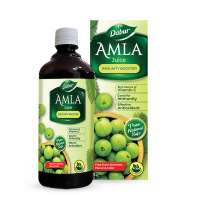
Dabur Amla Juice 1Ltr- Immunity Booster Pure Natural and 100% Ayurvedic Juice
$19.90
Buy on Lazada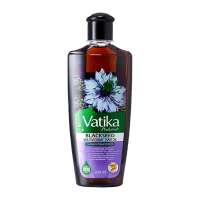
Dabur Vatika Enriched Black Seed Hair Oil 200ML
$6.90
Buy on Lazada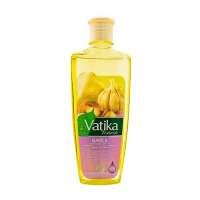
Dabur Vatika Enriched Garlic Hair Oil 200ML
$6.90
Buy on Lazada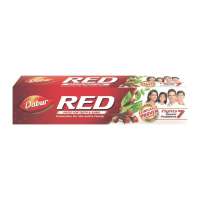
Dabur Red Paste 200g
$4.00
Buy on Lazada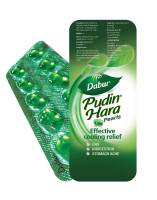
(30 Pearls) Dabur Pudin Hara Pearls For Effective and Cooling Relief Pack of 3 (10 Pearls in each pack)
$9.99
Buy on Lazada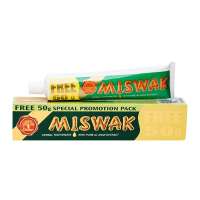
Dabur Miswak Herbal Tooth Paste 120g+50g
$4.00
Buy on Lazada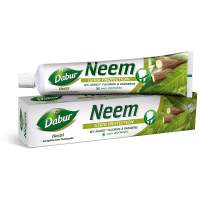
Dabur Herbal Toothpaste Neem 150g
$4.00$6.60
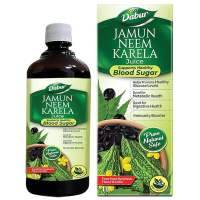
Dabur Jamun Neem Karela Juice - 1L | Helps Control Blood Sugar Level & Reduces Bad Cholesterol | Good for Metabolic & Digestive Health | Ayurvedic Health Juice For Diabetic Care
$20.00
Buy on LazadaAbout Dabur
Overview
Dabur India Limited, commonly known as Dabur, is an Indian multinational consumer goods company recognised for its Ayurvedic, herbal, natural health, personal care, and food products. Established in 1884 by Dr S. K. Burman in Calcutta (now Kolkata), the firm began as a manufacturer of Ayurvedic medicines and has since evolved into one of India’s leading FMCG companies, with products available in more than 120 countries.12
The company’s distinct identity stems from its integration of traditional Indian Ayurveda with modern science, research, manufacturing, and marketing. While Ayurveda remains central to its corporate ethos, Dabur’s contemporary portfolio extends well beyond medicinal preparations to encompass hair care, oral care, health care, skin care, home care, hygiene, and food and beverages.12
Company profile
| Attribute | Details |
|---|---|
| Full name | Dabur India Limited |
| Common name | Dabur |
| Founded | 1884 |
| Founder | Dr S. K. Burman |
| Origin | Calcutta (Kolkata), India |
| Industry | Fast-moving consumer goods (FMCG) |
| Core heritage | Ayurveda and natural healthcare |
| Headquarters | Ghaziabad, Uttar Pradesh, India |
| Registered office | New Delhi, India |
| Major businesses | Healthcare, hair care, oral care, skin care, home care, hygiene, food & beverages |
| International presence | 120+ countries |
| Ayurvedic/herbal portfolio | 250+ products |
| Major ownership group | Burman family/promoter group |
| Chairman | Mohit Burman |
| CEO | Mohit Malhotra |
| Website | dabur.com |
Dabur positions itself as a leading Indian FMCG enterprise and a global authority in Ayurveda. Corporate disclosures indicate revenue exceeding ₹12,400 crore and a market capitalisation above ₹100,000 crore, though these figures remain subject to market fluctuations and financial performance.1
History
Origins and early development
The origins of Dabur date to 1884, when Dr Shyam Sundar Burman (S. K. Burman) founded an Ayurvedic medicines business in Calcutta. As an Ayurvedic practitioner seeking to make healthcare accessible to the general public, Burman initially travelled throughout Bengal to sell remedies for digestive ailments, malaria, and cholera personally.12
The name “Dabur” is widely understood to be a portmanteau of “Daktar” (doctor) and “Burman”, referencing the founder.2 As demand grew, the enterprise transitioned from small-scale preparation to organised manufacturing, establishing a production plant in 1896 to formulate products on a larger scale.1
During the early twentieth century, Dabur specialised in nature-based Ayurvedic medicines. Addressing the inconsistency of traditional preparation methods, the company pioneered standardisation, scientific processes, and quality control. In 1919, it established research laboratories to develop scientific mass-production techniques and implement quality checks, cementing a philosophy that combined traditional Ayurvedic knowledge, modern scientific research, and industrial manufacturing.1
Incorporation and expansion
Throughout the first half of the twentieth century, Dabur expanded its manufacturing footprint and extended distribution beyond Bengal into Bihar and northeastern India. The business was formally incorporated as Dabur India (Dr. S. K. Burman) Pvt. Ltd. in 1936.1
A significant operational shift occurred in 1972 when Dabur relocated its base towards Delhi, subsequently establishing major manufacturing facilities in the region. Commercial production commenced at the Sahibabad factory in 1979, alongside the establishment of the Dabur Research & Development Centre, which enhanced the company’s technological capabilities. Dabur became a public limited company in 1986, creating the corporate structure necessary for future growth.1
Professionalisation
A pivotal moment in Dabur’s modern history occurred in 1998, when the Burman family separated ownership from day-to-day management. This transition introduced professional managers to senior leadership, marking the first time a non-family professional CEO led the company.1 This shift transformed Dabur from a traditional family enterprise into a professionally managed, publicly listed multinational corporation, while retaining the Burman family as the promoter group—a governance model that continues to define the company.1
Diversification beyond Ayurveda
Dabur’s evolution from a healthcare-focused entity into a diversified FMCG group represents its most significant strategic transformation. The company entered categories not traditionally associated with Ayurvedic medicine through several key developments:
- 1997: Establishment of a Foods Division and entry into the processed foods market.
- 1997: Launch of Real, which became a flagship food and beverage brand.
- 2003: Separation of the pharmaceutical business from the FMCG division.
- 2005: Acquisition of Balsara’s hygiene and home products businesses, adding brands such as Babool, Promise, Meswak, Odonil, and Odomos.
- 2008–2009: Expansion into women’s skincare via Fem Care Pharma/Fem.
- 2010: Overseas acquisitions including Hobi Kozmetik in Turkey and Namaste Laboratories in the United States.1
These strategic moves repositioned Dabur from being perceived solely as an Ayurvedic medicine manufacturer to a comprehensive consumer goods company with a competitive advantage rooted in Ayurveda and natural products.1
Brands and products
Dabur maintains an extensive portfolio spanning multiple consumer categories. Its primary Indian Power Brands include:12
Healthcare
- Dabur Chyawanprash
- Dabur Honey
- Dabur Honitus
- Dabur Pudin Hara
- Dabur Lal Tail
Hair and personal care
- Dabur Amla
- Vatika
Oral care
- Dabur Red Paste
Food and beverages
- Real
Additional brands within the broader portfolio include Odomos, Odonil, Babool, Meswak, Promise, and Fem.1
The launch of Real fruit juice in the 1990s was instrumental in demonstrating Dabur’s ability to extend its brand philosophy beyond traditional Ayurveda into everyday consumer categories such as fruit beverages, toothpaste, hair oil, honey, air fresheners, and household products. This diversification significantly broadened the company’s consumer base.1
Product categories
Dabur currently operates across seven major FMCG categories:1
- Healthcare: Traditional Ayurvedic preparations, health supplements, digestive aids, cough and cold remedies, honey, and Chyawanprash.
- Hair care: Amla hair oil and Vatika products, which are significant contributors to international revenue.
- Oral care: Toothpastes and related products including Dabur Red Paste, Babool, Meswak, and Promise.
- Skin care: Beauty and personal care offerings under the Fem brand and related lines.
- Home care: Products such as Odonil and Odomos, strengthened by the Balsara acquisition.
- Hygiene: Personal and household hygiene solutions.
- Food & beverages: Led by Real, alongside other packaged food products.
International operations
Although fundamentally an Indian enterprise, Dabur has developed substantial multinational operations. Its products are sold in over 120 countries, with strong market positions in the Middle East, South Asia, Africa, the United States, Europe, and Russia. Overseas business contributes more than 25% of total turnover.1
Manufacturing operations span multiple jurisdictions. FY2024–25 annual report materials identify production facilities in India, the UAE, Nepal, Bangladesh, Sri Lanka, South Africa, Nigeria, Egypt, and Turkey.1 This international footprint has been particularly beneficial for brands like Vatika, which has emerged as a major global personal care brand.
Distribution network
Dabur’s distribution system constitutes a key competitive advantage. The company reports that its products reach approximately 7.7 million retail outlets across India, with deep penetration in both urban and rural markets.1
In the Indian FMCG sector, availability is as critical as advertising and product quality. Consumers typically select brands that are immediately accessible at local shops. Dabur’s extensive network enables it to distribute products beyond major metropolitan areas into smaller towns and rural communities, ensuring widespread accessibility.1
Corporate structure and ownership
Dabur remains associated with the Burman family, which has been connected to the company since its inception. Following the separation of ownership and management in the late 1990s, the Burman family retained its role as the promoter group while professional executives assumed responsibility for daily operations.1 This structure exemplifies an Indian family-promoted company that has successfully evolved into a large, professionally managed public corporation.
Research and innovation
Research has been integral to Dabur’s identity since the establishment of its laboratories in 1919 to standardise Ayurvedic medicines.1 The modern company emphasises R&D-driven product development, following a pathway from Ayurvedic knowledge to scientific validation, formulation, modern manufacturing, and consumer-ready products. Continuous innovation in both products and processes is cited as a core organisational principle.1
Acquisitions
Strategic acquisitions have been central to Dabur’s diversification efforts. Notable transactions include:
| Year | Acquisition / development | Strategic importance |
|---|---|---|
| 2005 | Balsara businesses | Oral care and home care |
| 2008–09 | Fem Care Pharma | Women’s skincare |
| 2010 | Hobi Kozmetik, Turkey | International personal care |
| 2010 | Namaste Laboratories, USA | International hair care |
| 2022 | 51% of Badshah Masala | Entry into/expansion of spices |
| 2024 | 51% of Sesa Care | Expansion in hair care |
The acquisition of a 51% stake in Badshah Masala provided entry into the spices segment, while the 2024 transaction involving Sesa Care strengthened its position in hair care.2
Sustainability
Sustainability has become increasingly prominent in Dabur’s corporate strategy. FY2024–25 reporting highlights environmental responsibility, resource efficiency, and a commitment to returning value to nature.1 Manufacturing strategies incorporate energy efficiency, waste reduction, water management, responsible sourcing, environmental management, and sustainable packaging practices. The company seeks to integrate these environmental considerations into new facilities as it expands its manufacturing footprint.1
Brand identity
Dabur’s market positioning is defined by several interconnected pillars:
- Natural: Strong association with herbs, plants, natural ingredients, and traditional remedies.
- Ayurveda: A distinctive heritage that differentiates the company from conventional FMCG competitors.
- Science: Emphasis on research and scientific validation rather than presenting Ayurveda solely as traditional knowledge.
- Health and well-being: A corporate vision centred on household health.
- Indian heritage: An 1884 founding date providing one of the longest histories among major Indian consumer brands.
- Global reach: Successful transformation of Ayurveda and Indian-origin products into international businesses.
The company’s competitive identity functions as a bridge between tradition and modern consumer culture. Rather than abandoning its Ayurvedic heritage upon becoming an FMCG company, Dabur commercialised and modernised this legacy while expanding into mainstream consumer categories. This evolution follows a trajectory from traditional Ayurveda through R&D and modern manufacturing to consumer-friendly products, mass distribution, and presence in both Indian and international markets.1
Current status
As of 2026, Dabur is a 140+ year-old Indian multinational FMCG company with a portfolio extending far beyond its original Ayurvedic medicine business. The company maintains more than 250 herbal and Ayurvedic products, sells in 120+ countries, and operates a distribution network reaching approximately 7.7 million retail outlets in India.1
Its contemporary business encompasses three overlapping identities: an Ayurveda company representing its historical foundation and primary differentiation; a diversified FMCG company manufacturing everyday healthcare, personal care, home care, and food products; and a global consumer brand with sales across Asia, Africa, the Middle East, Europe, and the Americas.1