Shop on Lazada
Daiwa products
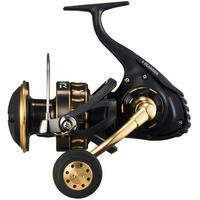
Daiwa | Saltwater Fishing Spinning Reel
$343.99$415.85
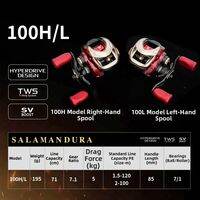
Daiwa | Fire Salamander Red Spider Attraction Fishing Reel
$379.18$445.28
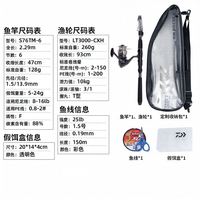
Daiwa | Lightweight Portable Long-Casting Spinning Rod
$215.05
Buy on Lazada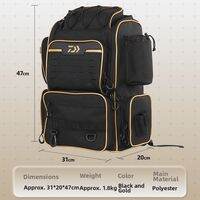
Daiwa | Multi-functional Fishing Tackle Bag
$109.35
Buy on Lazada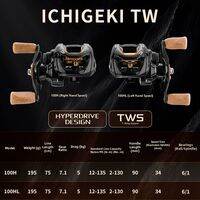
Daiwa | Long Casting Fishing Reel 24
$217.88$289.76
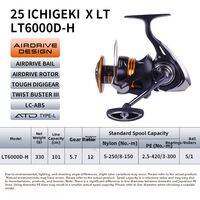
Daiwa | Micro Lure & Sea Fishing Reel
$123.99$144.96
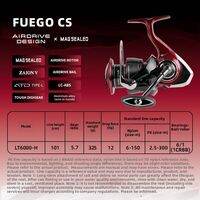
Daiwa | New Spinning Reel Light Distance Casting Shallow Cup
$197.21$298.30
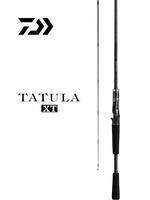
Daiwa | New TATULA XT Multipurpose Smallmouth Baitcasting Rod
$178.55$197.67
About Daiwa
Daiwa is a prominent Japanese fishing-tackle brand specialising in reels, rods, lines, lures, apparel and related angling equipment. It operates as the dedicated fishing division of GLOBERIDE, Inc., a sporting-goods manufacturer headquartered in Higashikurume, Tokyo, which is listed on the Prime Market of the Tokyo Stock Exchange.
Note: The Daiwa fishing brand is distinct from unrelated entities such as Daiwa House Industry and Daiwa Securities Group. This article concerns only the Japanese fishing-equipment manufacturer.
Corporate overview
| Item | Details |
|---|---|
| Brand | Daiwa |
| Country of origin | Japan |
| Industry | Fishing and sporting goods |
| Parent company | GLOBERIDE, Inc. |
| Parent headquarters | Higashikurume, Tokyo, Japan |
| Founded | 1958 (as Daiwa Seiko) |
| Current focus | Fishing tackle and apparel |
| Key products | Reels, rods, lines, lures, hooks, apparel, accessories |
| Core competencies | Spinning reels, baitcasting reels, rod engineering, carbon technology |
| Global markets | Japan, North America, Europe, Asia, Singapore and others |
GLOBERIDE was established in 1958 and currently manufactures and distributes products across fishing, golf, tennis and cycle-sports categories. As of 31 March 2026, the group employed 7,365 consolidated staff.1
Brand identity
Daiwa is fundamentally a fishing-technology company. Unlike sporting brands that originated in apparel or general outdoor gear, Daiwa’s reputation was built specifically on fishing reels and precision tackle engineering. Its parent company initially produced reels for export before developing proprietary Daiwa-branded products. The brand subsequently expanded internationally, becoming synonymous with high-precision reel manufacturing. GLOBERIDE identifies Daiwa as the cornerstone of its fishing business and states that the brand has led the global fishing market for decades.
Corporate history highlights the centrality of reel engineering to the brand’s identity; Daiwa became known as “the Reel Specialist” within years of its founding.2
History
Origins in the 1950s
The modern Daiwa brand traces its corporate lineage to the mid-1950s. GLOBERIDE records note that its predecessor began manufacturing fishing reels for export in 1955. However, the direct corporate antecedent, Daiwa Seiko Co., Ltd., was formally established in Tokyo in July 1958 to manufacture and sell fishing and sporting goods, primarily for overseas markets.3
This timeline distinguishes between early manufacturing activities and formal incorporation:
- 1955: Commencement of reel manufacturing for export.
- 1958: Establishment of Daiwa Seiko Co., Ltd.
- 1960s: Development of proprietary technology and international expansion.
The out-spool spinning reel
A pivotal development in Daiwa’s history was the introduction of out-spool spinning-reel designs. Traditional spinning reels positioned the spool differently; Daiwa’s external spool configuration improved line capacity, rotation smoothness and winding performance. This mechanical innovation significantly influenced angler preferences and cemented the brand’s reputation as a reel specialist.3
This engineering-first approach defined Daiwa’s subsequent product development, which became renowned for:
- Precision reel machining
- Lightweight construction
- Advanced drag systems
- Innovative spool geometry
- Refined gear systems
- Carbon-fibre material application
- Water and dust resistance
- Casting performance
- Rod blank technology
International expansion
Daiwa pursued international growth from an early stage. In 1966, the company established Daiwa Corporation in Los Angeles to manage American sales operations.4 Operations subsequently expanded across the United States, Australia, the United Kingdom, France, Germany, Italy, Taiwan, China, Korea, Thailand, Vietnam and Singapore.5
Today, Daiwa maintains a global distribution and development network. Manufacturing facilities are located in Japan, Vietnam, China, Thailand and Scotland, supporting regional markets including Singapore and Southeast Asia.5
Diversification into other sports
For much of its history, Daiwa’s parent company operated as a diversified sporting-goods manufacturer rather than exclusively as a fishing-tackle producer.
Golf
Daiwa entered the golf equipment market in 1972, leveraging its carbon-material expertise and manufacturing capabilities.6
Tennis
The company expanded into tennis equipment in 1980.7
Cycling
Cycle-sports products were added to the portfolio in 1991.8
These diversifications meant that, historically, the corporation functioned as a multi-category sporting-goods manufacturer alongside its core fishing business.
Transition to GLOBERIDE
In 2009, Daiwa Seiko Co., Ltd. changed its corporate name to GLOBERIDE, Inc. Concurrently, Daiwa was designated as the company’s exclusive global fishing brand.9
This restructuring clarified the distinction between the corporate entity and the product brand:
- GLOBERIDE: The parent corporation overseeing multiple sporting categories.
- Daiwa: The dedicated fishing brand.
GLOBERIDE’s non-fishing businesses now operate under separate brands covering golf, tennis and racket sports, and cycling, while Daiwa represents solely the fishing division.9
Technology and materials
Technological innovation remains central to Daiwa’s brand positioning. The company has consistently introduced materials and mechanical systems aimed at reducing weight, enhancing durability and improving reel performance.
Carbon technology
In 1979, Daiwa became the first manufacturer to use carbon graphite material for both reel bodies and rotors.10 The company also pioneered carbon technologies for fishing rods, establishing a lasting association with lightweight carbon construction.
ZAION
Introduced in 2007, ZAION is a high-density carbon-based composite developed by Daiwa. Designed to combine high rigidity with low weight, ZAION is used in reel bodies and other tackle components where strength-to-weight ratio is critical.10 This material reflects Daiwa’s enduring engineering philosophy: reducing weight without compromising structural integrity.
MAGSEALED
MAGSEALED, introduced around 2010, is a sealing technology that uses magnetic fluid to protect moving reel components from water and dust ingress while maintaining rotational smoothness. Derived from aerospace engineering principles, MAGSEALED is considered a milestone in Daiwa’s reel development.11
The technology is particularly associated with:
- Saltwater fishing applications
- Spinning reel platforms
- Water-intrusion protection
- Long-term operational smoothness
- Reduced maintenance requirements
Product categories
Daiwa’s contemporary fishing range encompasses multiple equipment categories.
Spinning reels
Spinning reels remain Daiwa’s most recognised product category. Key families include EXIST, CERTATE, LUVIAS, CALDIA, LEGALIS, FREAMS and BG. Model specifications and availability vary by market, including Singapore.
Baitcasting reels
Daiwa is a major manufacturer of baitcasting equipment, known for casting-control systems and compact, lightweight designs. Notable series include Steez, ZILLION, Tatula, Alphas, Lexa and Coastal.
Fishing rods
Daiwa produces rods for diverse fishing styles, including bass, inshore, offshore, surf, shore jigging, rock fishing, trout, carp, fly fishing, saltwater lure fishing, boat fishing and specialised Japanese techniques. Carbon-fibre engineering has historically been a key differentiator in Daiwa rod design.10
Fishing line
The brand manufactures braided line, fluorocarbon, monofilament, leaders and specialty lines.
Lures and terminal tackle
Depending on the market, Daiwa offers hard lures, soft lures, jigs, hooks, swivels, sinkers and other terminal tackle.
Apparel and accessories
Daiwa produces fishing-oriented clothing and accessories, including jackets, waterproof garments, waders, gloves, hats, bags, sunglasses and fishing tools.
Design philosophy
Daiwa’s design ethos emphasises the relationship between angler, equipment and the natural environment. Corporate philosophy statements include “Committed to total Quality”, “Feel Alive” and “Be Earth Friendly”, framing fishing as a means of connecting with nature rather than purely as competitive sport.12
GLOBERIDE articulates its broader mission as “A Lifetime Sports Company”, aiming to enable lifelong participation in sports and outdoor activities.13
Comparison with Shimano
Daiwa and Shimano are widely regarded as the two dominant Japanese fishing-tackle manufacturers. Both companies exert enormous influence over the global fishing industry.
| Attribute | Daiwa | Shimano |
|---|---|---|
| Origin | Japan | Japan |
| Primary identity | Reels and rods | Reels and rods |
| Parent company | GLOBERIDE | Shimano |
| Engineering strength | Reel/rod engineering, materials science | Reel/rod engineering, drivetrain precision |
| Market reach | Global | Global |
| Premium segment | Yes | Yes |
| Bass fishing | Strong | Strong |
| Saltwater | Strong | Strong |
| Spinning reels | Excellent | Excellent |
| Baitcasting | Excellent | Excellent |
Anglers typically select between the two based on subjective factors such as reel feel, gear design, drag characteristics, weight, casting system preference, ergonomics, maintenance considerations, price point and specific fishing technique, rather than objective superiority.
Reputation
Daiwa is recognised for high-end engineering and precision manufacturing. Its strongest reputational pillars include:
- Reels: Sophisticated spinning and baitcasting reel platforms.
- Rods: Advanced carbon-fibre rod technology.
- Saltwater equipment: Comprehensive product ranges from light inshore to heavy offshore applications.
- Japanese fishing traditions: Deep roots in specialised Japanese angling disciplines less common in Western markets.
Daiwa’s official history notes that technological development has consistently responded to increasingly demanding angler expectations.14
Manufacturing philosophy
Daiwa exemplifies broader Japanese manufacturing principles characterised by precision, miniaturisation, advanced materials, weight reduction, mechanical efficiency and reliability. These attributes are particularly evident in premium Daiwa reels, where gears, bearings, drag components, spool geometry, seals, materials and tolerances must function as an integrated system. This engineering heritage underpins Daiwa’s status as one of Japan’s most recognisable fishing brands.
Presence in Singapore and Southeast Asia
Singapore is part of Daiwa’s established Asian distribution network.5 The broader Southeast Asian region also plays a strategic role in Daiwa’s manufacturing infrastructure. GLOBERIDE’s corporate history records the establishment of Daiwa Seiko (Thailand) Co., Ltd. in Bangkok in June 1995 for fishing-product manufacturing.15 Today, Thailand remains one of Daiwa’s key production sites alongside Japan, Vietnam, China and Scotland.16
Consequently, Singapore serves not only as a retail market but also as part of a regional ecosystem supported by nearby manufacturing facilities.
Daiwa PIER39
Daiwa PIER39 is a fashion label inspired by Daiwa’s fishing heritage. Its concept bridges fishing functionality with urban clothing, incorporating technical outdoor ideas into everyday wear.17
This development illustrates the extension of the Daiwa name beyond traditional tackle into contemporary Japanese fashion, creating cultural associations linking Japanese fishing culture, technical outdoor clothing and urban style. However, Daiwa PIER39 operates as a separate fashion-oriented brand and should not be conflated with the core fishing-tackle business.
Industry significance
Daiwa’s importance in the fishing industry stems from multiple converging factors:
- Early specialisation in reel manufacturing
- Japanese precision-manufacturing standards
- Early and sustained international expansion
- Pioneering advances in carbon-material application
- Continuous reel-engineering innovation
- Comprehensive saltwater and freshwater product ranges
- Extensive global distribution network
- Long-standing competition with Shimano
- Integration of technology across all equipment categories
The company states that its fishing business achieved world-leading fishing-equipment sales in 1977, demonstrating rapid evolution from a Japanese manufacturer to a global tackle company.18
Contemporary corporate structure
The current organisational hierarchy is structured as follows:
GLOBERIDE, Inc.
* Daiwa (Fishing)
* Other GLOBERIDE sporting businesses
* Golf
* Tennis / racket sports
* Cycle sports
GLOBERIDE lists fishing, golf, tennis and cycle sports among its principal business segments.19 Since the 2009 renaming from Daiwa Seiko to GLOBERIDE, Daiwa has functioned specifically as the global fishing brand rather than as the corporate name.20
References
- 회사소개
- HISTORY|DAIWA
- DAIWA Global – DAIWA Germany | Fishing Tackle
- DAIWA Germany GmbH – DAIWA Germany | Fishing Tackle
- DAIWA BRAND-關於我們-DAIWA
- CONCEPT – DAIWA PIER39
- Daiwa House Realty Mgt. Co., Ltd. | Daiwa House Realty Mgt. Co., Ltd.
- PRIVACY POLICY
- PRIVACY POLICY
- About us – Daiwa Singapore
- Daiwa House Group 2004 Annual Report
- Business Outline | DaiwaHouse
- Daiwa House Group 2004 Annual Report
- 海外事業沿革|大和ハウスグループのグローバル領域|大和ハウス工業
- DAIWA HOUSE INDUSTRY CO., LTD.
- DAIWA HOUSE INDUSTRY CO., LTD.
- DAIWA HOUSE INDUSTRY CO., LTD.
- Corporate History | About Daiwa Securities Group | Daiwa Securities Group Inc.
- Corporate Information | FAQ | Daiwa Securities Group Inc.
- Corporate Profile | About Daiwa Securities Group | Daiwa Securities Group Inc.