Shop on Lazada
Dajiang (大江) products
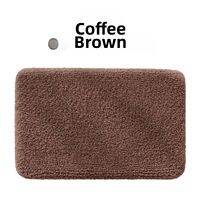
Dajiang | Water Absorbing Anti-slip Thick Bathroom Mat
$45.40
Buy on Lazada
Dajiang | Bath Anti-Slip Mat
$20.02
Buy on Lazada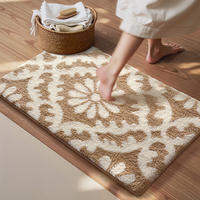
Dajiang | Water Absorbent Anti-slip Thickened Doormat
$39.49
Buy on Lazada
Dajiang (大江) | Non-slip Durable Carpet
$161.26
Buy on Lazada
Dajiang (大江) | Water Absorbent Non-slip Bathroom Mat
$44.08
Buy on Lazada
Dajiang | Anti-Slip Thick Bathroom Mat
$32.63
Buy on Lazada
Anti-slip and Fall-preventing Bath Mat
$15.54$31.15

Dajiang (大江) | Natural Sisal Wear-Resistant Year-Round Cat Mat
$124.97
Buy on LazadaAbout Dajiang (大江)
Overview
Dajiang (大江) is a Chinese food brand originating in Shanghai, historically associated with poultry farming, meat processing, frozen foods and prepared meat products. The brand emerged in the mid-1980s as part of an experiment in the modernisation of agricultural production in China and became particularly well known in Shanghai and the wider Yangtze River Delta region.
Its most iconic consumer product is the Dajiang Hamburger (大江汉堡), a breaded meat patty that has become a nostalgic food item for generations of consumers in Shanghai and surrounding areas. Over time, Dajiang (大江) expanded beyond its original chicken-meat business into frozen prepared foods, ready-to-cook products, snacks, rice burgers, chicken wings, chicken cutlets and prepared dishes.1
| Category | Information |
|---|---|
| Chinese name | 大江 |
| English/Romanized name | Dajiang |
| Industry | Food / meat processing / prepared foods |
| Origin | Shanghai, China |
| Established | 1985 |
| Original business | Poultry, feed, agricultural production and meat processing |
| Best-known product | Dajiang Hamburger (大江汉堡) |
| Core market historically | Shanghai, Jiangsu, Zhejiang and wider East China |
| Current positioning | Frozen foods, prepared foods, meat products and convenience foods |
History
Founding and agricultural industrialisation
The history of Dajiang (大江) dates back to 1985, when the enterprise was established in Shanghai as a Sino-foreign joint venture involving local agricultural enterprises in Songjiang and Thailand’s Charoen Pokphand (CP) Group. This formation occurred during the early stages of economic reform in China, and the company was conceived not merely as a conventional food factory but as an experiment in modern agricultural industrialisation.
The company developed an integrated agricultural model encompassing feed production, poultry farming, slaughtering, processing, distribution and retail. This approach was later described through the “company + farmers” (公司 + 农户) model, in which an industrial company collaborated directly with farming households rather than treating food production as an isolated factory operation. Contemporary accounts describe Dajiang (大江) as one of China’s early agricultural modernisation experiments.
The Dajiang model
During the 1980s and 1990s, the company served as an example of how China could transition from fragmented agricultural production toward a more industrialised supply chain. Its development was frequently summarised through three concepts: “Dajiang speed” (大江速度), “Dajiang scale” (大江规模) and “Dajiang efficiency” (大江效益). Consequently, the company became closely associated with the modernisation of Shanghai’s agricultural and food-processing industries.
Transition to consumer food brand
Originally, the operations of Dajiang (大江) were significantly broader than the consumer brand recognised today. Historical operations included poultry farming, animal feed production, chicken processing, meat processing, frozen poultry, food distribution, retail and agricultural production. The company gradually moved further down the value chain, transitioning from producing raw poultry to processing meat into branded consumer products.
This transformation was significant as it created a recognisable consumer identity for Dajiang (大江) rather than leaving the company as an anonymous agricultural supplier. Historical records indicate the company operated subsidiaries involved in chicken processing, meat products and related businesses.2
Dajiang Hamburger
The product most definitive of the Dajiang (大江) brand in popular memory is the Dajiang Hamburger (大江汉堡). Despite its name, this product is not a conventional Western hamburger; it is essentially a breaded meat patty, traditionally made from combinations of chicken, pork and beef with a thin outer coating, which is normally fried or heated before consumption.
In modern China, the term “hamburger” typically refers to a Western-style sandwich. However, historically, the Dajiang Hamburger became a distinct category for many Shanghai consumers. The product gained popularity decades ago, particularly in Shanghai and the surrounding Jiangsu-Zhejiang-Shanghai region. For consumers who grew up during the 1980s and 1990s, it became associated with childhood snacks and home meals.
The product’s distinctiveness arose from several characteristics suited to the period: relatively inexpensive meat, easy preparation, frozen storage capability, a crispy exterior, substantial meat interior, familiar savoury flavour, and suitability for breakfast or snacks. It could also be placed inside bread and eaten similarly to a conventional hamburger, elevating its cultural significance beyond that of an ordinary frozen meat patty.
Nostalgia and brand equity
For consumers in Shanghai and the surrounding region, the Dajiang Hamburger evokes memories of late 20th-century food culture, particularly among those who grew up during the 1980s and 1990s. Media coverage regarding the brand’s revival has repeatedly emphasised this “childhood taste” phenomenon.
Unlike purely contemporary food startups, the brand equity of Dajiang (大江) derives from two layers: industrial history and childhood memory. The former provides historical legitimacy, while the latter offers emotional value, constituting one of the brand’s strongest current assets.
Corporate changes and decline
Around 2000, production operations moved from Shanghai to Anhui, partly in response to environmental and water-source regulations in Shanghai. Concurrently, changes in major shareholders contributed to a reduction in the brand’s visibility within Shanghai’s retail market. As a result, products became less visible to local consumers, leading to a period where the brand shifted from being extremely familiar to relatively quiet before its later return.
Revival and modern expansion
A significant new chapter began in the late 2010s when Dajiang (大江) became associated with Shandong Xinhe Sheng (新和盛) and its broader poultry and food-processing ecosystem. Reports indicate the brand was acquired by Xinhe Sheng around 2017–2018, providing access to a larger modern poultry-processing and food-development platform.
The revival strategy combined old brand recognition with modern food manufacturing and new product development. This resulted in an expanded range including chicken strips, nuggets, wings, cutlets, salt-and-pepper chicken, rice burgers, prepared dishes, ready-to-cook foods and frozen snacks. Reports described the brand’s return to Shanghai retail channels in 2018 following a period of relative absence.
Product portfolio
Modern Dajiang (大江) offers a portfolio considerably broader than its flagship hamburger.1
Frozen meat products
This remains a core category, comprising chicken patties, chicken cutlets, chicken wings, chicken nuggets, chicken strips, chicken popcorn, skewers, and various pork and beef products.
Prepared and ready-to-cook foods
Targeting consumers seeking restaurant-style food with minimal preparation, this range includes pre-seasoned meat, microwaveable products, ready-to-cook dishes, prepared Chinese dishes and frozen snacks.
Rice burgers
The brand developed rice burgers (米汉堡), replacing conventional bread buns with rice-based components to localise the hamburger concept for Chinese consumers.
Snack foods
The snack range includes salt-and-pepper chicken (盐酥鸡), chicken popcorn (鸡米花), black pepper chicken nuggets (黑椒鸡块), boneless chicken cartilage skewers (骨肉相连), chicken strips (鸡柳) and various seasoned chicken products.
Traditional preserved foods
Dajiang (大江) maintains traditional products such as cured chicken legs (腊鸡腿), connecting the brand with traditional Chinese meat-preservation culture.
Brand positioning and identity
The positioning of Dajiang (大江) has evolved through several phases:
- Original positioning: A modern agricultural enterprise demonstrating the industrialisation of agriculture.
- 1990s positioning: A mass-market meat and poultry brand offering affordable, standardised products for urban consumers.
- 2000s: An industrial food-processing company with reduced consumer visibility due to corporate restructuring.
- 2010s–2020s: A nostalgic Chinese food brand combined with modern convenience food, characterised as a “heritage brand + modern convenience food” (老品牌 + 年轻化食品).
The brand identity rests on four pillars: Shanghai heritage, agricultural-industrial origins, everyday affordability, and nostalgia. The ability to market “the taste of childhood” rather than merely a frozen chicken patty serves as a powerful emotional differentiator.
Significance in Chinese food history
Dajiang (大江) sits at the intersection of several major developments in modern China, spanning reform and opening-up, agricultural modernisation, Sino-foreign joint ventures, industrial food production, frozen food adoption, urban consumer culture and convenience food. Its founding in 1985 placed it at the forefront of China’s modern agricultural-industrial food system, with its “company + farmers” model cited as an early example of agricultural industrialisation.
The brand represents part of the transition from traditional agricultural production to modern vertically integrated food production.
Competitive landscape
Dajiang (大江) competes with Chinese frozen-food brands, poultry-processing companies, supermarket private labels, prepared-food companies, Western-style fast-food suppliers and modern convenience-food brands. Its primary differentiation lies in historical brand recognition rather than price alone. While newer startups may possess superior social media marketing, they cannot easily replicate decades of consumer memories associated with products like the Dajiang Hamburger.
Strengths and challenges
Strengths
- Historical identity: Roots dating to 1985 provide greater heritage than most modern Chinese frozen-food brands.2
- Iconic flagship product: The Dajiang Hamburger provides immediate product recognition.
- Regional connection: Strong historical associations with Shanghai and the Yangtze River Delta.
- Manufacturing heritage: Origins in integrated poultry and food processing provide a stronger industrial background than brands relying solely on outsourcing.
- Diversification: Expansion from a single famous product into a broad frozen and prepared-food portfolio.
Challenges
- Generational recognition: Younger consumers may lack the connection older Shanghai consumers have with the Dajiang Hamburger.
- Competition: The frozen-food market is crowded with numerous domestic and international brands.
- Brand modernisation: Balancing modernisation without eroding valuable heritage.
- Geographic scaling: Transitioning from a Shanghai-associated heritage brand to a nationwide consumer brand presents difficulties given its historically strong East China focus.
Distinction from TCI
It is important to distinguish Dajiang (大江) food products from TCI (大江生医), a separate Taiwanese biotechnology and CDMO company. TCI was founded in 1980 and focuses on functional foods, supplements, beauty products and contract manufacturing services.3
| Feature | Dajiang (大江食品) | TCI (大江生医) |
|---|---|---|
| Industry | Food | Biotechnology / health |
| Origin | Shanghai, China | Taiwan |
| Founded | 1985 | 1980 |
| Famous for | Dajiang Hamburger, frozen foods | Supplements, functional foods, beauty |
| Business model | Food manufacturing / consumer products | CDMO / ODM |
| Same company? | No | No |
Readers researching the brand should ensure they are referencing the correct entity, as public information can sometimes conflate the histories of the former Shanghai Dajiang Group, subsequent food companies and their owners.