Shop on Lazada
Dior products
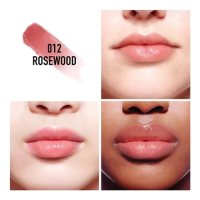
【100%Authentic】DlOR COLOR Changing Lipstick Long Lasting Moisturizing
$17.00$88.00
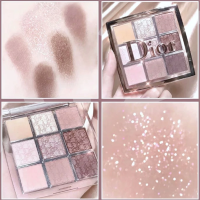
【100% authentic】DIOR BACKSTAGE Eyeshadow Palette
$18.00$88.00
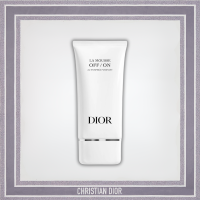
【Authentic】DIOR La Mousse OFF/ON Foaming Facial Cleanser 150ml
$25.00$85.00
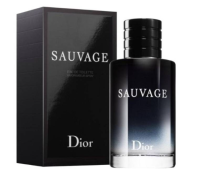
*Authentic* DIOR Sauvage EDT Fragrance For Him 100ml
$34.20$255.00
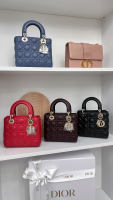
Loveholic Installment -
$6,732.00
Buy on Lazada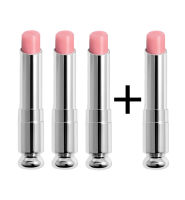
(100% Authentic) DIOR COLOR Changing Lipstick Long Lasting Moisturizing #001/#012
$46.00$90.00
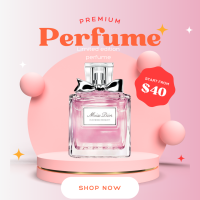
Blooming Bouquet EDT For Women 100ml
$37.00$200.00
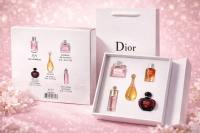
Dior Montaigne 5in1 Set 5 x 5ml Perfume Gift Set For Women
$61.75$170.00
About Dior
Overview
Christian Dior, commonly referred to as Dior, stands as one of the most influential French luxury brands in the world. Established by Christian Dior in Paris in 1946, the maison achieved immediate international renown for its revolutionary post-war fashion, most notably the “New Look” unveiled in 1947. Today, Dior operates across a comprehensive spectrum of luxury categories including haute couture, women’s and men’s ready-to-wear, leather goods, jewellery, watches, perfumes, makeup, and skincare. It serves as a flagship maison within the LVMH luxury group.1
Corporate Profile
| Category | Information |
|---|---|
| Full name | Christian Dior SE / Christian Dior |
| Brand name | Dior |
| Founded | 1946 |
| Founder | Christian Dior |
| Origin | Paris, France |
| Headquarters / historic address | 30 Avenue Montaigne, Paris |
| Industry | Luxury goods / fashion |
| Main sectors | Haute couture, fashion, leather goods, jewellery, watches, perfumes, cosmetics |
| Parent group relationship | Closely associated with and controlling shareholder of LVMH |
| Current Creative Director | Jonathan Anderson |
| Current CEO of Christian Dior Couture | Delphine Arnault |
| Key historic symbol | The Bar jacket / New Look |
| Major iconic bags | Lady Dior, Saddle, Book Tote, 30 Montaigne |
| Major fragrances | Miss Dior, J’adore, Sauvage |
| Official language/origin | French |
The maison’s historic headquarters remain intrinsically linked to 30 Avenue Montaigne, the Parisian townhouse where Christian Dior founded his couture house in 1946 and presented his debut collection in 1947.2
Founder: Christian Dior
Christian Dior (1905–1957) was a French fashion designer and the founder of the eponymous fashion house. Born on 21 January 1905 in Granville, Normandy, into a prosperous family, his initial career ambitions were not in fashion. Dior possessed a profound interest in art and, during his early twenties, assisted in operating an art gallery in Paris.3
Prior to establishing his own maison, he gained experience working for established designers including:
- Robert Piguet
- Lucien Lelong
These formative years allowed Dior to develop a sophisticated understanding of pattern cutting, construction, textiles, and Parisian couture. LVMH notes that he learned the métier of pattern cutting with Robert Piguet in 1938 before serving as a designer for Lucien Lelong from 1941.4
Artistic Foundations
Dior was more than a skilled dressmaker; his background in art, architecture, gardening, and visual culture fundamentally shaped the identity of his future fashion house. His designs aimed to construct a complete fantasy around the wearer, establishing a core philosophy of fashion as a dream.
Establishment of the House: 1946
In 1946, Christian Dior founded his couture house in Paris with financial backing from French industrialist Marcel Boussac. Dior selected 30 Avenue Montaigne as the location, an address that would become synonymous with the brand.5
Dior reportedly held a strong emotional attachment to this specific site, having previously identified the townhouse as the ideal setting for his future maison. Upon its availability in 1946, he established his operations there.6 More than a mere boutique, 30 Montaigne became the physical embodiment of Dior’s world, housing couture salons, design studios, ateliers, offices, and presentation spaces. Today, it remains one of the most significant addresses in luxury fashion, described by the maison as the intersection of its heritage and modernity.7
The New Look Revolution
The defining moment in Dior’s history occurred on 12 February 1947, when Christian Dior presented his first haute couture collection at 30 Avenue Montaigne. The collection featured silhouettes characterised by narrow waists, rounded shoulders, full skirts, pronounced hips, feminine proportions, and substantial fabric usage. Often associated with the Corolle and En 8 lines, the collection prompted Harper’s Bazaar editor Carmel Snow to famously describe it as a “New Look.” The house now regards this moment as foundational to its identity.8
Historical Context
The revolutionariness of the New Look must be understood within its post-war context. Europe had recently emerged from World War II, a period defined by austerity, rationing, and functional clothing. Dior proposed the antithesis of wartime utility: luxury, femininity, volume, elegance, and fantasy. The elaborate skirts and structured tailoring required significantly more fabric and craftsmanship, representing a psychological shift from austerity towards post-war optimism and luxury.
The Bar Jacket
Among Dior’s most enduring creations is the Bar jacket, a cornerstone of the original 1947 New Look. Distinguished by a sharply defined waist, sculpted construction, rounded hips, elegant lapels, and highly structured tailoring, the jacket is frequently compared by the maison to a work of architecture.9
The Bar jacket exemplifies a fundamental Dior philosophy: the body is shaped through architecture. Rather than simply draping fabric, Dior utilised tailoring to construct an idealised silhouette, establishing the jacket as a permanent visual code of the house.
Perfumery and Beauty
Contrary to the misconception that Dior began solely as a fashion company, perfume has been integral to the Dior concept since its inception. Christian Dior viewed himself as both a couturier and a perfumer, introducing his first fragrance, Miss Dior, alongside his debut fashion collection in 1947.10
Strategically, this allowed luxury to be expressed through a holistic lifestyle. Consumers unable to afford haute couture could still participate in the Dior universe through fragrance, lipstick, or accessories. Miss Dior, inspired in part by Christian Dior’s younger sister Catherine Dior, became the house’s first great fragrance.11
Over subsequent decades, Dior developed an extensive fragrance portfolio including Miss Dior, J’adore, Poison, Fahrenheit, Sauvage, Dior Homme, and La Collection Privée Christian Dior. Currently, Francis Kurkdjian serves as Dior’s Perfume Creation Director.
Cosmetics and Skincare
Dior subsequently expanded into cosmetics and beauty, making the brand accessible to a broader audience. Major categories include:
- Makeup: Rouge Dior, Dior Addict, Dior Forever, Diorshow, Backstage
- Skincare: Capture Totale, Prestige, Dior Prestige, Dreamskin
This accessibility follows a classic luxury strategy, creating an entry point that may eventually lead consumers toward higher-value categories such as handbags and ready-to-wear.
Succession of Creative Directors
Following Christian Dior’s unexpected death in 1957, the maison faced the challenge of preserving its identity while evolving. The succession of creative directors represents one of the most significant narratives in fashion history.
Yves Saint Laurent (1957–1960)
A young Yves Saint Laurent, aged approximately 21, assumed creative direction. While his early collections were successful, his increasingly modern and experimental approach eventually led to his departure to establish his own house. His tenure demonstrated that Dior’s identity could survive its founder.
Marc Bohan (1960–1989)
Marc Bohan served as one of the longest-serving creative leaders in Dior’s history, spanning nearly three decades. His aesthetic was refined, restrained, elegant, and traditionally couture-oriented, helping to stabilise the maison as a luxury institution during a period of immense social change.12
Gianfranco Ferré (1989–1997)
Italian architect-trained designer Gianfranco Ferré brought a highly architectural approach to Dior, emphasising dramatic proportions, structured tailoring, and sculptural construction. His appointment proved that a non-French designer could successfully reinterpret a prestigious French fashion house.
John Galliano (1997–2011)
John Galliano transformed Dior into a theatrical universe characterised by historical references, extravagant silhouettes, elaborate embroidery, and spectacular storytelling. His tenure was commercially and creatively successful, turning runway shows into major cultural events, until his dismissal in 2011 following controversy.13
Raf Simons (2012–2015)
Belgian designer Raf Simons introduced a minimalist counterpoint to Galliano’s maximalism, focusing on modern architecture, clean silhouettes, and restrained elegance. His work explored how historic codes could be modernised without mere reproduction.
Maria Grazia Chiuri (2016–2025)
In 2016, Italian designer Maria Grazia Chiuri became the first woman to lead Dior’s women’s collections as creative director.14 Her tenure, lasting nearly nine years, emphasised feminism, contemporary culture, art, literature, and the reinterpretation of Dior’s archives.
Jonathan Anderson (2025–present)
In 2025, Dior appointed Jonathan Anderson as Creative Director overseeing Haute Couture, women’s collections, and men’s collections. This unified creative vision marks a defining new chapter in the maison’s history.15 His debut men’s collection was presented in June 2025, followed by his first couture collection in 2026.16 Anderson’s approach involves reinterpreting Dior’s historical vocabulary—including the Bar jacket, Cannage, and archival silhouettes—through a contemporary lens, effectively decoding and re-coding the house’s language.17
Creative Director Timeline
| Period | Creative Director | General Character |
|---|---|---|
| 1946–1957 | Christian Dior | New Look, femininity, couture |
| 1957–1960 | Yves Saint Laurent | Youthful modernization |
| 1960–1989 | Marc Bohan | Refined, elegant couture |
| 1989–1997 | Gianfranco Ferré | Architectural, sculptural |
| 1997–2011 | John Galliano | Theatrical, extravagant |
| 2011–2012 | Bill Gaytten | Interim |
| 2012–2015 | Raf Simons | Minimalist, modern |
| 2015–2016 | Interim leadership | Transition |
| 2016–2025 | Maria Grazia Chiuri | Feminist, contemporary |
| 2025–present | Jonathan Anderson | Archival reinterpretation, contemporary experimentation |
Dior’s historical archive identifies Christian Dior, Saint Laurent, Bohan, Ferré, Galliano, Simons, Chiuri, and Anderson as the principal succession of creative leaders.18
Product Categories
Dior functions as a comprehensive luxury ecosystem rather than a simple fashion label.
Haute Couture
As the historical heart of the maison, couture involves highly skilled ateliers, hand embroidery, bespoke construction, and complex draping. Dior’s couture operations remain based at 30 Avenue Montaigne.19
Women’s Ready-to-Wear
This category translates couture identity into scalable collections featuring recurring codes such as the Bar jacket, New Look silhouette, Dior Oblique, Cannage, toile de Jouy, and architectural tailoring.
Men’s Fashion
Developed through identities including Christian Dior Monsieur and Dior Homme, the men’s line was dramatically reshaped by Hedi Slimane in the 2000s. Later, Kim Jones led Dior Men from 2018 to 2025, blending couture references with streetwear and contemporary art.20 Jonathan Anderson now oversees men’s alongside women’s and couture.
Iconic Handbags
Dior has produced some of the world’s most recognisable luxury handbags:
- Lady Dior: Associated with Cannage quilting and Princess Diana, who received one in 1995, leading to its renaming.
- Saddle Bag: Originally designed under John Galliano, its distinctive curved shape defined late 1990s fashion before being revived for the modern era.
- Dior Book Tote: A large-format accessory distinguished by its highly decorated surface.
- 30 Montaigne: Named after the historic Paris address, translating the location into an accessory code.
Visual Codes
Dior maintains a distinct set of recurring design codes:
- Cannage: A geometric woven pattern inspired by Napoleon III-style chairs used at 30 Avenue Montaigne, appearing on bags, shoes, furniture, and packaging.
- The Bar Jacket: The definitive symbol of the New Look.
- Dior Oblique: A repeating monogram pattern prominent on luggage and accessories.
- Toile de Jouy: A traditional French textile featuring pastoral scenes, frequently reinterpreted by the maison.
- Flowers: Reflecting Christian Dior’s passion for gardening, floral imagery is deeply embedded in the brand’s philosophy.
- Stars: A symbol linked to Christian Dior’s fascination with lucky signs and superstition.
- The Number 8: Considered Christian Dior’s lucky number and referenced as part of the house’s heritage.21
Relationship with Art
Dior has historically positioned itself at the intersection of fashion and art, reflecting Christian Dior’s early career in the art world. The maison collaborates with painters, sculptors, photographers, architects, filmmakers, and museums. In 2022, Dior opened La Galerie Dior at 30 Montaigne, presenting the house’s history and transforming the headquarters into a cultural destination.
Celebrity Associations
Dior maintains strong relationships with celebrity culture, bridging traditional haute couture and contemporary popular culture. Ambassadors and campaign stars have included figures from cinema, music, royalty, and pop culture such as Charlize Theron, Natalie Portman, Rihanna, Robert Pattinson, Johnny Depp, Jennifer Lawrence, Jisoo, Jimin, Milly Alcock, and Anya Taylor-Joy.
Corporate Structure and LVMH
The relationship between Dior and LVMH is complex. The Christian Dior group was acquired by Bernard Arnault and investors in 1984. In 1988, Christian Dior acquired a significant stake in the newly formed LVMH group.22
Today, Christian Dior SE is the controlling shareholder of LVMH. As of 31 December 2024, Christian Dior held approximately 42% of LVMH’s share capital and 57% of LVMH’s voting rights.23 Consequently, the corporate structure flows from the Arnault family to Christian Dior, which holds a controlling interest in LVMH, encompassing maisons such as Louis Vuitton, Fendi, Celine, Givenchy, and Loewe. Dior thus functions simultaneously as a luxury fashion house and a major corporate holding entity.24
Distinguishing Entities
- Dior: The luxury maison comprising fashion, couture, leather goods, jewellery, perfumes, and beauty.
- Christian Dior SE: The listed holding company associated with the Arnault family’s control structure.
- LVMH: The luxury conglomerate containing dozens of maisons.
While often simplified as “Dior is owned by LVMH,” the reality is that Christian Dior SE is the controlling shareholder of LVMH.24
Brand Philosophy and Identity
Dior’s competitive advantage lies in its combination of heritage and reinvention. Key pillars of its identity include:
- Femininity: Constructing ideals of feminine elegance.
- Dream: Fashion as a form of imagination.
- Craftsmanship: Centrality of haute couture savoir-faire.
- French Elegance: Deep association with Parisian couture.
- Art: Ongoing dialogue with artists and cultural institutions.
- Nature: Integration of botanical imagery.
- Transformation: Continuous reinterpretation by successive creative directors.
Significance in Fashion History
Dior’s influence extends beyond commercial success to fundamentally shaping post-war Western fashion. The 1947 New Look reversed wartime austerity, reintroducing luxury, volume, and glamour. This shift helped re-establish Paris as the symbolic centre of haute couture after World War II.25
Despite radical aesthetic shifts across different creative tenures, Dior remains recognisable because it is defined not by a single silhouette but by a system of codes: 30 Montaigne, couture craftsmanship, the New Look, femininity, flowers, art, and French elegance. Each designer alters the vocabulary while maintaining the underlying grammar.
Current Era: 2026
As of 2026, Dior has entered a new era under Jonathan Anderson, who oversees Haute Couture, women’s, and men’s collections. His debut couture collection (Spring/Summer 2026) and men’s debut (Summer 2026) focus on examining and transforming Dior’s archives through contemporary design rather than treating them as static relics. This approach suggests his appointment may be as transformative as those of Saint Laurent, Galliano, or Simons.
Summary
Dior is a French luxury fashion house founded by Christian Dior in Paris in 1946. Its first collection, presented on 12 February 1947 at 30 Avenue Montaigne, introduced the revolutionary New Look and transformed postwar fashion through sculpted silhouettes, narrow waists and voluminous skirts. After Christian Dior’s death in 1957, the house was successively shaped by Yves Saint Laurent, Marc Bohan, Gianfranco Ferré, John Galliano, Raf Simons and Maria Grazia Chiuri, before Jonathan Anderson became Creative Director of haute couture, women’s and men’s collections in 2025. Beyond haute couture, Dior has developed major businesses in ready-to-wear, leather goods, jewelry, watches, perfumes, makeup and skincare. Iconic codes such as the Bar jacket, Cannage, Dior Oblique, Lady Dior and Miss Dior have made the house one of the most recognizable names in global luxury. Corporate history also connects Dior closely with LVMH, with Christian Dior SE serving as LVMH’s controlling shareholder.26
References
- Christian Dior, haute couture and ready-to-wear – … – LVMH
- Annual Report as of December 31, 2024
- The Story of 30 Montaigne – 30 Montaigne – Fashion & Accessories | DIOR
- History – Profile – Christian Dior Finance
- History
- The New Look – One | DIOR
- Dior Haute Couture | Haute Couture Fashion House| DIOR
- Parfums Christian Dior – LVMH
- Christian Dior, Couturier-Perfumer | DIOR US
- Christian Dior – Design Museum
- The Designers Who Have Shaped The House Of Dior | Vogue France
- Jonathan Anderson presents debut collection for Di… – LVMH
- Haute Couture Spring Summer 2026 Show – womens-fashion – Fashion & Accessories | DIOR
- Summer 2026 Show – mens-fashion – Fashion & Accessories | DIOR
- Dior News | Fashion News| DIOR
- Dior Men 101: A Timeline From “Christian Dior Monsieur” to Hedi Slimane’s “Dior Homme” to Jonathan Anderson’s Takeover
- Sculptural fashion for Dior Fall/Winter 2026-2027 … – LVMH
- Sales Consultant – Christian Dior Couture – CDC14656 – LVMH
- Six iconic fragrances of LVMH Group – LVMH
- Dior Autumn-Winter 2026-2027 Show: The Craft of Ar… – LVMH
- Film noir revisited for Dior Cruise 2027 – LVMH
- Modern-day flâneurs at Dior Winter 2026-2027 Show … – LVMH
- House of Dior New York: Craftsmanship, Heritage, a… – LVMH
- House of Dior New York : Savoir-Faire, Héritage et… – LVMH
- Dior’s Creative Directors Timeline: From Christian Dior to Maria Gracia Chiuiri & Jonathan Anderson
- Heritage in motion at Dior Spring-Summer 2026 Wome… – LVMH