Shop on Lazada
Fancy Feast products
![[Bundle of 24/48] Fancy Feast Cat Wet Food Canned 85g](https://sg-live.slatic.net/p/3886fb090eaaf22f76b8734f894445d7.jpg_200x200q80.jpg)
[Bundle of 24/48] Fancy Feast Cat Wet Food Canned 85g
$60.90$80.16
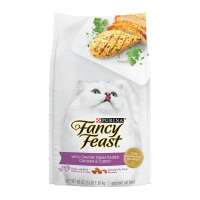
Fancy Feast Chicken And Turkey Gourmet Cat Food
$19.30
Buy on Lazada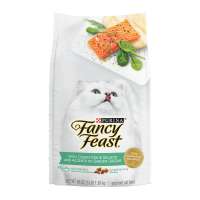
Fancy Feast Ocean Fish And Salmon Gourmet Cat Food
$19.30
Buy on Lazada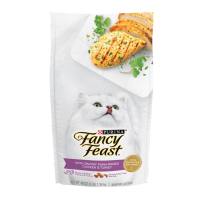
Fancy Feast Cat Dry Food 1.36kg
$15.44$19.30
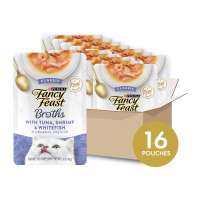
Fancy Feast Broths Tuna Shrimp and Whitefish in Classic Silky Broth - Case Cat Food Wet
$23.95$29.33
![[Bundle of 12/24] Fancy Feast Inspirations Adult Cat Wet Pouch Food 70g](https://sg-live.slatic.net/p/8b30298c2c0d85cddc221ddeb267b866.jpg_200x200q80.jpg)
[Bundle of 12/24] Fancy Feast Inspirations Adult Cat Wet Pouch Food 70g
$31.45$40.32
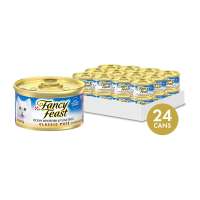
Fancy Feast Classic Ocean White Fish Tuna Case
$28.90$40.35
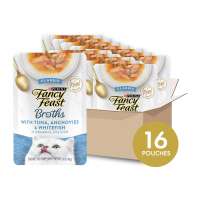
Fancy Feast Broths Tuna Anchovies and Whitefish in Classic Silky Broth - Case Cat Food Wet
$23.95$29.33
About Fancy Feast
Fancy Feast is a premium and gourmet cat food brand owned by Nestlé Purina PetCare, the pet care division of Nestlé. Introduced in the United States in 1982, the brand established itself by positioning cat food as an indulgent, restaurant-style dining experience rather than a purely functional pet product.1 Today, Fancy Feast is one of Purina’s most recognised cat food brands globally, with a portfolio spanning wet food, dry food, treats, kitten food, broths, toppers and other complementary products. Purina states that the brand offers more than 100 recipes worldwide, although the specific assortment varies by market.1
In Singapore, Fancy Feast holds a significant market position. Purina Singapore describes it as the No. 1 cat food brand in Singapore, based on NielsenIQ Scan Track data for the 52-week period ending August 2024 across the total modern-trade cat food market.4 The local range functions as a broad premium ecosystem, including wet canned food, Petite Delights, Inspirations, Broths, dry food, treats, pâté, gravy products, sauces and soups.4
Basic information
| Field | Information |
|---|---|
| Brand | Fancy Feast |
| Category | Cat food and cat treats |
| Founded / introduced | 1982 |
| Original company | Carnation Company |
| Current owner | Nestlé Purina PetCare |
| Industry | Pet food |
| Main animal | Cats |
| Core positioning | Gourmet / premium cat food |
| Major formats | Wet food, dry food, broths, treats, toppers, kitten food |
| Primary market origins | United States |
| Current reach | International |
| Brand philosophy | “Love is in the Details®” |
History
1982: Launch of Fancy Feast
Fancy Feast was introduced in 1982 as a novel category of cat food designed for owners seeking a more indulgent option for their pets. The original concept centred on a 3-ounce single-serving can, marketed as a gourmet meal. Purina describes this as a first-of-its-kind approach to gourmet, single-serve cat food.1 The brand initially launched with seven varieties of wet food, establishing the core idea that cat food could be presented as an enjoyable culinary experience rather than merely animal nutrition.2 Early branding deliberately employed language associated with human dining, such as gourmet, feast and elegant, which became integral to the brand’s identity.
1984: Holiday tradition
In 1984, Fancy Feast began releasing an annual holiday ornament in the United States and Canada. These ornaments eventually became a distinctive element of the brand’s seasonal marketing and collector culture.1
1985: Acquisition by Nestlé
Fancy Feast was originally associated with the Carnation Company. In 1985, Nestlé acquired Carnation, bringing the brand into its portfolio. Fancy Feast subsequently became associated with the Friskies PetCare business before ultimately joining the modern Nestlé Purina PetCare lineup.2
1990s–2000s: International expansion and diversification
The brand expanded beyond its original US market. Purina’s history records European expansion under the Gourmet name in 1995, while the broader portfolio developed related brands for various international markets.1 Concurrently, the product concept evolved from canned pâté-style foods into increasingly diverse textures, recipes and serving formats.
2006 onwards: Sophisticated recipes
Fancy Feast introduced Elegant Medleys in 2006, a line inspired by global recipes. This reflected a shift towards presenting cat food as a culinary experience featuring differentiated ingredients and textures.1
2009–2020: Broths, complements and new experiences
The brand expanded beyond conventional complete meals. Fancy Feast Appetizers emerged as an early complement-style product, followed by the introduction of Fancy Feast Broths in 2014. In 2020, the brand launched its first Advent Calendar.1
Brand identity
Fancy Feast is defined by its “gourmet cat food” positioning. Rather than focusing exclusively on scientific nutrition, the brand emphasises taste, texture, variety, presentation, indulgence, ingredient appeal and the emotional bond between cats and their owners. Its current brand line is “Love is in the Details®”, which Purina uses to connect the care taken in food preparation with the affection owners feel for their cats.3
The brand frequently utilises culinary terminology such as pâté, gravy, broth, roasted, grilled, flaked, medley and feast. This vocabulary distinguishes Fancy Feast from brands that primarily emphasise utilitarian nutrition.
Product portfolio
Fancy Feast has developed an extensive portfolio rather than relying on a single signature product.
Wet cat food
Wet food remains central to the Fancy Feast identity. Common styles include:
- Classic Pâté
- Grilled
- Roasted
- Flaked
- Chunky
- Gravy-based recipes
- Medleys
- Seafood recipes
- Chicken and poultry recipes
- Beef recipes
The Classic Pâté range is characterised by a finely processed, smooth texture, while other ranges provide chunks, flakes, gravy or alternative textures.34
Dry food
Although best known for canned products, Fancy Feast also sells dry cat food. These products are designed to provide the crunchy texture associated with kibble while retaining the brand’s flavour positioning.3
Broths
Fancy Feast Broths are a recognisable extension of the brand, combining small pieces of meat or seafood with liquid broth. They are generally positioned as complements or toppers rather than replacements for complete and balanced main meals.4
Treats
The portfolio includes cat treats and small-format indulgences, allowing the brand to participate in occasions beyond ordinary mealtimes.3
Kitten food
Fancy Feast offers products formulated specifically for kittens. In some markets, kitten pâté recipes are available to provide complete and balanced nutrition for growing cats.5
Ingredients and nutrition
Recipes vary considerably across the Fancy Feast range, meaning there is no single ingredient profile for the entire brand. Depending on the product, ingredients may include chicken, turkey, beef, salmon, tuna, whitefish, shrimp, other seafood, liver, milk or cheese ingredients, vegetables, gravy and broth. Purina states that many recipes use real seafood, poultry and beef, emphasising recognisable ingredients and culinary-style preparation.1
Crucially, Fancy Feast is not a single formula. Nutritional characteristics—including calories, protein, fat, carbohydrates, moisture and whether a product is a complete meal or complement—differ substantially between products. For example, Purina Singapore describes some Fancy Feast products as 100% complete and balanced, while certain Broths are explicitly designed as complements to a complete diet.4
Removal of artificial ingredients
Purina currently highlights recipes made without added artificial colours, flavours or preservatives in Singapore and other regional materials. However, this is a specific product or recipe claim rather than a universal statement applying to all historical formulas.4 The US brand website also details efforts to remove artificial colours and preservatives from many recipes.3
Marketing and advertising
Historically, Fancy Feast advertising has focused on the concept that cats deserve to be pampered. Branding frequently depicts elegant cats, upscale dining environments, beautifully presented meals, affection between owners and pets, and cats behaving like sophisticated diners. This approach was unusual at launch, as pet food advertising traditionally emphasised basic nutrition and convenience.
Fancy Feast helped popularise the notion of “pet indulgence”, suggesting that feeding a pet is an expression of affection and lifestyle. Long-running slogans have included “Good taste is easy to recognize”, “Is it love, or is it Fancy Feast?” and the current “Love is in the Details®”.2
The Fancy Feast cat
A key element of the visual identity is the association with an elegant white cat, traditionally portrayed as sophisticated and well-groomed. This imagery reinforces the positioning that Fancy Feast is appropriate for a “refined” cat rather than being ordinary sustenance. Consequently, the visual identity has become almost as important to the brand as its recipes.
Fancy Feast in Singapore
Fancy Feast maintains a particularly broad presence in Singapore. As noted, Purina Singapore cites NielsenIQ Scan Track data (52 weeks ending August 2024) to describe it as the No. 1 cat food brand in Singapore across the total modern-trade market.4
The Singapore range encompasses:
- Wet canned food
- Petite Delights
- Inspirations
- Broths
- Dry food
- Treats
- Pâté
- Gravy products
- Sauces and soups
Specific examples presented by Purina Singapore include Classic Pâté Chicken & Liver, Grilled Salmon, Royale Fine Flakes of Tuna, Inspirations Chicken, Pasta Pearls & Spinach and various Broths products.4 This breadth makes Fancy Feast substantially more than a single canned-food line in the local market; it functions as a comprehensive premium/gourmet cat food ecosystem.
Global presence
While originating in the United States, Fancy Feast is now marketed internationally. The exact product portfolio and branding differ by country, with variations in recipes, package sizes, product names and related Purina brands. For instance, the US has an extensive range; Singapore offers wet food, dry food, treats and Broths; Europe has historically used the Gourmet brand name; and other Asian markets feature localised assortments. Purina manages Fancy Feast as a global brand while adapting portfolios to individual markets.1
Ownership
Fancy Feast is currently part of Nestlé Purina PetCare. The corporate lineage is:
Carnation Company → Nestlé → Nestlé Purina PetCare
Launched by Carnation in 1982, the brand joined Nestlé following the 1985 acquisition. Today, Fancy Feast sits within Nestlé Purina’s international portfolio alongside brands such as Purina ONE, Purina Pro Plan and Friskies.1
Market positioning
Fancy Feast occupies a distinct position in the cat food market. It is positioned above basic/value cat food in terms of branding and perceived indulgence but is not marketed as a veterinary or therapeutic food. Its competitive proposition is essentially to make everyday cat food feel like a gourmet experience. The brand competes through variety and sensory appeal as much as nutrition, offering a selection useful for owners whose cats have strong food preferences.
Factors contributing to success
Several factors have contributed to the brand’s longevity:
Strong differentiation
Calling cat food “gourmet” provided a distinctive identity upon launch in 1982.
Variety
The brand has continually expanded the number of available flavours, textures and formats.
Emotional marketing
Fancy Feast connects feeding with love, affection and pampering, rather than treating it solely as a nutritional chore.
Strong visual branding
The elegant white cat and sophisticated food imagery ensure immediate recognition.
Single-serving heritage
The original 3-ounce single-serve concept reinforced convenience and the idea of an individual “meal”.1
Product innovation
The portfolio has expanded from traditional pâté into Medleys, broths, dry food, treats, kitten products and other formats.1
Brand philosophy
At its core, Fancy Feast combines three concepts: nutrition, indulgence and emotional bonding. Rather than simply stating that food keeps a cat healthy, the marketing message suggests that a cat deserves something special and that feeding is a way to show love. This distinction is central to understanding the brand.
Fancy Feast today
As of 2026, Fancy Feast remains a major Nestlé Purina cat food brand with an extensive international portfolio. Nestlé describes it as the world’s leading gourmet cat food brand, while Purina’s US business cites it as its No. 1 gourmet cat food brand with more than 100 recipes.1
The modern portfolio extends far beyond the original 1982 canned pâté concept to include:
Wet food → Dry food → Pâté → Gravy → Broths → Toppers → Treats → Kitten food → Variety packs → Specialty recipes
This evolution allows Fancy Feast to maintain its original “gourmet” identity while adapting to modern expectations regarding variety, ingredients, convenience and specialised feeding occasions.1