Shop on Lazada
Ferrari products
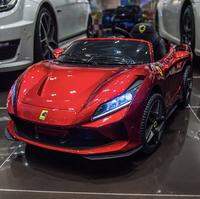
Kids electric car ferrari kid car toy car kiddy ride remote control car kid electric car toddler kid car kids electrical car self drive car
$239.00
Buy on Lazada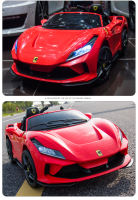
Ferrari F8 Spider Ride On Car Kids Electric Toy Car 1 Seater Remote Control Self Drive Dual Motor Bluetooth Music Fast Shipping Local Ready Stock Support Local Business
$178.00
Buy on Lazada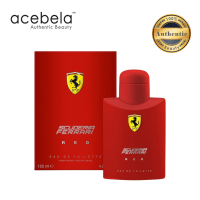
Ferrari Scuderia Red EDT 125ml (100% Authentic from Acebela)
$32.27$84.00
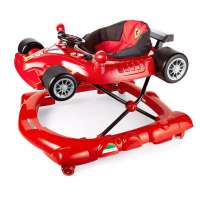
FERRARI F1 BABY WALKER
$109.00$140.30
![Ferrari Scuderia Red EDT for Men (125ml) Eau de Toilette [Brand New 100% Authentic Perfume/Fragrance]](https://sg-live.slatic.net/p/5b7476c721d17a6a92c3aff5d2b2fc53.jpg_200x200q80.jpg)
Ferrari Scuderia Red EDT for Men (125ml) Eau de Toilette [Brand New 100% Authentic Perfume/Fragrance]
$44.00$90.00
About Ferrari
Ferrari, officially Ferrari N.V., is an Italian luxury automobile manufacturer celebrated for its high-performance sports cars, supercars, grand tourers and limited-production vehicles. Headquartered in Maranello, Emilia-Romagna, Italy, Ferrari ranks among the world’s most recognisable luxury brands, synthesising automotive engineering, motorsport success, Italian design and an exclusive lifestyle identity. The company regards the Prancing Horse as a symbol of exclusivity, innovation and cutting-edge performance.1
The marque’s origins are inextricably linked to its founder, Enzo Ferrari, and to motor racing. What began as a racing organisation in the 1920s evolved into one of the most prestigious automobile manufacturers globally. Today, Ferrari operates not merely as a carmaker but as a comprehensive luxury brand encompassing road cars, racing, personalisation, merchandise, experiences and lifestyle products.2
Basic information
| Category | Information |
|---|---|
| Full corporate name | Ferrari N.V. |
| Automotive company | Ferrari S.p.A. |
| Brand | Ferrari |
| Founded | 1939, as Auto Avio Costruzioni |
| Founder | Enzo Ferrari |
| Headquarters / principal place of business | Maranello, Emilia-Romagna, Italy |
| Corporate seat | Amsterdam, Netherlands |
| Industry | Luxury automotive, motorsport and lifestyle |
| Main products | Luxury sports cars, supercars, grand tourers and limited-series cars |
| Racing division | Scuderia Ferrari |
| Stock ticker | RACE |
| Stock exchanges | NYSE and Euronext Milan |
| Current CEO | Benedetto Vigna |
| Executive Chairman | John Elkann |
| Vice Chairman | Piero Ferrari |
| Symbol | Prancing Horse (Cavallino Rampante) |
| Official website | Ferrari Corporate |
Ferrari N.V. was incorporated in the Netherlands in 2015, although its operational headquarters and principal place of business remain in Maranello.3
The founder: Enzo Ferrari
The history of Ferrari is inseparable from Enzo Ferrari (1898–1988).
Enzo Ferrari developed a passion for motor racing from an early age, becoming involved with Alfa Romeo first as a driver and later as an organiser and manager. In 1929, he established Scuderia Ferrari in Modena. Initially, this organisation operated as a racing team using Alfa Romeo cars rather than manufacturing its own automobiles.4
In 1939, Ferrari departed Alfa Romeo to found his own company, originally named Auto Avio Costruzioni. This enterprise eventually evolved into the Ferrari known today. During the Second World War, Enzo Ferrari relocated the company’s headquarters from Modena to Maranello, where Ferrari remains based.5
Crucially, Scuderia Ferrari existed before the Ferrari automobile company produced its own cars. Consequently, Ferrari’s identity originated in racing before transitioning to road-car manufacturing.
Birth of the Ferrari automobile
Ferrari produced its first racing car, the Ferrari 125 S, in 1947.
The 125 S was particularly significant as it introduced Ferrari’s renowned V12 engine architecture. Its 1.5-litre V12 became a cornerstone of Ferrari’s engineering philosophy, establishing the company’s association with high-revving, technically sophisticated power units.6
In 1948, Ferrari produced the 166 Inter, its first road-going model. From this juncture, the company developed a dual identity:
- Ferrari as a racing constructor
- Ferrari as a manufacturer of exclusive road cars
This combination remains fundamental to the brand’s character today.7
Ferrari and motorsport
Motorsport is arguably the foundation of Ferrari’s identity.
Scuderia Ferrari
Scuderia Ferrari is Ferrari’s racing division and is best known for its participation in Formula One.
Ferrari entered the Formula One World Championship in 1950, making it the longest-serving team in the series. Its racing history encompasses numerous victories and world championships.8
Ferrari’s racing activities extend beyond Formula One to include endurance racing and events such as:
- 24 Hours of Le Mans
- 24 Hours of Daytona
- World Endurance Championship
- Various GT and customer-racing categories
Ferrari returned to the top step at Le Mans in the modern era with victories in 2023 and 2024, reinforcing the link between Ferrari’s road-car brand and its competition heritage.9
The racing programme is also commercially vital; Ferrari considers motorsport a major contributor to brand awareness, prestige and technological development.10
The Prancing Horse
Ferrari’s most recognisable visual symbol is the Cavallino Rampante, or Prancing Horse.
The black horse appears on Ferrari’s distinctive yellow shield and has become one of the world’s most iconic automotive symbols. The logo is strongly associated with:
- Speed
- Racing
- Italian heritage
- Luxury
- Performance
- Exclusivity
- Motorsport success
The yellow background is specifically linked to Modena, Enzo Ferrari’s birthplace and the city whose colours inspired Ferrari’s famous shield.
The logo’s value extends far beyond the automobile itself: Ferrari utilises the Prancing Horse across its racing operations, dealerships, clothing, accessories, lifestyle products and other brand experiences.
Why Ferrari became a luxury brand
Ferrari differs from most large automobile manufacturers by deliberately emphasising scarcity.
Rather than maximising sales volume, Ferrari carefully controls production and manages waiting lists to preserve exclusivity. Its 2025 annual report explicitly describes a controlled-volume strategy intended to maintain the perception of scarcity.11
This creates a distinctive business model:
Ferrari sells fewer cars than many major luxury manufacturers, but extracts significantly more value from each customer and vehicle.
The strategy involves:
- Limited production
- High prices
- Extensive personalisation
- Special editions
- Limited-series cars
- Strong customer relationships
- Brand experiences
- Motorsport
- Ferrari merchandise and lifestyle products
Consequently, Ferrari behaves more like a luxury house in certain respects than a conventional mass-market automaker.
Ferrari’s product philosophy
Ferrari cars are generally designed around several fundamental principles:
Performance
Ferrari prioritises acceleration, braking, handling, aerodynamics and high-speed capability.
Engine technology
Historically, Ferrari became renowned for its V8 and V12 engines. More recently, it has incorporated hybrid systems and is moving towards electrification whilst maintaining its performance-oriented character.
Italian design
Ferrari places considerable importance on styling. The company has collaborated with famous Italian design houses, most notably Pininfarina, whilst increasingly developing designs internally through Ferrari’s own design organisation.
Driving emotion
Ferrari’s products are marketed not merely as transport but as emotional experiences.
Exclusivity
Limited production and personalisation are fundamental to the brand.
Ferrari’s major types of cars
Ferrari’s portfolio can broadly be divided into several categories.
Grand tourers
These are relatively comfortable, high-performance cars designed to combine long-distance usability with Ferrari performance. Examples include:
- Ferrari Roma
- Ferrari Roma Spider
- Ferrari Amalfi
The Ferrari Amalfi, introduced in 2025 as the successor to the Roma, is a front-mid-engine V8 2+ coupé designed to combine performance with everyday usability.12
Mid-engine sports cars
These models emphasise handling and performance, typically utilising a mid-mounted engine. Examples include:
- 296 GTB
- 296 GTS
- SF90 Stradale
- SF90 Spider
V12 cars
Ferrari’s V12 cars represent its traditional flagship-engine philosophy. Examples include:
- Ferrari 12Cilindri
- 12Cilindri Spider
- 812 Competizione
- 812 Competizione A
Four-seat / high-performance utility
The Purosangue is Ferrari’s first four-door, four-seat model and represents the company’s interpretation of the high-performance luxury utility segment.
Ferrari deliberately avoids describing it as a conventional SUV, positioning it instead as a fundamentally different interpretation of the segment.
Limited and special-series cars
Ferrari also produces extremely limited vehicles designed to showcase technology, design and exclusivity. Examples include:
- Daytona SP3
- SF90 XX Stradale
- SF90 XX Spider
- F80
- 296 Speciale
- 296 Speciale A
Ferrari’s current official range also includes newer models such as the 849 Testarossa, 849 Testarossa Spider, F80 and its forthcoming electric Ferrari Elettrica.13
Ferrari’s famous model families
Over the decades, Ferrari has produced numerous cars that have become automotive icons. Particularly famous examples include:
250 GTO
One of Ferrari’s most celebrated historic racing and road cars. Surviving examples are now among the most valuable collector automobiles globally.
F40
Introduced in 1987, the F40 became one of Ferrari’s defining supercars of the 1980s and 1990s.
F50
Introduced in 1995, the F50 applied a Formula One-inspired philosophy to a road-going supercar.
Enzo Ferrari
Named after the company’s founder, the Enzo was Ferrari’s flagship supercar of the early 2000s.
LaFerrari
Launched in the 2010s, LaFerrari combined a V12 engine with hybrid technology and became one of Ferrari’s most important modern halo cars.
SF90 Stradale
The SF90 represented Ferrari’s increasing use of electrification, combining a V8 engine with electric motors.
296 GTB
The 296 GTB introduced a V6 plug-in-hybrid powertrain into Ferrari’s mainstream sports-car range.
Purosangue
Ferrari’s four-door, four-seat model, expanding the company’s definition of a high-performance luxury automobile.
Ferrari’s move toward electrification
Although Ferrari has historically been strongly associated with internal-combustion engines—especially V8 and V12 configurations—the company is increasingly incorporating hybrid and electric technology.
The 2013 LaFerrari was an important early example of Ferrari’s hybrid strategy. This technology subsequently appeared in production models such as:
- SF90 Stradale
- SF90 Spider
- 296 GTB
- 296 GTS
Ferrari is also moving towards fully electric vehicles. Its official current product information lists the Ferrari Elettrica among its upcoming products.14
Ferrari’s approach is not solely about reducing fuel consumption; the company treats electrification as another means of increasing performance, responsiveness and technological sophistication.
Ferrari and personalisation
A major component of Ferrari’s modern business is vehicle personalisation.
Customers can customise aspects of their cars including:
- Exterior paint
- Wheels
- Interior materials
- Leather
- Carbon-fibre components
- Stitching
- Seats
- Trim
- Special finishes
- Personal details
This is financially significant because Ferrari can generate substantial additional value from personalisation without necessarily increasing production volume. In essence, Ferrari’s strategy focuses less on selling more cars and more on extracting greater value per car.
Ferrari’s 2025 financial results specifically identified product mix and personalisations as contributors to its financial performance.15
Ferrari as a lifestyle brand
Ferrari has expanded beyond automobiles. Its lifestyle activities include:
- Clothing
- Watches and accessories
- Collectibles
- Merchandise
- Licensing
- Ferrari-themed experiences
- Museums
- Events
- Driving experiences
- Client communities
Ferrari describes its lifestyle activities as part of its broader luxury-brand strategy. Its 2025 annual report states that the company designs and creates personal luxury goods, collectibles and experiences around the Ferrari identity.16
This makes Ferrari comparable in certain respects to luxury houses such as fashion and watch brands, rather than being solely an automobile manufacturer.
Ferrari’s ownership history
Ferrari’s corporate history comprises several important stages.
1969 — Fiat investment
Fiat acquired a 50% stake in Ferrari in 1969. Its ownership later increased to 90% in 1988 following Enzo Ferrari’s death, whilst Enzo’s son Piero Ferrari retained the remaining 10%.17
2015 — Ferrari N.V.
Ferrari N.V. was incorporated in the Netherlands in September 2015. The company subsequently conducted an initial public offering on the New York Stock Exchange under the ticker RACE.18
2016 — Separation from FCA
Ferrari became an independent publicly traded company following its separation from Fiat Chrysler Automobiles (FCA). Its shares began trading on the Italian market in January 2016, in addition to its New York listing.19
Today, Ferrari is therefore an independent publicly traded luxury company rather than a division of a mass-market automobile group.
Ferrari today
As of 2026, Ferrari is led by Benedetto Vigna, who became CEO in September 2021. He previously worked at semiconductor company STMicroelectronics and has a background in microelectronics and sensor technology.20
The company’s current executive leadership also includes John Elkann as Executive Chairman and Piero Ferrari, Enzo Ferrari’s son, as Vice Chairman.21
Ferrari continues to be headquartered in Maranello, maintaining the physical connection between the modern corporation and the location where Enzo Ferrari established the company’s headquarters during the 1940s.
Ferrari’s financial scale
Ferrari’s financial performance illustrates the uniqueness of its business model.
For 2025, Ferrari reported:
| Metric | 2025 |
|---|---|
| Car shipments | 13,640 |
| Net revenue | €7.146 billion |
| Operating profit (EBIT) | €2.110 billion |
| EBIT margin | 29.5% |
| Net profit | €1.600 billion |
| EBITDA | €2.772 billion |
These figures are derived from Ferrari’s 2025 financial results and annual report.22
A striking feature is the relatively small number of vehicles sold compared with major automobile manufacturers. Ferrari shipped 13,640 cars in 2025, yet generated more than €7.1 billion in revenue.23
This demonstrates the importance of its premium pricing, product mix, personalisation and non-automotive businesses.
Ferrari’s global presence
Ferrari sells its cars internationally through an authorised dealer network.
At the end of 2025, Ferrari reported sales in more than 60 markets, supported by 181 authorised dealers operating 195 points of sale.24
Its 2025 shipment distribution was approximately:
- EMEA: 46.5%
- Americas: 28.9%
- Mainland China, Hong Kong and Taiwan: 6.9%
- Rest of Asia-Pacific: 17.7%25
Ferrari is therefore a genuinely global luxury brand, although its identity remains deeply rooted in Italy.
Ferrari’s brand identity
Ferrari’s brand can be summarised through several concepts:
🐎 Prancing Horse
The central visual symbol of Ferrari.
🇮🇹 Italian heritage
Design, engineering and manufacturing remain strongly associated with Italy.
🏁 Racing
Formula One and endurance racing provide the foundation of Ferrari’s sporting identity.
🔥 Performance
Ferrari emphasises speed, handling, engines and technological innovation.
💎 Exclusivity
Limited production and carefully managed availability protect the brand’s luxury status.
🎨 Personalisation
Customers can create highly individualised cars.
❤️ Emotion
Ferrari sells an emotional experience as much as a physical automobile.
Why Ferrari is so famous
Ferrari’s global reputation stems from the combination of several factors rather than a single feature.
First, it possesses an exceptionally long and successful motorsport history.
Second, it has produced some of the most recognisable sports cars in automotive history.
Third, the company has maintained a strong visual identity through the Prancing Horse, red racing heritage and distinctive Italian design.
Fourth, Ferrari intentionally limits production, making ownership relatively exclusive.
Finally, Ferrari has successfully transformed its racing heritage into a broader luxury brand.
This combination affords Ferrari a level of cultural recognition that extends well beyond automobile enthusiasts.
Ferrari’s philosophy in one sentence
If Ferrari’s business philosophy had to be summarised in one idea, it would be:
Create exceptional performance and emotional experiences while protecting exclusivity and the long-term value of the Ferrari name.
This philosophy explains why Ferrari is reluctant to pursue the enormous production volumes of companies such as Toyota, Volkswagen or Ford. Ferrari’s objective is not simply to become the world’s biggest automobile manufacturer; it is to remain one of the world’s most desirable luxury brands.
Ferrari’s significance in automotive history
Ferrari occupies a unique position in the history of the automobile. It is simultaneously:
- A car manufacturer
- A supercar maker
- A luxury brand
- A Formula One constructor
- A motorsport organisation
- A technology company
- A design house
- A lifestyle brand
- A collector-car icon
Its history stretches from Enzo Ferrari’s racing activities in the 1920s, through the creation of the first Ferrari road and racing cars in the 1940s, to today’s hybrid and forthcoming electric vehicles.
The central theme has remained remarkably consistent: racing technology, Italian design, performance and exclusivity.
Timeline of Ferrari
| Year | Event |
|---|---|
| 1898 | Enzo Ferrari is born |
| 1920s | Enzo Ferrari becomes involved with Alfa Romeo racing |
| 1929 | Scuderia Ferrari is founded in Modena |
| 1939 | Enzo Ferrari establishes Auto Avio Costruzioni |
| 1943 | Headquarters moved to Maranello |
| 1947 | Ferrari 125 S becomes the first Ferrari racing car |
| 1948 | Ferrari 166 Inter becomes the first Ferrari road car |
| 1950 | Ferrari enters the Formula One World Championship |
| 1950s–60s | Ferrari establishes itself as a major force in sports-car racing |
| 1969 | Fiat acquires a 50% stake |
| 1988 | Enzo Ferrari dies; Fiat’s stake increases to 90% |
| 1987 | F40 introduced |
| 1995 | F50 introduced |
| 2002 | Enzo Ferrari supercar introduced |
| 2013 | LaFerrari introduced |
| 2015 | Ferrari N.V. incorporated; IPO on NYSE |
| 2016 | Ferrari completes separation from FCA and becomes independently listed |
| 2019 | SF90 Stradale introduced |
| 2021 | Benedetto Vigna becomes CEO |
| 2021 | 296 GTB introduced |
| 2022 | Purosangue introduced |
| 2023 | Ferrari wins the 24 Hours of Le Mans |
| 2024 | 12Cilindri and F80 introduced |
| 2025 | Amalfi, 296 Speciale, 849 Testarossa and other new products announced |
| 2026 | Ferrari continues expansion into hybrid and electric technologies |
The historical milestones above are based primarily on Ferrari’s corporate history and annual reports.26
Summary
Ferrari is an Italian luxury automobile and motorsport company founded by Enzo Ferrari. Its roots lie in Scuderia Ferrari, the racing organisation founded in 1929, whilst its automobile manufacturing history began with the 125 S in 1947. From its base in Maranello, Ferrari developed into one of the world’s most prestigious manufacturers of high-performance sports cars and supercars.27
What distinguishes Ferrari is that the car itself is only part of the product. Ferrari sells performance, engineering, design, heritage, racing history, exclusivity and status. Its controlled production strategy, personalisation programmes, motorsport activities and lifestyle business allow it to operate more like a global luxury house than a conventional mass-market automaker.28
As of 2026, Ferrari remains focused on maintaining that exclusivity whilst expanding its technology portfolio through hybridisation and electrification. Its current range includes V6 hybrids, V8 and V12 models, limited-production supercars, the Purosangue and forthcoming electric products.29
In essence: Ferrari is the intersection of Italian automotive design, motorsport, engineering, luxury and exclusivity—built around one of the most recognisable symbols in the world, the Prancing Horse.
References
- race-20251231
- FERRARI N.V.
- FERRARI N.V.
- FERRARI N.V.
- Ferrari N.V.
- Ferrari Amalfi
- Line-up: the Ferrari official car range 2025
- Gama: la gama oficial de automóviles Ferrari
- SEC
- Executive Officers | Ferrari Corporate
- Ferrari | Company Overview & News
- Ferrari Group PLC – Annual Report 2025 | FinancialReports.eu
- sec.gov
- sec.gov
- sec.gov
- EDGAR Filing Documents for 0001648416-26-000024
- Ferrari – 20-F annual report 2025
- Ferrari N.V. – Annual Report (ESEF) 2025 | FinancialReports.eu
- Ferrari N.V. – Annual Report 2025 | FinancialReports.eu
- Ferrari N.V. (Form: 20-F, Received: 02/19/2026 12:10:56)
- EDGAR Filing Documents for 0001648416-26-000018
- Ferrari N : Full year 2025 Presentation | MarketScreener UK
- Ferrari Capital Markets Day targeting new heights
- sec.gov
- Ferrari Amalfi
- Ferrari N.V. – Annual Report 2024 | FinancialReports.eu
- Ferrari NV Annual Report 2024 (SEC Filing) PDF document
- race-20221231
- Ferrari N.V. – Annual Report 2020 | FinancialReports.eu