Shop on Lazada
Oakley products
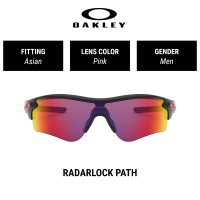
Oakley Radarlock Path OO9206 920637 Men Asian Fitting PRIZM Sunglasses Size 138mm
$349.20$388.00
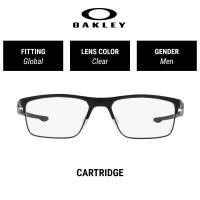
OAKLEY CARTRIDGE OX5137 513701 Men Global Fitting Eyeglasses Size 54mm
$308.70$343.00
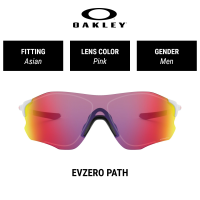
Oakley Evzero Path OO9313 931304 Men Asian Fitting PRIZM Sunglasses Size 138mm
$292.50$325.00
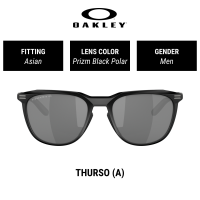
Oakley Thurso (A) (Polarized) - 0OO9286A Asian Fitting Sunglasses Size 54mm
$389.70$433.00
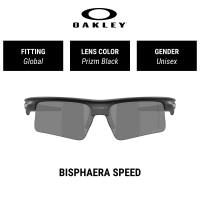
OAKLEY BISPHAERA SPEED Prizm - OO9534 953401 | Global Fit Unisex | 68mm
$325.00
Buy on Lazada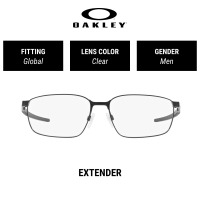
Oakley Ophthalmic Extender OX3249 324901 Men Global Fitting Eyeglasses Size 58mm
$201.60$224.00
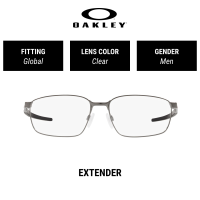
Oakley Ophthalmic Extender OX3249 324904 Men Global Fitting Eyeglasses Size 58mm
$201.60$224.00
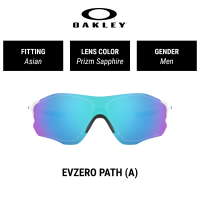
Oakley EVZERO PATH (A) OO9313 931315 Men Asian Fitting PRIZM Sunglasses Size 38mm
$292.50$325.00
About Oakley
Overview
Oakley is an American brand specialising in sports performance eyewear, apparel and lifestyle products. It is best known for its technologically advanced sunglasses, sports goggles, prescription eyewear and distinctive wraparound designs. Founded in 1975 in California by James “Jim” Jannard, the company began by producing motorcycle-related equipment before evolving into one of the world’s most recognised performance eyewear manufacturers. Oakley is currently part of EssilorLuxottica, a global eyewear group that also owns brands such as Ray-Ban.1
EssilorLuxottica describes Oakley as a leading product-design and sports-performance brand, noting that it holds more than 1,300 patents and designs.13
Quick facts
| Item | Information |
|---|---|
| Brand | Oakley |
| Founded | 1975 |
| Founder | James “Jim” Jannard |
| Origin | California, United States |
| Industry | Eyewear, sports performance, apparel, accessories |
| Best known for | Sports sunglasses, performance eyewear and goggles |
| Parent company | EssilorLuxottica |
| Acquired by parent | 2007 |
| Brand positioning | Performance, technology and distinctive design |
| Major markets | Global |
| Core consumers | Athletes, outdoor enthusiasts, active and lifestyle customers |
| Major technologies | Prizm™, O Matter™, Unobtainium®, Plutonite®, HDO® |
| Current categories | Eyewear, goggles, apparel, footwear and accessories |
History and origins
Oakley’s origins differ from those of traditional eyewear companies. In 1975, Jim Jannard established the business after leaving a sales position, initially focusing on products for the motorcycle and motocross sectors. The brand was named after his English Setter, Oakley Anne.9
Rather than beginning with sunglasses, Jannard experimented with motorcycle equipment and materials. A significant early innovation was Unobtainium, a proprietary material developed to provide enhanced grip. This reflected a philosophy that would define the brand: identifying a performance problem, inventing a new solution and converting that solution into a commercial product. This approach became central to Oakley’s development.2
The company subsequently expanded from motorcycle products into goggles and eyewear, eventually making eyewear the core of its business.2
Transition to performance eyewear
Oakley’s early association with motocross, cycling and other action sports provided a strong connection to athletes and demanding physical environments that traditional eyewear brands generally lacked. Instead of treating sunglasses primarily as fashion accessories, Oakley approached them as performance equipment.
This focus led to an emphasis on impact resistance, grip, optical clarity, peripheral vision, lightweight construction, ventilation, helmet compatibility, lens interchangeability and sport-specific optical performance. This approach became one of Oakley’s primary competitive advantages. The brand’s rise was further supported by adoption within cycling, skiing, motocross and other action-sports communities, which served as important channels for building credibility.2
Design philosophy
Oakley’s design identity combines engineering with visual experimentation. While traditional eyewear often begins with a familiar frame shape, Oakley frequently designs frames around specific athletic requirements. This has resulted in sculptural, futuristic and highly wrapped forms. Company heritage materials describe this as a creator mentality that refuses to follow established design conventions.3
The brand’s design DNA can be summarised as a progression from performance and technology to unconventional design and a recognisable identity. This distinct aesthetic allows Oakley products to be identified even when the logo is not immediately visible.
Key technologies
Technology is central to Oakley’s brand identity. The company utilises several proprietary technologies that distinguish it from conventional fashion eyewear brands.
Prizm™
Prizm™ is one of Oakley’s most prominent lens technologies. Rather than simply darkening a lens or changing its colour, Prizm is engineered to manipulate specific wavelengths of light to enhance colour and contrast, helping to reveal visual details in particular environments.4 Oakley develops different Prizm configurations for specific settings, including road cycling, golf, snow, water, everyday use and low-light conditions. This exemplifies the brand’s philosophy of sport-specific product engineering.
Unobtainium®
Unobtainium® is one of Oakley’s earliest and most recognisable proprietary materials. It is used in components such as nose pads and ear socks because its grip increases with perspiration, helping to keep eyewear securely positioned during activity.5 Unobtainium functions simultaneously as a performance technology, a recognisable brand feature and a link to the company’s historical identity.
O Matter™
O Matter™ is a frame material designed to provide a combination of light weight, strength and flexibility.6 It enables Oakley to produce relatively large and aggressive-looking frames without excessive weight.
Plutonite®
Plutonite® is a high-purity optical polycarbonate lens material used as part of Oakley’s impact-protection and UV-protection systems.7 Its use reinforces the brand’s positioning as performance equipment rather than merely fashion eyewear.
High Definition Optics (HDO®)
High Definition Optics (HDO®) is part of Oakley’s optical technology platform, intended to maintain visual clarity and reduce optical distortion. Together, technologies such as Prizm, Plutonite, O Matter and Unobtainium form a technological vocabulary that distinguishes Oakley from conventional eyewear brands.
Product categories
Oakley has expanded beyond sunglasses to encompass a broader product ecosystem.
Eyewear
- Performance sunglasses
- Lifestyle sunglasses
- Prescription eyewear
- Sport-specific eyewear
- Polarised eyewear
- Photochromic options
- Customised eyewear
Goggles
- Ski and snowboard goggles
- Motocross and off-road goggles
- Other sport-oriented protective eyewear
Apparel
- Performance clothing
- Outdoor clothing
- Sportswear
- Lifestyle apparel
Accessories
- Bags
- Headwear
- Gloves
- Eyewear accessories
- Sport accessories
Footwear
Oakley has also expanded into footwear and broader sportswear. EssilorLuxottica describes the brand as having extended beyond sports eyewear into apparel, footwear and accessories.10 The current product structure is organised around both Sport Performance and Lifestyle, with sports categories including cycling, baseball, golf, running, snow, gaming, football, training and outdoor activities.8
Association with sports
Sports are fundamental to Oakley’s identity. The brand maintains particularly strong associations with cycling, snow sports, motocross, surfing, golf, running, baseball, motorsport and outdoor sports.
Oakley’s strategy involves using athletes not only for sponsorship but also as product-development and credibility assets. The brand’s current portfolio continues to feature athlete and signature collections, including products related to cycling and MotoGP.9
Visual identity
Oakley’s visual identity is characterised by its elliptical “O” logo, which is frequently integrated directly into frame architecture. Beyond the logo, the brand is associated with aggressive curves, wraparound lenses, futuristic silhouettes, exposed technical details, sculptural frames, high-contrast colourways, technical-looking materials and large shield lenses.
This aesthetic differs significantly from traditional luxury eyewear companies and can be broadly described as technical, futuristic, athletic and slightly rebellious.
Lifestyle expansion
A significant transformation for Oakley was its movement from pure sports equipment into lifestyle fashion. The brand now operates across two primary segments:
Performance Oakley
Designed for active participation in sport, this segment includes highly wrapped cycling sunglasses, ski goggles and specialised sports eyewear.
Lifestyle Oakley
Designed for everyday wear, these products retain Oakley’s technical DNA but utilise more conventional or fashion-oriented silhouettes.
This distinction is strategic, as Oakley seeks to appeal to performance, active and lifestyle consumers rather than being perceived solely as an athlete’s sunglasses company.10
Iconic design families
Oakley has produced numerous memorable designs over several decades. Key design families include:
- Eye Jacket: A highly influential late-1990s design associated with Oakley’s futuristic aesthetic.
- Razor Blades: An important part of Oakley’s earlier design language and a reference point for later models.
- Sub Zero: Known for its unconventional, minimalist and futuristic construction.
- M Frame: A significant sports-performance platform, especially associated with cycling and other athletic applications.
- Radar: A major performance-sports eyewear family.
- Sutro: A large shield-style design that helped integrate Oakley’s performance aesthetic into contemporary cycling and lifestyle culture.
- Holbrook: A more conventional lifestyle shape that broadened the brand’s appeal to consumers seeking less technical-looking sunglasses.
- HSTN: A newer lifestyle-oriented design combining heritage elements with a contemporary silhouette, originally introduced in 2021.8
Collectively, these families demonstrate how Oakley has repeatedly navigated between technical performance and fashion.
Acquisition by Luxottica
A major turning point occurred in 2007 when Italian eyewear giant Luxottica acquired Oakley for approximately US$2.1 billion.11 Prior to the acquisition, Oakley was an independent company with a strong identity centred on technology, sports and design. Following the transaction, it became part of one of the world’s largest eyewear groups.
Luxottica subsequently merged with Essilor to form EssilorLuxottica. Today, Oakley sits within the EssilorLuxottica portfolio alongside other major brands. The group continues to identify Oakley as one of its key proprietary brands and describes it as a global leader in sports performance.12
Comparison with Ray-Ban
As both are owned by EssilorLuxottica, Oakley and Ray-Ban are sometimes discussed together, though their brand identities differ significantly.
| Feature | Oakley | Ray-Ban |
|---|---|---|
| Core identity | Sports performance | Classic lifestyle and fashion |
| Heritage | Action sports and technology | Aviation, popular culture and classic eyewear |
| Design | Futuristic and technical | Timeless and classic |
| Main strength | Performance eyewear | Iconic lifestyle eyewear |
| Typical visual language | Wraparound, sculptural | Aviator, Wayfarer, classic shapes |
| Consumer mindset | Performance and technology | Style and heritage |
While Ray-Ban focuses on iconic eyewear, Oakley emphasises engineered eyewear. Although there is some overlap in the modern market, this distinction remains relevant.
Market positioning
Oakley occupies a unique position at the intersection of sports, technology, design and fashion. It is neither a luxury fashion house, a mass-market sunglasses company nor solely a technical sporting-goods manufacturer. This intersection has allowed the brand to remain culturally relevant to a diverse consumer base ranging from professional athletes and outdoor enthusiasts to those who simply appreciate the brand’s aesthetic.
Relationship with athletes
Athletes are integral to Oakley’s brand-building strategy. The company has historically collaborated with elite athletes across various sports to communicate that its products are designed for genuine performance conditions. This creates a marketing cycle where athlete endorsement builds performance credibility, which validates product technology, fosters consumer trust and ultimately drives lifestyle adoption. Once a technical product gains recognition among athletes, it can successfully cross over into mainstream fashion.
Innovation and smart glasses
Innovation is central to Oakley’s brand promise. EssilorLuxottica states that Oakley holds more than 1,300 patents and designs, describing innovation and high-performance optics as core to the brand.13 The company’s technological scope encompasses materials, optical geometry, frame construction, fit, impact protection, ventilation, lens interchangeability and sport-specific optical performance.
More recently, Oakley has moved into connected eyewear. EssilorLuxottica’s corporate materials describe the group as developing AI glasses in partnership with Meta under both the Ray-Ban and Oakley brands.15 This represents a continuation of Oakley’s original philosophy, expanding the question of what eyewear can do beyond optical performance. The brand’s future is increasingly positioned around the convergence of eyewear, sports performance, electronics, AI and lifestyle.
Strengths and criticisms
Strengths
- Brand recognition: Distinctive logos and frame designs make Oakley immediately identifiable.
- Technical heritage: Decades of actual performance-product development back the brand, unlike those that simply market sunglasses as “sporty”.
- Athlete credibility: Associations with elite sport reinforce the performance image.
- Proprietary technology: Technologies such as Prizm, Unobtainium and O Matter provide a substantial technical vocabulary.14
- Distinctive design: The brand’s aesthetic differs markedly from conventional eyewear.
- Category breadth: Ability to move from cycling glasses to everyday sunglasses, apparel and accessories.
Criticisms
- Polarising design: The futuristic aesthetic can appear overly aggressive to those preferring understated eyewear.
- Premium pricing: Technical positioning generally places Oakley above mass-market sunglasses brands.
- Strong sports association: The performance identity may be less attractive to consumers seeking traditional luxury or minimalist fashion.
- Corporate ownership: Some consumers may view integration into a large corporation as inconsistent with the rebellious, independent identity associated with the brand’s origins.
Target audience
Oakley is particularly suited to consumers who value performance, technology, outdoor utility, bold design and athletic identity. It is less naturally aligned with those whose primary priorities are understated luxury, traditional European styling, minimalist optical design or purely fashion-oriented eyewear, although the brand does offer products that address some of these preferences.
References
- Unveiling Oakley Heritage in Eyewear Innovation | Oakley® US
- The History of Oakley, Luxottica and your Sunglasses
- Oakley Lens Technology | Oakley® US
- Oakley Frame Technology | Oakley® US
- Oakley Sunglasses, Apparel, & Accessories | Oakley® US
- Oakley Sunglasses, Apparel, & Accessories | Oakley® US
- Oakley – EssilorLuxottica Vision Source Brand Guide
- Oakley HSTN Sunglasses with Matte Black Frame and Prizm Black Polarized Lenses | Oakley® US
- Jim Jannard
- Eyewear
- Oakley Media Hub
- Oakley – Orange County Business Journal
- Retail Associate | Oakley | C | NZ | Queenstown Job Details | EssilorLuxottica Group
- Oakley – Sales Associate Job Details | EssilorLuxottica Group
- essilorluxottica.com