Shop on Lazada
Glico products
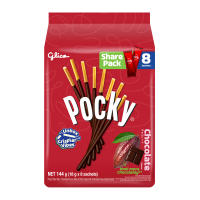
Glico Pocky Chococlate Biscuits Share Pack 8S
$4.89
Buy on Lazada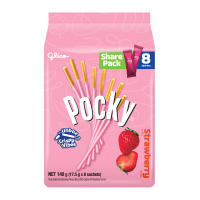
Glico Pocky Strawberry Biscuits Share Pack 8S
$4.89
Buy on Lazada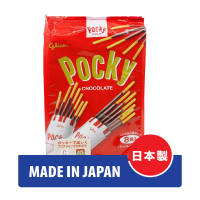
Glico Pocky Choco (Family Size)
$5.50
Buy on Lazada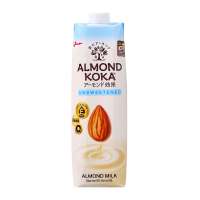
Glico Almond Koka Unsweetened 1L
$6.50
Buy on Lazada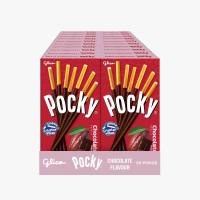
Glico Pocky Chocolate (Box Of 20)
$28.25
Buy on Lazada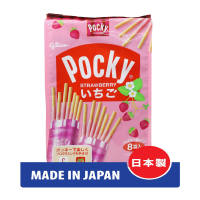
Glico Pocky Straw (Family Size)
$5.50
Buy on Lazada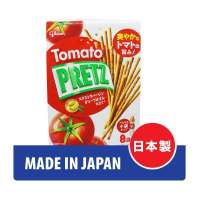
Glico Tomato Pretz
$5.05
Buy on Lazada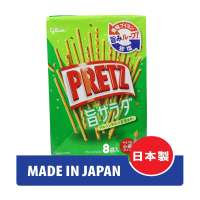
Glico Pretz Salad Family Size
$5.05
Buy on LazadaAbout Glico
Glico (Japanese: 江崎グリコ, Ezaki Glico) is a major Japanese food and confectionery company best known internationally for Pocky, Pretz, and the original Glico Caramel. Founded by Riichi Ezaki in Osaka in 1922, the company was established on the philosophy of improving public health through food. Today, Glico operates across Japan and international markets in Asia, Europe, and North America, with business segments spanning confectionery, dairy products, nutrition, food ingredients, and other food-related categories.1
The corporate philosophy is expressed as “A Wholesome Life in the Best of Taste,” while a newer corporate purpose, introduced for the centenary in 2022, is “Healthier days, Wellbeing for Life.”2
Quick facts
| Category | Information |
|---|---|
| Company | Ezaki Glico Co., Ltd. |
| Common name | Glico |
| Japanese | 江崎グリコ株式会社 |
| Founded | 11 February 1922 |
| Founder | Riichi Ezaki |
| Origin | Osaka, Japan |
| Industry | Food & beverage, confectionery, nutrition |
| Best known for | Glico Caramel, Pocky, Pretz, Bisco and other food products |
| Corporate philosophy | “A Wholesome Life in the Best of Taste” |
| 2022 purpose | “Healthier days, Wellbeing for Life” |
| Employees | 5,588 consolidated employees |
| 2025 consolidated sales | ¥361.39 billion |
| Manufacturing facilities | 13 |
| Overseas companies | 19 |
| International footprint | Japan, Asia, Europe and North America |
The employee and corporate figures above represent Glico’s latest published data, while the sales figure applies to the fiscal year ended 31 December 2025.3
Origins and founding
The history of Glico begins with Riichi Ezaki, who was born in Saga Prefecture in 1882. Prior to establishing the company, Ezaki researched the nutritional properties of glycogen, a substance involved in energy storage within living organisms. In 1919, he confirmed that oyster broth contained substantial amounts of glycogen.4
According to company history, a significant motivation for his work stemmed from his son’s illness with typhus. Ezaki associated glycogen-rich food with his son’s recovery and became convinced that diet could play a vital role in improving health.5 This led him to develop a nutritious caramel containing glycogen, resulting in Glico Caramel, the product that gave the company its name.
The product was test-marketed before being officially sold at Mitsukoshi Department Store in Osaka on 11 February 1922. Glico subsequently adopted 11 February as its founding day.6 Consequently, Glico did not originate simply as a confectionery manufacturer; its founding concept was closer to “health through food,” utilising confectionery as a vehicle to deliver nutrition in an appealing form.7
The Glico running man
One of the most recognisable elements of the Glico brand is the running man with arms raised towards the finish line. This image appeared on packaging from the earliest days, representing a runner crossing the finish line and becoming associated with achievement, vitality, health, and victory. The original packaging combined the runner with the company’s red branding and heart-shaped caramel.8
The image eventually transcended packaging to become a symbol of Glico itself. Its most famous real-world manifestation is the enormous Glico running-man sign in Dotonbori, Osaka, which remains one of the city’s best-known landmarks.
Early marketing innovations
Glico was innovative not only in food production but also in marketing and product experience. From the outset, Glico Caramel was linked to children’s play. In 1922, the company began including picture cards inside packages. Small toys were introduced later, and by 1929, packaging had been redesigned to accommodate a small toy at the top of the box.9
This reflected Ezaki’s belief that eating and playing were both essential activities for children. Glico thus developed an early form of experiential marketing, where customers received entertainment alongside their purchase. The company also experimented with vending machines incorporating movies, demonstrating an aggressive exploration of novel advertising and distribution methods during its formative years.
Expansion before and after World War II
During the 1920s and 1930s, Glico expanded beyond its original Osaka market, establishing factories and entering overseas markets, including China.10
However, World War II devastated the company. By the end of the war in 1945, domestic and overseas facilities had been destroyed, and the company had effectively lost its physical assets.11 Despite this, Glico rebuilt its operations post-war, reviving products such as Bisco and Glico Caramel before expanding into numerous new categories. Products including Almond Chocolate, Pretz, Giant Cone, and Pocky became important additions to the portfolio.12 This rebuilding period transformed Glico from a single-product caramel company into a diversified food manufacturer.
The birth of Pocky
Glico’s most internationally famous product is Pocky. Launched in Japan in 1966, 44 years after the original Glico Caramel, it consists of a crisp biscuit stick partially coated with chocolate. The uncoated end allows the snack to be held without getting chocolate on the fingers.13
The product was designed around a functional concept: a chocolate-covered snack that could be eaten cleanly by holding the uncoated end. The name Pocky derives from the Japanese onomatopoeic sound “pokkin pokkin,” referring to the crisp snapping sound made when eating it.14 The combination of biscuit, chocolate, convenient shape, clean handling, portable packaging, and distinctive sound gave Pocky a highly recognisable identity.
Global expansion of Pocky
Pocky was internationalised gradually rather than becoming a worldwide brand immediately. Key milestones include:
- 1970 — Thai Glico established, marking entry into international markets.
- 1982 — Entry into France/Europe; Pocky marketed as MIKADO.
- 1987 — Expansion into Canada.
- 1995 — Shanghai Ezaki Glico Foods established in China.
- 2003 — Ezaki Glico USA established in California.
- 2014 — Glico Indonesia established.
- 2017 — Glico Malaysia established.15
This gradual expansion established Pocky as one of Japan’s best-known exported snack brands. Notably, Pocky carries different identities in various markets; in much of Europe, it is sold as MIKADO, while in China it is known as 百奇 (Bǎiqí).
Major brands and products
While Pocky is the international icon, Glico’s portfolio is substantially broader.
Glico Caramel
The original product and namesake of the company, introduced in 1922. It established the fundamental Glico concept of combining confectionery with nutritional positioning.16
Pocky
The company’s best-known global snack. While the basic product is a partially chocolate-coated biscuit stick, Glico has developed numerous flavours and premium versions over decades.
Pretz
A savoury or flavoured pretzel-like biscuit stick introduced during the post-war expansion. Pretz remains one of Glico’s long-running core products.17
Bisco
A long-standing Japanese biscuit associated with children’s nutrition and everyday snacking. It was among the products revived after World War II.18
Giant Cone
An ice cream product added to the portfolio during the post-war expansion era.19
Pucchin Purin
A well-known Japanese pudding product introduced during the company’s expansion into desserts in the 1970s.20
Seventeen Ice
Another prominent product from Glico’s dessert and ice cream division.21
Diversification into a food group
Glico has diversified significantly beyond confectionery. Current business segments include:
- Health & Food: Functional foods, nutritional products, and health-oriented food items.
- Dairy: Dairy products, ice cream, and related items.
- Nutritious Confectionery: Pocky, Pretz, Bisco, and other snacks.
- Food Ingredients: Ingredients and related food technologies.
- Other Businesses: Additional food-related activities in Japan and overseas.22
This diversification means Glico is more accurately described as a Japanese food and nutrition group than solely a candy manufacturer.
Corporate philosophy
Glico’s corporate philosophy, “A Wholesome Life in the Best of Taste,” combines two concepts present throughout its history: health/wholesomeness (food contributing positively to life) and taste/enjoyment (nutritious food being enjoyable). This traces back to Riichi Ezaki’s original vision.23
In 2022, marking the 100th anniversary, the group introduced a new purpose: “Healthier days, Wellbeing for Life.” This is described as an evolution of its longstanding commitment to health.24
Approach to innovation
Innovation is central to Glico’s identity and manifests in several forms:
Product innovation
The company consistently creates new flavours, formats, and categories. Pocky exemplifies this, having expanded into almond, strawberry, premium, and other varieties since launch.
Packaging innovation
Distinctive red packaging for both Glico Caramel and Pocky is integral to brand recognition.
Marketing innovation
Glico has experimented with toys, picture cards, vending machines, and unconventional advertising. For instance, upon discovering consumers using Pocky as a drink stirrer in cafés, the company incorporated this behaviour into marketing campaigns.25
International adaptation
Rather than exporting Japanese products unchanged, Glico adapts brands for local markets, as seen with the MIKADO name in Europe and 百奇 in China.
Pocky as a cultural brand
Pocky has evolved beyond a mere snack. Its distinctive shape ensures high recognition, while the concept of sharing a box is central to its positioning. Glico describes Pocky as suitable for both individual consumption and sharing, reflected in the long-running “Share happiness!” campaign.26
In 2016, Glico launched Pocky Day to celebrate the product’s 50th anniversary. The date, 11 November (11/11), was chosen because the numerals visually resemble four Pocky sticks.
International operations
Glico’s overseas operations cover Asia, Europe, and North America, comprising 19 overseas companies according to the latest corporate overview. Consolidated sales for 2025 illustrate the geographical scale of the group:
| Region | 2025 Sales |
|---|---|
| Japan | ¥270.688 billion |
| China | ¥47.595 billion |
| Southeast Asia | ¥20.194 billion |
| USA | ¥15.942 billion |
| Other regions | ¥6.971 billion |
| Total | ¥361.390 billion |
While Japan remains the largest market, China, Southeast Asia, and the United States represent significant international business segments.
Current status
As of the latest published corporate information, Glico reports:
- 5,588 consolidated employees
- ¥361.39 billion in consolidated net sales for 2025
- 13 manufacturing facilities
- 8 domestic companies
- 19 overseas companies
- Operations across Japan, Asia, Europe, and North America
The modern business is broadly understood through four themes: Food + Health + Taste + Innovation. This combination represents the evolution of the concept Riichi Ezaki introduced over a century ago.
Timeline
| Year | Event |
|---|---|
| 1919 | Riichi Ezaki investigates glycogen in oyster broth. |
| 1921 | Glico Caramel is developed and test-marketed. |
| 1922 | Glico Caramel begins sales at Mitsukoshi in Osaka; Glico’s founding date. |
| 1922 | Picture cards begin appearing with Glico products. |
| 1927 | Small toys replace picture cards. |
| 1929 | Toy placement is incorporated into redesigned packaging. |
| 1930s | Glico expands manufacturing and overseas activities. |
| 1945 | World War II destroys Glico’s domestic and overseas facilities. |
| Post-1945 | Glico rebuilds and revives its major products. |
| 1966 | Pocky launches in Japan. |
| 1970 | Thai Glico established. |
| 1970s | Glico expands into desserts and ice cream. |
| 1982 | Expansion into France/Europe; Pocky sold as MIKADO. |
| 1987 | Expansion into Canada. |
| 1995 | Shanghai Ezaki Glico Foods established. |
| 2003 | Ezaki Glico USA established. |
| 2014 | Glico Indonesia established. |
| 2016 | Pocky celebrates 50 years; Pocky Day campaign launched. |
| 2017 | Glico Malaysia established. |
| 2022 | Glico celebrates its 100th anniversary and introduces “Healthier days, Wellbeing for Life.” |
| 2025 | Consolidated sales reach ¥361.39 billion. |
References
- Overview | Glico Global Official Site
- History | Ezaki Glico USA Corporation
- Annual Report 2025
- Founder’s ideal | Glico Asia Pacific
- 沿革 | 〖公式〗江崎グリコ(Glico)
- Corporate History | Glico Asia Pacific
- 会社の歴史 | 〖公式〗江崎グリコ(Glico)
- 公司的历史 | Shanghai Ezaki Glico Foods Co., Ltd.
- Pocky’s History|EZAKI GLICO Pocky
- About Pocky|EZAKI GLICO Pocky
- Pocky’s History|EZAKI GLICO Pocky
- Ezaki Glico : >> Annual Report 2025 | MarketScreener
- EZAKI GLICO CO.,LTD. – Annual Report 2025 | FinancialFilings
- 2206 江崎グリコ | 有報資料 – 有価証券報告書-第120期(2024/01/01-2024/12/31)(2025/03/26 9:16提出) | IRBANK
- Annual Report | Glico Global Official Site
- Pocky’s History|EZAKI GLICO Pocky
- Locations・Access | Glico Global Official Site
- Sejarah perusahaan | PT Glico Indonesia
- アニュアルレポート | 〖公式〗江崎グリコ(Glico)
- セグメント別売上高の概況 | 〖公式〗江崎グリコ(Glico)
- IR情報 | 〖公式〗江崎グリコ(Glico)
- CSR Report | Glico Global Official Site
- バックナンバー | 〖公式〗江崎グリコ(Glico)
- 沿革 | Shanghai Ezaki Glico Foods Co., Ltd.
- 商品的历史 | Shanghai Ezaki Glico Foods Co., Ltd.
- 江崎グリコ株式会社 – 関係会社の状況(2025年12月期) 有価証券報告書 レポート抜粋 (健全!どんぶり会計β版)