Shop on Lazada
Gucci products
![💯% Authentic Gucci Bamboo EDP Women 75ml [Free high-end gifts]](https://sg-live.slatic.net/p/9e2363d6070646094313aae03a0240fd.jpg_200x200q80.jpg)
💯% Authentic Gucci Bamboo EDP Women 75ml [Free high-end gifts]
$66.60$425.00
![Gucci Flora Gorgeous Gardenia EDP for Women (100ml) [Brand New 100% Authentic Perfume FragranceCart] Eau de Parfum Woman Pink Gold Floral](https://sg-live.slatic.net/p/32d09e5bcaca200207b7e41f5007a80e.jpg_200x200q80.jpg)
Gucci Flora Gorgeous Gardenia EDP for Women (100ml) [Brand New 100% Authentic Perfume FragranceCart] Eau de Parfum Woman Pink Gold Floral
$149.00$275.00
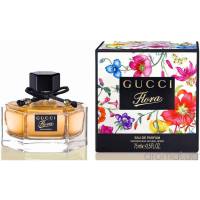
Gucci Flora Eau de Parfum for Women 75ml
$80.75$200.00
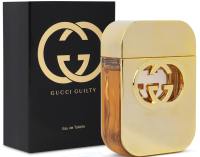
Gucci Guilty for Women Edt 75ml
$85.50$150.00
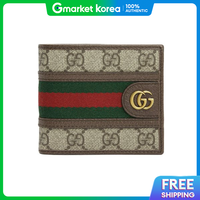
Gucci | 26Ss Gg Ophidia Fold Wallet Beige 597606 96Iwt 8745
$668.67$1,340.44
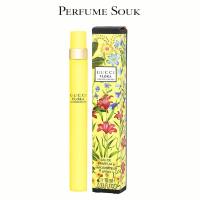
Gucci Flora Gorgeous Orchid Eau de Parfum For Women 10ml
$19.00$75.00
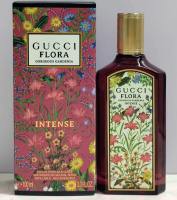
Gucci Flora Gorgeous Gardenia Edp Intense for Women 100ml (2025)
$128.25$250.00
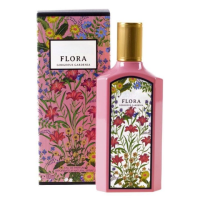
Gucci Flora Gorgeous Gardenia EDP Eau de Parfum for Women 100ml
$128.25$270.00
About Gucci
Gucci, officially Guccio Gucci S.p.A., is an Italian luxury fashion house established in Florence in 1921 by Guccio Gucci. Recognised globally for its leather goods, handbags, footwear, ready-to-wear collections, accessories, jewellery, watches, fragrances and lifestyle products, it ranks among the world’s most prominent luxury brands. Gucci operates as part of the French luxury group Kering.1
As of 2026, the house has entered a new creative chapter under Demna, who was appointed Artistic Director in 2025 following a decade at Balenciaga.2
Basic information
| Category | Information |
|---|---|
| Full legal name | Guccio Gucci S.p.A. |
| Brand name | Gucci |
| Founded | 1921 |
| Founder | Guccio Gucci |
| Founded in | Florence, Italy |
| Industry | Luxury fashion |
| Parent company | Kering |
| Headquarters | Florence, Italy |
| Main products | Leather goods, handbags, shoes, clothing, accessories, jewellery, watches, beauty, décor |
| Current Artistic Director | Demna |
| Current CEO | Stefano Cantino |
| President & CEO (Kering history) | Francesca Bellettini |
| Key identity | Italian craftsmanship and fashion innovation |
| Best known for | GG monogram, Horsebit, Bamboo, Jackie, Flora, green-red-green Web stripe |
Leadership titles may shift during corporate transitions. Kering’s current Gucci profile identifies Demna as Artistic Director and notes Francesca Bellettini’s 2025 appointment as President and CEO, whilst other contemporary reports cite Stefano Cantino as CEO.3
Origins and early history
The foundation of Gucci lies with Guccio Gucci, who was born in Florence in 1881. During his youth, he relocated to London and worked at The Savoy hotel, where exposure to affluent international travellers, refined English style and luxury luggage profoundly influenced his future enterprise. Upon returning to Florence, he eventually established his own business.
In 1921, Guccio Gucci opened his first boutique on Via della Vigna Nuova in Florence, initially specialising in luggage and leather goods.4 From its inception, the brand’s identity transcended simple Italian fashion, synthesising Florentine craftsmanship, Italian leatherworking, English-inspired elegance, travel, equestrian culture and an aristocratic lifestyle. This fusion became the bedrock of Gucci’s visual language.
During its early decades, the company focused heavily on luggage, travel accessories, handbags and leather goods, earning a reputation for superior craftsmanship. In the late 1930s, Gucci introduced canvas into its product range. The Diamante pattern, featuring a repeated diamond motif, emerged as one of the house’s earliest recognisable signatures and later inspired the iconic GG monogram canvas.
World War II and material innovation
Material shortages during World War II compelled Gucci to experiment with alternatives. This period fostered the development of unconventional materials and construction techniques, establishing a characteristic approach to design that would define the brand in later years.
Iconic products and design codes
Gucci has created numerous products that have achieved recognition far beyond the fashion industry, often transforming practical solutions into luxury signatures.
Bamboo 1947
Introduced in 1947, the Bamboo bag is distinguished by its curved bamboo handle, a design born from post-war material constraints. The bamboo could be shaped and polished into an elegant form, creating one of Gucci’s most enduring icons. Kering identifies the Bamboo 1947 as one of the house’s historic classics, representing its connection to craftsmanship and material experimentation.5
Horsebit loafer
The Horsebit 1953 loafer features a metal horsebit detail referencing Gucci’s longstanding relationship with equestrian culture. Since its introduction, it has remained one of the most enduring luxury footwear designs in fashion history.6
Jackie and Flora
The Jackie handbag traces its lineage to the 1960s and became strongly associated with celebrities, including Jackie Kennedy, whose frequent use of the style cemented its popular name. Similarly, the Flora motif, introduced in the 1960s, provided a colourful floral contrast to the house’s more masculine equestrian and monogram elements, becoming one of Gucci’s most recognisable decorative patterns.
GG monogram and Web stripe
The interlocking GG logo represents the initials of founder Guccio Gucci and has evolved into one of the world’s most recognisable luxury monograms. Another key signature is the green-red-green Web stripe, which originates from traditional saddle equipment and equestrian heritage. Over time, this stripe has functioned as a visual shorthand for the brand across handbags, shoes, belts, luggage, clothing and accessories, serving as a logo even when the word GUCCI is absent.
Expansion and ready-to-wear
Following the establishment of the business by Guccio Gucci, his sons played pivotal roles in its expansion. Aldo Gucci, in particular, was instrumental in transforming the Florentine leather-goods business into an international luxury brand. During the postwar period, Gucci cultivated a clientele comprising aristocrats, Hollywood celebrities, wealthy travellers and international jet-set figures, associating the brand with a comprehensive luxury lifestyle rather than merely leather goods.
A significant milestone occurred in 1953 with the opening of Gucci’s first store in New York City, marking the beginning of major international expansion.6 This strategic move capitalised on America’s growing influence as a consumer market and solidified the brand’s association with Italian glamour, Hollywood, travel and celebrity culture.
Although initially renowned for leather goods, Gucci began producing ready-to-wear in the mid-1960s and opened a dedicated clothing store at 699 Fifth Avenue in New York in 1972.7 This transformation established Gucci as a complete fashion house, expanding its product universe to include women’s and men’s clothing, shoes, handbags, accessories, scarves, jewellery, watches, fragrances and home products.
Corporate evolution and family conflict
The Gucci family later experienced serious internal conflicts regarding ownership, management and succession. By the late 1980s and early 1990s, the family increasingly lost control of the business, marking a transition from a family-controlled Italian company to a professionally managed global luxury corporation.
In 1999, Gucci became part of what is now Kering, the French luxury group that also owns Saint Laurent, Balenciaga and Bottega Veneta.8 While Gucci retains its Italian cultural identity and heritage, it operates within a multinational luxury portfolio. This distinction remains fundamental: Gucci is Italian in origin, but its parent company is French.
Creative directors
Tom Ford (1994–2004)
A pivotal moment in Gucci’s modern history arrived in 1994 when Tom Ford became Creative Director.8 Ford radically reimagined the brand’s image, introducing a sensual, glamorous, provocative and minimalist aesthetic characterised by 1970s-inspired glamour, sharp tailoring and metallic details. He demonstrated that a heritage luxury brand could be reinterpreted rather than merely preserved, establishing a model where heritage provides the foundation and the creative director supplies the contemporary identity.
Frida Giannini (2006–2014)
Succeeding Ford, Frida Giannini became Creative Director in 2006. She emphasised Gucci’s historical codes, offering a polished and feminine interpretation of archives such as Flora, Bamboo, Horsebit and Italian glamour. Her tenure reinforced the notion that Gucci could modernise without abandoning its heritage.
Alessandro Michele (2015–2022)
Alessandro Michele, appointed Creative Director in 2015, orchestrated one of Gucci’s most dramatic transformations.14 Rejecting minimalism, he introduced a maximalist, romantic, eclectic and gender-fluid aesthetic that mixed historical references with contemporary street culture. Under Michele, products like the GG belt, Ace sneakers, Dionysus bag and Princetown loafer became cultural phenomena. The brand became synonymous with oversized silhouettes, vintage references, elaborate runway shows and strong celebrity collaborations, making it one of the most culturally visible luxury brands of the 2010s.
Sabato De Sarno (2023–2025)
Following Michele’s departure, Sabato De Sarno became Creative Director in 2023.13 His debut collection, Ancora, shifted the brand towards a more streamlined, contemporary language emphasising burgundy tones, refined tailoring, modern silhouettes and understated sensuality rooted in archival codes.12
Demna (2025–present)
In 2025, Gucci appointed Demna as Artistic Director, initiating the current creative chapter.9 Previously influential at Balenciaga for roughly a decade, Demna’s approach involves looking toward the future through the past, utilising Gucci’s archives and heritage as raw material for a new creative identity.1011
Cultural impact and celebrity
Celebrity culture has historically been integral to Gucci’s visibility. The brand maintains mutually beneficial relationships with figures in Hollywood, music, fashion, sports and art, leveraging campaigns, runway appearances and ambassador roles to maintain cultural relevance. This dynamic was dramatised in the 2021 film House of Gucci, directed by Ridley Scott. Starring Lady Gaga, Adam Driver, Al Pacino, Jeremy Irons and Jared Leto, the film depicted the family’s internal conflicts and the 1995 murder of Maurizio Gucci. While bringing the brand’s complex history to a global audience, the film should be viewed as a dramatic interpretation rather than a documentary account.
Under Alessandro Michele, Gucci’s cultural power extended significantly to social media and younger consumers, blending heritage with irony, youth culture, art and internet culture. This evolution helped position Gucci as a dominant force in digital luxury discourse.
Business model and financial scale
Gucci operates at the luxury end of the fashion industry, where value is derived not only from materials and manufacturing but from the brand’s name, design, heritage and cultural status. The business model relies on direct retail, scarcity and exclusivity to maximise perceived value rather than unit volume. Kering reported that directly operated stores accounted for 92% of Gucci’s total sales in 2025.16
Financially, Gucci remains central to Kering’s portfolio. According to Kering’s 2025 financial report, Gucci generated approximately €5.992 billion in revenue in 2025, compared with €7.650 billion in 2024, representing a 22% year-over-year decline on a reported basis.16 The group also reported approximately 17,497 average full-time-equivalent employees for Gucci in 2025.17 These figures reflect both the brand’s immense scale and the challenges accompanying its current creative and strategic transition.
Kering provides corporate infrastructure, capital allocation and group-level resources, while Gucci maintains its distinct brand identity, creative direction and product development.18
Product categories
Gucci’s contemporary offering spans multiple categories:11
- Fashion: Women’s and men’s ready-to-wear, outerwear, knitwear, tailoring, denim
- Leather goods: Handbags, shoulder bags, totes, backpacks, luggage, small leather goods
- Shoes: Loafers, sneakers, boots, sandals, heels
- Accessories: Belts, wallets, scarves, hats, sunglasses, gloves
- Jewellery: Fine jewellery, fashion jewellery
- Watches: Gucci watches
- Beauty: Fragrances, makeup, other beauty products
- Lifestyle: Home décor, tableware, selected lifestyle objects
Brand identity and market position
Gucci occupies a distinctive position among major luxury houses due to its ability to combine highly recognisable logos and heritage motifs with experimental fashion. Its visual identity is anchored by recurring elements: the GG monogram, Horsebit, Bamboo, green-red-green Web stripe, Flora motif and interlocking G logo. Central to this identity is Italian craftsmanship, particularly in leatherworking and artisanal production, alongside an eclecticism that fuses traditional and modern, masculine and feminine, and formal and casual influences.
If personified, Gucci’s brand personality is confident, glamorous, eccentric, creative, luxurious, provocative, playful and fashion-forward. This contrasts with more restrained, craftsmanship-focused houses like Hermès. The brand’s greatest asset is its recognition; over a century of accumulated cultural associations—from Florentine craftsmanship to Hollywood celebrity and youth culture—allows Gucci products to be identified instantly even without explicit branding.
However, this recognition presents a challenge. Gucci must constantly balance heritage with innovation, exclusivity with accessibility, and commercial success with artistic credibility. Every creative director faces the fundamental task of making the brand feel new without losing its essential character. As of August 2026, with Demna at the helm, Gucci is attempting to revitalise its legacy through a strong contemporary aesthetic while restoring commercial momentum following recent financial pressures.
Key dates in Gucci history
- 1921: Guccio Gucci opens his first shop in Florence.
- 1947: Bamboo bag introduced.
- 1953: First New York store opens; Horsebit loafer launched.
- 1960s: International celebrity profile grows; Flora and signature codes emerge.
- 1970s: Ready-to-wear and international fashion expansion accelerate.
- 1994: Tom Ford becomes Creative Director.
- 1999: Gucci joins Kering.
- 2015: Alessandro Michele becomes Creative Director.
- 2023: Sabato De Sarno becomes Creative Director.
- 2025: Demna becomes Artistic Director, beginning the current creative chapter.15
References
- History of GUCCI | GUCCI® INT
- Gucci | Couture & Leather Goods | Kering
- Gucci
- History of GUCCI | GUCCI® CA
- Gucci | Couture & Leather Goods | Kering
- Kering.com – Maison Gucci | Kering
- Gucci | Maison Gucci | Kering
- Kering.com – Maison グッチ | Kering
- History – Gucci Careers
- Kering – Press Release – First-quarter 2025 revenue
- Demna appointed Artistic Director of Gucci | Kering
- Meet The New Gucci Designer, Sabato De Sarno | Vogue
- Sabato De Sarno appointed Creative Director of Gucci | Kering
- GUCCI – Museo del Marchio Italiano
- History – Gucci Careers
- Gucci Financials | Fashionbi
- GUCCI历史传承-古驰品牌历史-古驰GUCCI中国官方网站
- 关于古驰GUCCI-古驰品牌-古驰GUCCI中国官方网站