Shop on Lazada
Hada Labo products
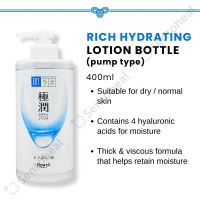
Hada Labo Gokujyun Hydrating Series - Milk/ Cream/ Lotion Bottle/ Refill - Made in Japan - Sentoheal
$19.80$24.90
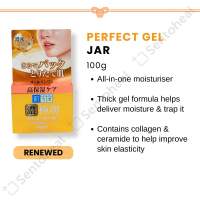
Hada Labo Premium Gokujyun Hydrating Series - Lotion/ Milk/ Makeup Remover/ Bottle/ Refill- Made in Japan - Sentoheal
$17.90$22.90
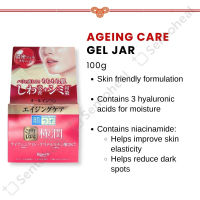
Hada Labo Gokujyun Aging Care Hydrating Series - Lotion/ Milk/ Bottle/ Refill/ Ageing Care - Made in Japan
$18.30$22.90
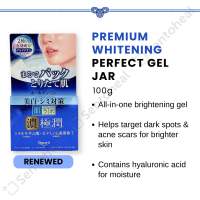
Hada Labo Premium Shirojyun Whitening Series - Lotion/ Milk/ Moist/ Ceam/ Bottle/ Refill - Made in Japan
$19.20$22.90
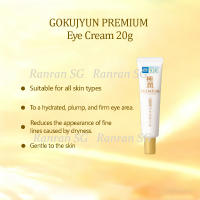
Hada Labo Gokujyun Premium Hyaluronic Acid Lotion (170ml) - Hydrating Toner for Face Made in Japan | For Dry Dehydrated Skin
$11.63$17.90
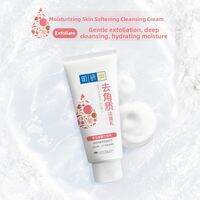
Hada Labo | Cleansing Moisturizing Pore Purifying Facial Cleanser 100g facial cleansers face wash face cleanser
$10.19$12.65
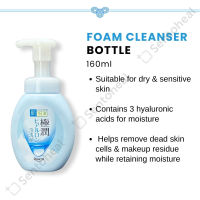
Hada Labo Gokujyun Moist Cleanser series - Face wash - Made in Japan
$8.70$12.90
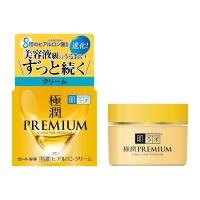
Hada Labo Gokujyun Premium Hydrating Lotion/Milk/Cream/Gel (8 Types) - Bottles/Tubs/Refill
$20.50$24.90
About Hada Labo
Hada Labo is a Japanese skincare brand developed by Rohto Pharmaceutical Co., Ltd., a long-established pharmaceutical and healthcare company. Launched in 2004, the brand was built on the premise that skincare should supply the skin with essential elements while avoiding unnecessary ingredients and elaborate formulations. Its name, Hada Labo (肌ラボ), translates to “Skin Laboratory.”
The brand is widely recognised for its focus on hydrating skincare and hyaluronic acid (HA), particularly through its signature Gokujyun line. From a single hydration-centric concept, Hada Labo has expanded into a comprehensive portfolio addressing moisturising, brightening, anti-ageing, cleansing and other skincare concerns.
Basic information
| Category | Information |
|---|---|
| Brand | Hada Labo |
| Japanese name | 肌ラボ |
| Meaning | “Skin Laboratory” |
| Founded | 2004 |
| Country of origin | Japan |
| Parent company | Rohto Pharmaceutical Co., Ltd. |
| Industry | Skincare / cosmetics |
| Main focus | Hydration, skin conditioning and targeted skincare |
| Signature ingredient | Hyaluronic acid |
| Brand philosophy | “Perfect × Simple” |
| Major market | Japan and other Asian/international markets |
Rohto officially lists Hada Labo among its skincare brands, while its Indonesian subsidiary describes it as skincare developed by Rohto Pharmaceutical Japan under pharmaceutical-oriented quality standards.1
History
Origins
Hada Labo was created during a period when Japanese consumers were increasingly seeking skincare products formulated around specific functional ingredients, rather than cosmetics marketed primarily through fragrance, packaging or luxurious imagery.
According to Rohto’s account of the brand’s development, the concept emerged in 2003 when product planner Yuri Muramoto observed growing consumer interest in ingredient-focused cosmetics. Although hyaluronic acid and urea were already present in some skincare products, they remained relatively niche. The team identified an opportunity to build a new brand centred on the scientific potential of these ingredients.13
Development proceeded rapidly. Rohto states that the Hada Labo project moved from initial planning to commercialisation in approximately six months, with the R&D team formulating a product that combined the functional properties of hyaluronic acid with a pleasant cosmetic texture.14
2004 launch
Rohto officially records 2004 as the year Hada Labo launched as a basic skincare brand.14
The original concept deliberately diverged from conventional beauty brands. Rather than offering a complicated multi-step luxury experience, Hada Labo focused on simple formulas centred on useful ingredients. This philosophy was eventually summarised as:
“Perfect × Simple”
Rohto describes this approach as selecting what is genuinely necessary for the skin and minimising elements that are not.2
Meaning of the name
The Japanese name is written 肌ラボ.
- 肌 (hada) = skin
- ラボ (labo) = laboratory, derived from “laboratory”
Thus, Hada Labo ≈ “Skin Laboratory.”25
The name reflects the brand’s positioning: rather than presenting itself as a glamorous cosmetics label, Hada Labo emphasises research, ingredients and skin functionality. This aligns with its parent company’s background. Rohto began as a Japanese pharmacy business in the late 19th century and has since expanded into pharmaceuticals, healthcare and cosmetics.26
Parent company: Rohto Pharmaceutical
Hada Labo is a brand of Rohto Pharmaceutical Co., Ltd.
Rohto’s history dates to 1889, when Yasutami Yamada established a family pharmacy in Osaka. The business eventually evolved into Rohto Pharmaceutical.25
Over subsequent decades, Rohto expanded beyond pharmaceuticals into areas including:
- Eye care
- Dermatological products
- Cosmetics
- Skincare
- Contact-lens products
- Consumer healthcare
In 1988, Rohto acquired The Mentholatum Company, providing the group with a significant international presence in skincare and healthcare.27
Consequently, Hada Labo originates from a company with a stronger pharmaceutical and healthcare heritage than a typical independent cosmetics startup.
Brand philosophy
The central philosophy of Hada Labo is minimalism combined with functionality. The core principle is to provide the skin with what it needs while avoiding additives that serve little purpose.
The brand’s philosophy emphasises three broad principles:
Simple
Hada Labo traditionally avoids making skincare an unnecessarily complicated experience. The focus is placed on the function of the formula rather than luxury presentation.24
Effective
The brand concentrates on ingredients with recognisable skincare functions, particularly moisturising agents such as hyaluronic acid.4
Reliable
As a Rohto brand, Hada Labo’s identity is closely connected with pharmaceutical-style research, testing and quality control.3
International brand materials similarly describe the philosophy as ideal, simple and reliable, with an emphasis on minimal ingredient lists.23
Hyaluronic acid
The ingredient most strongly associated with Hada Labo is hyaluronic acid. A naturally occurring substance involved in maintaining water within tissues, it is valued in skincare primarily as a humectant that helps attract and retain moisture.
Hada Labo’s original concept was to make this hydration-focused ingredient the centrepiece of an affordable, everyday skincare routine. Rohto states the brand was inspired by research into hyaluronic acid and the recognition of its value for skin hydration.4
Multiple types of hyaluronic acid
A key differentiator for Hada Labo has been the use of different forms of hyaluronic acid in specific formulations. Rather than treating hyaluronic acid as a singular moisturising agent, the brand has experimented with various forms to achieve distinct hydration characteristics.
This approach became prominent in the Gokujyun Premium range. Historical materials document the introduction of a Premium formula containing five types of hyaluronic acid in 2015.15
Product families
Hada Labo’s exact lineup varies by country and evolves over time; catalogues in Japan, Indonesia, the Philippines and other markets are not necessarily identical.5
In Indonesia, for example, Rohto currently lists several major families including Gokujyun, Shirojyun, Gokujyun Alpha, Tamagohada and related products.17
Gokujyun — hydration
Gokujyun (極潤) is the best-known Hada Labo line, with a primary focus on moisturisation and hydration.
Typical products include:
- Lotion
- Milk
- Face Wash
- Serum
- Cream
- Cleansing Oil
- Sheet Mask
The Hada Labo “lotion” requires clarification, as it does not necessarily correspond to Western body lotion. In Japanese skincare terminology, it functions closer to a hydrating toner or skin conditioner used after cleansing and before subsequent moisturising steps. Rohto Indonesia explicitly describes its lotion as a hydrating toner.12
Gokujyun Premium — intensive hydration
Gokujyun Premium builds upon the basic Gokujyun concept with richer formulations positioned towards users seeking more intensive hydration. The Premium range represented an important evolution of the brand’s HA-focused identity, with Rohto introducing higher-level moisturising formulations in 2015.1822
Shirojyun — brightening
Shirojyun (白潤) is the brightening-oriented family. Rather than focusing exclusively on hydration, Shirojyun combines moisturising care with ingredients intended to improve the appearance of uneven tone and dullness.
Ranges typically include lotions, face washes, serums and creams.1920 In the context of Asian skincare, “whitening” generally refers to brightening and evening skin tone, rather than altering natural skin colour.
Gokujyun Alpha — anti-ageing
Gokujyun Alpha addresses mature-skin concerns, combining:
- Hydration
- Firmness
- Anti-ageing care
Products in this range include lotions, milks, serums and face washes.6
Tamagohada — exfoliation and cleansing
Tamagohada differs from the Gokujyun lines, focusing on cleansing and gentle exfoliation. Products are designed to remove excess oil, impurities and dead skin cells, often described as a gentle peeling approach.7
The “lotion” terminology
The term “lotion” in the Hada Labo context can cause confusion for consumers accustomed to Western skincare conventions.
- Western context: lotion → moisturiser
- Japanese context: lotion → hydrating toner/skin conditioner
Therefore, products such as Hada Labo Gokujyun Lotion are generally intended for application after cleansing and before milk, cream, serum or other moisturising steps. Rohto Indonesia explains that its lotion functions as a hydrating toner or pre-moisturising step, while milk, cream and gel products serve directly as moisturisers.21
This terminology is one reason Hada Labo became closely associated with the Japanese skincare routine internationally.
Minimalist formulation
A significant aspect of Hada Labo’s identity is what it excludes. The brand has traditionally promoted formulas without unnecessary:
- Fragrance
- Colourants
- Mineral oil
- Certain additives
Rohto Indonesia states that its Hada Labo products are formulated without fragrance, colourants, alcohol and mineral oil. However, precise formulations should be verified product-by-product, as compositions can differ between products and markets.8
Hada Labo’s “minimalism” describes a general formulation philosophy rather than a uniform standard across every product.
Packaging and visual identity
Hada Labo’s packaging is deliberately understated. Compared with luxury skincare brands, products typically feature:
- Simple bottles and tubes
- Restrained colours
- Large Japanese typography
- Straightforward labelling
- Minimal decorative elements
This supports the brand’s proposition that the formula matters more than the packaging. The minimalist aesthetic has also become part of Hada Labo’s recognisable identity in international skincare communities.29
Presence in Indonesia
Hada Labo maintains a significant presence in Indonesia through PT Rohto Laboratories Indonesia. Established as a joint venture in 1996, the Indonesian operation formed part of Rohto’s wider Asian expansion.16
The local portfolio includes products from several major lines:
- Gokujyun
- Gokujyun Premium
- Gokujyun Alpha
- Shirojyun
- Tamagohada
- Perfect 3D Gel
Rohto Indonesia states that Hada Labo products sold locally use ingredients imported from Japan and are manufactured under the supervision of Rohto Japan. Products are researched with Asian skin and humid climates in mind.9 The Indonesian site additionally notes that its Hada Labo products hold MUI halal certification.10
International expansion
Although originating in Japan, Hada Labo has expanded across Asia and other global markets, including:
- Southeast Asia
- East Asia
- United States
- Parts of Europe
- Other international markets
Significant differences exist between international versions. For example, Hada Labo Tokyo is an international-market line associated with Mentholatum/Rohto and should not be assumed identical to Japanese domestic products. Different countries may have distinct product names, formulations, packaging and regulatory requirements.5
European materials state that the brand entered Europe in 2016, beginning with Poland.23
Factors in popularity
Hada Labo’s success stems from several converging factors:
Simple proposition
The original brand proposition was straightforward: hydration + useful ingredients + simplicity.
Hyaluronic acid focus
As hyaluronic acid gained global popularity, Hada Labo had already established a strong identity around the ingredient.
Affordable positioning
Hada Labo sits closer to mass-market and drugstore skincare than luxury segments, making ingredient-focused products accessible without premium pricing.
Pharmaceutical heritage
The Rohto name provides credibility distinct from fashion or celebrity-driven beauty brands.
J-Beauty culture
The brand benefited from the international growth of J-beauty, particularly interest in Japanese cleansing, hydration and layered skincare routines.28
Hero products
The Gokujyun moisturising lotion became synonymous with the brand, serving as a recognisable hero product.11
Position in Japanese skincare
Hada Labo is best understood as a functional Japanese skincare brand rather than a luxury cosmetics house.
| Dimension | Hada Labo’s positioning |
|---|---|
| Origin | Japan |
| Parent | Pharmaceutical/healthcare company |
| Price | Mass-market to affordable |
| Philosophy | Minimalism |
| Hero concern | Hydration |
| Hero ingredient | Hyaluronic acid |
| Visual identity | Simple / clinical |
| Main audience | Broad, everyday skincare users |
| Beauty philosophy | Function before decoration |
This positioning places Hada Labo in a distinctive middle ground: more ingredient- and science-oriented than conventional mass-market cosmetics, yet more affordable and accessible than prestige skincare.
Distinctive characteristics
Unlike brands that sell beauty fantasy through indulgence, sensorial experiences and prestige, Hada Labo emphasises research, ingredients, hydration, simplicity and everyday skin health. This distinction informs its packaging, product design, ingredient selection and marketing.11
Relationship with J-Beauty
Hada Labo is frequently categorised as J-Beauty (Japanese beauty). Its approach aligns with characteristics commonly associated with Japanese skincare:
- Emphasis on consistent daily care
- Hydration
- Gentle cleansing
- Layering
- Relatively simple routines
- Attention to texture and usability
- Long-term maintenance rather than dramatic transformation
However, Hada Labo represents one specific philosophy centred on hydration and ingredient minimalism, rather than the entirety of Japanese skincare.30
Reputation and cultural impact
Hada Labo has developed a reputation beyond Japan, particularly among consumers interested in Asian skincare. Its international popularity arose from an unusual combination of Japanese formulation philosophy, recognisable ingredients, simple packaging and affordable prices.
The brand states its flagship hydrating lotion launched in Japan in 2004 and has maintained a strong following since. The Philippine site, for example, cites 15 consecutive years as Japan’s No. 1 skincare brand based on INTAGE unit-sales data for the period 2007–2021.13
This claim should be understood within the methodology and category stated by the source, rather than as a blanket assertion that Hada Labo is the largest Japanese beauty company overall.
Timeline
- 1889 — Rohto’s predecessor begins as a family pharmacy in Osaka.25
- 1988 — Rohto acquires The Mentholatum Company.27
- 1996 — Rohto establishes PT. Rohto Laboratories in Indonesia as a joint venture.16
- 2003 — Rohto begins developing the Hada Labo concept around ingredient-focused skincare and hyaluronic acid.13
- 2004 — Hada Labo officially launches in Japan.14
- 2015 — Rohto introduces the Gokujyun Premium concept with multiple types of hyaluronic acid.15
- 2016 — Hada Labo enters the European market, beginning with Poland.23
- 2024 — Hada Labo reaches its 20th anniversary.2
- Today — Hada Labo remains one of Rohto’s major skincare brands, with varying product portfolios across Japan and international markets.17
Summary
Hada Labo is a Japanese skincare brand founded by Rohto Pharmaceutical in 2004. Its name means roughly “Skin Laboratory,” reflecting its research-oriented identity. The brand became renowned for its minimalist, hydration-centred approach and particularly for products containing hyaluronic acid.
Its signature philosophy is “Perfect × Simple”: focusing on ingredients and functions beneficial to the skin while minimising unnecessary complexity. The Gokujyun line represents its core moisturising identity, while Shirojyun, Gokujyun Alpha, Tamagohada and other ranges address different skincare goals.17
Within the broader beauty industry, Hada Labo is a pharmaceutical-rooted, Japanese, mass-market skincare brand built around functional ingredients, hydration, simplicity and accessibility.
References
- Hada Labo – Rohto Laboratories Indonesia
- To express our gratitude for Hada Labo®’s 20th anniversary, we are giving away a limited edition bottle, “Shukujun,” to celebrate turning 20 | News | ROHTO Pharmaceutical Co., Ltd.
- HADA LABO TOKYO™ – JAPOŃSKI SEKRET MŁODOŚCI – THE WORLD OF HADA LABO – BRAND PHILOSOPHY
- Hada Labo – Rohto Laboratories Indonesia
- Hada Labo Japan Version vs the US Version — They Are Not the Same Prod – Tokyo Shelf
- Hada Labo Complete Guide: Japan’s Best-Selling Skincare Ranked | SkinScore
- Hada Labo: Rohto’s Japanese drugstore hydration cult, decoded
- ハダラボ乳液を比較|白潤・極潤・薬用ハリの違いと選び方〖ニキビ・乾燥・ハリ悩み別〗 | 肌マッチ
- Hada Labo: Complete Brand Guide | Tsujimoto Market
- Hada Labo Skincare Guide: A Complete Introduction to Japanese Hydratio | Kokoro Japan
- Hada Labo: Every Product Line Explained
- Hada Labo Lotion: Japanese Lotion Guide – Slow Soak
- Cult-favorite Japan skincare brand now available in PHL – BusinessWorld Online
- Page 9155 – BusinessWorld Online
- Rohto’s Hada Labo range: skin moisture science, with the art of (hyaluronic) acid | DEJAPAN Blog
- Rohto Laboratories Indonesia
- Product – Rohto Laboratories Indonesia
- Hada Labo Gokujyun Premium Serum – Rohto Laboratories Indonesia
- Hada Labo Shirojyun Premium <br> Ultimate Whitening Lotion – Rohto Laboratories Indonesia
- Hada Labo Shirojyun Premium Serum – Rohto Laboratories Indonesia
- Hada Labo Gokujyun<br>Ultimate Moisturizing Lotion – Rohto Laboratories Indonesia
- Hada Labo Gokujyun Premium <br> Ultimate Moisturizing Lotion – Rohto Laboratories Indonesia
- Świat marki – HADA LABO TOKYO™
- Filozofia marki HADA LABO TOKYO™
- Historia marki HADA LABO TOKYO™
- hadalabotokyo.com
- About Us | Hada Labo Tokyo AU
- Hada Labo Explained
- Hada Labo Tokyo Reviews: AI Score and Reviews from 50,000 Beauty Decoders (2026)
- The best products for oily skin care without clogging pores or excessi – Hada Labo Tokyo