Shop on Lazada
Yves Saint Laurent products
![Yves Saint Laurent Touche Eclat Glow-Pact Cushion (#BR20/#B20)(1pc) [YSL]](https://sg-live.slatic.net/p/d9a123d769c717a3c9982e1182e17dbe.jpg_200x200q80.jpg)
Yves Saint Laurent Touche Eclat Glow-Pact Cushion (#BR20/#B20)(1pc) [YSL]
$100.99$221.00
![YVES SAINT LAURENT Le Cushion Encre De Peau SPF23 PA++ (5g/14g) [YSL]](https://sg-test-11.slatic.net/p/1f62172196fae2100f7fff37d0319f96.jpg_200x200q80.jpg)
YVES SAINT LAURENT Le Cushion Encre De Peau SPF23 PA++ (5g/14g) [YSL]
$83.99$185.00
Yves Saint Laurent YSL Y Eau de Parfum sp 100ml
$168.00$207.00
Yves Saint Laurent Mon Paris Eau de Parfum 90ml
$32.36$100.00
![Yves Saint Laurent La Nuit De LHomme Eau De Toilette Spray 100ml [TESTER PACKAGING] - Eclat Parfum](https://sg-live.slatic.net/p/2b77228de632999a8f58b2dd7feac686.jpg_200x200q80.jpg)
Yves Saint Laurent La Nuit De LHomme Eau De Toilette Spray 100ml [TESTER PACKAGING] - Eclat Parfum
$112.00$191.00
![Yves Saint Laurent YSL Y Eau de Parfum Refillable Spray 100ml [TESTER PACKAGING] - Eclat Parfum - Brand New 100% Authentic](https://sg-live.slatic.net/p/22d09cb3f26c97890b93a0672d14abd7.jpg_200x200q80.jpg)
Yves Saint Laurent YSL Y Eau de Parfum Refillable Spray 100ml [TESTER PACKAGING] - Eclat Parfum - Brand New 100% Authentic
$150.00$225.00
YVES SAINT LAURENT - Radiant Touch/ Touche Eclat - #2 Luminous Ivory (Beige) 2.5ml/0.1oz
$46.78$55.00
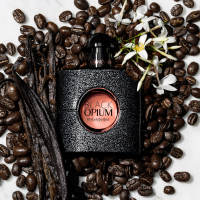
Yves Saint Laurent Black EDP For Women 90ml
$35.38$130.00
About Yves Saint Laurent
Yves Saint Laurent, commonly abbreviated as YSL, is one of France’s most influential luxury fashion houses. Today, the fashion house officially operates under the name Saint Laurent, while YSL remains one of its most recognizable symbols. It was founded in Paris in 1961 by French-Algerian designer Yves Saint Laurent and businessman Pierre Bergé.
The house is particularly famous for transforming the relationship between haute couture, ready-to-wear, menswear, feminism, youth culture and modern luxury. Yves Saint Laurent challenged traditional ideas about how women should dress, famously bringing elements of the male wardrobe—especially the tuxedo—into women’s fashion.
Basic information
| Category | Information |
|---|---|
| Full name | Yves Saint Laurent |
| Current brand name | Saint Laurent |
| Common abbreviation | YSL |
| Founded | 1961 |
| Founders | Yves Saint Laurent & Pierre Bergé |
| Founded in | Paris, France |
| Industry | Luxury fashion |
| Parent company | Kering |
| Main categories | Women’s fashion, men’s fashion, leather goods, shoes, accessories, jewellery, eyewear and fragrances |
| Current Creative Director | Anthony Vaccarello |
| Headquarters | 37–39 rue de Bellechasse, Paris |
| Current identity | French luxury fashion house with a strong Parisian, sensual and modern aesthetic |
Kering describes Saint Laurent as one of the world’s most prominent fashion houses, with more than 300 stores worldwide.
Who was Yves Saint Laurent?
Yves Henri Donat Mathieu-Saint-Laurent was born in 1936 in Oran, Algeria, then part of French Algeria. He showed an extraordinary interest in fashion from a young age and moved to Paris as a teenager, where he entered the fashion world and quickly attracted attention for his talent.
His major breakthrough came when he joined Christian Dior. When Dior died unexpectedly in 1957, the 21-year-old Saint Laurent was appointed artistic director of the House of Dior—an extraordinary position for someone so young. His designs were often considered more youthful and experimental than traditional couture. His final Dior collection in 1960, for example, incorporated influences from youth and street culture that were unusually radical for the conservative couture establishment.1
After leaving Dior, Saint Laurent and Pierre Bergé established their own fashion house.
Foundation of the house
The Yves Saint Laurent couture house officially opened in December 1961. Pierre Bergé played a crucial role in establishing the business and raising the capital necessary to create the new maison. The house initially operated from 11 rue Jean-Goujon before moving to 30 bis rue Spontini in Paris.1
The first official Saint Laurent collection was presented on 29 January 1962 and received international attention. One of the earliest pieces produced by the new atelier was a little black dress.1 From the beginning, the house sought to combine the technical excellence of haute couture with a more modern understanding of women’s lives.
The YSL logo
One of the most recognizable fashion logos in the world is the YSL monogram. It consists of three intertwined letters: Y — S — L. The logo was designed by French graphic artist Adolphe Jean-Marie Mouron, better known as Cassandre. It was created for the house in 1961 and remains an important part of Saint Laurent’s visual identity.
The logo communicates several concepts simultaneously, including French sophistication, art and graphic design, modernism, luxury and the personal identity of the founder. Unlike many luxury logos, the YSL monogram is strongly associated with both the designer and the fashion house.
The revolutionary idea: Rive Gauche
One of Yves Saint Laurent’s greatest contributions to fashion came in 1966, when he launched Saint Laurent Rive Gauche, a ready-to-wear line sold through its own boutique at 21 rue de Tournon in Paris.2 This move was revolutionary; at the time, haute couture was primarily an exclusive world serving wealthy clients, but Saint Laurent believed sophisticated fashion could reach a much broader audience.
Importantly, he did not simply make cheaper versions of his couture designs. He created Rive Gauche as a distinct fashion line and gave its prototypes the same level of creative attention.3 This helped establish the modern concept of designer luxury ready-to-wear.
Why Rive Gauche mattered
Rive Gauche fundamentally changed the luxury-fashion business model. While the traditional model moved from couture to extremely exclusive wealthy private clients, YSL’s emerging model moved from designer to ready-to-wear to boutiques to a wider cultural audience. This shift is a primary reason Saint Laurent holds such significance in the history of modern fashion.
The famous women’s tuxedo: Le Smoking
Perhaps the single most famous YSL design is Le Smoking, the women’s tuxedo. Saint Laurent introduced the tuxedo as part of his approach to borrowing from traditional menswear and transforming it for women. Kering specifically identifies the tuxedo and the saharienne as central examples of his goal of creating clothing that could “set women free”.
The significance went beyond simply making a suit for women. The traditional fashion ideal of femininity often emphasized dresses, skirts, decorative silhouettes, traditionally feminine fabrics and restrictive clothing. Saint Laurent proposed another possibility: a woman could wear a tuxedo and still be intensely feminine, elegant and desirable. That idea became fundamental to the YSL identity, and the tuxedo consequently became one of the house’s permanent codes.
Other major YSL fashion innovations
Yves Saint Laurent repeatedly incorporated elements from outside traditional haute couture into his work.
Art
The famous Mondrian dresses from 1965 translated the geometric visual language of Dutch artist Piet Mondrian into fashion.
Menswear
Saint Laurent famously incorporated tuxedos, tailored jackets, trousers, safari jackets and military references into women’s wardrobes.
Cultural influences
He drew inspiration from different cultures and historical periods, including Morocco, Africa, Russia, China, Spain, the Middle East and 1940s fashion.
Cinema
Saint Laurent had a particularly strong relationship with cinema. In 1967, the house designed costumes for Catherine Deneuve in Luis Buñuel’s Belle de Jour. This helped establish Saint Laurent as more than simply a clothing designer; the house became part of the broader world of film, photography, art and celebrity culture.
YSL and feminism
It is difficult to understand Yves Saint Laurent without understanding the social changes of the 1960s and 1970s. His clothes frequently challenged conventional ideas of femininity. Instead of asking how a woman could look more traditionally feminine, YSL often asked what a woman could wear if she were completely free to choose.
His use of men’s tailoring was therefore both aesthetic and cultural. The tuxedo, trouser suit and safari jacket allowed women to appear powerful, independent, sexually confident, androgynous and sophisticated. This became one of the central philosophical ideas associated with the brand. Kering describes his creative vision as one aimed at creating clothing that liberated women, particularly through the adaptation of classic menswear.
Fragrance
YSL also became a major name in luxury fragrance. The house launched its first fragrance, Y, in 1964.4 One of its most famous later fragrances was Opium, launched in 1977.
Opium was particularly significant because Saint Laurent connected fragrance with the broader world of fashion, imagery and fantasy. The 1977 couture collection inspired by Asian culture was accompanied by the launch of Opium, creating an unusually integrated relationship between couture and perfume. Today, YSL fragrances and beauty products are a major part of the broader YSL universe, although the beauty business has historically operated separately from the fashion house.
The 1970s and 1980s
During the 1970s, Saint Laurent became increasingly influential internationally. His 1971 “Libération” collection, inspired by the 1940s, initially generated controversy, though its strong shoulders later became highly influential on the fashion language of the 1980s. The house also became increasingly associated with dramatic fashion shows, strong shoulders, tailored silhouettes, sensuality, theatricality and sophisticated eveningwear.
In 1983, the Metropolitan Museum of Art in New York held a retrospective dedicated to Yves Saint Laurent. It was the first time the museum had honoured a living fashion designer in this way,5 demonstrating that fashion was increasingly being recognized as an important form of cultural and artistic expression.
Yves Saint Laurent retires
By the 1990s, Yves Saint Laurent’s personal involvement with the fashion house gradually decreased. In 1997, he appointed Alber Elbaz and Hedi Slimane to lead the women’s and men’s Rive Gauche lines respectively while he continued designing haute couture.
A major turning point arrived in 1999 when the Gucci Group acquired the house of Saint Laurent.6 In 2000, Tom Ford was appointed creative director of the ready-to-wear lines. In 2002, Yves Saint Laurent officially retired from the house after a major retrospective couture show at the Centre Pompidou. The haute couture operation subsequently closed, leaving Saint Laurent to continue primarily as a ready-to-wear luxury house. This marked the end of the founder’s direct creative era.
Creative directors after Yves Saint Laurent
The house went through several important creative periods after its founder.
| Period | Creative director | Importance |
|---|---|---|
| 2000–2004 | Tom Ford | Modernized the house with a highly sensual, provocative image |
| 2004–2012 | Stefano Pilati | Reinterpreted YSL’s codes with a more refined, Parisian approach |
| 2012–2016 | Hedi Slimane | Radically modernized the brand and changed its visual identity |
| 2016–present | Anthony Vaccarello | Developed a highly sensual, sharp and contemporary Saint Laurent aesthetic |
Official records confirm Ford’s appointment in 2000, Pilati’s in 2004, Slimane’s in 2012 and Vaccarello’s in 2016.6
Hedi Slimane and the name “Saint Laurent”
Hedi Slimane’s arrival in 2012 produced one of the most controversial changes in the brand’s modern history. The label was changed from the familiar Yves Saint Laurent to SAINT LAURENT. The change referenced the ready-to-wear name and logo originally associated with Saint Laurent Rive Gauche.
However, the YSL monogram did not disappear. This is why today both SAINT LAURENT and YSL are visible. The distinction is useful:
- Saint Laurent: Current fashion-house name
- YSL: Iconic monogram/logo
- Yves Saint Laurent: Founder’s full name and historical name of the house
Anthony Vaccarello era
In 2016, Belgian-Italian designer Anthony Vaccarello became Saint Laurent’s Creative Director. His interpretation of the house has emphasized extremely sharp tailoring, slim silhouettes, powerful shoulders, short dresses, leather, high boots, eveningwear, sensuality, black, gold and dramatic styling.
Vaccarello has essentially taken the sexuality and confidence of classic YSL and translated it into a contemporary luxury context. Kering describes his approach as combining the house’s heritage with “irreverent modernity”, a cinematic quality and a strong Parisian attitude.
What does Saint Laurent sell?
Today, Saint Laurent is much more than a clothing label. The fashion house itself currently focuses on women’s and men’s ready-to-wear, leather goods and associated luxury categories, while YSL beauty and fragrances form a related but distinct business operation.7
Women’s fashion
Dresses, jackets, tailoring, skirts, tops, knitwear, outerwear and eveningwear.
Men’s fashion
Suits, jackets, shirts, trousers, knitwear, leather and outerwear.
Leather goods
Handbags, shoulder bags, totes, clutches, wallets and small leather goods.
Shoes
Pumps, boots, sandals, sneakers and loafers.
Accessories
Sunglasses, belts, jewellery, scarves and hats.
Beauty and fragrance
Perfumes, makeup and skincare/beauty products.
Iconic Saint Laurent products and codes
Some designs have become almost synonymous with the brand.
- Le Smoking: The women’s tuxedo is arguably the ultimate YSL icon.
- YSL Monogram: The interlocking YSL logo is one of the most recognizable luxury symbols in the world.
- Safari jacket: A key example of Saint Laurent’s transformation of utilitarian/menswear-inspired clothing into sophisticated women’s fashion.
- Mondrian dress: A famous example of the connection between fashion and modern art.
- Saint Laurent boots: High-heeled and sharply shaped boots have become a recurring part of the modern Saint Laurent aesthetic.
- Sac de Jour: A structured handbag introduced during the modern Saint Laurent era and associated particularly with the brand’s luxury-leather-goods expansion.
- Kate / Lou / Sunset: Examples of handbags that helped establish the contemporary Saint Laurent leather-goods vocabulary.
The Saint Laurent aesthetic
The visual identity of Saint Laurent can be summarised as Parisian, sensual, rebellious, elegant, dark and powerful. The house frequently operates around contrasts:
| Contrast | Saint Laurent interpretation |
|---|---|
| Masculine vs. feminine | Tuxedos, tailoring + sensual dresses |
| Elegant vs. rebellious | Couture technique + rock attitude |
| Minimal vs. dramatic | Simple silhouettes + theatrical styling |
| Day vs. night | Tailoring + extravagant eveningwear |
| Classic vs. modern | Historical YSL codes + contemporary proportions |
| Luxury vs. youth culture | High craftsmanship + rock/cultural references |
This ability to combine opposites is a major reason Saint Laurent has remained relevant for so long.
Photography and advertising
Saint Laurent has historically placed enormous importance on image-making. The house worked with influential photographers including Helmut Newton and Robert Mapplethorpe, whose imagery contributed to the cultural history surrounding the brand.8
This is important because Saint Laurent does not simply sell clothes; it sells a world. The advertising often communicates sexuality, nightlife, Paris, youth, rebellion, rock music, art, cinema, celebrity and freedom. The campaign imagery is therefore part of the product itself.
Saint Laurent and cinema
The relationship between Saint Laurent and cinema began very early. One of the most famous examples is Catherine Deneuve’s wardrobe in Belle de Jour, designed by the house in 1967. The connection has continued into the modern era. In 2023, Saint Laurent launched Saint Laurent Productions, expanding the house’s involvement in cinema and film production.9 This is particularly consistent with the house’s longstanding belief that fashion exists within a larger ecosystem of film, photography, music and visual culture.
Saint Laurent and Paris
Paris is not merely the location of Saint Laurent’s headquarters; it is central to the brand’s identity. The house has repeatedly emphasized Paris’s Left Bank, or Rive Gauche, as an important source of inspiration. The company’s current operations are located at 37–39 rue de Bellechasse, while historically important addresses include 30 bis rue Spontini, 21 rue de Tournon, 5 avenue Marceau, 24 rue de l’Université and 37 rue de Bellechasse. The house’s Parisian identity is closely connected to intellectual life, art, nightlife, literature and youth culture associated with the Left Bank.
Saint Laurent and Kering
Saint Laurent is currently part of Kering, one of the world’s major luxury groups. The house was acquired by the Gucci Group in 1999, during the period when Kering’s predecessor organization was expanding aggressively into luxury.6 Today Kering’s portfolio includes major luxury houses such as Saint Laurent, Gucci, Bottega Veneta, Balenciaga, McQueen, Brioni, Boucheron and Pomellato. Thus, Saint Laurent is both an independent creative house and part of a much larger luxury-business ecosystem.
Saint Laurent today
As of 2026, Saint Laurent remains one of Kering’s flagship fashion houses.11 Anthony Vaccarello continues as Creative Director, having been appointed in 2016. The current Saint Laurent identity is built around several enduring principles:
- Strong silhouette: Clothes are often recognizable from their shape alone.
- Sexuality: The brand embraces sensuality rather than hiding it.
- Tailoring: Menswear-inspired construction remains fundamental.
- Parisian attitude: The house maintains a strong connection to Paris and the Left Bank.
- Black: Black is particularly important to the modern Saint Laurent visual language.
- Youth and rebellion: The house has historically refused to remain trapped in traditional couture conventions.
- Luxury craftsmanship: Despite its rebellious image, Saint Laurent remains a high-end luxury house with significant emphasis on materials, construction and craftsmanship.
Kering currently describes the brand’s strategic direction as strengthening its fashion authority, iconic codes and highly desirable silhouette.
Important timeline
- 1936: Yves Saint Laurent is born in Oran, Algeria.
- 1950s: He moves into the Paris fashion world and eventually joins Christian Dior.
- 1957: Saint Laurent becomes artistic director of Dior at just 21.
- 1961: Yves Saint Laurent and Pierre Bergé establish their own couture house.12
- 1962: First Saint Laurent collection is presented.
- 1964: First YSL fragrance, Y, is launched.4
- 1965: The famous Mondrian dresses appear.
- 1966: Saint Laurent Rive Gauche launches, pioneering luxury designer ready-to-wear.2
- 1967: YSL designs costumes for Belle de Jour.
- 1971: The controversial Libération collection is presented.
- 1977: Opium fragrance launches.
- 1983: The Metropolitan Museum of Art presents a major Yves Saint Laurent retrospective.5
- 1999: Gucci Group acquires Saint Laurent.6
- 2000: Tom Ford becomes creative director of Saint Laurent ready-to-wear.
- 2002: Yves Saint Laurent retires; the haute couture house closes.
- 2004: Stefano Pilati becomes creative director.
- 2012: Hedi Slimane becomes creative director and the label is renamed simply Saint Laurent.
- 2016: Anthony Vaccarello becomes creative director.
- 2023: Saint Laurent launches Saint Laurent Productions.9
- 2024: Saint Laurent opens SAINT LAURENT BABYLONE, a cultural destination and bookstore in Paris.10
- 2026: Saint Laurent remains a major Kering fashion house, with Anthony Vaccarello continuing its creative direction and more than 300 stores worldwide.11
Why Yves Saint Laurent is historically important
Yves Saint Laurent’s importance goes far beyond making beautiful clothes. His biggest contribution was arguably that he changed what luxury fashion could represent. Before YSL, haute couture was largely associated with exclusivity, tradition and aristocratic elegance. YSL helped introduce youth, freedom, sexuality, art, feminism and popular culture into the luxury sphere.
He helped make the fashion designer into a cultural author, rather than simply a maker of garments. He also helped establish the modern idea that a luxury fashion house could simultaneously have haute couture heritage, ready-to-wear, boutiques, accessories, fragrance, advertising, celebrity relationships, cinema, art and a powerful logo. That model became fundamental to the modern luxury industry.
Summary
Yves Saint Laurent is a French luxury fashion house founded in Paris in 1961 by Yves Saint Laurent and Pierre Bergé. The house revolutionized twentieth-century fashion by combining the craftsmanship of haute couture with the accessibility and cultural relevance of designer ready-to-wear, particularly through the 1966 launch of Saint Laurent Rive Gauche. Yves Saint Laurent challenged conventional ideas of femininity through designs such as the women’s tuxedo, safari jacket and trouser suit, while drawing inspiration from art, cinema and global cultures. After the founder’s retirement in 2002, the house evolved under designers including Tom Ford, Stefano Pilati, Hedi Slimane and, since 2016, Anthony Vaccarello. Today, officially known simply as Saint Laurent, it is a global luxury house owned by Kering, recognized for its sharp tailoring, sensuality, Parisian identity, leather goods, footwear, accessories and distinctive YSL monogram.12
References
- Creation of the Yves Saint Laurent Haute Couture House – Musée Yves Saint Laurent Paris
- SAINT LAURENT rive gauche – Musée Yves Saint Laurent Paris
- SAINT LAURENT rive gauche – Musée Yves Saint Laurent Paris
- First Fragrance: Y – Musée Yves Saint Laurent Paris
- Yves Saint Laurent: When Fashion Meets Art – The Metropolitan Museum of Art
- Yves Saint Laurent announces the departure of Creative Director Stefano Pilati | Kering
- HERITAGE | Saint Laurent | YSL AT
- HERITAGE | Saint Laurent | YSL NO
- 时装屋 | Saint Laurent 圣罗兰 | YSL.CN
- YVES Saint Laurent – Museo della Calzatura
- Yves saint laurent – Yves Saint Laurent Marrakech museum
- La création de la maison de couture Yves Saint Laurent – Musée Yves Saint Laurent Paris