Shop on Lazada
Head & Shoulders products
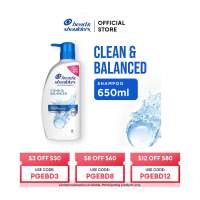
Head & Shoulders Clean And Balanced Anti-Dandruff Shampoo 650ML
$7.80$14.00
Head & Shoulders Cool Menthol Anti-Dandruff Shampoo 650ml
$7.80$14.00
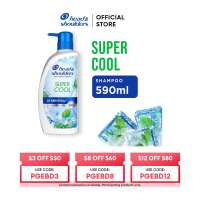
Head & Shoulders Anti Dandruff Shampoo Super Cool 590ml
$7.80$14.00
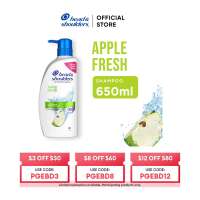
Head & Shoulders Apple Fresh Anti-Dandruff Shampoo 650ml
$7.80$14.00
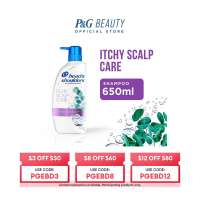
Head & Shoulders Itchy Scalp Care Anti-Dandruff Shampoo 650ml
$7.80$14.00
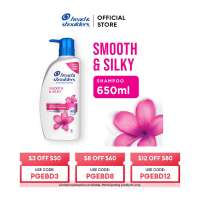
Head & Shoulders Smooth And Silky Anti-Dandruff Shampoo 650ml
$7.80$14.00
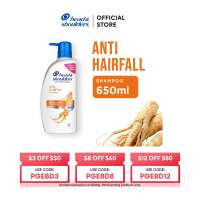
Head & Shoulders Anti-Hairfall Anti-Dandruff Shampoo 650ml
$7.80$14.00
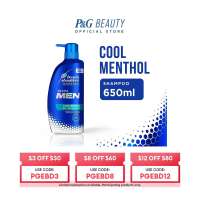
Head & Shoulders Ultra Men Cool Menthol Anti Dandruff Shampoo 650 ml
$12.91$17.21
About Head & Shoulders
Brand overview
Head & Shoulders (H&S) is an American hair-care brand best known for its anti-dandruff shampoos and scalp-care products. Owned by Procter & Gamble (P&G), it was introduced in 1961 following approximately ten years of research into dandruff treatments. The brand currently markets shampoos, conditioners, 2-in-1 formulations, pre-wash and co-wash products, and specialised scalp treatments in countries worldwide.1
| Attribute | Details |
|---|---|
| Brand name | Head & Shoulders |
| Abbreviation | H&S |
| Parent company | Procter & Gamble (P&G) |
| Industry | Hair care / personal care |
| Main category | Anti-dandruff and scalp care |
| Founded/launched | 1961 |
| Origin | United States |
| Key historical scientist | Dr John Parran Jr |
| Original breakthrough | Zinc pyrithione (ZPT) |
| Core problem addressed | Dandruff and scalp flaking |
| Major products | Shampoo, conditioner, 2-in-1, scalp treatments |
| Global positioning | Specialist in dandruff and scalp care |
P&G describes Head & Shoulders as one of its major brands, noting that it quickly became one of the company’s largest following its 1961 launch.
History
Before Head & Shoulders
The brand’s origins lie with Dr John Parran Jr, a chemical engineer and bacteriologist who joined Procter & Gamble in the late 1940s with the objective of developing a superior solution for dandruff. At the time, available treatments such as coal-tar and egg-oil preparations were often unpleasant to use and potentially harsh on hair. Parran sought to create a product that was not only effective at removing flakes but also pleasant to use and less damaging to hair.2
1961: Launch
After roughly ten years of research and clinical trials, Parran and his team identified a compound capable of combating dandruff, leading to the launch of Head & Shoulders in 1961. P&G identifies pyrithione zinc (zinc pyrithione) as the breakthrough ingredient discovered during this period.3 Contrary to modern expectations, the original product was not initially a conventional shampoo; historical materials describe the first formulation as a cream, which was subsequently developed into a shampoo format.4
1975: Transition to shampoo
By 1975, Head & Shoulders had evolved its formulation into a shampoo. The company regards this transition as a significant step in making anti-dandruff treatment easier and more enjoyable for consumers.5
1988: Expansion into China
Head & Shoulders was introduced in China in 1988, marking it as P&G’s first brand launched in that market.6
2002: Advances in dandruff research
Researchers associated with the brand helped decode the genetic sequence of Malassezia globosa, a microorganism linked to dandruff. This milestone reflected a strategic shift from marketing a simple anti-dandruff product towards positioning Head & Shoulders as a scientifically focused scalp-care brand.7
2010s–2020s: Broader scalp care
The brand has since expanded beyond basic anti-dandruff shampoo to include numerous formulations addressing diverse hair and scalp needs. Current ranges in markets such as the United States include categories like Everyday, Clinical, Royal Oils, Supreme, Bare and Ingredient Inspired, alongside products targeting dry scalp, itchiness, persistent dandruff and oily hair.8
Scientific basis
Zinc pyrithione
Historically, the brand’s signature active ingredient has been zinc pyrithione (ZPT). Head & Shoulders states that ZPT has been part of its formulation since around 1960 and functions through anti-fungal properties that help control Malassezia, a yeast-like microorganism associated with dandruff.9 P&G similarly identifies the discovery of pyrithione zinc as the primary scientific breakthrough behind the original product.10
Formulation variations
Formulations differ by country and product line. While some consumers assume global uniformity, active ingredients vary. For example, certain product ranges use piroctone olamine, while others list zinc pyrithione.11 Additionally, selenium sulfide is listed as an active ingredient in specific formulations designed for more severe flaking or seborrhoeic dermatitis.17
Function and benefits
Head & Shoulders is fundamentally a hair-care brand built around controlling dandruff and maintaining scalp health. Its scientific explanation of dandruff focuses on the interaction between the scalp, sebum, skin-cell turnover and microorganisms such as Malassezia.12
Products are designed to combine multiple functions:
- Cleanse the hair and scalp
- Control dandruff
- Reduce visible flakes
- Relieve dandruff-associated itching
- Maintain scalp health
- Condition and improve hair feel
- Provide cosmetic benefits such as fragrance, softness and shine
This combination supports the brand’s positioning as an everyday beauty and personal-care product with integrated dandruff protection, rather than solely a medical treatment.
Product portfolio
Shampoo
Anti-dandruff shampoo remains the core of the brand. Formulas target various consumer needs including everyday protection, dry or itchy scalp, oily hair, persistent dandruff, sensitive scalp, cooling sensations, hair fall concerns, and fragrance preferences. Specific market offerings vary; for instance, one regional website lists 14 anti-dandruff variants including Menthol Dingin, Super Cool, Anti Bacterial, Anti Apek, Lemon Segar, Sensasi Dingin and hair-fall-care options.13
2-in-1 products
These combine shampoo and conditioning functions for consumers seeking a simplified hair-care routine.
Conditioner
Dedicated conditioners allow consumers to pair dandruff and scalp care with traditional hair conditioning.
Specialised treatments
The portfolio includes products for specific scalp conditions and routines, including pre-wash and co-wash formats in selected markets.14
Market adaptation
Head & Shoulders adapts its global concept to local consumer preferences. In Indonesia, for example, the range includes variants such as Halus & Lembut, Menthol Dingin, Lemon Segar, Sensasi Dingin, Anti Apek, Anti Bacterial, Perawatan Rambut Rontok, Supreme Anti Hairfall and Perawatan Gatal dengan Eucalyptus.15 These products illustrate a positioning where consumers select based on hair texture, scalp sensation, fragrance, oiliness, odour or hair-fall concerns, rather than severe dandruff alone. The Anti Apek variant, for instance, combines dandruff protection with odour reduction and contains charcoal and piroctone olamine.16
Brand philosophy
The brand’s stated mission is to “free the world from dandruff”, though its philosophy extends beyond flake elimination to emphasise a healthy-looking scalp, great-looking hair and confidence.11 This philosophy rests on scientific research, effective dandruff control, safe formulations, pleasant user experience, adaptation to different hair types, continuous improvement and accessibility across demographics. Head & Shoulders cites over 65 years of international scientific knowledge and research supporting its development.18
Brand positioning
Functional positioning
At its core, the brand promises to solve dandruff, providing a clear functional reason for existence.
Scientific positioning
Unlike purely cosmetic shampoo brands, Head & Shoulders emphasises scientists, clinical testing, active ingredients, scalp biology and dermatological expertise. The brand states its products have been supported by more than 225 clinical trials throughout its history.14
Emotional positioning
The brand links dandruff control with confidence and social comfort, based on the insight that visible flakes can cause self-consciousness. Removing dandruff is thus presented as both a hygiene and confidence benefit, creating a three-layer proposition: science leads to scalp health, which leads to confidence.
Target consumers
While anti-dandruff shampoo was historically perceived as a narrow category, Head & Shoulders now develops products for different ages, genders, ethnicities and hair types.19 Key consumer groups include teenagers and young adults concerned with visible flakes and social confidence; adults seeking regular dandruff control; consumers with specific scalp concerns such as dryness, itchiness or oiliness; and those requiring formulations tailored to specific hair types.
Marketing strategy
The brand’s advertising has historically followed a “problem → embarrassment → solution → confidence” narrative, leveraging the fact that dandruff is easily communicated visually. Celebrities, athletes and humorous advertising have been used to make the functional product culturally relevant. Rather than focusing solely on anti-fungal active ingredients, marketing messages typically encourage consumers not to let dandruff undermine their confidence.
Origin of the name
The name “Head & Shoulders” directly references the two areas where dandruff becomes most noticeable. The inclusion of “shoulders” is particularly relevant from a marketing perspective, as flakes are often most visible on dark clothing around the shoulder area, immediately communicating the problem the product addresses.
Relationship with Procter & Gamble
Head & Shoulders is a brand within Procter & Gamble rather than an independent company. It benefits from P&G’s research infrastructure, product-development capabilities, manufacturing, global distribution, advertising expertise, market research and brand-management systems. P&G describes Head & Shoulders as becoming one of its biggest brands following its 1961 introduction.20
Global scale
Head & Shoulders describes itself as the world’s number one anti-dandruff shampoo, although the exact claim and methodology vary by market and measurement period. For example, one market attributes its sales claim to P&G calculations based on Nielsen data for July 2023–June 2024.21 Consequently, the “number one” status is best understood as a market-positioning claim supported by specific sales datasets rather than an absolute universal ranking.
Ingredient philosophy
The brand emphasises selecting ingredients for both effectiveness and consumer safety. Transparency materials explain ingredient choices, and the brand states it does not use parabens in Head & Shoulders products.22 Typical formulations include anti-dandruff actives, surfactants, conditioning agents, humectants, fragrance, preservatives, thickeners, pH adjusters and colourants, though exact compositions vary significantly between products and countries.
Scientific evolution
The brand’s scientific approach has evolved from finding a chemical to reduce dandruff towards understanding the biological mechanisms behind the condition. Researchers have investigated the role of Malassezia, conducted hundreds of clinical studies and continually redesigned formulations based on new technology.23 This progression spans from discovering an effective anti-dandruff ingredient in the 1960s, to developing an effective shampoo in the 1970s, advancing biological understanding in the 2000s, and creating differentiated scalp and hair-care systems today.
Strengths
- Clear brand purpose: Consumers immediately understand the brand’s function.
- Strong heritage: Associated with dandruff care since 1961.24
- Scientific credibility: History is genuinely rooted in dandruff research.
- Global distribution: Part of P&G’s extensive international network.
- Broad product range: Addresses diverse hair and scalp needs.
- Consumer recognition: The name is synonymous with anti-dandruff shampoo in many markets.
Challenges
Competition
The brand competes with mass-market and specialist products from Clear, Selsun, Nizoral, Dove, Pantene, Sunsilk, pharmacy brands and local anti-dandruff labels.
Changing consumer preferences
Consumers increasingly prioritise ingredient transparency, sulfate-free options, natural formulations, sustainability, scalp microbiome science, fragrance and sensitive-skin considerations.
Regulatory differences
Anti-dandruff active ingredients are regulated differently across countries, meaning formulas sold in different regions may not be identical.
Perception
A brand strongly associated with “dandruff shampoo” must continually demonstrate it is also a modern hair-care and scalp-care brand, not merely a treatment for severe conditions.
Sustainability and transparency
Head & Shoulders increasingly discusses sustainability alongside efficacy, with dedicated information on ingredient transparency and environmental responsibility appearing on its websites.18 However, sustainability claims regarding packaging, recycling and formulations should be evaluated at the specific product and market level.
Distinctive characteristics
- Problem ownership: Effectively owns the consumer problem of dandruff.
- Scientific heritage: Origin story is rooted in genuine research.
- Functional and emotional benefit: Sells both dandruff protection and confidence.
- Mass-market accessibility: Offers specialised scalp care in an affordable, everyday format.
- Localisation: Adapts global concepts to local preferences, such as cooling menthol, lemon, charcoal, eucalyptus and anti-odour variants in specific markets.23
Timeline
- 1940s: Dr John Parran Jr joins Procter & Gamble.24
- 1950s: Approximately ten years of dandruff research conducted.
- 1961: Head & Shoulders launches.1
- 1975: Formula developed into shampoo.5
- 1988: Head & Shoulders launches in China.6
- 2002: Research into Malassezia globosa advances understanding of dandruff.7
- 2010s–2020s: Expansion into differentiated scalp, hair and conditioning products.
- Today: A global P&G hair-care brand centred on dandruff and scalp health, with products adapted to diverse consumer needs.
References
- Our history | Head & Shoulders
- Our history | About us | Head&Shoulders UK
- America’s #1 Dandruff Shampoo Brand | Head & Shoulders
- Our Active Ingredients | Head & Shoulders
- Shampo Anti Ketombe dengan Charcoal untuk Rambut Bebas Ketombe & Anti-Apek | Head & Shoulders ID
- Shampo Anti Ketombe Halus & Lembut untuk Rambut Bebas Ketombe & Lembut | Head & Shoulders ID
- Anti-Dandruff Shampoo Ingredients and How They Work | Head & Shoulders
- Sampo Anti-Ketombe untuk Kulit Kepala Sehat | Head & Shoulders ID
- Dandruff Hair Shampoo | Head & Shoulders
- Sampo Anti-Ketombe untuk Perawatan Rambut Rontok | Head & Shoulders ID
- Our philosophy | Head & Shoulders
- Head & Shoulders and The Science Behind it
- What Ingredients are in Our Dandruff Shampoo | Head & Shoulders
- The Science Behind Head&Shoulders | Head&Shoulders UK
- A brief history of Head & Shoulders | Fashion | The Guardian
- Hair Products for Dandruff & Flakes | Head & Shoulders
- What Is Selenium Sulfide? | Head & Shoulders
- About | Head & Shoulders
- Bahan-bahan Kami | Head & Shoulders ID
- Tentang Head & Shoulders | Ahli Perawatan Ketombe
- Anti-Dandruff Product for Silky Soft Hair – Head & Shoulders
- Head & Shoulders: Dandruff & Scalp Care Leaders | H&S IN
- Notre histoire et évolution de la marque | A propos | Head&Shoulders FR
- Head&Shoulders Hakkında Tarihi Bilgi | Head&Shoulders TR