Shop on Lazada
Hello Kitty products
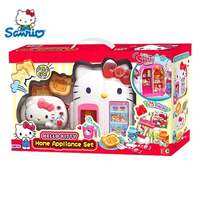
Hello Kitty | Girls Simulation Playhouse Toy Mini Fridge
$75.41$105.90
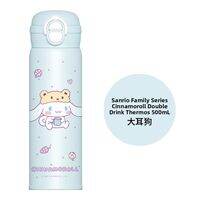
Hello Kitty | Cold Retention Stainless Steel Straw Cup for Students 500ml
$12.29$48.82
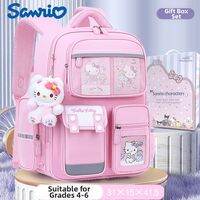
Hello Kitty | Lightweight Cinnamoroll and Hello Kitty Style School Backpack
$41.85
Buy on Lazada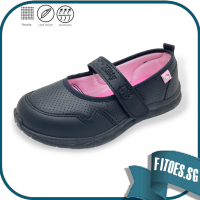
*SG Seller* Hello Kitty KC3283 School Shoes White Black
$27.51$29.90
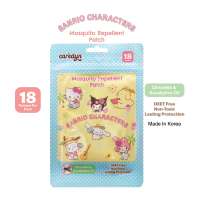
CAREDYN Sanrio Characters Mosquito Repellent Patch 18 Patches
$8.41$9.90
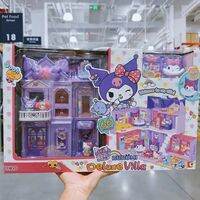
Hello Kitty | Luxury Villa Dollhouse for Roleplaying
$66.77$93.23
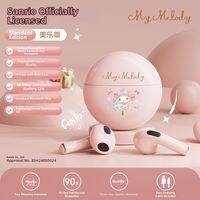
Hello Kitty | High Quality Noise Cancelling Comfortable Bluetooth Headphones
$13.53$84.26

Hello Kitty | Bone Conduction Wireless Bluetooth Earphones Long Battery
$17.80$25.09
About Hello Kitty
Hello Kitty is a fictional character and global brand created by the Japanese company Sanrio. Since her debut in 1974, she has become one of the most recognisable figures in popular culture worldwide. Although frequently perceived as a cat, Sanrio’s official profile identifies her as Kitty White, a cheerful British girl born in the suburbs of London.
Today, Hello Kitty extends far beyond stationery and toys. She serves as the centrepiece of an extensive international business encompassing licensing, merchandise, entertainment, fashion, and collaborations managed by Sanrio.
Overview
| Category | Information |
|---|---|
| Name | Hello Kitty |
| Full name | Kitty White |
| Japanese name | ハローキティ (Harō Kiti) |
| Creator/company | Sanrio |
| Debut | 1974 |
| Birthday | November 1 |
| Birthplace | Suburbs of London, England |
| Gender | Female |
| Family | Parents and twin sister Mimmy |
| Height | Five apples |
| Weight | Three apples |
| Favorite food | Her mother’s apple pie |
| Hobbies | Baking cookies and playing the piano |
| Dream | To become a pianist or poet |
| Personality | Cheerful and kind |
| Company | Sanrio Co., Ltd. |
Sanrio confirms that Hello Kitty was designed in 1974 and lists her fictional height as five apples and weight as three apples.1
Nature of the brand
Hello Kitty is best understood as a Sanrio character brand rather than a single cartoon or product line. Sanrio develops characters through merchandise, licensing, media, collaborations, events, and digital entertainment. As Sanrio’s most prominent character, Hello Kitty laid the foundation for a wider family of characters; since her introduction in 1974, the company has launched more than 450 unique characters globally.2
The term “Hello Kitty” may refer to:
- The fictional character Kitty White;
- The visual identity centred on her face and bow;
- Sanrio’s Hello Kitty merchandise;
- Licensed collaborations featuring the character;
- Animated and digital entertainment;
- Themed attractions and experiences;
- The broader cultural phenomenon surrounding the character.
Creation and debut
Hello Kitty was created by Sanrio, a Japanese company founded by Shintaro Tsuji. The company originally focused on products designed to communicate friendship and affection, guided by the corporate philosophy “Minna Nakayoku”, which translates to “Getting Along Together”. Sanrio describes its purpose as connecting people and creating happiness through its characters and entertainment.
Designed in 1974, Hello Kitty’s initial appearance established a visual formula that achieved international fame:
- A simple white face;
- Black eyes;
- A yellow oval nose;
- Whiskers;
- No visible mouth;
- A distinctive bow near her left ear.
This design simplicity made Hello Kitty highly adaptable, allowing her image to be applied to a vast array of products without requiring complex illustrations.
Character profile
According to Sanrio’s official biography, Hello Kitty’s full name is Kitty White. She is portrayed as a cheerful, friendly girl living in the suburbs of London with her family. Her hobbies include baking cookies, playing the piano, and making friends, while her favourite food is her mother’s apple pie.3
Her official profile includes whimsical measurements:
Height: five apples
Weight: three apples
Rather than depicting her as a realistic animal, Sanrio presents her as a stylised fictional person with cat-like visual traits.
Personality
Kitty is characterised as:
- Friendly;
- Cheerful;
- Kind;
- Sociable;
- Family-oriented;
- Interested in music;
- Enthusiastic about friendship.
Her official concept strongly emphasises friendship and communication, reflecting Sanrio’s broader corporate philosophy.4
Absence of a mouth
A defining feature of Hello Kitty is that she has no visible mouth. This minimalist design choice allows observers to interpret her expression based on their own emotions, rather than being presented with a fixed happy, sad, or angry face. Consequently, Hello Kitty functions as an emotional canvas onto which fans can project their feelings. This characteristic has contributed significantly to the design’s versatility across different products and cultures.
The signature bow
Hello Kitty’s bow is as recognisable as her face. Positioned near her left ear, Sanrio’s official profile describes it as a symbol of friendship that connects people’s hearts.5 Over the decades, the bow has appeared in numerous variations, including red, pink, blue, black, floral, jewelled, seasonal, luxury-fashion styles, and custom collaboration designs. Despite these variations, the basic silhouette remains instantly identifiable.
Family and social world
Sanrio has developed a fictional family and social environment for Hello Kitty, ensuring she is not presented as an isolated mascot.
Mimmy
Mimmy is Kitty’s twin sister and best friend. The sisters are distinguished by their bows: Hello Kitty wears hers on her left ear, while Mimmy wears hers on the right.13
Other family members
The Hello Kitty universe includes her parents and other recurring characters, providing a domestic and social context. This family-centred storytelling enables Hello Kitty to function simultaneously as a children’s character, a lifestyle brand, and a collectible figure.
Visual evolution
Hello Kitty’s core appearance—white face, black eyes, yellow nose, whiskers, and bow—has remained stable for over five decades. However, her artwork has evolved substantially. Sanrio regularly redesigns Hello Kitty for different eras, markets, holidays, fashion trends, product categories, collaborations, anniversaries, and special events. This balance ensures that Hello Kitty remains instantly recognisable whilst being highly adaptable, allowing her design to transition from children’s stationery to high-fashion collections without losing its identity.
Merchandise and licensing
Hello Kitty’s success is largely attributed to her design for merchandising. Rather than relying on a single television programme or film, she appears on a wide range of consumer products, including:
- Stationery and notebooks;
- Pens and bags;
- Clothing and plush toys;
- Accessories and cosmetics;
- Household goods and electronics;
- Food packaging and toys;
- Furniture and games;
- Collectibles and limited-edition items.
This approach established Hello Kitty as a powerful lifestyle character brand. Current offerings continue to span collectibles, accessories, apparel, stationery, digital entertainment, and collaborations.6
Business model
Hello Kitty exemplifies a character licensing business. Sanrio does not manufacture every product itself; instead, the character is licensed or used in collaborations with partners across various industries. Official announcements have documented partnerships involving brands such as Nike, Crocs, Kura Sushi, Toca Boca, and Pusheen, covering fashion, footwear, food, gaming, technology, and entertainment.9 In this model, the character itself is the intellectual property, while partners translate it into specific products and experiences.
Fashion collaborations
Hello Kitty maintains a significant presence in the fashion industry. Her simple aesthetic suits both mass-market products and premium collaborations. Over the years, she has featured in collections involving clothing, handbags, shoes, jewellery, cosmetics, streetwear, and designer fashion. For her 50th anniversary, collaborations included companies such as Crocs, Converse, Kate Spade New York, and Fender.7 These partnerships demonstrate her ability to cross over from children’s entertainment into adult fashion and collectible culture.
Media and entertainment
Although originally a merchandise character, Hello Kitty has expanded into numerous entertainment formats, including animated television productions, specials, video games, mobile apps, web content, books, music, theme-park attractions, and interactive experiences. Sanrio continues to develop her as an entertainment property; for example, recent promotions have featured Hello Kitty and Friends Supercute Adventures, indicating ongoing development beyond traditional merchandising.8
Other Sanrio characters
Hello Kitty exists within a broader Sanrio universe. Prominent characters in the official brand directory include:
- My Melody15
- Kuromi
- Cinnamoroll
- Pompompurin
- Little Twin Stars
- Keroppi
- Badtz-Maru
- Pochacco
- Tuxedosam
- Gudetama
- Hangyodon12
- Aggretsuko
Despite this extensive roster, Hello Kitty remains Sanrio’s defining global icon.9
Global identity and Kawaii culture
Hello Kitty was created by a Japanese company but given a British fictional identity, with an official birthplace in the suburbs of London, England. This facilitated her acceptance in international markets. Simultaneously, her design retains strong associations with Japanese kawaii culture—an aesthetic of cuteness emphasising innocence, friendliness, softness, playfulness, and simplified features. Hello Kitty’s large head, small body, and rounded forms align naturally with this aesthetic, demonstrating the principle that simplicity increases recognizability. She stands as a primary example of Japanese popular culture transforming into a global lifestyle phenomenon.
Factors behind longevity
Several factors explain Hello Kitty’s enduring success:
- Simple design: Her face is instantly recognisable.
- Emotional neutrality: The lack of a mouth allows for personal emotional interpretation.
- Broad demographic appeal: She appeals to children, teenagers, adults, collectors, fashion enthusiasts, and nostalgic fans.
- Adaptability: The design works across stickers, statues, clothing, games, luxury goods, and digital avatars.
- Strong merchandising: Sanrio has built an extensive ecosystem around the character.
- Friendship-centred identity: She represents positive concepts rather than complex mythology.
- Constant reinvention: Sanrio updates her clothes, colours, themes, and settings while maintaining her core identity.
Cultural significance
Hello Kitty has transcended her origins to become a symbol of Japanese pop culture, kawaii aesthetics, friendship, nostalgia, and consumer culture. Her image holds different meanings for different audiences, representing childhood, Japanese culture, fashion, or simply a recognisable cute character. This flexibility is fundamental to the brand’s longevity.
50th Anniversary
2024 marked Hello Kitty’s 50th anniversary. Sanrio celebrated five decades since her 1974 debut through special products, collaborations, events, and international campaigns. Anniversary materials described the milestone as a celebration of Hello Kitty’s continuing importance to people worldwide.4161718 The occasion demonstrated that Hello Kitty remains an active contemporary brand rather than merely a nostalgic relic of the 1970s.
Current status
As of 2026, Hello Kitty remains central to Sanrio’s portfolio, appearing in new merchandise, digital entertainment, collaborations, and international marketing.10 Official materials continue to feature her alongside other major characters, and operations in key markets such as the United States continue to release new projects.111419 Her sustained recognisability across multiple generations, without fundamental redesign, is unusual in popular culture.
Legacy
Hello Kitty transformed the concept of a character into a lifestyle platform. She demonstrates that global significance does not require complex narratives or superpowers. Instead, her influence stems from recognition, simplicity, emotional openness, friendship, and adaptability. From a small design introduced in 1974, she developed into a worldwide brand spanning merchandise, fashion, licensing, digital media, and popular culture. Sanrio’s corporate history places Hello Kitty at the beginning of its modern character empire, noting that the global portfolio began with her in 1974 and subsequently expanded to more than 450 characters.2
References
- HELLO KITTY | Sanrio Company, Ltd.
- ハローキティ|サンリオ
- Hello Kitty
- Hello Kitty’s 50th Anniversary
- Hello Kitty
- Hello Kitty’s 50th Anniversary
- HELLO KITTY 50th
- Hello Kitty at 50: Cute Simplicity a Winning Formula for Sanrio | Nippon.com
- SANRIO® Announces a Celebration of 50 Years of Hello Kitty:
- ハローキティ|サンリオ
- Hello Kitty
- Hello Kitty
- Hello Kitty
- Hello Kitty
- Hello Kitty
- Hello Kitty’s 50th Anniversary
- Hello Kitty’s 50th Anniversary
- Hello Kitty’s 50th Anniversary
- Hello Kitty – Sanrio Wiki