Shop on Lazada
H&M products
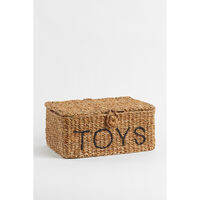
H&M | Home Decorative Storage Box
$65.30
Buy on LazadaHeadlight Washer Nozzle Cover For BMW 5 Series F10/F11/F18 2009 2010 2011 2012 2013 Unpainted Washer Jet Sprayer Cap With bracket 51117246869 51117246870
$29.00$48.33
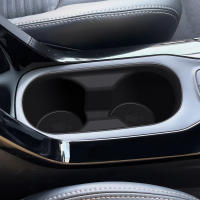
For Toyota Corolla Cross Silicone Rubber Central Control Water Cup Holder Drink Cover Interior Accessories
$30.00$50.00

For Mazda CX60 2022-2025 CX70 CX80 CX90 2024-2025 Car Storage Central Control Storage Box Container Auto Interior Accessories
$26.00$43.33
About H&M
H&M (short for Hennes & Mauritz) is a Swedish multinational fashion and retail company best known for selling relatively affordable, trend-oriented clothing, accessories, footwear, beauty products, and home goods. Founded in 1947 by Erling Persson, the company began as a women’s clothing store in Västerås, Sweden, called Hennes (“hers” in Swedish). It later expanded into men’s and children’s fashion and became Hennes & Mauritz before adopting the familiar H&M name.1
Today, H&M is the flagship brand of the broader H&M Group, one of the world’s major fashion companies. The group operates in more than 80 markets and has a large physical and online presence worldwide.2
Basic information
| Item | Information |
|---|---|
| Brand name | H&M |
| Full company name | H & M Hennes & Mauritz AB |
| Founded | 1947 |
| Founder | Erling Persson |
| Country of origin | Sweden |
| Original name | Hennes |
| Headquarters | Stockholm, Sweden |
| Industry | Fashion and retail |
| Parent organization | H&M Group |
| Main products | Clothing, accessories, footwear, beauty, home products |
| Business model | Mass-market / accessible fashion, omnichannel retail |
| Stock exchange | Nasdaq Stockholm |
| Current H&M Group CEO | Daniel Ervér |
| H&M brand CEO | Daniel Ervér |
| Major markets | Europe, North America, Asia, Latin America and other global markets |
H&M Hennes & Mauritz AB is publicly listed on Nasdaq Stockholm.3
History
1947 — The beginning
H&M’s story began in Västerås, Sweden, in 1947, when entrepreneur Erling Persson opened a women’s clothing store called Hennes. Persson had been inspired by American retail and wanted to make fashionable clothing available to a much wider audience at affordable prices. The original store focused exclusively on women’s clothing.4 The name Hennes means approximately “hers” in Swedish.
1950s — Expansion in Sweden
The concept proved successful, and Hennes expanded beyond its first location. In 1952, the company opened its first store in Stockholm, Sweden’s capital. Hennes also began experimenting with large-scale advertising, helping establish marketing as an important part of the company’s growth strategy.5
1968 — Hennes becomes Hennes & Mauritz
A major turning point came in 1968, when Hennes acquired the Swedish hunting and fishing retailer Mauritz Widforss. The acquisition gave Hennes access to men’s clothing and allowed the company to expand beyond womenswear. The company subsequently became Hennes & Mauritz. This was the foundation for the broader fashion concept that H&M operates today.6
1970s — The H&M identity
During the 1970s, Hennes & Mauritz continued expanding its product categories and geographic presence. Important developments included the introduction of underwear, expansion into cosmetics, entry into additional European countries, and a growing focus on younger consumers. In 1974, the company was listed on the Stockholm Stock Exchange and stores began using the abbreviation H&M.7 The abbreviation eventually became the globally recognizable brand name.
International expansion
H&M’s internationalisation began relatively early. The company expanded from Sweden into other European markets, including Norway, Denmark, the United Kingdom and Switzerland.8 During the 1990s, H&M continued expanding throughout Europe. In 1998, H&M launched online shopping in Sweden, establishing an early digital presence. The same year, the company opened its first Paris store, strengthening its position in one of the world’s most important fashion capitals.9
2000 — United States
A major milestone came in 2000, when H&M opened a flagship store on Fifth Avenue in New York City. This marked the beginning of H&M’s major expansion outside Europe and helped transform the company from a primarily European retailer into a global fashion brand.10
Designer collaborations
One of H&M’s most influential marketing strategies has been its collaborations with famous designers and fashion houses. The breakthrough came in 2004, when H&M collaborated with legendary designer Karl Lagerfeld. The basic idea was unusual for the luxury fashion industry: bring high-profile designer aesthetics to a much broader audience at substantially lower prices. H&M subsequently collaborated with designers and brands including Karl Lagerfeld, Stella McCartney, Roberto Cavalli, Versace, Alexander Wang, and many other major creative names. H&M says its designer collaborations have helped demonstrate that design does not necessarily have to be associated with luxury-level prices.11 These collaborations became a major part of H&M’s brand identity and generated significant media attention.
Product assortment
H&M is primarily a fashion and lifestyle retailer. Its assortment includes:
Clothing
- T-shirts
- Shirts
- Blouses
- Dresses
- Jeans
- Trousers
- Jackets
- Coats
- Knitwear
- Underwear
- Sleepwear
- Sportswear
- Children’s clothing
- Baby clothing
Accessories
- Bags
- Belts
- Hats
- Sunglasses
- Jewellery
- Scarves
- Other fashion accessories
Beauty
H&M also operates H&M Beauty, offering cosmetics and beauty-related products.
Home
H&M HOME sells products such as bedding, towels, decorative objects, kitchen products, furniture, home textiles, and interior accessories.
Sports
H&M Move is the group’s sports-focused concept, launched globally in 2022.12
Target market
H&M has historically positioned itself around accessible fashion. Its target audience is broad rather than limited to one demographic. It offers products for women, men, teenagers, children, babies, families, fashion-conscious consumers, and customers looking for affordable everyday clothing. The brand’s appeal comes partly from its ability to combine fashion trends, relatively accessible prices and frequent product changes. In simple terms, H&M attempts to occupy the space between basic clothing retailers and higher-priced fashion brands.
Business concept
H&M’s official business idea is essentially to offer fashion and quality at the best price in a sustainable way. The company describes its broader purpose as “Liberating fashion for the many.”6 This reflects three central elements of the H&M strategy: Fashion (keeping products relevant to current styles and trends), Price (making fashion accessible to a large number of consumers), and Sustainability (attempting to reduce the environmental and social impact associated with fashion production).
Business model
H&M’s business model combines design, global sourcing, large-scale retail, digital commerce and marketing.
Design
H&M maintains creative and design teams that develop collections based on fashion trends, customer preferences and commercial opportunities.
Global supply chain
Rather than manufacturing every product itself, H&M works with a large network of external suppliers and manufacturers. This allows the company to operate at significant scale.
Physical stores
Stores remain an important part of H&M’s business. However, the company increasingly treats stores and digital channels as parts of a single omnichannel shopping experience.
Online shopping
Customers can purchase H&M products through the company’s digital platforms in many markets.
Marketing
H&M has historically invested heavily in advertising, celebrity campaigns, designer collaborations, social media, fashion events, influencer marketing, store design, and digital experiences. The company describes its model as combining physical and digital shopping experiences.13
Fast fashion context
H&M is commonly classified as a fast-fashion retailer, although the company itself increasingly emphasises concepts such as sustainability, quality, circularity and responsible production. The traditional fast-fashion model involves identifying fashion trends, designing products relatively quickly, producing them at large scale, distributing them through stores and online channels, introducing new products frequently, and offering them at relatively accessible prices. This model helped companies such as H&M dramatically increase the speed and accessibility of fashion. However, it has also generated criticism regarding overconsumption, textile waste, resource use, labour conditions and greenhouse-gas emissions. These issues have become increasingly important to H&M’s strategy and public reputation.
Sustainability
Sustainability has become one of H&M’s major strategic themes. The company says it wants to make fashion more circular and reduce its environmental impact. Its efforts include areas such as recycled materials, more sustainably sourced materials, circular fashion, garment collection and recycling, climate-related targets, supply-chain improvements, product durability, and reduced emissions. According to H&M Group’s 2025 reporting, 80% of materials in its commercial products were recycled or sustainably sourced, including 32% recycled materials.14 The company also operates or participates in initiatives intended to improve textile reuse and recycling. For example, H&M Group and Remondis created Looper Textile Co. in 2023 to collect, sort and sell used and unwanted garments and textiles.15
Sustainability controversy
H&M’s sustainability efforts have also attracted criticism. The central issue is a fundamental tension: H&M wants to sell large quantities of affordable fashion while simultaneously reducing the environmental impact of fashion production and consumption. Critics have questioned whether the fast-fashion business model itself is compatible with sustainability goals. H&M therefore faces a difficult strategic challenge: it must improve materials, production, logistics and recycling while also encouraging customers to consume fashion in a more responsible way. This makes sustainability not merely a marketing issue for H&M but a significant business-model question.
H&M Group structure
An important distinction is that H&M and H&M Group are not exactly the same thing. The H&M brand is the group’s flagship fashion brand, while H&M Group is the larger corporate organisation that owns or operates a portfolio of brands and businesses. Its portfolio currently includes H&M, COS, Weekday, Cheap Monday, Monki, & Other Stories, ARKET, Singular Society, and Sellpy. The H&M brand itself includes H&M HOME, H&M Move and H&M Beauty.16
Corporate scale
H&M Group has grown enormously from the single store opened in Sweden in 1947. For the 2025 financial year, H&M Group reported approximately SEK 200 billion in net sales, 125,000 employees, approximately 3,000 stores, operations in 81 markets, and online sales in more than 60 markets. The figures are based on H&M Group’s 2025 annual reporting.17 The group’s financial year runs from 1 December to 30 November.18
Leadership
Daniel Ervér became CEO of H&M Group in 2024, succeeding Helena Helmersson. He also continued as CEO of the H&M brand.19 The Persson family remains historically important to the company. H&M was founded by Erling Persson, and his family has remained influential in the group’s ownership and governance structure.
Presence in Singapore and Southeast Asia
While H&M maintains a significant retail and digital presence across Southeast Asia, including Singapore, its regional operations align with the group’s global positioning of offering fashion and quality at the best price in a sustainable way.11 The brand serves Singaporean consumers through both physical retail locations and integrated e-commerce platforms, consistent with its omnichannel strategy.
Brand identity
H&M’s identity can be summarised through several characteristics:
- Affordable: H&M attempts to make contemporary fashion accessible to a broad population.
- Trend-driven: The brand responds relatively quickly to changing fashion trends.
- Global: Although Swedish in origin, H&M has developed a highly international identity.
- Youth-oriented: H&M has historically maintained strong appeal among younger consumers, although its customer base is much broader.
- Collaborative: Designer collaborations have become an important part of its cultural and marketing identity.
- Accessible design: The brand tries to bring fashion aesthetics associated with higher-end fashion into a more affordable retail environment.
Logo
The familiar H&M logo consists of the letters H&M, traditionally rendered in red with a hand-drawn, energetic appearance. The logo is deliberately simple and highly recognisable. The company’s use of the abbreviation began in 1974, when Hennes & Mauritz stores were rebranded as H&M.20 The simplicity of the logo has helped make H&M one of the most recognisable identities in global fashion retail.
Competitive strengths
H&M’s major competitive strengths include:
- Global scale: Its enormous international network allows it to spread design, sourcing, marketing and technology costs across many markets.
- Strong brand recognition: H&M is recognisable well beyond its Swedish origins.
- Affordable positioning: The company occupies an attractive price point for consumers who want fashionable products without luxury prices.
- Fashion collaborations: Designer collaborations give the brand cultural relevance and generate publicity.
- Omnichannel retail: H&M combines stores with digital commerce and other online services.
- Broad product assortment: The company serves women, men, children and home/lifestyle customers.
- Supply-chain scale: Its large global sourcing network supports high-volume retail.
Challenges
H&M faces significant challenges in the modern retail landscape:
- Competition: It competes with numerous international retailers and online fashion companies, including brands such as Zara, Uniqlo, Mango, Primark, Shein and many others.
- Sustainability: The company must reconcile affordable, high-volume fashion with environmental and social responsibility.
- Changing consumer behaviour: Consumers increasingly discover and purchase fashion through social media, marketplaces and mobile applications rather than traditional stores.
- E-commerce: Online-first competitors can introduce products rapidly and compete aggressively on price.
- Brand differentiation: Because affordable fashion is highly competitive, H&M must continually maintain a distinctive identity.
- Physical retail: The company must determine which stores remain strategically valuable as online shopping becomes more important.
Place in fashion history
H&M’s importance goes beyond simply being a large clothing retailer. The company helped popularise a model in which fashion trends that were once associated primarily with designer and luxury brands could be translated into products available to mass-market consumers. Its designer collaborations were particularly influential because they blurred the traditional boundary between high fashion and mass retail. The 2004 Karl Lagerfeld collaboration, for example, demonstrated that a major designer could collaborate with a mass-market retailer and reach consumers who normally could not purchase the designer’s mainline products.
Timeline
| Year | Event |
|---|---|
| 1947 | Erling Persson opens Hennes in Västerås |
| 1952 | First Hennes store in Stockholm |
| 1968 | Hennes acquires Mauritz Widforss and becomes Hennes & Mauritz |
| 1974 | Company listed on Stockholm Stock Exchange; H&M abbreviation introduced |
| 1977 | Impuls concept introduced for teenagers; cosmetics added |
| 1998 | Online shopping begins in Sweden; first Paris store |
| 2000 | Major Fifth Avenue store opens in New York |
| 2002 | First Corporate Social Responsibility Report |
| 2004 | Karl Lagerfeld designer collaboration |
| 2020 | Karl-Johan Persson becomes chair; Helena Helmersson becomes CEO |
| 2022 | H&M Move launches globally |
| 2023 | Looper Textile Co. established with Remondis |
| 2024 | Daniel Ervér becomes H&M Group CEO |
| 2025 | Group reports SEK 200 billion in net sales for the financial year |
| 2026 | H&M continues its global retail, digital and brand-development strategy |
References
- History – H&M Group
- Learn more about H&M | H&M Careers
- About us – H&M Group
- H & M Hennes & Mauritz AB Full-year report 2025 – H&M Group
- Organisation and management – H&M Group
- Business idea – H&M Group
- H&M GROUPANNUAL & SUSTAINABILITY REPORT2025
- Annual and sustainability report 2025 – H&M Group
- Investors – H&M Group
- Reports and presentations – H&M Group
- Company info
- Newsroom – H&M Group
- Securing 74 more years in fashion: H&M Group shapes the future of retail with tech – H&M Group
- Annual report – H&M Group
- Home – H&M Group
- Sustainability reporting – H&M Group
- Word from CEO – H&M Group
- About H&M
- ข้อมูลองค์กร
- Learn more about H&M | H&M Careers Singapore