Shop on Lazada
Learning Resources products
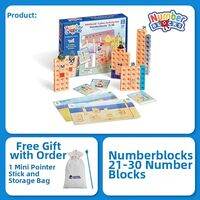
Learning Resources | Educational Number Blocks Balance Toy
$93.95$157.82
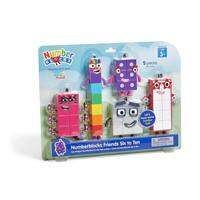
Learning Resources | Mathematical Education Number Blocks Toys
$52.47$80.12
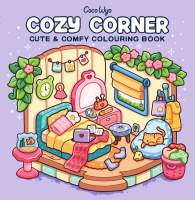
Coco Wyo BESTSELLER: Cozy Colouring Books - Popular on TIKTOK (96 Pages)
$22.90
Buy on Lazada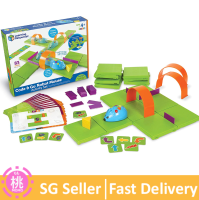
Learning Resources Code & Go Robot Mouse Coding STEM Toy Screen-Free Coding Toys for Kids Ages 4+ STEM Toys
$115.90$128.00
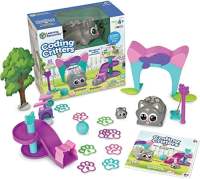
Learning Resources Coding Critters - 22 Pieces Ages 4+ Educational Learning Games Screen-Free Early Coding Toy for Kids Interactive STEM Coding Pet
$55.90$75.90
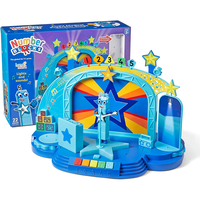
Learning Resources | Educational Toy Numberblocks Number 5 Musical Stage
$106.02$140.24
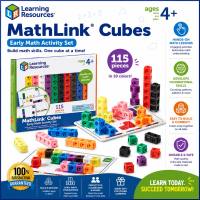
Authentic Learning Resources MathLink Cubes STEM Educational Toy Math Link Cube Math Cube Montessori Early Math Counting Building Blocks Homeschool Manipulatives Fine Motor Learning Activity Set
$14.90$25.90
Primary Science® Big View Binoculars
$34.00
Buy on LazadaAbout Learning Resources
Learning Resources is an American educational toy and learning products brand best known for integrating play with hands-on education. Founded in 1984 in Chicago, Illinois, the company develops toys, games, manipulatives, classroom resources, and STEM and coding products designed to help children build foundational academic and developmental skills.1 Its long-standing tagline, “Learning is where we play”, reflects a philosophy that positions play as a means for children to explore concepts, practise skills, solve problems and develop confidence.2
Company profile
| Category | Information |
|---|---|
| Brand | Learning Resources® |
| Company | Learning Resources, Inc. |
| Founded | 1984 |
| Origin | Chicago, Illinois, United States |
| Current headquarters | Vernon Hills, Illinois, United States |
| Ownership | Family-owned / privately held |
| Industry | Educational toys, children’s products, learning resources |
| Main audience | Children, parents, teachers, schools |
| Core philosophy | Learning through play |
| Major areas | Early learning, mathematics, literacy, STEM, coding, fine motor, critical thinking, social-emotional learning |
| International reach | Products sold in more than 80 countries |
| Product range | Over 1,000 products |
| Notable acquisition | Educational Insights (2006) |
| Major brands/products | Botley®, Coding Critters™, Pretend & Play®, Skill Builders!®, STEM Explorers™ |
| Official headquarters address | 380 N. Fairway Dr., Vernon Hills, IL 60061 |
The company describes itself as a family-owned educational toy manufacturer, with corporate information listing Vernon Hills, Illinois, as its current headquarters.3
History
Foundation
Learning Resources was established in 1984 in Chicago, Illinois. From its inception, the company distinguished itself from conventional toy manufacturers by focusing on products that combined play, educational concepts and hands-on manipulation.4 This early philosophy held that children acquire skills more naturally when actively engaging with physical objects rather than passively receiving information, a principle that became the foundation of the Learning Resources brand.
Expansion into Europe
In 1994, ten years after the American company was founded, Learning Resources Ltd was established in the United Kingdom under managing director Dennis Blackmore. Based in King’s Lynn, Norfolk, this operation took responsibility for markets including the United Kingdom, Europe, the Middle East, Africa and India.2 This expansion marked a significant step in transforming Learning Resources from a domestic American company into an international brand.
Acquisition of Educational Insights
A major milestone occurred in 2006 when Learning Resources acquired Educational Insights, a Los Angeles-based educational toy company originally founded in 1962 by Burt and Diana Cutler to help their daughter learn to read.5 This acquisition added an established educational play brand to the portfolio and expanded the company’s range of games and learning products.
Modern focus on STEM and developmental learning
In recent decades, Learning Resources has expanded beyond traditional counting toys, puzzles and classroom manipulatives. The current portfolio encompasses STEM toys, coding toys, robotics, critical-thinking games, fine-motor activities, sensory products, social-emotional learning resources, literacy and mathematics materials, imaginative role-play toys and teacher resources. The company’s catalogue now includes hundreds of products across these categories.6
Product approach and design philosophy
Learning Resources functions as a bridge between a toy company and an educational resource provider. Products are designed to be engaging as toys whilst incorporating specific learning objectives. For example, a pretend cash register allows a child to practise buying and selling whilst developing counting and basic mathematical skills, while a coding robot introduces programming concepts through sequencing and problem-solving activities.
The company emphasises several key characteristics in product design:
- Durability: Products are manufactured to high standards to withstand regular use by children.12
- Physical interaction: Many items involve touching, sorting, stacking, counting, building or manipulating objects.
- Accessibility: Designs frequently feature large pieces, bright colours, simple controls, visually recognisable objects and child-friendly shapes.
- Versatility: Individual products often support multiple games or educational exercises rather than a single fixed activity.
Major product categories
Early learning
The company offers a substantial range of products for preschool and early childhood development, addressing alphabet recognition, numbers, colours, shapes, counting, matching, sorting, early vocabulary, fine-motor skills and basic problem-solving. The current catalogue includes products suitable for children as young as 18 months.7
Mathematics
Mathematics is one of the brand’s strongest categories, covering counting, number recognition, addition, subtraction, multiplication, fractions, measurement, sorting, number sense and mathematical reasoning. Current catalogue examples include Jumbo Multiplication Cards, Rainbow Multiplication Board and Skill Builders! Multiplication Quiz Wheel.8 Rather than relying solely on worksheets, many products transform mathematical concepts into physical activities.
Literacy and reading
Early literacy products support alphabet recognition, phonics, letter sounds, spelling, sight words, vocabulary and reading readiness. The Skill Builders! line, for instance, addresses letters, sight words and other foundational skills.9
STEM and coding
STEM has become a highly recognisable part of the modern Learning Resources portfolio, encompassing science, technology, engineering and mathematics through engineering activities, building challenges, scientific exploration, coding, robotics, logic and problem-solving. A prominent example is Botley® the Coding Robot, a screen-free robot designed to introduce programming concepts, which has received Toy of the Year recognition.9 Other notable lines include Coding Critters™ and various STEM robotics products.
Fine-motor development
Products in this category strengthen physical manipulation skills through grasping, pinching, sorting, threading and manipulating small objects. These activities support hand-eye coordination and dexterity, which are closely linked to writing, drawing, cutting and using classroom tools in preschool and early primary education.
Imaginative and role play
Learning Resources deliberately uses pretend play as a learning mechanism. The Pretend & Play® Calculator Cash Register, for example, allows children to simulate operating a store whilst practising counting, money concepts, arithmetic, communication and social interaction. This reflects the principle that children do not need to be aware they are studying in order to learn.
Social-emotional learning
The company has expanded into social-emotional learning (SEL), offering products that help children explore feelings, emotional recognition, communication, social interaction, self-awareness and cooperation. This reflects a broader definition of educational development that extends beyond reading and mathematics.
Teacher and classroom resources
Teachers and schools form a significant part of the customer base. Products include classroom manipulatives, teacher resources, activity sets, intervention materials, assessment-support resources and large classroom kits. The UK division notes that its products are used globally for hands-on classroom learning, assessment support and intervention.11 This dual focus on home and classroom use distinguishes Learning Resources from mainstream toy companies.
Target age range
Historically focused on young children, the current US product catalogue spans from approximately 18 months through preschool and early elementary levels up to ages 8 and above, with particularly strong representation in the 3–7-year-old range.10 Key audiences include toddlers, preschoolers, kindergarten and early elementary students, as well as parents and educators.
Educational philosophy
The company’s educational approach is built upon five core principles:
- Learning should be fun: Children learn more effectively when educational activities are enjoyable.
- Hands-on learning matters: Physical manipulation of objects is prioritised over exclusive reliance on screens or printed material.
- Play can teach real skills: Pretend play, games and exploration are deliberately designed around educational objectives.
- Children should discover concepts: Products provide environments where children can discover answers themselves rather than simply being told them.
- Education extends beyond academics: Development includes creativity, fine-motor skills, problem-solving, STEM, social-emotional growth and imagination.
The stated mission is to help children develop a lifelong love of learning and build the skills needed to succeed in school and beyond.11
Notable products and product families
- Botley® the Coding Robot: A screen-free coding robot introducing programming concepts through physical play; a Toy of the Year recipient.9
- Pretend & Play®: A line centred on imaginative role-play, including the Calculator Cash Register.
- Farmer’s Market Color Sorting Set: A hands-on sorting activity combining pretend play with colour recognition and early mathematics.13
- Coding Critters™: Screen-free products designed to introduce programming and computational thinking.
- Skill Builders!®: A collection focused on foundational academic skills including mathematics, letters and sight words.
- STEM Explorers™: Products designed around science, technology, engineering and mathematical exploration.
Educational Insights
Educational Insights is a separate educational toy brand that joined the Learning Resources family in 2006, with origins dating back to 1962.5 While maintaining its own product identity, it shares the parent company’s emphasis on educational play, making the overall business broader than the Learning Resources-branded products alone.
International presence
Relationship with teachers
Teachers are central to the brand’s identity. Products are positioned as resources for home, classroom, therapy, intervention and structured educational activities. The UK site states that teachers use its products for hands-on classroom learning, assessment support and intervention.11 Consequently, product design typically begins with identifiable educational objectives, asking what a child can learn whilst having fun, rather than focusing solely on entertainment value.
Current scale and catalogue
The current US website lists hundreds of products spanning early-learning manipulatives to advanced STEM and coding items.6 The product taxonomy includes coding, critical thinking, imaginative and role play, STEM toys, teacher resources, fine-motor toys, games and activity sets, sensory-bin toys, social-emotional learning, English language arts, mathematics and science/STEM.8 Learning Resources is thus best understood as a comprehensive educational-play ecosystem rather than a single toy line.
Ownership and corporate identity
2026 public visibility
In May 2026, Learning Resources received increased public attention when it was included in TIME’s 2026 Most Influential Companies list and its list of the 10 Most Influential Manufacturing and Logistics Companies.9 This recognition was largely connected to the company’s involvement in the US Supreme Court case Learning Resources, Inc. v. Trump, concerning tariffs imposed under the International Emergency Economic Powers Act (IEEPA). According to the company, the Supreme Court ruled on 20 February 2026 that IEEPA did not authorise the president to impose those tariffs.9 This involvement in a major constitutional and trade-law dispute was unusual for an educational toy company.
Brand positioning and strengths
Learning Resources occupies a middle ground between traditional toy companies focused on entertainment and textbook publishers focused on academic instruction. Its products embed educational purpose within the play experience. Key strengths include:
- Strong educational identity: Education is central to product development rather than merely a marketing label.
- Teacher connection: Significant presence in classroom and teacher-resource markets.
- Hands-on approach: Provides a physical alternative to purely screen-based learning.
- Broad developmental coverage: Serves children from toddlerhood through early elementary education.
- STEM presence: Coding, robotics and STEM are integral to its modern identity.
- Long history: Over four decades of experience since 1984.8
- International reach: Products available in more than 80 countries.2
Potential limitations
Certain characteristics may not appeal to all consumers. Some products prioritise educational function over mainstream aesthetics, appearing more like classroom materials than entertainment toys. Many items are skill-specific, meaning a child may outgrow them upon mastering the intended concept. The strongest product range focuses on early childhood and elementary learning rather than teenagers. Additionally, specialised educational design and durable manipulatives can result in higher prices compared to generic plastic toys. These traits are generally consequences of the brand’s educational positioning.
Comparison with mainstream toy companies
Unlike conventional toy manufacturers that typically begin with the question of what would be fun, Learning Resources often starts by asking what skill or concept a child can explore through fun. This distinction is fundamental; the products remain toys, but their entertainment value and educational value are deliberately intertwined.
References
- Learning Is Where We Play | Learning Resources
- Our Story
- Learning Is Where We Play | Learning Resources
- Learning Resources® | Educational Toys & Learning Games for Kids
- Default Category
- Learning Resources® | Kids Educational Toys & Learning Games
- Press Room | Learning Resources® News & Media
- Learning Resources | LinkedIn
- Learning Resources® | Press Room – Recognized in Two of TIME’s Most Influential Companies Lists
- Learning Resources® | Kids Educational Toys & Learning Games
- Join Our Team | Careers at Learning Resources UK
- Learning Resources® UK | Educational Toys & Learning Games for Kids
- Learning resources — DDI Group – Living and Childhood brands