Shop on Lazada
Louis Vuitton products
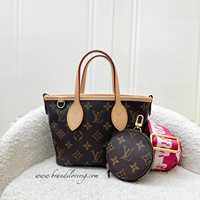
(Pre-loved) Louis Vuitton LV Neverfull BB in Monogram Canvas Rouge Pivoine Interior and GHW (Model: M46786) C/2026/05/067E
$3,030.00
Buy on Lazada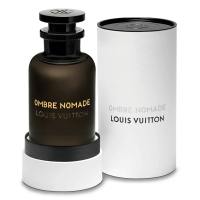
Ombre Nomade Louis Vuitton for Unisex Eau de Parfum 100ml
$270.00$600.00
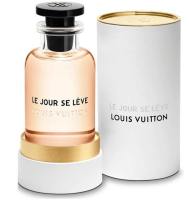
Le Jour Se Leve by Louis Vuitton for Unisex Edp 100ml
$180.00$530.00
![💯% Authentic LOUIS VUITTON ON THE BEACH EDP 100ml [Free high-end gifts]](https://sg-live.slatic.net/p/54b156f6c8aac8e5fd9e34af17e06222.png_200x200q80.jpg)
💯% Authentic LOUIS VUITTON ON THE BEACH EDP 100ml [Free high-end gifts]
$79.20$458.00
Les Parfums Louis Vuitton Miniature Gift Set Edp for WOMEN 7 x 10ml
$157.50$450.00
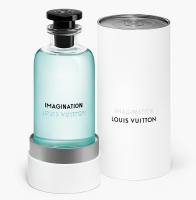
Imagination by Louis Vuitton eau de Parfum For men 200ml
$360.00$650.00
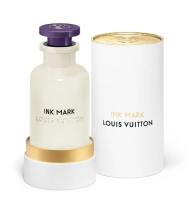
Ink Mark by Louis Vuitton Eau de Parfum Unisex 100ml
$180.00$480.00
![[Decant] Original LV Pacific Chill](https://sg-live.slatic.net/p/f865150dcfec9951692d24d3ae2c1737.png_200x200q80.jpg)
[Decant] Original LV Pacific Chill
$64.67$200.00
About Louis Vuitton
Louis Vuitton (often abbreviated LV) is a French luxury fashion house established in Paris in 1854 by Louis Vuitton. Originally founded as a maker of high-quality travel trunks and luggage, the Maison has since expanded into handbags, leather goods, clothing, footwear, accessories, perfumes, watches, jewellery, and other luxury products. Today, Louis Vuitton stands as one of the most recognisable luxury brands globally and serves as a flagship Maison within LVMH (Moët Hennessy Louis Vuitton). 1
The brand’s identity is intrinsically linked to travel, craftsmanship, innovation, French luxury, and the LV Monogram. Its history is particularly significant as many design and manufacturing concepts originally developed for nineteenth-century travellers laid the foundations for the modern luxury goods industry.
Basic information
| Category | Information |
|---|---|
| Full name | Louis Vuitton Malletier |
| Common name | Louis Vuitton / LV |
| Founded | 1854 |
| Founder | Louis Vuitton |
| Founded in | Paris, France |
| Industry | Luxury fashion and leather goods |
| Parent company | LVMH |
| Core heritage | Trunks, luggage and travel |
| Major products | Handbags, luggage, leather goods, ready-to-wear, shoes, jewellery, watches, fragrances, accessories and beauty |
| Signature symbol | LV Monogram |
| Major creative directors | Nicolas Ghesquière — women’s collections; Pharrell Williams — men’s collections |
| Current corporate group | LVMH |
Louis Vuitton’s original business differed fundamentally from the fashion house known today; it began with packing and trunk-making for wealthy travellers. 2
The founder: Louis Vuitton
Louis Vuitton was born on 4 August 1821 in Anchay, in the Jura region of France. His family background was connected to milling, woodworking, and craftsmanship. At approximately 14 years of age, he left home and eventually made his way to Paris. 2
Arriving in Paris in 1837, he became an apprentice to Romain Maréchal, a master trunk-maker and packer. For roughly 17 years, Vuitton learnt the highly specialised craft of making boxes, trunks, and travel cases, as well as packing valuable belongings for affluent clients. 3
This experience formed the foundation of his future company.
Why his work mattered
During the nineteenth century, travel grew increasingly important due to the development of railways, steamships, and other modern transportation. Travellers required luggage that could protect clothing and possessions whilst being transported under increasingly demanding conditions.
Louis Vuitton recognised that traditional luggage could be improved. In 1854, he established his own business at 4 Rue Neuve-des-Capucines in Paris, near the Place Vendôme. 4
The revolutionary trunk
One of Vuitton’s most significant innovations was the development of a flat-topped trunk.
Traditional trunks commonly featured rounded or domed lids. Vuitton developed trunks with a flat top, making them easier to stack during transportation. He also utilised lightweight materials and canvas coverings to make the luggage more practical for travellers. 5
The early Trianon grey canvas became particularly important. Rather than simply producing decorative luggage, Vuitton sought to combine:
- Durability
- Lightness
- Practicality
- Protection
- Efficient transportation
- Elegant appearance
This philosophy—function combined with luxury—remains central to the Louis Vuitton identity.
The Asnières workshop
In 1859, Louis Vuitton acquired land in Asnières-sur-Seine, outside Paris, where he established a larger workshop. The location was strategically advantageous due to its proximity to transportation routes and the Seine. 6
Asnières subsequently became one of the most important locations in Louis Vuitton history. The workshop developed into a centre of the Maison’s savoir-faire, representing specialised craftsmanship and accumulated technical knowledge. The Asnières site remains closely connected with Louis Vuitton’s heritage today.
Expansion under Georges Vuitton
Louis Vuitton’s son, Georges Vuitton, played a major role in transforming the family business into an international luxury house.
Georges joined the business and eventually took over its management. Under his leadership, Louis Vuitton introduced several important innovations. 7
Damier Canvas — 1888
In 1888, Louis Vuitton introduced the Damier canvas, recognisable by its checkerboard pattern. The design was not merely decorative; one motivation was to distinguish Vuitton products from competitors and combat imitation.
The famous lock
In 1889, Georges Vuitton introduced a sophisticated multi-tumbler lock system designed to make Louis Vuitton trunks exceptionally secure. The company famously emphasised the security of its luggage. 7
This illustrates an important characteristic of the Maison’s history: Louis Vuitton’s luxury image developed partly from solving practical problems.
The LV Monogram
Perhaps the most important symbol in the history of Louis Vuitton is the Monogram Canvas.
It was created in 1896 by Georges Vuitton, following the death of his father, Louis Vuitton. The design incorporated the initials LV together with stylised floral motifs. Its influences included Art Nouveau, Japonism, and Neo-Gothic ornamentation. 8
The Monogram was initially connected to the protection and identification of Louis Vuitton products, but it eventually became one of the world’s most recognisable luxury brand patterns. As of 2026, Louis Vuitton is celebrating the 130th anniversary of the Monogram, highlighting its continued importance to the Maison. 9
Why the Monogram is so important
The LV Monogram performs several functions simultaneously:
- Brand identification — people can recognise the product immediately.
- Heritage — it connects contemporary products to the nineteenth-century Maison.
- Luxury symbolism — the pattern became associated with exclusivity.
- Design language — designers continually reinterpret it.
- Cultural recognition — LV became recognisable far beyond the traditional fashion industry.
From luggage company to fashion house
For much of its early history, Louis Vuitton was primarily associated with trunks, travel cases, and leather goods.
Over the twentieth century, however, the company gradually expanded its product universe. Its heritage remained centred on the idea of the “Art of Travel” while the brand began developing:
- Handbags
- Small leather goods
- Luggage
- Accessories
- Clothing
- Shoes
- Watches
- Jewellery
- Fragrances
- Home and design objects
This transformation allowed Louis Vuitton to evolve from a specialist luggage manufacturer into a complete luxury Maison.
The most famous Louis Vuitton products
Several products have become strongly associated with the brand.
Speedy
The Speedy is one of Louis Vuitton’s best-known handbags. Its roots are connected with travel and the Maison’s tradition of practical luggage.
Keepall
The Keepall is a large soft travel bag and one of the classic expressions of Louis Vuitton’s travel heritage.
Noé
The Noé originated as a bag designed to carry bottles of champagne but eventually became an iconic everyday handbag.
Alma
The Alma is one of the Maison’s most recognisable structured handbags, distinguished by its architectural shape.
Neverfull
The Neverfull, introduced in the modern era, became particularly popular as a large everyday tote.
Capucines
The Capucines takes its name from the street where Louis Vuitton opened his first store in Paris. It represents the Maison’s more contemporary high-end leather goods direction. 10
Petite Malle
Introduced by Nicolas Ghesquière in 2014, the Petite Malle translates the visual language of historic Louis Vuitton trunks into a small contemporary handbag.
Important Louis Vuitton materials and patterns
Louis Vuitton’s identity is not based solely on the LV logo. The Maison has developed a large vocabulary of materials.
Monogram Canvas
The brown canvas with the LV initials and floral motifs is probably the brand’s most recognisable material.
Damier
The checkerboard Damier pattern dates back to 1888 and predates the Monogram. 11
Epi Leather
Introduced in 1985, Epi leather is characterised by its distinctive textured, wave-like grain. It became another important Louis Vuitton material. 12
Vachetta leather
Natural cowhide leather has historically been used on many Louis Vuitton pieces, particularly as handles, straps, and trim. It develops a darker patina with age, giving individual products a changing appearance.
Louis Vuitton and LVMH
A major turning point came in 1987, when Louis Vuitton merged with Moët Hennessy.
The transaction created LVMH, whose name stands for Louis Vuitton Moët Hennessy. 13
LVMH subsequently became one of the world’s largest luxury goods groups, with a portfolio spanning fashion, leather goods, wines and spirits, perfumes and cosmetics, watches and jewellery, retail, and other businesses. 14
Louis Vuitton is therefore not an independent luxury conglomerate; it is a Maison within the LVMH group.
Louis Vuitton enters modern fashion
A crucial change occurred as Louis Vuitton increasingly embraced fashion rather than limiting itself to leather goods and travel.
The brand began working with major designers and artists, allowing its historical codes to be interpreted through contemporary fashion. This produced a distinctive tension between:
- Heritage and innovation
- Craftsmanship and popular culture
- Traditional luxury and contemporary fashion
That tension has become one of Louis Vuitton’s defining characteristics.
Marc Jacobs era
Marc Jacobs became Louis Vuitton’s artistic director in 1997 and played an important role in transforming the company into a major global fashion label.
Under Jacobs, Louis Vuitton became increasingly associated with runway fashion, collaborations, and contemporary artistic culture. One particularly important development was the use of collaborations with artists such as Stephen Sprouse, Takashi Murakami, and others.
These collaborations demonstrated that the Monogram did not have to remain static; it could be transformed into new artistic languages.
Nicolas Ghesquière
Nicolas Ghesquière became Louis Vuitton’s Artistic Director of Women’s Collections in 2013. 15
His approach has generally combined Louis Vuitton’s historical codes with:
- Futuristic silhouettes
- Architectural forms
- Technical materials
- Historical references
- Experimental proportions
- Contemporary tailoring
One of his most recognisable contributions is the Petite Malle, introduced in 2014, which directly references the Maison’s historic trunks. 16
Ghesquière’s work illustrates an important strategy used by Louis Vuitton: the brand does not simply preserve its archive—it continually redesigns it.
Pharrell Williams and men’s fashion
In 2023, Pharrell Williams became Louis Vuitton’s Men’s Creative Director.
His appointment represented another major intersection between luxury fashion, music, celebrity culture, and streetwear. Pharrell’s Louis Vuitton collections have emphasised ideas such as:
- Luxury streetwear
- Tailoring
- Embroidery
- Travel
- Jewellery
- Denim
- Cultural references
- Elaborate reinterpretations of the Damier and Monogram codes
His appointment also reflects the increasing importance of musicians and cultural figures in contemporary luxury fashion.
Fragrance
Louis Vuitton also has an important fragrance business.
The Maison appointed Jacques Cavallier Belletrud as its Master Perfumer in 2012. He works from the company’s perfume facilities in Grasse, France, a historic centre of French perfumery.
Louis Vuitton’s fragrance strategy emphasises the same ideas found elsewhere in the brand: travel, craftsmanship, exceptional materials, and storytelling. Rather than treating perfume as merely another licensed product category, Louis Vuitton has positioned fragrance as part of its broader luxury identity.
Watches and jewellery
Louis Vuitton has also expanded into watchmaking and jewellery.
Its watchmaking identity combines traditional Swiss watchmaking with the Maison’s visual codes. The jewellery division similarly operates at the intersection of French luxury design, gemstones, and craftsmanship.
These categories are strategically important because they allow Louis Vuitton to compete not only with fashion houses but also with traditional luxury watch and jewellery brands.
Beauty
Louis Vuitton entered another major category with La Beauté Louis Vuitton, launched in 2025.
The beauty line was developed with British makeup artist Dame Pat McGrath as Cosmetics Creative Director. The initial collection included lipsticks, lip balms, and eyeshadow palettes.
This represents another stage in the Maison’s evolution: trunks → leather goods → fashion → fragrance → jewellery/watches → beauty. The brand can therefore now be understood as a broad luxury lifestyle and fashion Maison, rather than simply a handbag company.
Louis Vuitton and art
Art has become an important component of Louis Vuitton’s cultural identity.
The most obvious example is the Fondation Louis Vuitton, a contemporary art museum in Paris designed by architect Frank Gehry. It opened to the public in 2014 and hosts exhibitions and cultural programmes involving modern and contemporary artists.
It is important to distinguish the Fondation from the Louis Vuitton fashion business: the Fondation is a cultural institution associated with the broader Louis Vuitton/LVMH ecosystem rather than simply a Louis Vuitton retail store.
Louis Vuitton and travel
Travel remains one of the deepest ideas behind the brand.
The company’s original products were created because wealthy travellers needed specialised trunks and packing services. That heritage survives in modern Louis Vuitton through:
- Luggage
- Travel bags
- Trunks
- Travel accessories
- Travel-inspired collections
- Fashion campaigns
- Collaborations
- Special-order trunks
This is why Louis Vuitton often describes its historical identity through the concept of the “Art of Travel”. The brand’s luxury proposition is therefore unusual: its heritage is not originally based on haute couture but on making objects for movement.
Craftsmanship and manufacturing
Craftsmanship is a major part of Louis Vuitton’s brand positioning.
The Maison operates workshops where leather goods and other products are produced using specialised techniques. Louis Vuitton states that an average leather bag can require approximately 250 individual operations, illustrating the degree of manual and technical work involved in its products.
The company also continues to maintain its historic Asnières workshop, connecting contemporary production with its nineteenth-century origins.
Business model
Louis Vuitton occupies the high end of the luxury market.
Its business model emphasises:
Controlled distribution
Louis Vuitton primarily distributes products through its own boutiques, selected retail environments, and official e-commerce channels.
Brand-controlled presentation
Stores, packaging, advertising, fashion shows, and product photography are designed to maintain a consistent global identity.
High prices
Luxury pricing is not based solely on the physical cost of materials. It also reflects:
- Craftsmanship
- Design
- Scarcity
- Brand heritage
- Distribution
- Marketing
- Cultural prestige
- Perceived exclusivity
Icon products
Classic products such as Monogram bags provide continuity while new collections keep the brand culturally relevant. This combination allows Louis Vuitton to be simultaneously traditional and contemporary.
Brand identity
Louis Vuitton’s identity can broadly be summarised through several concepts:
| Element | Meaning |
|---|---|
| LV Monogram | Recognition and heritage |
| Damier | Historical identity |
| Trunks | Original craftsmanship |
| Travel | Foundational brand narrative |
| French heritage | Origin and cultural positioning |
| Craftsmanship | Product justification and differentiation |
| Innovation | Continuous reinterpretation |
| Art | Cultural relevance |
| Celebrity | Global cultural influence |
| Fashion | Contemporary relevance |
| Exclusivity | Luxury positioning |
The key idea is that Louis Vuitton does not treat its historical symbols as museum pieces. Instead, it repeatedly reinterprets them for new generations.
Why Louis Vuitton became so famous
Louis Vuitton’s success comes from a combination of historical and modern factors.
1. It started with a genuine technical innovation
The company was not originally built around a logo. It was built around solving problems associated with travel.
2. It created recognisable visual codes
The Monogram and Damier made Louis Vuitton products instantly identifiable.
3. It maintained its heritage
The brand continuously references trunks, travel, leatherwork, and historic designs.
4. It embraced contemporary culture
Louis Vuitton has worked with designers, artists, musicians, architects, and other cultural figures.
5. It controls its luxury environment
Its stores, packaging, advertising, and products all reinforce the same identity.
6. It balances old and new
A nineteenth-century trunk can inspire a twenty-first-century handbag. That ability to transform heritage without abandoning it is arguably one of Louis Vuitton’s greatest strengths.
Major historical timeline
1821 — Louis Vuitton is born in Anchay, France.
1837 — Vuitton arrives in Paris and begins his apprenticeship as a trunk-maker and packer.
1854 — Louis Vuitton opens his first store at 4 Rue Neuve-des-Capucines in Paris. 4
1859 — The Asnières workshop is established. 6
1888 — Damier canvas is introduced. 11
1889 — Georges Vuitton introduces the famous multi-tumbler lock. 7
1896 — The LV Monogram Canvas is created by Georges Vuitton. 8
1978 — Louis Vuitton officially enters Japan.
1985 — Epi leather becomes part of the Maison’s product heritage. 12
1987 — Louis Vuitton merges with Moët Hennessy, creating LVMH. 13
1997 — Marc Jacobs becomes artistic director and expands Louis Vuitton’s role in fashion.
2013 — Nicolas Ghesquière becomes Artistic Director of Women’s Collections. 15
2014 — Petite Malle is introduced and Fondation Louis Vuitton opens in Paris.
2023 — Pharrell Williams becomes Men’s Creative Director.
2025 — La Beauté Louis Vuitton launches with Pat McGrath.
2026 — Louis Vuitton celebrates the 130th anniversary of the Monogram. 9
Louis Vuitton today
As of 2026, Louis Vuitton can best be described as a global luxury Maison built around the intersection of travel, fashion, leather craftsmanship, design, art, and culture.
Its original business—making trunks for travellers in nineteenth-century Paris—has evolved into a vast luxury ecosystem encompassing leather goods, handbags, luggage, ready-to-wear, shoes, watches, jewellery, fragrances, accessories, and beauty. 14
Its most important competitive advantage is arguably its heritage. Very few modern luxury brands can trace a continuous identity from nineteenth-century craftsmanship to contemporary global fashion on the same scale.
At the same time, Louis Vuitton’s strategy is not simply to reproduce historical products. Its designers continually reinterpret the Monogram, Damier, trunks, travel concept, and French craftsmanship through new collections and collaborations.
In that sense, the fundamental Louis Vuitton formula can be summarised as:
Heritage + craftsmanship + innovation + cultural influence + exclusivity
That formula explains how a company founded by a nineteenth-century trunk maker became one of the defining names of modern luxury.
References
- Louis Vuitton, exceptional ready-to-wear – Fashion… – LVMH
- Our history in stories | LV Careers
- Louis Vuitton’s Heritage: A History Since 1854 | LOUIS VUITTON ®
- A Legendary History | LOUIS VUITTON ®
- L’Héritage Louis Vuitton: Une histoire depuis 1854 | LOUIS VUITTON
- Louis Vuitton celebrates 130 years of its Monogram… – LVMH
- Louis Vuitton’s Heritage: A History Since 1854 | LOUIS VUITTON
- Louis Vuitton’s Heritage: A History Since 1854 | LOUIS VUITTON
- The history of Louis Vuitton | Christie’s
- Louis Vuitton: The Birth of Modern Luxury – Books and Stationery | LOUIS VUITTON
- A Legendary History | LOUIS VUITTON
- Notre histoire dans l’histoire | LV Careers
- ルイ・ヴィトンのヘリテージ:1854年から紡ぐ歴史|ルイ・ヴィトン 公式サイト
- Louis Vuitton’s Heritage: A History Since 1854 | LOUIS VUITTON ®
- Louis Vuitton News, Collections, Fashion Shows, Fashion Week Reviews, and More | Vogue
- Louis Vuitton, prêt-à-porter d’exception – Mode & … – LVMH